Progeny Press The Scavengers eGuide (review)

Scavengers eGuide

While I had heard the name Progeny Press, I was unfamiliar with the company prior to this review. The Scavengers sounded like a book my son would really enjoy so I purchased the book and requested the opportunity to review the The Scavengers – eGuide that Progeny Press created to accompany the book. Knowing that we would be reviewing this over the summer when we would normally be taking a break, I really hoped the book would be good enough to really hook my son and keep him interested. Thankfully, he absolutely loved the book and enjoyed the format of the eGuide.  This particular book and guide are recommended for grades 5-8 and my son is entering the 7th grade.
scavengers1

The Scavengers – eGuide starts out with prereading activities that you can choose from. They were quite varied and covered a variety of learning styles. For this book there were options that included a Bible study, a research project, a cooking project, and even a field trip. We completed the research project as a family discussion as well as talking about the hands on the project. In this instance, one of the hands on options was using a book on edible plants and trying to locate some of them near your home. Since we had already done this as a family, we simply discussed when we had done it and what we learned.

They made a suggestion at the beginning of the guide that made a huge difference for my son. He loves to read but often gets really frustrated with study guides and such because he does not like to have to pause at the end of every chapter or section to answer questions.  Progeny Press suggested reading the entire book and then going back and rereading the sections as necessary. He really appreciated that and felt like it helped with both the flow and enjoyment of the book.

Once he had completed the prereading activities and read the entire book, he went back and started completing the questions for each section. There are two different ways to approach having a child answer the questions. This is a self-guided study and you can have the child answer the questions on the computer in adobe or you can print it out and have them answer the questions on paper. My son preferred to answer them on the computer and appreciated that many of the questions offered drop down boxes with choices.

The book was great. I really liked the drop down boxes on some of the questions. I did not like that there was so much grammar/vocabulary study included.

He is a student that prefers book studies to be more focused on the content of the book and was not as fond of having to deal with vocabulary and grammar in the form of synonyms and antonyms and literary terms. As a parent/teacher I see the value in including those components and feel that they are an important part of a well rounded education.

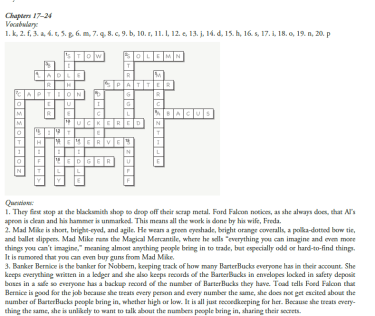
Once the questions in the guide are completed there are writing and ‘after you read’ activities that you can use to wrap up your study. Many of these offer opportunities to think more deeply and critically about the content and themes of the book. For example one of the prompts for this book has them looking at times and ways in which people groups have been dehumanized throughout history. There are also hands on activities like painting a scene from the book or creating a diorama. My son is going to create a painting but has not finished that part of the study yet.
Scavengers4

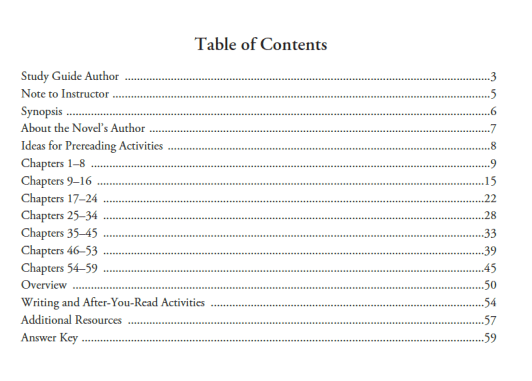
At the end of the study Progeny Press includes  a list of additional resources that the student can use to continue the learning. There is also an answer key to make grading easy for the parent. While we did discuss the book as a family, it was very easy for my son to work independently and for me to grade his work without me needing to actually read the book. With four children, this is definitely a benefit because I can not keep up with reading everything they read.

I think it is important to note that these eGuides are written from a Christian perspective. There are tie-ins to scripture and discussion questions that have the student analyzing how different parts of the book line up with scripture. However, the books themselves are not necessarily written from a Christian perspective. The Scavengers – eGuide was a really interesting experience for us and while I do not plan on making these our entire curriculum, I could certainly see us using some of their other eGuides in our literature studies.

I encourage you to check out the many eGuides available at Progeny Press and other Review Crew reviews about some different titles below. I’d love to hear in the comments which one most interests you.

New Study Guides for Literature From a Christian Perspective {Progeny Press Reviews}Crew Disclaimer

Resource Library and Affiliate Disclosure

When you sign up for the Schoolin’ Swag free resource library you will get a link and password to the library, we are adding to the library each month with new items. You will also get a bi-weekly newsletter email to keep you up to date on what we have going on.

Resource Library 

This post may contain affiliate or referral links, including Amazon affiliate links. As always I will never recommend a product that I don’t believe in and you will never be charged more for purchasing through our links. It does help pay for the costs associated with the blog.

Bible Study Guide For All Ages (review)

20180708_084429

When people ask me which is the best Bible curriculum, I always ask them what they are looking for in a Bible curriculum. Sometimes people want a good devotional; sometimes, they want a scripture memorization program or maybe a study of character traits. There are many options for Bible study, and we have used a variety depending on our needs at the time.

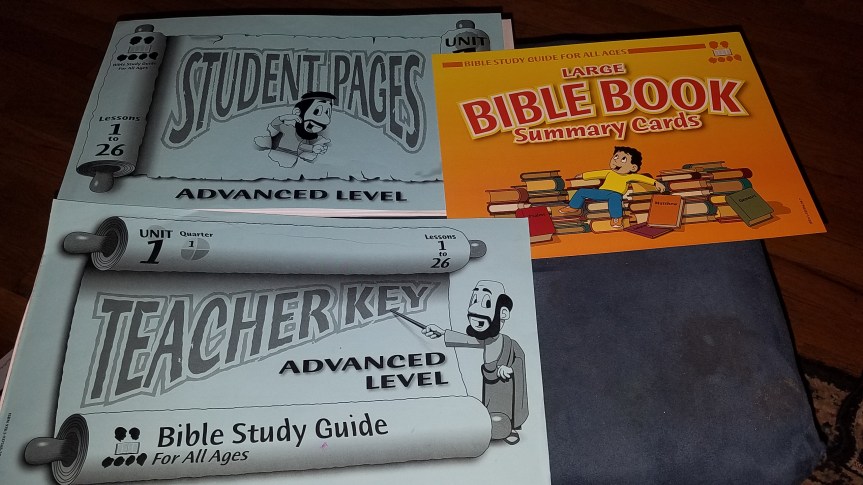
Bible Study Guide For All Ages is an orderly study of the scripture and its key components and characters, starting with Genesis and moving forward.  We had the privilege of reviewing both the Advanced (5th & 6th grade) level and the Beginner (3-K) level.

My goal was for us to be able to use this program as a family. The two levels used the same Bible verses and story for each lesson with different activities. When we tried the first lesson, I was concerned that I had taken on more than we could successfully complete with this review, but within a couple of lessons, we had figured out a rhythm and made it work for the whole family.

As I figured out the program and how it would look for us as a family, it took about 45 minutes to complete the first lesson. However, once I was used to the flow and the children understood what was expected of them, it took us about 20-25 minutes to complete a lesson.

20180708_084335

I used the Advanced (5th & 6th grade) program with my rising 5th and 7th graders. While my oldest is technically aging out of their suggested range, I still plan to use it with him next year as I think he will continue to learn from it, and I like being able to study the Bible together as a family.

At the same time, my four-year-old was using the Beginner (3-K) level. When we first started, I was having a bit of a time working out doing it all together. The four-year-old has a fairly typical four-year-old attention span (aka short) and would get distracted while I helped the older children.

However, within a couple of lessons, we found a rhythm and flow that allowed us to all work together.  I received the consumable workbooks for both levels, a teacher’s guide for the advanced level, and the Bible Book Summary Cards.

Beginner Level

The Beginner (3-K) level has review questions at the beginning of each lesson. There are also some songs that you can sing to help with remembering, but they come on a CD as an additional purchase. I am considering purchasing the CD to use during the upcoming school year.

Next, there is either an activity or discussion questions that lead into the Bible story. For example, in lesson three, one of the discussion questions was about mom having made cookies and told you that you could eat one after dinner and then left the kitchen. You want to eat one now, but what should you do?

Bible Study Guide for All Ages

Next is the Bible story. They give you the scripture reference, and you read it directly from the Bible. This was a feature that I really liked because I knew that they were getting actual scripture, and I could choose the translation that our family found to be most appropriate.

Once I read the scripture there were a variety of questions and activities for the child to complete to help with understanding and remembering the story. For example, he may be asked to circle the correct picture in a series of pictures to go along with the story or to color a person from the story. There might be words to trace for another question. Each story had about 5-10 of these questions.

Once those were complete, there was an Apply It! section where you discussed what you learned and how it should apply to our lives. This was done in fairly simple and easy-to-understand terms that were appropriate for the target age range. There was also a picture that could be colored to go along with the story.  I typically used the picture as something my four-year-old could do while I was working with the older children.

Advanced

The Advanced (5th & 6th grade) level was set up in a similar way but was more in-depth based on the target audience.  They started with memory work and review questions. Included in their memory work was Bible Book Summary Cards. There was a card for each book of the Bible, and you worked with the one for the book you were currently studying.

The front of the card has pictures to help you remember the key points from that book of scripture, and the back and a summary of the book and questions that you can ask to help the students remember what is included in that book of the Bible.

Next, you read the story, and they have a series of questions like the beginner level. Their questions often require them to fill in the blanks or choose the right answer.  Once that is completed, they have timeline or map work. There is a printed timeline on each activity page, and they use that timeline to answer a series of questions and fill in answers on the timeline.

For example, one question in the first lesson had them answer how many years Abraham lived before the birth of Jesus. Another question had them draw Joseph’s coat near a picture of the 12 sons.  The pages with map work are set up similarly with a map instead of a timeline.

Wall Maps and Timeline Sets

They also have a Wall Maps and Timeline set that you can purchase to go with your program. These are maps and timelines to be hung on the wall and used as a group.

They also have timeline figures that you can purchase to go with the wall timeline that the children can add as you progress. This is a great way to help them visualize the timeline of the Bible.  For younger children, there is also a beginner timeline that can be purchased to use with your non-readers. It is set up on cards with large pictures.

Get Active!

Get Active! was the next section. Some of those activities were things like writing down the name of someone they knew that was feeling down. They were to commit to themselves to encourage that person and pray for them.  There were times when these activities were designed around having a small group of students complete the activity (like a skit).

Most of those were easily modified, or you could simply skip that step that day. The lessons are complete enough without that step that I don’t feel like it was a problem to skip it on days when it was not practical to complete the activity.  Then we finished up with the Apply it! section where we talked about and answered questions about how the story affects our lives and what God is teaching us through this lesson.

What did I think, and how will we use this program?

After a bit of a learning curve getting started (particularly with combining ages), we really enjoyed the program. The children were learning the stories, and even though its summer, they did not mind sitting down to do the lessons. My four-year-old absolutely loved that he could participate with the older children and had his own papers.

I liked that it was thorough and stuck to scripture. Because it focused on actual stories and information from scripture and not an interpretation, I think it would be a great fit for various denominational backgrounds.

As a family, we listen to a section of the Bible each day to listen to the Bible in a year and also have some devotionals that we are working through but I plan to continue using this next school year. My plan is for us to complete 2-3 lessons per week as a family. I believe that this program will help give them a strong foundation in knowing what the Bible says and understanding the timeline of events.

There are some great sample pages and information on the website, and I encourage you to check them out to see if they would be a good fit for you. You can also check out the other reviews by our review crew to get more information, learn about the other levels, and see some of the other features that are available.

Bible Study Guide For All Ages {Reviews}Crew Disclaimer

Resource Library and Affiliate Disclosure

When you sign up for the Schoolin’ Swag free resource library, you will get a link and password to the library; we are adding to the library each month with new items. You will also get a bi-weekly newsletter email to keep you updated on what we have going on.

Resource Library 

This post may contain affiliate or referral links, including Amazon affiliate links. As always, I will never recommend a product that I don’t believe in, and you will never be charged more for purchasing through our links. It does help pay for the costs associated with the blog.

The Master and His Apprentices (Art History) Review

The Master and His Apprentices

I am excited to share with you my family’s new favorite art history resource. The Master and His Apprentices: Art History from a Christian Perspective is a full art history course that would satisfy requirements for a high school elective credit if it was completed as written. However, my children are in middle and elementary school and so we took a different route for this review and used it as a supplement.  We love incorporating a bit of art into our history studies. The layout of this program makes that so simple.

Honestly, art history is not a strong subject for me. It was not something that was covered much at all during my educational experience (I did get a little in a fine arts course in college). This can sometimes make it difficult to include in my children’s studies without doing a lot of research and work. I love that this art history book by The Master and His Apprentices made it so easy for me to find what I needed. the chronological layout makes it a perfect fit for using it to supplement our history program.

Capture3

The textbook starts all the way back at creation and shares about God as the master artist and his creations. Then it moves into art in ancient cultures and moves forward chronologically through modern times.

As we have been studying more modern history we skipped towards the end of the book and focused on chapter 18, Rococo to Today. I would read the information aloud and then show the children the art work on our television screen (hooked to our computer). We then talked through some of the discussion questions and just a general conversation about the art work. Since we were not using it as a high school course but rather a supplement we did not complete the exams or suggested papers.

Important Highlights From the Website

  • Written from a Christian perspective
  • Contain NO nudity or other objectionable material
  • Satisfies requirements for a full high school elective credit
  • Helps readers create a “visual” timeline of biblical and world events

I was really pleased to have a resource that had so much wonderful art from so many different cultures and time periods. That was made even better by not having to be concerned about whether the art work was appropriate for the children. This was truly the first resource I’ve ever found that was so comprehensive in the coverage of art work while not including any nudity or other inappropriate material.

The pictures were beautiful and included such a variety of art work. I loved that in addition to paintings, sculptures, and other traditional art they included lots of architecture and other pieces that were created as more than just artistic works.

Capture4

In the fall, we will be studying ancient history and I’m so excited to be able to use this to tie art into our studies. In addition to be separated chronologically they have it separated by culture. This means that when we read about Ancient Egypt, I can show them art work from Ancient Egypt, and the same for Greece, Rome, etc. I think it will be so powerful to be able to show them examples of canopic jars when we talk about mummies, statues and mosaics from ancient Greece, and Roman Architecture. I really enjoyed how they tied in Biblical events and references throughout the book.

The textbook includes several resources that really added to the ability to use this book as a supplemental resource. There was a great breakdown of art work from various geographic regions. This would be a great way to study art from one area over the course of time. Then they had a lengthy index that would make finding information or art very easy. There was also a section explaining various art terms. There was so much history included in this art history book that it could probably function as a complete world history course with a little bit of supplementation.

The teachers manual included a sample syllabus that could be used to make it a full high school class. The syllabus and included worksheets and exams would make it a very easy to implement class, even for those people like myself that do not have a strong art background. They have separate instructions for using this in a classroom (or co-op) setting and at home, answer keys for the worksheets and exams, and art history paper instructions.

I am looking forward to using The Master and His Apprentices: Art History from a Christian Perspective  to supplement our history studies for the next several years and possibly using it as a full course for my children once they reach high school. The worksheets in the teachers guide are considered consumable and for use by only one child. However, they only charge an additional $2 for each additional child making this a great resource to use with multiple children.  While the hardback version of this book would be out of our price range (through probably a reasonable price given the number of full color pictures) the digital version is very reasonably priced, especially for a resource that I can use for years to come.

The Master and His Apprentices: Art History from a Christian Perspective {The Master and His Apprentices Reviews}

Crew Disclaimer

Resource Library and Affiliate Disclosure

When you sign up for the Schoolin’ Swag free resource library you will get a link and password to the library, we are adding to the library each month with new items. You will also get a bi-weekly newsletter email to keep you up to date on what we have going on.

Resource Library 

This post may contain affiliate or referral links, including Amazon affiliate links. As always I will never recommend a product that I don’t believe in and you will never be charged more for purchasing through our links. It does help pay for the costs associated with the blog.

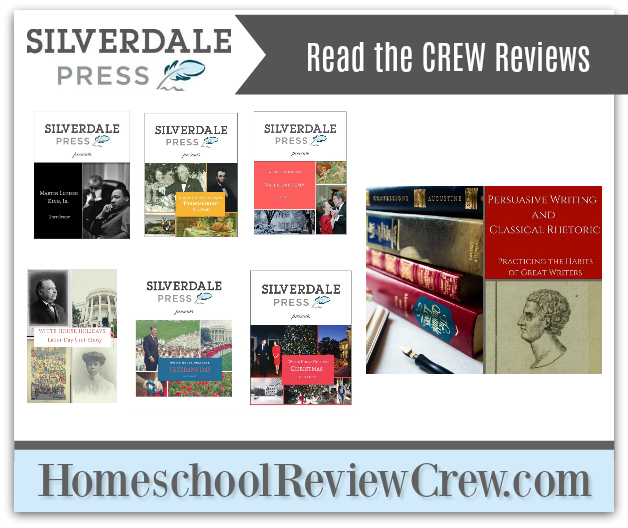
Silverdale Press LLC White House Holidays Unit Studies Review

20180618_112600
Voting Rights Posters! (yes I saw the typo 😉 )

When I signed up to review the White House Holidays Unit Studies by Silverdale Press LLC my plan had been to incorporate parts of several of the studies into our existing history program. I figured that I could condense them down and work through several applicable ones.

However, while I personally looked over several of them, we only did one complete one as a family. Not because we didn’t enjoy them but because I felt like they were so good that we didn’t want to skip around and miss out on valuable content. I wanted to take the time to review the entire unit study and let it sink in.

How Did The Unit Studies Work?

These unit studies are broken down by holiday, but I made my choice based on the fact that we were studying the civil rights movement as a key part of our history last month. I had planned to use several resources and supplement them with parts of the Martin Luther King, Jr. Study. When we received the unit studies, I realized that I would not need to supplement our studies with anything other than our family discussions.

Martin-Luther-Kind-Jr-Unit-Study

In our home, we typically do history studies twice a week. As civil rights was only one component of the era we were studying, we decided to devote one day each week to the unit study and complete our studies of the other events of that time period on the second day.

While this was a Martin Luther King Jr. unit study, it also talked about other people involved in the civil rights movement. The name White House Holidays Unit Studies also focused on how Martin Luther King Jr. interacted and worked with the men who were president during his time as a civil rights activist.

How We Used the Study

Each week I would read one of the lessons aloud to my children. This would inevitably bring about family discussions about this very difficult time in our nation’s history. Once I had read and discussed any questions the children had, we would complete the various activities that were included for that week.

A timeline continued throughout the study and each week that would add the events that had been discussed to the timeline. There was also a map where they could mark the various cities where the event occurred. There was a printable map included at the end of the study, which is sufficient, but after a couple of weeks, my children decided that it was more fun to find them on our big wall map.

20180618_112516

Activities for All Ages

In addition to the timeline and maps each week, there were various activities broken up by age. Some activities are for grades K-6, and some for 7-12. I went through each week and chose the best fit for our family. The children’s favorite activity, and possibly one of the most eye-opening activities, was completing a quiz that was used as a barrier to keep blacks from registering to vote. They were surprised at how difficult the quiz was and how unimportant and random many of the questions were. Honestly, I was surprised. By most standards, I am a very educated voter, and there were questions on that test that I could not answer.

Other activities included listening to freedom songs, making protest posters, analyzing speeches, and participating in a service project. There were craft activities for those children that learn well in that modality, writing activities that could easily count towards your language arts program, and other relevant and engaging activities.

Videos

Each lesson also included links to various video clips. We watched a couple each week to help the children better understand what we had read and discussed that week. My son was particularly enthralled with one of the clips, which featured the President on the phone with Martin Luther King Jr. We had just recently traveled to the Eisenhower National Historic Site as we studied through that era in history. So my children were very excited to make the connections of the Civil Rights movement with President Eisenhower.

Other Studies

In addition to the Martin Luther King Jr. study, they have studies for Labor Day, Valentine’s Day,  Veterans Day, Thanksgiving, Christmas, and one coming soon about George Washington. These studies could be done as your curriculum for a week leading up to the holiday or spread out over a month as we did. You could pick and choose a few of the activities or go all in and complete all of the options. We chose to use a study that correlated with our history studies that were in progress, but they could easily stand alone. They can be done around the holiday, but this one also worked fine for a different time of year. I look forward to doing the Labor Day study in September as we start our new school year.

Which White House Holidays Unit Study sounds most interesting to you? Please let me know in the comments, and use the link below to check out reviews of other studies by our wonderful Crew!

Persuasive Writing & Classical Rhetoric: Practicing the Habits of Great Writers & White House Holidays Unit Studies {Silverdale Press LLC Reviews}Crew Disclaimer

Resource Library

When you sign up for the Schoolin’ Swag free resource library you will get a link and password to the library, we are adding to the library each month with new items. You will also get a bi-weekly newsletter email to keep you up to date on what we have going on.

Resource Library 

This post may contain affiliate or referral links, including Amazon affiliate links. As always I will never recommend a product that I don’t believe in and you will never be charged more for purchasing through our links. It does help pay for the costs associated with the blog.

Memoria Press Classical Composition I: Fable Review


Classical Composition I: Fable Set

Finding a writing program for my twelve year old is one of the biggest challenges I face in our homeschool. I had heard great things about Memoria Press and I was excited to review their Classical Composition I: Fable Set. This set includes a teachers manual, instructional DVD, and a consumable student book. The book has twenty lessons, each featuring a different fable, and we were completing a lesson over the course of two weeks. Depending on your child you could move faster or slower than we did.

For each lesson my son would watch the video instruction and then complete a series of eight assignments. During the instruction the fable was read aloud and they discussed the vocabulary and various components of the fable.  Those assignments included looking for examples of the three plot components of recognition, reversal, and suffering. Then they would look into variations using synonyms to vary sentences from the fable associated with that lesson. Then they summarize the fable by creating an outline. I loved that in the instructional video they went step by step through the outline for the first lesson to show them how to create an outline and give them a good example moving forward.

Next, they are asked to do a written narration of the fable. They include a scoring guide for the written narration if you choose to score those. Depending on your child you may also want to start with a verbal narration and then do the written narration.

Then they move into a set of two paraphrases. The first paraphrase they are asked to use three different figures of description. For example in lesson 2 they are asked to use anemographia, dendrographia, and ethopoeia in the first paraphrase. Depending on the lesson they are asked to write the second paraphrase either by reduction, leaving out all extra details, or by starting at a place other than the beginning of the story.

Next the student completes the Variations Part 2 component. This is again using synonyms to vary sentences from the fable. This helps them work on using creativity but still keep the meaning of the original sentence.

Finally, the students finish the lesson with a final draft of one of their two paraphrases. They take the paraphrase that they wrote and find any mistakes or omissions. Then they write a final draft of that paraphrase. This is the culmination of what they have learned in the lesson and helps prepare them to write other papers in the future.

I loved the video instruction for this course. By having it on video it took the pressure off of me as the writing instructor and allowed my son to do some of this independently. I still worked closely with him since writing is a struggle for him. The instruction was easy to follow and included examples to show the student what was expected. Since it was broken into the various components it was easy to watch just the instruction we needed for that day.

This is a very thorough and classical education style writing program. It is well written and easily implemented. That said, my son did not like the program. He found it to be too repetitive and a little overwhelming.  He struggles with writing and while this program would probably help improve his writing, it was a struggle to get him to complete the lessons because he disliked the repetition of narrating, multiple paraphrases, and a final draft of the same story. While it was not the right fit for my son, the technique is sound educationally and would benefit many students who want to improve their writing.

If you are looking for a classical style writing program that is well presented and easy to implement then I recommend the Classical Composition I: Fable Set. If your family like ours is used to a more relaxed ‘Charlotte Mason’ approach to writing, this will be very different and may be a little overwhelming to your student. Memoria Press has many wonderful products and our Crew has reviewed a variety of them so click the link below to read more reviews.

New American Cursive & Traditional Logic {Memoria Press Reviews}Crew Disclaimer

Resource Library

When you sign up for the Schoolin’ Swag free resource library you will get a link and password to the library, we are adding to the library each month with new items. You will also get a bi-weekly newsletter email to keep you up to date on what we have going on.

Resource Library 

This post may contain affiliate or referral links, including Amazon affiliate links. As always I will never recommend a product that I don’t believe in and you will never be charged more for purchasing through our links. It does help pay for the costs associated with the blog.

Home School Navigator Review

Home School Navigator

Sometimes a review turns up a program that solves a problem you didn’t know you had. When I took the opportunity to review the Home School Navigator Reading and Language Arts Curriculum by Home School Navigator and their novel studies with interactive notebooks, I was mostly interested in the interactive notebooks as a way to expand our current novel studies. However, I found that my daughter was really thriving with the program and plan to continue to use it next year.

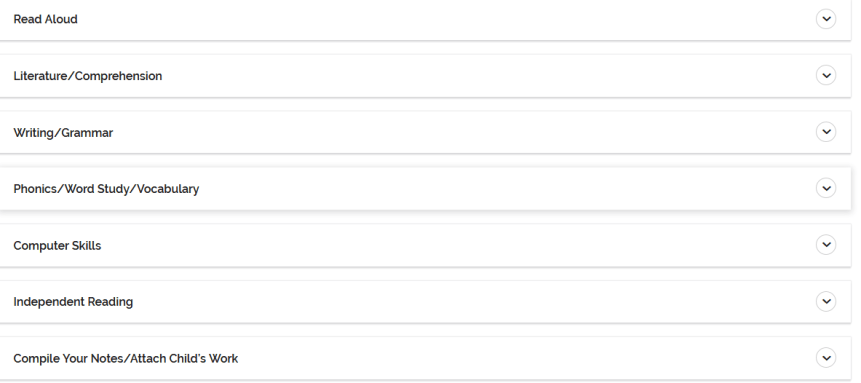
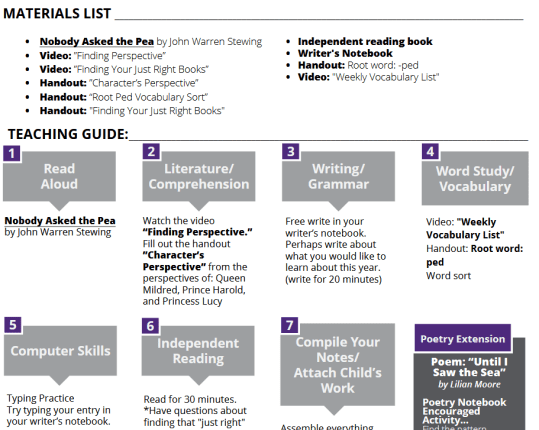
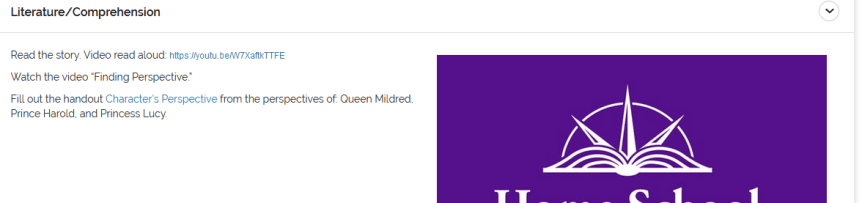
Home School Navigator is an elementary English Language Arts program that incorporates the various components of English Language Arts including read alouds, literature, writing/grammar, word study/vocabulary, and independent reading. They also incorporate computer skills into some of the lessons. Both my 4th grade daughter and 6th grade son used this product. It is designed with the highest level at 5th grade but I felt that the interactive notebooks would be a good fit for him.

Homeschool Navigator 1

When you log-in to home school navigator you choose which level your child will complete. You have one month in which to try out the various levels before you are locked into a single level. Once you choose a level to start you go into month one, week one, day one. At that page there are introductory videos for both the parent and student explaining the program.  For my students I printed out the daily overview sheets and marked through anything that I did not require them to complete. Then gave them the five daily sheets so that they could use them to guide their work throughout the week.

homeschool navigator 3


I loved that Home School Navigator linked to videos of each read aloud book! This really helps limit the add on cost of ‘one more book’. It also allowed my children to complete this program much more independently. The one thing I would have changed about this part is that the videos were on YouTube. The videos were fine but we are always careful with YouTube because you never know what commercials will come up or what videos will play next.

homeschool navigator 2


For my son I had him do a few of the other activities each day but mostly he did the interactive notebook and independent reading of Number the Stars by Lois Lowry. I chose this book because it tied in well with our history program for the month and I thought it would be a great way to make those connections. The interactive notebook included bubble maps, vocabulary words, comprehension questions, and other literary components designed to be completed in a lapbook style. I thought it was very thorough without being overly repetitious.  My son enjoyed the book and did well with the questions, though he did say that he would prefer to just answer the questions and not cut out all of the pieces and make the notebook. If he were younger and going to continue with the program, I would simply have him write the answers in his notebook. My daughter however, was disappointed that she did not get to complete an interactive notebook and is excited to have them as part of her work next year.

My daughter started in the first month of the 4th grade program even though she is almost finished with 4th grade because I wanted to get a good idea of how the program worked from the beginning. She completed most of the activities for each week except that I did not always make her complete the writing and computer skills portions. I had to help her with navigation on the first day and then (aside from overriding the parental controls that we use on the computer to allow YouTube) she was able to complete the lessons independently. The days varied to some extent but most days took her about 30–45 minutes to complete the online and written work. In addition, she was assigned 30 minutes of independent reading most days.

She enjoyed the weekly vocabulary work. For her level she was working on prefixes. Her one complaint was that the books were not longer, but I think that the addition of the novel studies and interactive notebooks which come in the following month will solve that issue. There are also poetry extension activities included in some of the lessons. We did not complete those during this review but are excited to do them as a part of our continued use of the program.

I think this program does a good job of offering a comprehensive language arts program that can be tailored to the needs of your family, or individual learner. If you are just looking for a reading program you can only use the reading components or you can mix and match components to suit your needs. This can even be decided on a daily or weekly basis, for example you may decide to skip writing on a particularly busy week or a week when your child is writing for another subject. It is laid out in such a way as to make it easy for an older elementary child to complete independently. Another benefit is the ability to use the record keeping component, especially for those families in states where such records are mandatory.

If you have an elementary aged child, I encourage you to take a look at the Home School Navigator Reading and Language Arts Curriculum Home School Navigator. Their interactive notebooks are an included part of the comprehensive program and can also be purchased individually in their store. I am looking forward to using this program next year with my daughter as she completes the 5th grade level program.


Home School Navigator Reading and Language Arts Curriculum {Home School Navigator Reviews}Crew Disclaimer

Resource Library

When you sign up for the Schoolin’ Swag free resource library you will get a link and password to the library, we are adding to the library each month with new items. You will also get a bi-weekly newsletter email to keep you up to date on what we have going on.

Resource Library 

This post may contain affiliate or referral links, including Amazon affiliate links. As always I will never recommend a product that I don’t believe in and you will never be charged more for purchasing through our links. It does help pay for the costs associated with the blog.

Kids Email Review

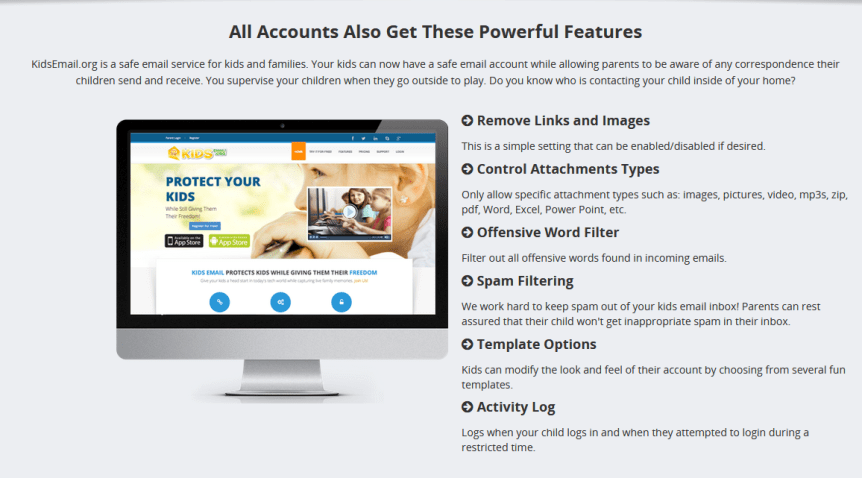
Kids EmailIn the interest of honesty, I did not jump on the opportunity to review Kids Email Safe Email for Kids by Kids Email. We had an e-mail program that we had been using without a lot of problems and I was not sure that we needed something new. However, I knew that it might be beneficial to some of my readers, so we ‘took one for the team’. My original plan was for us to use it just with-in our home to test out the features and be able to share our experiences with everyone. After testing it out and trying some of the features we are in the process of switching the children over to using it full time.

There are many great features included with this email program. There is mail monitoring, time restrictions, a mail queue, several content and language filters, activity log, and attachment controls just to name a few. While we have not yet tried out all of the features, there are several that we tried and really liked.

The mail monitoring and mail queue were features that I knew were requirements in our family for a kids email program. Both my 10 and 11 year olds were using the program and I wanted to make sure I had a good handle on any emails that were coming in. Using this program, I was able to see any email that was sent or received. Those emails were limited to contacts that I had approved. Any emails that did not fit those parameters would be sent to the mail queue. This would allow me to approve it or deny it and see what someone was trying to send to my children.

kidsemailpicture

Time restrictions would have allowed us to restrict the times and days that the children had access or even ground them from their email for a certain amount of time. We did not take advantage of this feature because we already use a timer on their devices but I could see how it would be very helpful if you only wanted them to use email after school was finished or before a certain time at night.

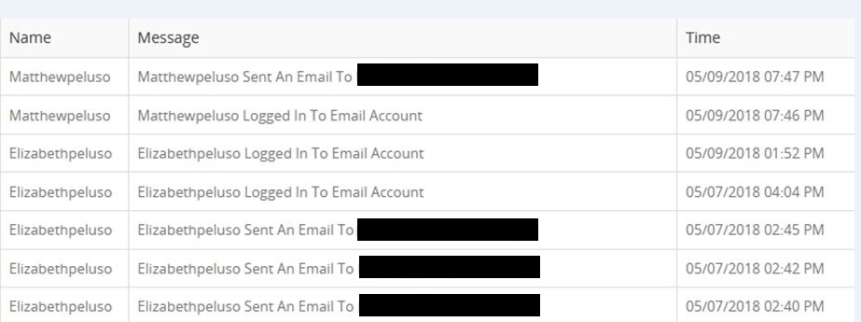
Another feature that I appreciated was the activity log. I could go in and see when they children had been logged in and what e-mails they had sent each day. This was a great way to keep track of their usage in an easy to use format.  As you can see in the picture below it let me know that date and time for each activity.

kidsemail4

As we used the program we did run into one small problem which ended up being operator error. There is a feature that allows or disables attachments. I had allowed attachments but when I sent an e-mail with a word document the attachment was not going through. When I looked into it a little further I realized that the feature had controls that allowed you to choose certain types of attachments to allow and it had defaulted to not allowing word documents. It was a quick fix, but I mention it here so that if you try out this email you know to go into all of the features and set them to allow you to use it as you feel best.

One other feature that we have not used yet, but that I think will be beneficial over the next few years as the children get older is the option to change the email from kidsemail.org to ‘kmail’ and use an interface designed for older children/teens. This is a way to start that transition with older children but still monitor and guide their usage as needed without making them feel like they are using a ‘childish’ program.

We started by simply using this email as a way for me to communicate my children’s daily tasks to them. I would send them an email at night with a list of assignments, chores, and activities for the next day. Since they enjoyed it and the features were so beneficial we are switching it to their primary email. This way they can use it to keep in contact with various family members. If you are looking for a way for your children to be able to use e-mail but still keep them safe and not have to worry about spam or ads, I encourage you to check out Kids Email Safe Email for Kids .

Safe Email for Kids {Kids Email Reviews}

Crew Disclaimer

Resource Library

When you sign up for the Schoolin’ Swag free resource library you will get a link and password to the library, we are adding to the library each month with new items. You will also get a bi-weekly newsletter email to keep you up to date on what we have going on.

Resource Library 

This post may contain affiliate or referral links, including Amazon affiliate links. As always I will never recommend a product that I don’t believe in and you will never be charged more for purchasing through our links. It does help pay for the costs associated with the blog.


Weigl Book Review

For this review I had the opportunity to check out three different types of books from Weigl Publishers and the digital content that accompanied each book. We reviewed Glaciers, A Lion’s World, and There Once Was a Cowpoke Who Swallowed an Ant. These were digital books with interactive content. For each book you receive a PDF of the book and inside the PDF there are instructions for going to the website and entering in the book code to access the digital features of the book. You do need internet access in order to use the digital content and extras but you can view the PDF of the book without internet access once you have it downloaded.

Glaciers Earths Water

The first book was Glaciers from the series “Earth’s Water” published under their imprint Lightbox. This book was geared towards upper elementary and middle grades students and packed with information. While it technically is a nonfiction book, it was so much more than a book.  There were awesome web links, videos, and other activities included as you read through the book. I could have done an entire unit study on glaciers based off of this book and the extra activities and information that were linked in the book. There were maps and even quizzes included with the book. The illustrations were excellent including real photographs as well as diagrams that were beneficial to understanding the science concepts. The end of the book included a cool science experiment. We thoroughly enjoyed this book and plan to go back and revisit it later when it ties into our regular science curriculum. I do want to mention one thing that may be an issue for some of my readers, it did discuss a timeline for glacier movement that spanned millions of years.

A Lions World

The second book we looked at was A Lion’s World belonging to our “EyeDiscover” series. Weigl says that it is intended for a K-2 interest range which I believe is appropriate but my four year old also really enjoyed it. It was much shorter with more basic (age appropriate) information. It included audio aspects that were a great way to keep younger children involved and interested. Benjamin (4) said when reading about lions and watching them run, ” That is like how fast I can run with my big strong legs.” Each page had one sentence and the sound and movement made the book a wonderful experience for my son. After I showed it to him initially he asked several times to read it again.

The third book was a fiction title that was geared toward lower elementary school students, There Once Was a Cowpoke Who Swallowed an Ant. This was a silly rhyming fictional book. You could choose to have it read to the student or for the student to read it themselves. While this was probably our least favorite book as a family, I know some other students who would have really enjoyed the silly story. The ability to have it read to them while they followed along with the words is a great strategy for developing readers.

There Once Was a Cowpoke Who Swallowed an Ant

We enjoyed these books, particularly the non-fiction titles. I recommend them for families looking to add a digital element to their reading or wanting to support developing readers with the read aloud options. Check out all of the available titles by Weigl Publishers and let us know which ones you think your family would most enjoy.

Multimedia Digital Books {Weigl Publishers Reviews}

Crew Disclaimer

When you sign up for the Schoolin’ Swag free resource library you will get a link and password to the library, we are adding to the library each month with new items. You will also get a bi-weekly newsletter email to keep you up to date on what we have going on.

Resource Library 

This post may contain affiliate or referral links, including Amazon affiliate links. As always I will never recommend a product that I don’t believe in and you will never be charged more for purchasing through our links. It does help pay for the costs associated with the blog.

Planet 316 Story Bible App Review

planet3161

When I asked to be on the review team for Planet 316 Story Bible and the companion Planet 316 Story Bible App I was thinking about my four year old but it turns out that my 10 year old enjoyed it as well. This is a beautifully illustrated children’s book of Bible stories and a really neat app by Planet 316 and WorthyKids/Ideals.

When we first started using it I would sit down with my four year old and let him pick the stories and we would use the app together. My 10 year old saw us looking at the book and app and asked to use it as well. While the stories were geared towards a younger audience she really enjoyed the technology aspect of it and it became something they could do together.

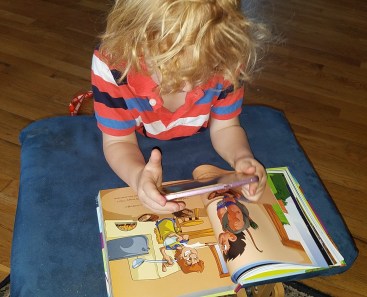
As you chose a story you could aim your phone or certain tablets (apple products) at the pages of the book and make the people and animals ‘come to life.’ They would move and talk on the screen adding an extra dimension to the reading experience. For example on the page where Noah is loading the Ark he says, “elephants check, giraffes check.” and if you touch the animals they make their animal sounds.

In looking at the book itself the illustrations are colorful and beautifully done. My son enjoyed looking through them even when he wasn’t able to use the app or have someone read to him. I also really liked that each story included the scripture reference for where it came from so that you could look it up and read the actual scripture if you chose to do so. Most of the stories are only a page or two which was a great length for keeping the attention of younger children.

We had the benefit of having this book and app for Easter this year so I used the stories leading up to Easter both with my son and on Easter Sunday in my Pre-K class at church. The children loved the stories. My son kept asking me to read them again. When I asked him his favorite stories he showed me the story where Adam was naming the animals and Noah’s Ark first but then he started showing me almost all of them and saying, “and this one.” I think it is safe to say he enjoyed all of the stories we have read so far.
Planet 316 Story Bible and Bible App My one complaint is that it was a big difficult to line up and see using my phone. The app worked on the phone but holding the book and lining up the small screen on my phone so that both myself and the children could see the characters on the phone screen was a little bit difficult. I think using a compatible tablet would make that a lot easier but we did not have a tablet that would work with the app at this time.

All in all I found this to be a fun and engaging activity to do with my four year old. I think it would be most engaging for the preschool and early elementary ages though as in our house, older siblings may enjoy using it with the younger children. This would not replace our family Bible time but was a great supplement. Check out the Planet 316 Story Bible and the companion Planet 316 Story Bible App and let me know what you think.

Planet 316 Story Bible and Bible App {Planet 316 Reviews}

Crew Disclaimer

When you sign up for the Schoolin’ Swag free resource library you will get a link and password to the library, we are adding to the library each month with new items. You will also get a bi-weekly newsletter email to keep you up to date on what we have going on.

Resource Library 

This post may contain affiliate or referral links, including Amazon affiliate links. As always I will never recommend a product that I don’t believe in and you will never be charged more for purchasing through our links. It does help pay for the costs associated with the blog.

A+ Interactive Family Math Review

With a preschooler and a new baby in the house I have been working towards more independent/self study lessons for the older children. So I was grateful for the opportunity to review the Family Math Package by A+ Interactive Math (by A+ TutorSoft Inc.)  with my oldest son. He is a sixth grader who has typically done well in math but struggled some this year with decimals and fractions this year.

Family Math

This program provides online lessons and practice questions followed by online quizzes and tests. When we got started I realized that I needed to show him where to take the quizzes and help him with general navigation around the program’s interface. After that initial help he was able to operate the system independently. I loved that the practice questions allowed him to go back and fix mistakes but the quizzes showed me the score he received on his first attempt. If a child does poorly on an attempt, you can have a new quiz created for them to complete. Since we chose the Family Math Package we had the ability to place him in the grade level that we felt best fit his needs and chose the lessons I wanted him to work on. The Family Math Package allows you to use the programmed order or skipped around to work on the areas of highest need.

We have found that it takes my son about 15-20 minutes to do a daily lesson including practice problems. This length of time is nice for us because it fits well into our philosophy of short lessons to keep attention and it is easy to fit into a busy day. He does work through problems reasonably quickly and it could take a bit longer if you have a student that works at a slower pace.

When I reviewed the first quiz result I was shocked that he only scored a 20/100.  Normally he’s pretty good at testing, and the first lesson should have been a review for him.  So, I asked him about it. “Mom, I thought I could only use the computer. I didn’t use any scratch paper.” Sometimes he does follow instructions! The moral of this anecdote; if  your learners are new to online math it may be worth it to encourage them to work their problems out on paper before answering.

Once he understood how the lessons worked and that he could use his pencil and paper to figure the answers things went smoothly. This week he even came up to me all excited, “Mom, I got a 100, that is three 100s in a row!”

I love all of the reports and data that I can access to keep track of how he is doing without having to constantly look over his shoulder. I can see how he did on the practices and worksheets, what his averages are, what lessons he has completed, and other useful reports from the admin panel. You can see some examples of reports that I had for my son below.

We have enjoyed using this program. For our family, I do not think it would work as a standalone math program this year. My son needs a bit more instruction and practice but it made an excellent review for him and helped him understand some areas he had been struggling with. With the instruction, practice, and quizzes it could be a complete math program for many students depending on the ease at which they learn new math concepts. I intend to use this program to continue reinforcing math concepts and introduce new concepts. He enjoyed the immediate feedback of the online grading and the ability to go back and see what he missed.

If you are looking to foster some independence in math or to review skills that your child is struggling with I suggest checking out the Family Math Package by A+ Interactive Math (by A+ TutorSoft Inc.). If you want even more automation they also offer an Adaptive Math Curriculum that has the student go through pretests and then gives them lessons based on the results of the pretests. You can click below to read reviews about that program from some of the other Crew members.

Family & Adaptive Math Online {A+ Interactive Math Reviews}Crew Disclaimer

When you sign up for the Schoolin’ Swag free resource library you will get a link and password to the library, we are adding to the library each month with new items. You will also get a bi-weekly newsletter email to keep you up to date on what we have going on.

Resource Library 

This post may contain affiliate or referral links, including Amazon affiliate links. As always I will never recommend a product that I don’t believe in and you will never be charged more for purchasing through our links. It does help pay for the costs associated with the blog.