
Emotions can be intense and confusing for young children. Even as adults, we sometimes struggle to put our emotions into words, and it is often much more challenging for young children. I was excited to get the chance to review Spark’s How Does Bear Feel?: A Social Emotional Learning Tool for Timberdoodle.
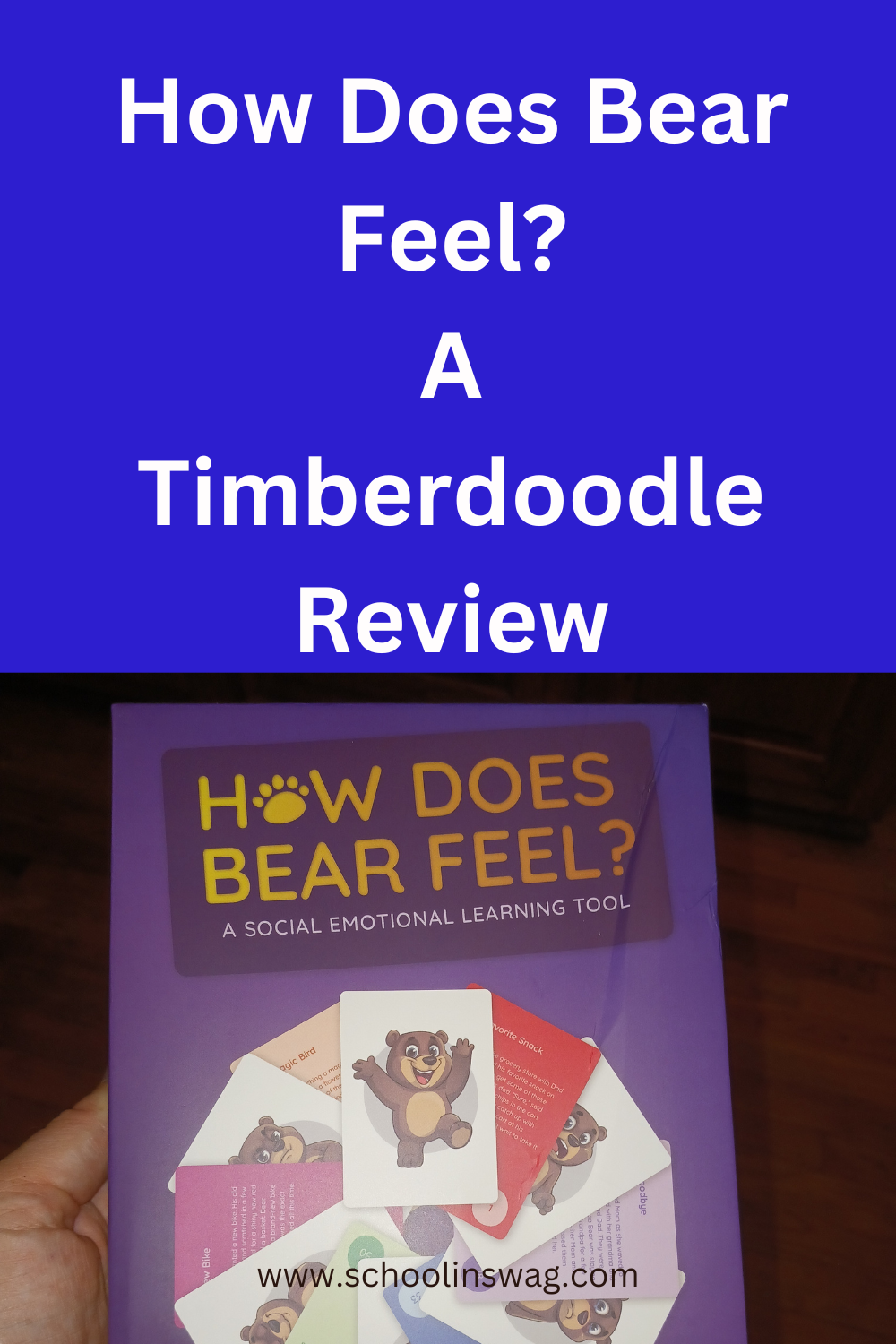
What is How Does Bear Feel?
How Does Bear Feel? is an activity that teaches children about different emotions and helps them recognize the body language cues associated with those emotions. The kit includes 50 double-sided story cards (100 stories), 20 bear emotion cards, and an instructional card.
You read a story card aloud, and the students help to pick out which of the bear emotion cards they think the bear would feel based on the story. Then, they can also talk about how the card displays that emotion.

For example, the big smile shows he is happy. The open mouth and arms up show a surprised bear. The crossed arms and frown show an angry bear.
The other side of the instruction card also shows a miniature version of each of the emotion bears and names the emotion.
How Did We Use How Does Bear Feel?
I used How Does Bear Feel? with my son, who is just finishing up kindergarten. He sometimes struggles with expressing and handling his emotions. We sat down and made it a game. I would read a card, and he would find the emotion bear he thought matched.
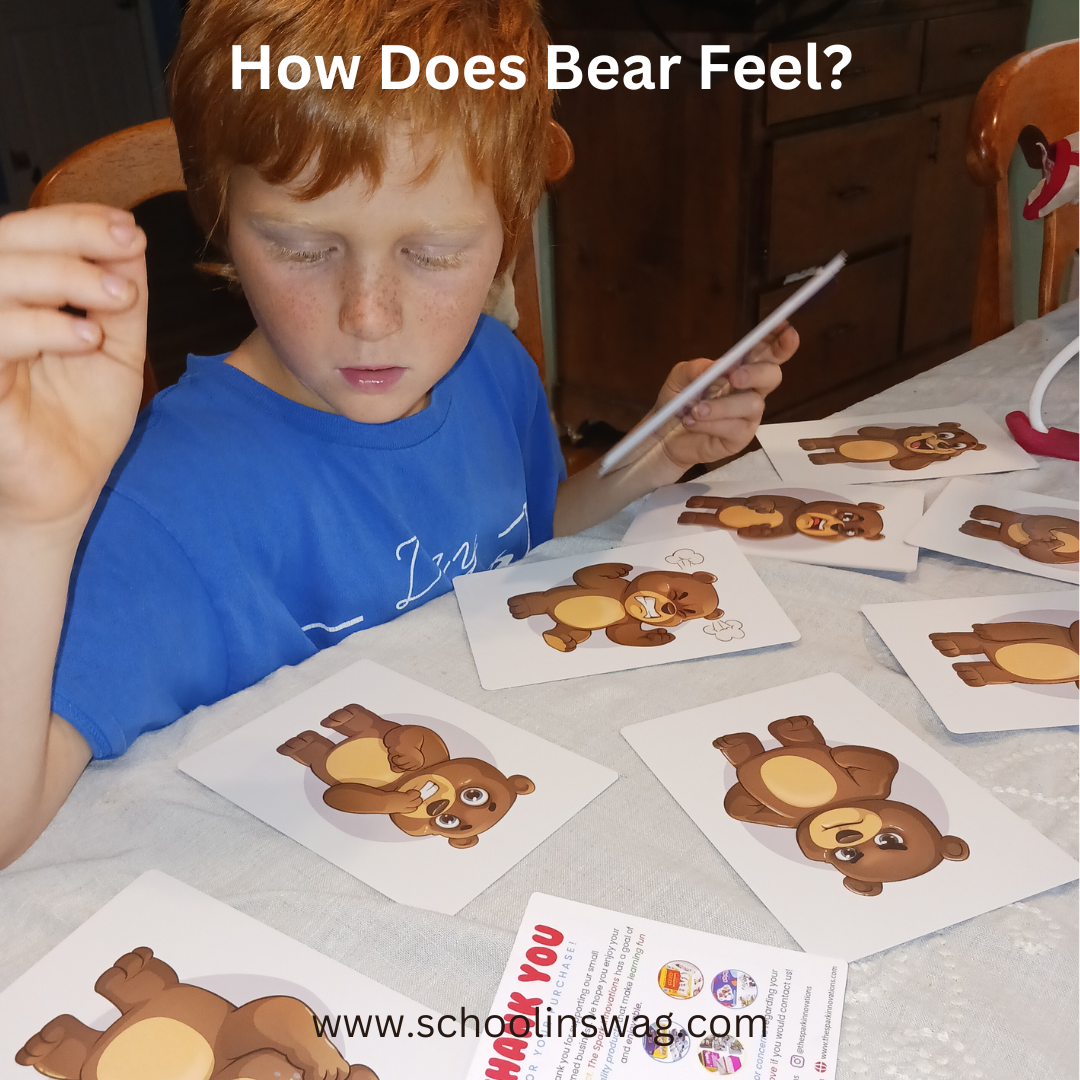
Then, he would name the emotion and tell me why he thought that was the right bear.
Sometimes, I would ask him about other emotions that might also be correct to help him think about the situation.
For example, a bear might be happy and surprised simultaneously. He enjoyed the game and had no issues understanding how to play.
You could also use the bear emotion cards to help students talk through their own experiences or make up different scenarios that apply to them.
What Did We Think?
Overall, I thought that How Does Bear Feel? was a great tool for helping young students learn to understand and talk about emotions. I really appreciated that it not only helped them name the emotions but also examined body language to help them recognize and understand body language in others.

I appreciated that it had twenty different emotions to help students work through different nuances of emotion and see that they can feel a variety of emotions in any one situation. I also liked that it was flexible in the amount of time spent using the product. You could do a card a day in just a minute or two. You could also sit for as long as the student was interested and go through different story cards.
This product is generally great for ages three to six but could also be used for older students struggling in this area.
If you have a young child who is struggling with expressing emotions, understanding social cues, or handling big feelings, go to Timberdoodle and check out How Does Bear Feel?. You can purchase it individually or it is included in their Pre-K kit.