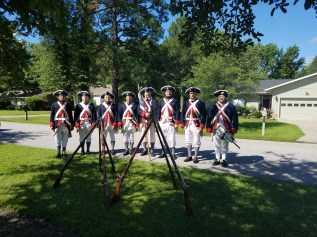
The War Before the Revolution

As I began our studies this month of the Revolutionary time period I also wanted to cover the French and Indian war. Some of you may recall that we went to see Fort Dobbs a couple of weeks ago and started the conversation about that war.  Being honest, this is a war that I didn’t know a great deal about prior to our studies. I’m sure it was probably covered at some point in my history classes but I didn’t remember much about the war. It is always a fun experience to learn alongside my children and one of the many benefits I’ve found to the homeschool experience.

This week we read the chapter from America’s Story that covered the French and Indian war and had a great meal time conversation about the war and its implications. My children already knew a bit about Cajun culture so they were very interested in the part about the Acadians being relocated to Louisiana. My son wanted to cook gumbo to go along with this new knowledge but we didn’t have the ingredients to we agreed to add it to the meal plan sometime soon.

In looking at project ideas for this month the children have chosen topics but not yet narrowed down their actual projects. Matthew will be studying Nathan Hale and Elizabeth will focus on Rachel Revere and how she helped her husband Paul Revere.  I believe these topics will help them go a little deeper into the war and get an understanding that goes beyond the facts and dates. If you are looking for ideas for your students you could consider other notable names such as Benjamin Franklin or Abigail Adams. There is a great list of people and information here to get you started.  You could also focus on home lives, the day to day life of a soldier, or the difference in how the war was viewed by a Loyalist and a Patriot.

We did a cute chalk pastel of the outlines of the original 13 colonies with a black cloud representing the impending war with England off the coast. They enjoyed that lesson though the lines on the map were a bit more difficult than some of the other chalk pastel lessons they have completed.

Elizabeth really enjoyed reading the Magic Tree House book Revolutionary War on Wednesday this week. It is a bit on the easy side for her reading level but she was able to tie in what was in the book with what she already knew about the Revolutionary War.

We watched an episode of Liberty’s Kids this week as well. We watched the episode about the Marquis de Lafeyette which was of particular interest since we had seen him being portrayed by a historian in Williamsburg last month.  While we will not watch the whole series this month (there are about 40 episodes) we hope to watch one or two episodes each week.

Next week we will delve into the Revolution itself more thoroughly. We hope to go over a couple more chapters in America’s Story as well as some of the other books that we have. Matthew will be reading The Diary of Joesph Plumb Martin next week as well.  One of our meals next week will be a typical meal for a Revolutionary War soldier.

I’d love to know what you did in history this week. Please feel free to share in the comments.

If you would like to join us on this journey through US History, join our mailing list and get access to our free library. Each month I’ll post a list of resources and ideas for the time period we are going to cover the next month. You can learn more in our post Our Journey Through History.  Colonial and Revolutionary resources are currently posted.

When you sign up for our free resource library you will get a link and password to the library, we are adding to the library each month with new items. You will also get a bi-weekly newsletter email to keep you up to date on what we have going on.

Resource Library

Our study of Sally Clarkson’s new book The Lifegiving Table starts tomorrow and I am so excited about this book and the message that she is sharing. We can use our tables to disciple our children and all of those that come through our homes. We can give them rest, nourishment, comfort and so much more.  I invite you to join us on this journey as we study through the book. I believe it has the power to transform families.  i will post in the facebook group tomorrow with our first assignment and on Wednesday I’ll have thoughts on the blog and in the group. To learn more or to join us in this study check out this post.

Finally, Not Consumed is having a great sale on their hymn studies. These are great ways to includes holidays and seasons into your studies while also focusing on God.  We have used them in the past and really enjoyed them. Her missionary study (which we are using this year) is also on sale right now.

There is also a one day sale going on over at You Are an Artist. Everything is 25% off for Columbus Day.

This post may contain affiliate or referral links. As always I will never recommend a product that I don’t believe in and you will never be charged more for purchasing through our links. It does help pay for the costs associated with the blog.


Studying the Great Artists

20171002_111136

If you have followed this blog much you have seen the chalk pastel program that we do to work on art skills. We absolutely adore the program and the children have fun using it.  In addition to these art lessons we wanted to make sure to continue to cover famous artists and their works.  It is our goal that the children be familiar with and introduced to a wide variety of works and artists. We do not emphasize memorization but familiarity and enjoyment.

I have found that we do better when we spend a few minutes each week for a longer period of time (we started at a year but have settled into a semester) studying one artist.  When we tried to do multiple artists at once or an artist a week.

When we started studying artists we used Confessions of a Homeschoolers program, The World’s Greatest Artists.  I still use a few things I gleaned from that program but for the most part we go our own way. We do use the same series of books as our spine, Getting to Know the World’s Greatest Artists. This semester we are studying Georgia O’Keefe.

For our studies we will read through the book on O’Keefe that was mentioned above, a few pages each time we study her. We will also choose some of our favorite paintings of hers to hang on the wall of our school room.  This can be done by buying a used art book that has some of her pictures and removing them or finding public domain prints that can be printed off at home or staples (we don’t have a color printer so I use staples for these if we don’t have any in an art book). I have found that having them up around the room for a semester helps to make them more familiar to the children. Over the course of the semester we will choose some and do a picture study, talking together about that they are, how they were done, what emotions we feel when we see them.  We will also do some hands-on activities. For example, Georgia O’Keefe was known for her large pictures of flowers. So this week the children each painted a large flower painting.

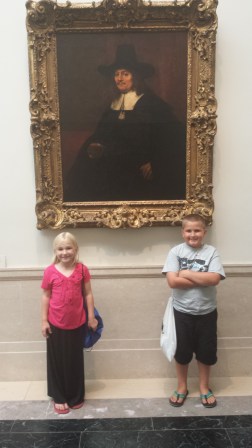
Once we have gone through the Georgia O’Keefe: Getting to Know the World’s Greatest Artists book we will look at other books about her.  One such book that we are hoping to read is My Name is GeorgiaWhenever possible we try to find art museums or galleries that have works from the artist we are studying that we can visit. This is not always possible due to distance but we have found it to be a great experience when we could work it out. The kids were very excited a couple of years ago to get a chance to see this Rembrandt over the summer prior to us studying his works.

11694848

One of the parts of artist study that we struggled with most in those first few years was figuring out how to fit it in amidst lots of other things. We wanted to cover it and felt it was beneficial but it got pushed to the side in favor of reading, math, Bible, etc.  When I found Tauna Meyer’s Loop Scheduling course and information I realized that loop scheduling was the answer to my problem.  She blogs over at Proverbial Homemaker and has a great course and support group for learning to use loop scheduling.  This allows me to keep a good rotation going.

We have studied many other artists including Da Vinci, Rembrandt, and Rockwell. Next semester will probably be  Grandma Moses. I’d love to hear what artist you are studying or which one has been your favorite to study. Leave a comment on the post to tell me about your artist study.  We are intentionally choosing American artists this year to loosely tie into our American history study. In years past we have chosen artists based on the time period as we did a chronological study of world history.

If you are thinking that you love the idea of artist study but don’t like the idea of creating your own program like we did, you can always check out the programs at Schoolhouse Teachers. They have several great courses for artist study.  If you have a high school student that needs credit they have a great class called Art the Timeless Treasure which studies art and architecture.  For middle school ages they have ‘A Century of Art‘ which studies art from 1870-1970 and gives students the opportunity to try out different styles. If you are studying world history or Africa in particular they have a course on South African Art. So many different options to choose from.  If you are not familiar with this program you can try an entire month out for just $5, this includes not just these art classes but over 300 other classes for all subjects.

In all of this I hope you take away the idea that studying artists can be fun and rewarding. It doesn’t have to be boring and it doesn’t’ have to be a big burden and weight added to an already busy schedule.

When you sign up for our free resource library you will get a link and password to the library, we are adding to the library each month with new items. You will also get a bi-weekly newsletter email to keep you up to date on what we have going on.

Resource Library

This post may contain affiliate or referral links. As always I will never recommend a product that I don’t believe in and you will never be charged more for purchasing through our links. It does help pay for the costs associated with the blog.


Wrapping up Colonial History-Week 4

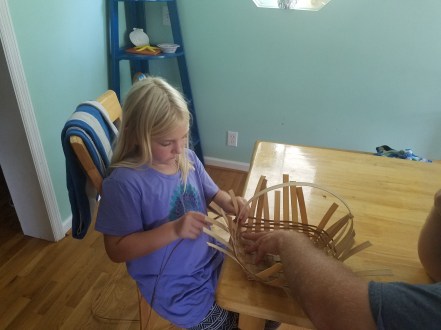
We spent the week wrapping up our study of colonial history and getting ready for the Revolutionary War era. We spent one evening sipping hot apple cider while I read a chapter from America’s Story Vol. 1. It always amazes me how much they enjoy listening and that they continue to ask for more. Afterwards, my daughter took the pages I had printed to bed with her so she could look at the pictures and maps. We also read some from some of our other selected colonial history books. Elizabeth finished up her colonial basket and Matthew finished his puppet play.

20170924_154135

I think Elizabeth was surprised that basket weaving was not as easy as it looks (or as easy as weaving paper) but her basket turned out great and she is excited to try a more complex basket soon.  She is entering her basket into our state fair this month as one of her 4-H projects.

On Friday we had the opportunity to go to Historic Bath, NC with a group of our friends. They were able to tour one of the historic homes, see the oldest church in North Carolina, and participate in several projects. One of the most interesting things that happened on the trip was learning that the home we were touring belonged to ancestors of a relative (by marriage) of ours. The kids really enjoyed that connection.

The kitchen was my favorite part of the tour (you may notice a trend, I enjoy cooking and eating 😉 ). It was a reproduction and during parts of the year they actually use the fireplace and cook food for folks to see. It was well stocked with a variety of dishes and cooking equipment. My son is excited that he has seeds to try and grow gourds similar to what you see in the picture of the ladles made from gourds. They also had a large loom and linen press in the kitchen. The press makes me thankful for my dryer but the loom was of particular interest to my daughter who has been interested in them since our trip to Williamsburg.

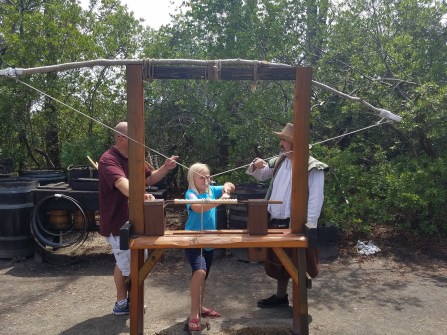
They had an opportunity to write with a quill pen and make rope during our tour of historic Bath.  Both activities were fun but the rope making was hands down the favorite of my children and most of the others that were with us. Historic Bath was a coastal town that primarily dealt in naval stores so rope making would have been a common task. We learned to make rope using a hand cranked machine, though it wouldn’t’ be long before they would have used steam powered machines to help with that task.  The tour in Bath was only a couple of hours but a fun time and really helped to wrap up our colonial studies.

If you would like to join us on this journey through US History, join our mailing list and get access to our free library. Each month I’ll post a list of resources and ideas for the time period we are going to cover the next month. You can learn more in our post Our Journey Through History.  Colonial and Revolutionary resources are currently posted.

When you sign up for our free resource library you will get a link and password to the library, we are adding to the library each month with new items. You will also get a bi-weekly newsletter email to keep you up to date on what we have going on.

Resource Library

Also, today is launch day for Sally Clarkson’s new book The Lifegiving Table. I am so excited about this book and the message that she is sharing. We can use our tables to disciple our children and all of those that come through our homes. We can give them rest, nourishment, comfort and so much more.  I invite you to join us on this journey as we study through the book. I believe it has the power to transform families. To learn more or to join us in this study check out this post.

Finally, Not Consumed is having a great sale on their hymn studies. These are great ways to includes holidays and seasons into your studies while also focusing on God.  We have used them in the past and really enjoyed them. Her missionary study (which we are using this year) is also on sale right now.

This post may contain affiliate or referral links. As always I will never recommend a product that I don’t believe in and you will never be charged more for purchasing through our links. It does help pay for the costs associated with the blog.
Meal Planning: A Step Towards Sanity

For many years I did not meal plan.  We would decide each day, typically about meal time what we wanted. Occasionally, I would be on the ball and plan that morning and therefore be able to go ahead and thaw meat for dinner.   I wanted the flexibility to change my mind and honestly it felt overwhelming to plan.  However, in the years since I started meal planning I have found that it actually saves us time, money, and stress and I still have flexibility.

meal plan photo

By planning out our meals, I know what needs to be done ahead of time. I can bake muffins the night before, take out meat to thaw, put things in the crock pot, etc. This means that there is less rushing around and adding stress to busy days. It also means I know if I need to add anything to my grocery list for the week.

Earlier I mentioned still having flexibility. I know that is one of the biggest reasons why people say they don’t meal plan. However, like most of my plans in life our meal plan is subject to change. If my husband wakes up that morning and decides he would really rather have lasagna tonight I can simply change the plan. If something comes up and we don’t get home in time to cook the pot roast I had on the menu, I can substitute something fast and easy. The plan isn’t’ written in stone but it gives us a good guideline. Planning keeps me from getting to 5pm and not knowing what we are going to have and having to try to wing it while the managing the children and being tired from a long day.

Another common complaint is that meal planning costs too much money. I think this is a misconception about  meal planning . If you buy a pre-done meal plan that involves lots of ingredients you don’t normally use and then go buy them all at full price it could cost you more money. However, I make our menu plans based off of the foods and meals we already like (or recipes that I want to try) and what we have in our house. I grocery shop based on sales and seasons. When non-perishable items like noodles, rice, beans, etc are on sale I stock up on them so that I have enough to last until they are on sale again.  We either buy in our meat in bulk or stock up when it is on sale as well and store it in our freezer. We purchase most of our produce locally and in season. We also, can that local seasonal produce for the winter months. I do supplement our produce with sales at the grocery store.  Using this method I get most of our groceries at a very reduced price but have a wide range to choose from when I plan our menus. I do occasionally need a specific ingredient or two to finish out our menus, for instance I added ricotta cheese to the list this week because I wanted lasagna and we were out of ricotta.  By using this method I am able to utilize the sales and actually save money on groceries through meal planning.

In addition to saving money at the grocery store, we save money by not going out to eat as often. If you are very busy and have no plan it can be easy to feel like you have to eat out. Whether it is a lunch out on a field trip day because you didn’t have anything to pack or a quick dinner because you are going to get home at dinner time and nothing is prepared, it can add up quick. By planning out our meals and consulting our calendar I make sure that on afternoons we will be out I have something in the crock pot or ready for the instant pot when we get home. For days we are out at field trips I plan a lunch that is easy to pack and bring. Busy mornings are often muffins or sausage balls prepared the night before.  A little bit of planning and preparation can go a long way towards saving time and money in these situations.

I often use the crock pot or instant pot (and sometimes both) in conjunction with my meal plan. On days that are busy or where we may not be in the house I can let them do the work of cooking for me and still serve my family a hot fresh meal. Those tools allow me to better spend my time focusing on other aspects of our home or family. I can throw lunch in the crock pot, spend the morning teaching the children and sit down to a meal ready to eat.

We use the crock pot for many things but a few favorites are baked potatoes for loaded baked potatoes at lunch, soups of all kinds during the cooler months, For a tasty and easy dinner I put a fresh ham steak and a jar of green salsa in the crock pot in the morning. Just before we are ready to eat I cook a bit of rice in the instant pot. I serve the carnitas from the crock pot over the rice and top with corn salsa and sour cream. It is an easy, nutritious meal that our whole family enjoys.

So many different things can be cooked in the instant pot but a few family favorites are grits (so easy in the instant pot and I don’t have to stir them the whole time), beans (dry beans to ready to eat in under an hour), rice, and meat loaf with mashed potatoes. I can put the potatoes on the bottom, the meat loaf on top in a foil boat and basically have dinner ready with no mess in very little time just add a salad or some steamed veggies.

There are many different ways to meal plan. As a homeschooling family we are home for most meals during the week and I found it was important that I planned all three meals each day.  I sit down with the calendar (so I know if we have things going on that might effect the menu) each week and plan out Sunday through Friday. Our Saturdays tend to vary so I don’t plan those ahead of time. I make a plan based on the food we have, our plans for the week, and what everybody wants that week. When I need ideas I have a list for each of the three meals that I can draw ideas from. This helps keep us from getting into the rut of eating the same thing each week.  In doing our meal planning like this each week our stress is reduced, our food budget is reduced, and we eat healthy balanced meals.

Each family is different and each plan will look different but I think having a meal plan will help most families. If you have meal planning ideas or plan to try this I’d love to hear from you in the comments.

I have added a simple meal planning template to our resource library to help you get started. Though I only plan six days a week I have included all seven days for those that would prefer that method. It includes spots for all three meals each day as well as a spot for things you need to do to prep for the next days meals.

In addition to all of the other benefits to meal planning, I find that having a plan and a well stocked pantry help make it easier for me to meet our goals of having a ‘Life Giving Home’ and a ‘Life Giving Table’.  I am so excited about the upcoming release of Sally Clarkson’s new book “The Life Giving Table“. I will be offering an online study of this book in October after the release. It can help us to bless our families and others through the simple act of gathering together around the table.

When you sign up for our free resource library you will get a link and password to the library, we are adding to the library each month with new items. You will also get a bi-weekly newsletter email to keep you up to date on what we have going on.

Resource Library

This post may contain affiliate or referral links. As always I will never recommend a product that I don’t believe in and you will never be charged more for purchasing through our links. It does help pay for the costs associated with the blog

We found the Lost Colony.. or Our Visit to Roanoke Island


20170601_143314

I knew we were starting our year off with the colonies and early American history. For several years I had wanted to take the children down to Roanoke Island when they could see the Lost Colony. The production is only preformed during the summer, so rather than wait until we started back to school we went ahead and made the trip back the end of May. It was a great way to end the school year and get the children excited about this year.

While we were on Roanoke Island we had the opportunity to explore Roanoke Island Festival Park. They do a great job showing how both the Native Americans and the Colonist would have lived. Our favorite is probably a replica of the Elizabeth II. It really brings home the size of their average ship and the conditions in which they would have traveled across the ocean. Crossing the ocean in a big cruise ship makes me nervous so thinking about the crossing in such tight quarters with so little protection is terrifying and amazing.  They also often have a blacksmith working and explaining his trade. There is a pedal lathe that folks can try working on and making table legs and other needed materials. The children can also pretend to haul buckets of water, try on some soldier equipment, and take a turn in a dug out canoe.

In addition to all of the colonial history outside at the park, they have a great museum which has costumes to try on, information about the Lost Colony, CSI style, and lots of other history from that area. The CSI style Lost Colony information is a computer program that people can use to study what we know about the lost colony and possible clues to what happened to them.


Another great site on the island is Fort Raliegh. It is a national park site so don’t forget to bring your national park passport if you have one to get those stamps! This site has a museum as well as preserving the remnants of the original settlement. This is also the location for the Lost Colony play.

In my title I mentioned finding the Lost Colony. We of course didn’t solve the mystery, though my children now have their theories. We had the chance to watch the Lost Colony theater production. It is an excellent play and I highly recommend it. I was a little concerned about the late start time but it was so engaging that even the three year old stayed awake and enjoyed watching it.  There are a few scary scenes that might be a bit intense for younger children but it is well done and an excellent addition to time spent on the island.  This production is so popular that it was in its 80th year of production this year and is scheduled to start back up the end of May 2018.

It still amazes me to think about the great lengths the colonist had to go to start this country. They endured difficult journeys, tough living conditions, leaving their families, sickness and many other hardships in order to settle this great land. They made plenty of mistakes but their sacrifices paved the way for the creation of this nation. I feel that by starting here in our history it gave us a great perspective to begin out journey. We have also talked about the Spanish Colonies in Florida, the native Americans who were already here, and even Viking explorers, but for us the Lost Colony is close to home and gives us  great starting point for further study.

If you are interested in learning more about the Lost Colony and Roanoke Island you can check out these books: Roanoke The Lost Colony, Roanoke Island, The Beginnings of English America, or The Lost Colony of Roanoke by Jean Fritz.

If you would like to join us on this journey through US History, join our mailing list and get access to our free library. Each month I’ll post a list of resources and ideas for the time period we are going to cover the next month. You can learn more in our post Our Journey Through History.  Colonial and Revolutionary resources are currently posted.

When you sign up for our free resource library you will get a link and password to the library, we are adding to the library each month with new items. You will also get a bi-weekly newsletter email to keep you up to date on what we have going on.

Resource Library

This post may contain affiliate or referral links. As always I will never recommend a product that I don’t believe in and you will never be charged more for purchasing through our links. It does help pay for the costs associated with the blog


Black-eyed Pease and Wooden Forts

20170921_190546

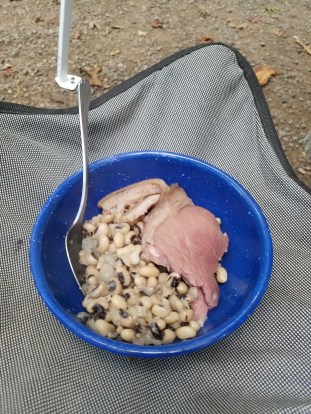
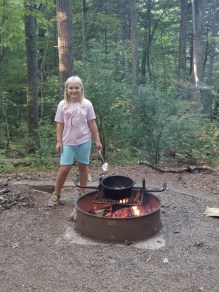
Black-eyed pease (colonial spelling) and salt pork cooked over a fire were the historical highlight of the week. We had originally planned on making the stuffed pumpkin recipe that I shared last week but it has a cook time of over three hours and we didn’t have time to work that one out. It is still on our list of things to do over the next few weeks but the black-eyed pease and salt pork were a great substitution. The kids worked together to cook them over the fire in a Dutch oven much like it may have been cooked during colonial times. They were very tasty and the kids enjoyed cooking them. For those that are interested in trying this, we simply soaked the black eye peas in water over night, put the peas, some country ham, a little diced onion, and plenty of water into the Dutch oven. We cooked it all for about an hour over the fire. You can add a bit of pepper or vinegar to taste.

20170920_180734

In addition to the black eyed pease, my favorite part of history this week was our long conversation around the campfire. We spent over an hour just talking and discussing colonial life, the timeline of events, the part that religion and economics played in development, and how it all compares to modern times.  If I had tried to read from a textbook for an hour, the children would have been bored and would not have retained most of what was said. However, by having an active discussion while relaxing as a family they were engaged and enjoyed the time.

We read several things this week to go along with our study. We read a chapter on the French and Indian war from Uncovering Exciting History by Amy Puetz, a chapter on colonial life in America’s Story, and some pages from What Really Happened in Colonial Times by Terri Johnson. My son has also been reading several books from the American Adventure series on his own time. This is a series of historical fiction books based on American history. He has been focusing on the ones from the colonial and Revolutionary time period. He has also been re-reading his books from the Christian Heritage Series: The Williamsburg Years. We don’t’ have all of them but they also have books set in other parts of colonial America.

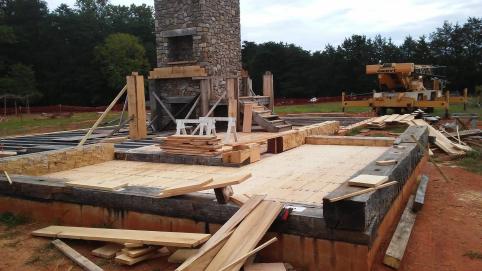
We also had the opportunity to visit Ft. Dobbs which was a fort on the western frontier on North Carolina late in Colonial times during the French and Indian War. At this point they are rebuilding the fort which should be an excellent addition to the site when they are finished. Currently, they have a model of the original fort and a variety of artifacts found on the site available on display. They had a garden and a small one room house on the property that you could view. This was a great little stop with lots of helpful information as we study through this time period. It only took us about 30 minutes to view, so it is one I only recommend if you are close or can combine it with other stops. Another option is going for one of their living history days where there would be more hands on activities.

21248516_10155086980229542_1078153441497987591_o

I think one of the biggest points of interest to my children was the type of construction and the size of the fort. While they don’t have the reconstruction finished they do have the foundation built which allowed them to get a good idea of the size. We have had the opportunity to experience various types and sizes of forts. The one they are most familiar with is Fort Macon which is a stone fort on the coast of North Carolina. It has been well preserved and appears to offer a great deal of protection. We have also been to earthen fortifications that are not much more than mounds of dirt used to strategically protect those behind them. This fort seemed safer than those earthen forts but not very large and not nearly as secure as Fort Macon. We had a great discussion about how it was built and why it would have been built in that manner.

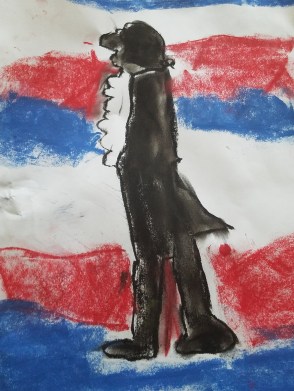
We did chalk pastels of George Washington this week. It is a bit early in our history for him but he did get his start in the French and Indian War. The children loved the lesson and I thought they turned out very nice. There is a great lesson on the 13 original colonies that we plan to do next week.

20170925_142312

Next week we will spend more time in  America’s Story Volume 1 which we are using for our spine for this portion of Our Journey Through History. We also want to do another lesson in the American History Video Course from them this year to tie into our history.  If you want to learn more about their art courses check out my review.

If you would like to join us on this journey through US History, join our mailing list and get access to our free library. Each month I’ll post a list of resources and ideas for the time period we are going to cover the next month. You can learn more in our post Our Journey Through History.  Colonial and Revolutionary resources are currently posted.

When you sign up for our free resource library you will get a link and password to the library, we are adding to the library each month with new items. You will also get a bi-weekly newsletter email to keep you up to date on what we have going on.

Resource Library

This post may contain affiliate or referral links. As always I will never recommend a product that I don’t believe in and you will never be charged more for purchasing through our links. It does help pay for the costs associated with the blog

The Next Step on Our Journey: A Revolution

Revolutionary Period (1754-1785)

20170701_095828

We’ll start the revolutionary period at the beginning of the French and Indian War (1754). It’s difficult to hold a discussion about the causes of the Revolution without a basic understanding of the political, military, and social setting in the second half of the 18th century, and many of these are strongly rooted in the French and Indian War. Of particular interest is the relationship between colonial leaders, British Parliament, and King George III. With any military conflict it’s very easy to be drawn into a discussion of battles, tactics, leaders, and campaigns. With younger learners this can quickly become overwhelming, I suggest focusing on campaigns, the big picture, as it were. You can use names, especially if they hold local relevance, but, I suggest not making a list of persons and places the focus.

I am so excited about the next step on our journey. We are not yet finished with colonial history but I wanted to go ahead and give an overview of what was coming next month to afford time to prepare and gather any resources. Our family volunteers as living historians and costumed interpreters for a local historical site. We have spent a great deal of time focusing on the time around the American Revolution and are excited about our upcoming study.

20170916_175408

Our focus will be on the “why” of the Revolution, how it affected the general population, the outcomes, and any interests of the children that arise during the study. I will cover some of the key battles with them but not focusing on dates and details.

One of our favorite resources for studying this time is the Liberty Kids video series. This series is one that the children love to watch and it teaches so much history.  We don’t watch a lot of movies in our house but we have found these to be worth the screen time.

We will also be continuing our American History Art Program. There are lessons on the Boston Tea party, Revolutionary War Uniforms, Paul Revere, George Washington and more that will tie in very nicely to the American Revolution.  If you are looking for an art program I highly recommend these chalk pastels. For more information read my full review.

We are looking forward to field trips to Tryon Palace, Historic Bath, and hopefully Brunswick Town.  We will be reading a variety of books on the Revolution. My son is especially fond of Revolutionary War flags and will be working on a project in conjunction with the flags and history.  We will continue studying selected chapters from America’s Story Volume 1 by Master Books.

I found this resource after I published the list of October Resources. I’ll be updating the list but in case you already downloaded it, check out this faith based movie about the American Revolution, Beyond the Mask. You can download it for as little as $3.99 and there is a free unit study to go with it here.

A couple additional resources that may be of interest to you are the current sale on Discovery Education Streaming Plus at the Buyers co-op. This is a great collection of educational programming. They also have a sale on Jim Hodges Audio CDs right now. He has several different collections that would work well with early American history.

If you would like to join us on this journey through US History, join our mailing list and get access to our free library. Each month I’ll post a list of resources and ideas for the time period we are going to cover the next month. You can learn more in our post Our Journey Through History.  Colonial and Revolutionary resources are currently posted.

When you sign up for our free resource library you will get a link and password to the library, we are adding to the library each month with new items. You will also get a bi-weekly newsletter email to keep you up to date on what we have going on.

Resource Library

This post may contain affiliate or referral links. As always I will never recommend a product that I don’t believe in and you will never be charged more for purchasing through our links. It does help pay for the costs associated with the blog

If you are looking for a more in-depth premade course on the Revolution you can check out this 9 week course at School House Teachers. They are currently running a special and you can get monthly membership for less than $10 a month for the whole family.

21587276_10155788980326204_7927471402727886196_o


The Lifegiving Table

21366868_10154751055561373_1099460212502287100_o


I am so excited about the upcoming release of Sally Clarkson’s new book, The Lifegiving Table. I have had the privilege of reading the first four chapters of the book and I can hardly wait to have the rest of it in my hands. I had the privilege of reading her book The Lifegiving Home and even hearing her speak. It was such a blessing to me and my family as I learned so much about making my home the home I always wanted it to be. A place of love and discipleship for my family and all those who enter our home.

I am looking forward to focusing on making my table a place of growth and discipleship. I want to use that time and place to disciple my children, love our friends and neighbors and grow in Christ. I will be going through this book chapter by chapter and writing about my thoughts and lessons learned.  I will be blogging here about the book as I go through it but I’d also like to invite you to join me in a private Facebook group where we can discuss the book together and pray and grow in a safe environment. Click here to join our book study group: Dawn Peluso, Schoolin’ Swag Book Study. I pray that we can all learn and grow together through this study. The book releases October 3rd and we will start our study on October 9th to make sure everyone has a chance to get the book prior to our start.

When you sign up for our free resource library you will get a link and password to the library, we are adding to the library each month with new items. You will also get a bi-weekly newsletter email to keep you up to date on what we have going on.

Resource Library

This post may contain affiliate or referral links. As always I will never recommend a product that I don’t believe in and you will never be charged more for purchasing through our links. It does help pay for the costs associated with the blog


An Ox Cart Ride..Colonial History Week 2

20170910_102320

Most of this week’s history centered on a field trip. We took a couple of days and visited Colonial Williamsburg. We always enjoy our trips there and this was no exception. We spent two days in Williamsburg and were able to see a variety of historical trades, buildings, and experiences.  The favorite part was a chance to ride in an ox cart. All three of the children loved it and have been talking about it since we returned. They loved making the connection with the oxen used in the old video game Oregon Trail.  My daughter loved the weaving looms and wants to go back one day when they are dyeing the threads. She is even asking for a table loom for Christmas. My oldest son thought that the little skit we went and saw was quite funny. They explained the history of hot air balloons in a very fun and comical way.

My favorite part might have been the hot chocolate. Colonial chocolate is very rich and dark with added spices. We had a bit of a sample in the tour of the coffee house. We always enjoy seeing the various trades and how they did their work. The craftsmanship and attention to detail is amazing. My husband enjoyed watching a new addition to Williamsburg, ax throwing.

20170911_122030

The primary focus of this visit was to learn about the colonial period but we also went into the Revolutionary war period a bit with some dialogues about freedom and rights. We had a chance to hear ‘Marquis de Lafayette’ and ‘James Armistead Lafayette’ speak as they gave their perspectives on the war from that of a French man who came to help us fight and a slave who was volunteered to fight as a spy and later freed after much help from Marquis de Lafayette.

While touring the Getty house they had the opportunity to learn a bit more about what education might have been like for the children in that home during colonial times. They saw letter dice that were used to play games (much like Boggle today), puzzles, and cards. They learned how to play a new card game Kings in the Corner. This was a fun game that they have already played several times at home since we returned.  It reminded me of a cross between solitaire and Skip Bo.

In addition to the field trip my son worked on his puppet show and my daughter started doing the prep work for her basket weaving for their projects this month. We also planned out the colonial dish that we will be trying this week, stuffed pumpkin.

Next week we will spend more time in  America’s Story Volume 1 which we are using for our spine for this portion of Our Journey Through History. We also want to do another lesson in the American History Video Course from them this year to tie into our history.  If you want to learn more about their art courses check out my review.

If you would like to join us on this journey through US History, join our mailing list and get access to our free library. Each month I’ll post a list of resources and ideas for the time period we are going to cover the next month. You can learn more in our post Our Journey Through History.  Colonial and Revolutionary resources are currently posted.

When you sign up for our free resource library you will get a link and password to the library, we are adding to the library each month with new items. You will also get a bi-weekly newsletter email to keep you up to date on what we have going on.

Resource Library

This post may contain affiliate or referral links. As always I will never recommend a product that I don’t believe in and you will never be charged more for purchasing through our links. It does help pay for the costs associated with the blog