Week 1: Learning about Reconstruction

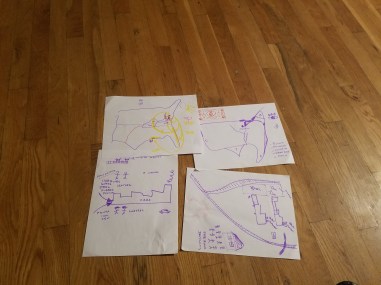
Last week in history we focused on reconstruction. We mostly accomplished this through several long dinner time conversations. My husband led most of the conversations and even helped them with some diagrams drawn to explain a few concepts they were struggling to understand. This also led to conversations about the industrial revolution and the transcontinental railroad and how all of those things tie in together.

20180211_181353

This week they are finishing up our study of reconstruction with this free US Reconstruction Lego project. This is a fun way for them to show what they learned about the destruction and rebuilding in the southern states. Anytime they get a chance to work with Legos makes them happy and I like for them to have a more tangible way for them to show what they learned.

In addition to our conversations, Matthew read a great biography of Thomas Edison that ties into our industrial revolution components. This week coming up we will spend more time on the industrial revolution. We have a tasting of foods from the industrial revolution, we are going to watch some episodes of  The Men Who Built America (we do skip one episode due to language/content so preview them for your family). They are working on researching various companies and foods from the time period for their tasting.  I’m not sure it will be the most balanced meal we have but it should be fun.

We are also hoping to fit in a little field trip to the Birthplace of Pepsi this week. This one should be a simple but fun way to see one of the inventions from this time period.  We would normally try to take in the Wright Brothers Memorial with this section but much of it is currently closed for renovations. Hopefully, we will have a chance to get back there once they re-open.  The plane that is normally on display in the visitor’s center at the memorial is currently on display in the North Carolina Museum of History which is our field trip for March.

When you sign up for our free resource library you will get a link and password to the library, we are adding to the library each month with new items. You will also get a bi-weekly newsletter email to keep you up to date on what we have going on.

Resource Library

This post may contain affiliate or referral links, including Amazon affiliate links. As always I will never recommend a product that I don’t believe in and you will never be charged more for purchasing through our links. It does help pay for the costs associated with the blog.


Deals and Freebies!

valentines sale

Educents is having a big sale! It includes lots of great products like Life of Fred (at the lowest prices ever), Hooked on Phonics, Times Tales and More.

Huge Valentines Day Freebie Bundle from The Old Schoolhouse!

Winter Olympics for Kids (Free on Kindle at the time of posting)

Snowman Paul Returns to the Winter Olympics

Kindle Fire on Sale for less than $40

Great War, Great Depression, and Jazz (1914-1935)

This twenty one year period is packed with important events that have shaped our country today.  Our plan is to spend two weeks covering World War I followed by two weeks covering the Great Depression and recovery from the Great Depression.  We are going to study jazz and particularly Duke Ellington and Louis Armstrong throughout the month as well.

We are looking forward to a trip to our NC History Museum to see the World War I exhibit. If you live too far to make that trip, there are still some great resources available on the website. The difference in the military rations from the Civil War to World War I is much more significant than the differences between previous wars. My son will be looking into those differences and how it was shaped by the industrial revolution. We will also look into how the war affected what was being eaten in the United States by civilians. While there was not official rationing of foods there were very directed efforts at food conservation.  We will cover the causes of the war and a basic timeline of American involvement in the war. We will also cover how the war effected the United States.

There are many books that go along with World War I but one of our favorites is Finding Winnie which I will use as a read aloud. We have the book, War, Peace, and All That Jazz to help guide our discussions and aid the children in any research.  One of our favorite movies about World War I is Sergeant York and we plan to have a movie night and watch this movie.

The Great Depression can be a difficult concept for children but we will cover that by explaining for about the stock market and the economics of the situation. We will also talk about some of the ways that people ‘made do or did without’ and how self- sufficiency benefited many with gardens, backyard chickens, etc.


We have just finished up a composer study of John Phillips Sousa and are going to devote that musical appreciation time to learning about jazz artists. We will be focusing on Duke Ellington and Louis Armstrong though I will share some music from a few other jazz artists. We will use Duke Ellington: The Piano Prince and His Orchestra and from our regular composer study series we will use Duke Ellington (Getting to Know the World’s Greatest Composers).

If you have signed up for our free resource library you can find a six page list of various resources that coordinate with this month’s study as well as a historical overview of the time period. I am looking forward to sharing more about this period as we work our way through it. I am also looking into a couple of new resources that may work well, so stay tuned for those. If you have a favorite book or resource for this time period I’d love for you to share it in the comments.

When you sign up for our free resource library you will get a link and password to the library, we are adding to the library each month with new items. You will also get a bi-weekly newsletter email to keep you up to date on what we have going on.

Resource Library

This post may contain affiliate or referral links, including Amazon affiliate links. As always I will never recommend a product that I don’t believe in and you will never be charged more for purchasing through our links. It does help pay for the costs associated with the blog.
SchoolhouseTeachers.com is offering you a heartfelt opportunity to pay one low annual membership fee ($99 per year) for life to get a wealth of courses and resources for your whole family – at one low price! And to sweeten the deal they are even including a free Dove Chocolate bar for US customers!

valentines sale

P is for President!

Do you have a child interested in the presidents? My oldest finds them fascinating. He loves to listen to audiobooks, read books, and find other resources about various presidents. We have even had the opportunity to take him to visit several different presidential homes and birthplaces.

He is really looking forward to our President’s Day studies. President’s Day is celebrated on the third Monday of February in honor of George Washington’s birthday. It is a day that many focus on George Washington and Abraham Lincoln, but it is also used to honor all of our nation’s presidents.

For the younger crowd, it is a great time for fun stories, crafts, and great snacks. For the older children, there are also great math activities, writing prompts, history lessons and lots more. This is one of the holidays that is easy to incorporate from preschool all the way to high school. The focus can be as narrow as George Washington or as broad as the Presidential History of the United States.

What Are We Doing For Presidents Day?

In our house this year, we are going to do some of the fun preschool snacks, a coloring page, and a couple of cute picture books for the youngest (though I’m sure everyone will enjoy the snacks). The parfaits will probably be our go-to snack since it is simple and nutritious. My older children love making pancakes, so I may let them try their hands and the presidential pancakes.

Teens and Tweens on Presidents Day

The older children will each pick a presidential biography to read for their reading assignment for the week. In addition, we will use some of the grammar sheets below as a nice review of some concepts that they seem to be forgetting in their writing. We have spent a great deal of time studying Washington and Lincoln already this year as we go through Our Journey Through History. Therefore, I plan to focus most of our activities on other lesser-studied presidents.

I will also probably include some time to watch the 60-second videos about different presidents. We also may spend some time focusing on the presidents from the Reconstruction and Gilded age which is the period of time we are focusing on this month in  Our Journey Through History.

We have the audio version of Heros of History Theodore Roosevelt that we are listening to this month as well. Depending on how our time is going and how interested the children are, we may incorporate some of the other activities into our lessons that week.

I’d love to know how you celebrate President’s Day and what resources you think your children will most enjoy. Let me know in the comments. Also, if you are looking for any other resources, ask in the comments, and I’ll see what I can find.

Printable and Online Resources for Presidents Day:

Presidents Day Books:

When you sign up for our free resource library, you will get a link and password to the library. We are adding to the library each month with new items. You will also get a bi-weekly newsletter email to keep you updated on what we have going on.

Resource Library

This post may contain affiliate or referral links, including Amazon affiliate links. As always, I will never recommend a product that I don’t believe in, and you will never be charged more for purchasing through our links. It does help pay for the costs associated with the blog.

Deals and Freebies

FREE Historical Fiction Writing Cards from WriteShop (must subscribe to e-mails).

Little Women is only .99 on kindle right now! (Amazon prices are subject to change always check before purchasing.)

FREE Baby Yoda Art Lesson from Nana!

All About Learning has released the best deal of the day: A FREE Snowman Pack with reading and spelling activities for a variety of ages.

Free Makeover Your Morning 5 Day Challenge! This is a great way to help re-focus and get your day off on the right foot.

Harry The Happy Mouse (Free on Kindle)

Illustrated Would You Rather Book (Free on Kindle)

Free Help Your Child’s Memory Book from All About Learning Press!

Homeschool Review Crew Weekly Link Up

Brother Against Brother: Rations, Forts, and an Underground Railroad

We had a week full of history! We started our week focused on the Underground Railroad. I had planned on reading the book, If you Traveled on the Underground Railroad, over the course of several days. The children liked it so much that they asked me to continue and we read it all in one session! That evening we had a good family dinner time discussion about the Underground Railroad as well as some of the people and events surrounding that time.

20180125_110621.jpg

My daughter has been working diligently on completing her Freedom Seekers badge for American heritage Girls. This badge focuses on the Underground Railroad. She did a hymn study of Amazing Grace and learned about its writer, John Newton, who was a slave trader that later fought against slavery. She also read a biography about Harriet Tubman.

The children also had the opportunity to work with their father and build a nearly life size replica of a cannon that would have been appropriate to the time period. This replica will be used to teach other children about how cannons were used, loaded, and fired. They enjoyed the opportunity to build and are looking forward to using it next weekend to teach other children.

My son spent his project time this week researching Civil War rations from the perspective of both the Southern and Union Armies. He compiled a list of both and created a menu plan for dinner one night using the Southern rations since we live in a Southern state.

This slideshow requires JavaScript.

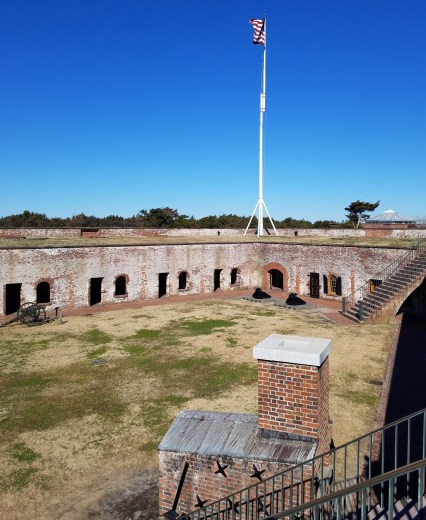
We had the opportunity to travel to Fort Macon for a field trip this week as well. Fort Macon has a rich military history involving multiple wars but we focused on its part in the Civil War and the architecture this week. The children were able to tour the fort as well as look at some of the various exhibits. Fort Macon is North Carolina’s first state park and it is very well done. The historic site has a great collection of exhibits and information complementing the original masonry construction. They have displays showing rations, bunks, uniforms, artillery, and other artifacts from its time in use. The fort was actually used from the Civil War through World War II and is now a part of the North Carolina Park Service.

They also feature displays on ecology and conservation in the adjacent visitors center. We did not have time this week to enjoy those displays but they are a wonderful addition to the trip and all included at no cost. It is a comfortable day trip for us and we plan to go back later in the spring as we study other times when the fort was in use.

When you sign up for our free resource library you will get a link and password to the library, we are adding to the library each month with new items. You will also get a bi-weekly newsletter email to keep you up to date on what we have going on.

Resource Library

This post may contain affiliate or referral links, including Amazon affiliate links. As always I will never recommend a product that I don’t believe in and you will never be charged more for purchasing through our links. It does help pay for the costs associated with the blog.

Reconstruction and Gilded Age (1866-1914)

2013-11-09 10.44.21There is so much happening during this time: people are recovering from a long and costly Civil War, railroads are expanding, inventions and big business are on the rise, the Panama Canal is dug, the Great San Francisco Earthquake, Steamboats, and the Statue of Liberty.

Growing up in Eastern North Carolina the Wright Brothers were an important part of our state history studies. I read the Wright Brothers at Kitty Hawk  so many times that the cover was falling off. My children had the opportunity to go visit the monument and visitors center in Kitty Hawk several years ago and really enjoyed it. They are looking forward to studying this aspect further. They have also enjoyed reading Suzanne Tate’s books including Helping the Wright Brothers.

In addition to studying the Wright Brothers we will spend some time studying various inventors and business men such as Henry Ford, Andrew Carnegie, Cornelius Vanderbilt and Thomas Edison. We will watch the History Channel documentary, Men Who Built America to get an understanding of some of these men and the effects their lives and businesses had on America. ( I do recommend previewing these to make sure they are appropriate for your family. Most of them are very good but we do skip the first one due to language and content.)


Food should be a fun topic this month. While finding actual recipes was a bit more difficult for this time period there were a lot of new companies and foods that were becoming popular. Including the invention of ‘Brad’s Drink’ that we know today as Pepsi. My plan is to work with the children in researching some of those new products and hold a tasting. We may also field trip to the Birthplace of Pepsi. I did find recipes for the Wright Brothers breakfast so that will probably make it onto the menu plan sometime in February as well.

We will learn about Teddy Roosevelt and listen to Theodore Roosevelt: An American Original. I want to at least touch on Ellis Island and the Statue of Liberty as well as the Panama Canal. To add in some great literature of the time period will we read some of Mark Twain’s short stories, Complete Short Stories of Mark Twain (only .99 on kindle at the time of posting). We will also enjoy some of the Little House on the Prairie series during our reading time.

I’ve included a brief synopsis of this period in history below. I’d love to hear what your favorite resources are and what you want to learn more about in the comments. Don’t forget to check out the resource list for this month in the free resources library.

Reconstruction and Gilded Age (1866-1914)

1865 closed a brutal chapter in American History. At the dawn of the last third of the 19th Century, Union forces still occupied much of the south. Despite Lincoln’s insistence that the southern states had no right to leave the Union, the former Confederate States were forced to apply for readmission, complete by 1870, to the United States.  Military governors oversaw the formation of new assemblies and congresses and stipulated that states accept the 13th, 14th, and 15th amendments to earn readmission.

Death, destruction, and the scars of war persisted throughout America. America’s greatest maritime disaster occurred during a Prisoner of War Repatriation trip (Steamer Sultana).  The south was deeply segregated, racial divided, and often at odds with northern political influence. Rural working and living conditions were by many accounts very harsh. At the same time, railroads were pushing east and west, soon to meet at Promontory, UT (1869).

America completed its ‘Manifest Destiny’ and settled the entire continent, accepting the lower 48 states by 1912 and claiming or purchasing territories in Hawaii (1894) and Alaska (1867).  Rail soon linked all major cities stimulating a great migration.  Farming, once Thomas Jefferson’s ‘noble occupation,’ comprised 58% of the population in 1860, by 1910 only 30% still farmed.  America became an industrialized nation, textiles, factories, trains, steel, steam ships, great naval ships, electricity, communications, and consumer goods soon became norm.

Fueled by rapid industrial growth and emerging technologies industrial titans earned huge fortunes. They provided transportations (Vanderbilt), oil (Rockefeller), steel (Carnegie), financial reform (J.P. Morgan), electronics (Edison/Telsa), and soon automobiles (Ford).  These captains of industry provided unprecedented access to goods and services. For this, and their creativity, energy, and abilities, they created a new class of ultra wealthy in the United States. Rockefeller and Carnegie went back and forth throughout their careers, each holding the title of world’s richest man for periods. At his death in 1937, John Rockefeller held 1.5% of America’s wealth (more than four times that of Bill Gates).  The wealth represented by these families stood in stark contrast to the working class, often employed by the same firms. Fueled by public outrage at the wealth divide, governments passed the 40-hour workweek, health and safety standards, anti-trust legislation, and child labor restrictions. Eventually the national standard of living would creep upward, greatly expanding the middle class.

America emerged on the world stage as a burgeoning super power, defeating the Spanish in Cuba and the Philippians (1898), sailing the Great White naval fleet around the world (1907), and developing industrialization and technologies at an unprecedented rate. But global war, on a scale not before seen, was on the horizon.

If you are not already signed up to get our monthly list of history resources as well as all of our other freebies, sign-up below. I’ll send you an email every other week letting you know what new stuff we have on the blog and in the library.

When you sign up for our free resource library you will get a link and password to the library, we are adding to the library each month with new items. You will also get a bi-weekly newsletter email to keep you up to date on what we have going on.

Resource Library

This post may contain affiliate or referral links. As always I will never recommend a product that I don’t believe in and you will never be charged more for purchasing through our links. It does help pay for the costs associated with the blog.

Homeschool-Weekly-Blog-Link-UP-new-2


Civil War Medicine and an Iron Clad Ship

20180110_104153

This was our first real week back to school and history from the holidays. The break was nice but we (or at least I) were ready to be back in our routine. We started off history with a field trip to one of our state historic sites, the CSS Neuse, a confederate ironclad that was salvaged from the river in the 1960s. If you live nearby, I highly recommend this trip. It was very informative, fun, and affordable.

We started the time there with three demonstration stations. At one station, they learned about spinning wheels and weaving, at one station Civil War medicine, and at the third they were able to learn all about local battles and how railroads and ports played an important role in the war.

This slideshow requires JavaScript.

One thing the children found really interesting about the Civil War medicine presentation was that the basic surgeical tools used then are remarkably similar to some of the tools still in use today. However, modern medical techniques greatly increase battlefield survivability. More importantly, the understanding and control of infection is vastly better today and makes a huge difference in survival rates.

After the demonstrations, the children each received a scavenger hunt to help guide them through the museum and learn more about the CSS Neuse and the Civil War. This was a fun way to learn in a more self-guided manner. The remains of the ship are preserved in the museum and really neat to see. They also have a full size replica that is across the street and helps people get a better idea of what it would have looked like during the war. There was information about the ship itself, various battles, life during the war and other relevant topics presented on display boards with artifacts, models, and videos.

Once they completed the scavenger hunt, they had a chance to work on a small weaving project using a cardboard loom. It was a great way to finish up the trip and leave them wanting to learn more. We are hoping to go back and a spend a day learning more about the fiber arts aspect of the time period, an unexpected bonus for what was intended as a military history trip.

This was a great way to kick start our studies and a field trip I highly recommend to those in this area. If you are not local they have some resources on the website you can use to get more information virtually and there are other great Civil War historic sites listed on the National Parks website or many of the websites for various states.

Next week we are working on a timeline of the Civil War and learning more about some of the battles. The children will work together to complete the free printable timeline project found here. Then they will each choose a battle, or campaign,  to learn more about and present to the family. To help them with their research I have found several sites that have good information. The National Parks Service and this Ducksters timeline which is geared more towards children. In addition we may use the World Book online resources that are included with our Schoolhouse Teachers membership.

What Civil War field trips have you enjoyed? Please let us know in the comments. Don’t forget we have a list of Civil War resources in the free resource library.

When you sign up for our free resource library you will get a link and password to the library, we are adding to the library each month with new items. You will also get a bi-weekly newsletter email to keep you up to date on what we have going on.

Resource Library

This post may contain affiliate or referral links. As always I will never recommend a product that I don’t believe in and you will never be charged more for purchasing through our links. It does help pay for the costs associated with the blog.

january schoolhouse sale

Brother Against Brother: January History Resources

 Brother against Brother 1860-1865

neuse-painting1
Paintings by Stephen McCall © CSS Neuse State Historic Site

States rights, slavery, abolitionists, agrarianism, capitalism, central government, and more contribute to another dark chapter. States choose to leave the nation, and the nation refuses to allow their secession.  States are pitted against states, family against family, and in some cases brother against brother.  In the end the grand Union would be retained, albeit at a terrible cost, more dead than all other U.S. wars combined.  The union emerges as a power in the hemisphere, primed to complete the conquest of the continent and stretch influence into the Caribbean, Latin America, and the Pacific.

I could easily spend an entire year just studying the American Civil War. There are the political aspects, the war and battles, the family and home front, and the lasting implications. However, since I only have one month and need to stay on schedule, we are planning on focusing on the political aspects of the war and life during the war. My son is highly interested in the battles so he will probably do some independent study on those. While this is a highly controversial subject in current news and times, I feel that it is an important part of our history and we would do well to cover it as accurately and unbiased as possible. In addition to telling you about some of the resources that we will be using as a family, I’m including some information at the end of this post to help you understand the various names and points of view involved in this one war.

We are hoping to fit in several field trips this month and have already scheduled one to see a Civil War ironclad at one of our state historic sites. In addition to seeing the ironclad itself, we will be doing activities with medicine, hygiene, toys and the uniforms of the era.  Living on the East coast of the United States we have many battlefields and museums with information about this war.  We even have a local battlefield in our own town. It has a beautiful hiking trail that allows us to combine hiking and history.

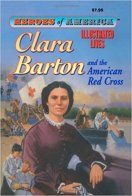
There are many good books for this era. We have all of our books for this era in a basket and I’m going to let the children pick the ones we read. I’ve pictured a few of their options below.  Some of them deal with the war and others with elements that were going on during the time like the Underground Railroad. Elizabeth is going to complete the American Heritage Girls Freedom Seekers badge as her project this month. This badge is a study in the Underground Railroad. I’m not sure yet what Matthew will choose but I know his interest lies more in the military history.

civil war book           underground railroad   clara barton.jpg

For art, we are finishing up some lessons from our American History Chalk Pastel Lessons that we did not get a chance to finish up last month (we spent December’s art time on holiday projects).  I’ve also found these podcasts from our state history museum that may be good to listen to as an easy way to incorporate more history into our days.

As we begin in January, my plan is to make sure we discuss certain key points, but to try and let the children’s interest dictate what aspects of this era that we discuss and study most in-depth. Knowing that we can not cover everything in a month, my goal is to get them excited about learning more and then let them continue to explore with books and resources after we have moved on into the next time period.

Do you have any favorite resources or field trips related to the American Civil War? Share with us in the comments.


Further Information About Choosing Resources:

The Civil War, by its very nature, is the most divisive and destructive war our nation has ever fought. We killed, wounded, and displaced more than 3% of the American population.  By modern standards, the loss is equivalent to the entire population of New York City and Chicago. No period of American History is more thoroughly studied, written about, researched, or reenacted.  No period is as polarizing either. Educators will need to find their specific approach to the challenges of this polarization while preparing to teach.  Sources are often strongly influenced by the political or historical views of the author. Historians are even divided as to what to call the war.

Oftentimes, you can broadly categorize the political objective of source material by the use of different names for the conflict.

Civil War – Tends to be more mainstream, often centrist or with a slight pro-union tilt

War Between the States – Commonly used by international scholars, often the most ‘objective’ observers

War to Preserve the Union – often heavily pro-union, abolitionist

War of Northern Aggression – often heavily pro-confederacy, but not necessarily pro-slavery

War against Slavery – often blatantly abolitionist, important in that the use of this term often coincides with little attention to other political factors

War of Southern Secession – Often focuses solely on political factors, leans very pro-confederate and may ignore or minimize the slavery issue.

These terms do not represent a hard and fast guide, but can serve as a starting point to clue you in that the presenter, writer, researcher, or producer may have an agenda.


If you are not already signed up to get our monthly list of history resources as well as all of our other freebies, sign-up below. I’ll send you an email every other week letting you know what new stuff we have on the blog and in the library.

When you sign up for our free resource library you will get a link and password to the library, we are adding to the library each month with new items. You will also get a bi-weekly newsletter email to keep you up to date on what we have going on.

Resource Library

This post may contain affiliate or referral links. As always I will never recommend a product that I don’t believe in and you will never be charged more for purchasing through our links. It does help pay for the costs associated with the blog.


Westward Expansion: December History Resources

Westward Expansion (1829-59)

31star

The conclusion of the War of 1812 opened lands west of the Appalachians to settlement.  Lewis and Clarks expedition had opened the eyes of the young nation to the vastness of the continent and whet the appetite for adventure and growth.  A darker period of history also resurfaces here in Indian wars, resettlement, and conquest of native peoples. Expansionist tendencies couple with emerging technologies, steam trains and canal building, and promote the movement of goods and people on a scale not before seen in history.  Growth and expansion sews the seeds of contention and conflict with neighbors, perhaps more importantly lead up to the most destructive conflict in the nation’s history.

Do you remember going to a computer lab in school and playing Oregon Trail? I might be telling my age there but it is one of the first computer programs that I ever remember playing (along with Reader Rabbit but that is a story for another day).  You can still access that computer program in all of its simplistic glory on the internet for free. That is one of the many resources that we will use this month as we work our way through Westward Expansion, the Alamo, and the California Gold Rush.

We hope to visit Duke Homestead and our North Carolina State Capitol building during this month. They give great representations as to what was going on during this time in history and will be decorated for Christmas which will be an added bonus. Since a trip to California isn’t really an option right now we will also do a couple of virtual tours using the National Park Service to get an idea about the area involved in the Gold Rush and Fort Laramie.

We always do lots of baking around the holidays and this year we will include some of the desserts I found from this time period (like Molasses Cake) into our regular baking. We will also probably have some corn bread and other favorites using older recipes.

Years ago I had the opportunity to visit the Alamo. I remember being very shocked by its location. I had envisioned it in the middle of open land as it would have been all those years ago, but now it is in the middle of a city.  Since we won’t be able to travel to Texas we will also be doing a virtual tour of the Alamo during our study. Once we have studied the Alamo I plan to watch, Davy Crockett, King of the Wild Frontier.  Then we can complete a Venn diagram about the real story of Davy Crockett and the Alamo versus the movie.

We will be enjoying a variety of books and continuing to read from America’s Story by Master Books. I know that Elizabeth is going to read A Nest for Celeste (John James Audubon) which is an adorable book about the travels of John James Audubon written from the perspective of a mouse.  She also plans to work on finishing up her Native American badge for American Heritage Girls as her project for this month. Matthew is still deciding on his but considering a Lego model of the Alamo.

celeste

We take several weeks off for Christmas, New Year’s and my daughter’s birthday, so this will be a slightly shorter month for us, but if we haven’t finished the movie or virtual tours the children would be happy to work on those during their time off. Let us know your plans for teaching about this period of westward expansion in the comments.


Also check our free resource library for two new Christmas freebies, Christmas Traditions and a Christmas Bucket List.

When you sign up for our free resource library you will get a link and password to the library, we are adding to the library each month with new items. You will also get a bi-weekly newsletter email to keep you up to date on what we have going on.

Resource Library

This post may contain affiliate or referral links. As always I will never recommend a product that I don’t believe in and you will never be charged more for purchasing through our links. It does help pay for the costs associated with the blog.

A New Nation: Week 1

We started the study of the New Nation with a few videos including Schoolhouse Rocks and a couple episodes at the end of Liberty’s Kids. Liberty’s Kids was about how George Washington refused to become a king which is such an important part of how our country was created. Schoolhouse Rocks has some catchy tunes about our constitution and how a bill becomes a law which help children remember important facts about the way our government operates. We are going to review the bill of rights with next week with this free worksheet where they will illustrate each of the rights.

I read, We the People, by Lynn Cheney as one of our read alouds this week. It does a great job of going through the basic information about problems with the Articles of Confederation and the transition to the Constitution. The pictures are beautifully done and each page has a quote from someone there at the time of the writing of the Constitution.

we the people

Matthew is reading the book Six Frigates and seems to be enjoying it so far. It is a longer book and so he is reading it over the course of a couple of weeks. He decided that he wants to do a Lego replica of the battle at Ft McHenry for his project this  month. He also plans to look at the rations for the War of 1812 and cook up a meal one day in the next couple of weeks. To help him with his project we are going to spend a bit of time next week looking over the pictures and videos on the National Parks Website about Ft. McHenry.

Elizabeth is going to complete the American Heritage Girls (AHG), Our Heritage badge, for her project this month. She loves that she can combine her history with her AHG work. She will be cooking pumpkin pancakes this week from a historical receipt (the term for recipe during this time period) as well as volunteering at a school event  teaching children about games of the time period. She is also reading Little House by Boston Bay to get an idea of life during the War of 1812 from the prospective of a young girl.

If you would like to join us on this journey through US History, join our mailing list and get access to our free library. Each month I’ll post a list of resources and ideas for the time period we are going to cover the next month. You can learn more in our post Our Journey Through History.  Colonial through New Nation resources are currently posted and the Westward Expansion resources should be posted by the end of the week.

When you sign up for our free resource library you will get a link and password to the library, we are adding to the library each month with new items. You will also get a bi-weekly newsletter email to keep you up to date on what we have going on.

Resource Library

This post may contain affiliate or referral links. As always I will never recommend a product that I don’t believe in and you will never be charged more for purchasing through our links. It does help pay for the costs associated with the blog.

23331164_123505058346543_6141260774310134992_o

Schoolhouse Teachers has a great Flash Sale going on right now! This is HUGE.. This sale is a $139 BOGO! Buy one year, get one year free – so essentially, $69.50 per year! That is less than a $100 per year for curriculum for your whole household. This deal is only good through Nov. 17th so act fast!


Thankful-for-Art-Pumpkin-Day-1-400x266

This week ‘You Are An Artist’ is doing a fun free art lesson each day! Today they are doing this great pumpkin lesson.  Check our facebook page each day for a link to the lesson of the day.

Revolutionary War Wrap Up

20171102_195238


There is so much to learn from the Revolutionary War and so many interesting stories to tell that I think you could spend an entire year focused on that one war. However, we wrapped up our month long study of the war last week so that we can move on to other important parts of American history.  We will continue to learn about Revolutionary history through events, books, and conversations but our focus will be turning to the new nation and how our government works.

The children enjoyed several chapters from America’s Story Volume 1 this past week. The story format keeps them begging for me to read more and I find them looking back over it during their free time.  I love that it isn’t a dry list of dates and events but a collection of stories that told about the war. Occasionally the timeline gets a little jumbled with this style, as it makes sense to cover campaigns or theaters sequentially, even if significant events were happening geographically elsewhere.

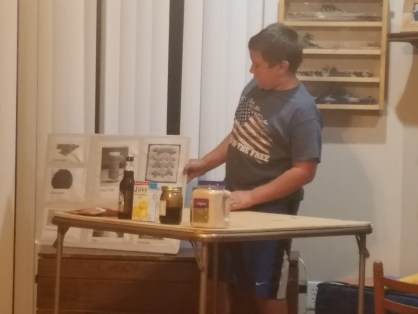
Matthew did an excellent presentation on rations from the Revolutionary War including a poster, some modern day examples, and a speech. This was a topic that I would not have thought to do too deeply into but he was so interested that he enjoyed studying about it and recreating them as best he could given modern ingredients and cooking. I expect that he will enjoy seeing how rations changes as we study other wars in our American history.

In art this week we did the Paul Revere Drawing from You Are an Artist.  This was his hat and lantern that are symbolic of his famous ride. The children enjoyed the lesson and it tied in well to Elizabeth’s presentation which was about Rachel Revere, Paul’s wife.  There are many people from this time that we hear all about and I thought it was great for Elizabeth to do a little reading and research into someone that is not as much a familiar name. While she used several different resources for her presentation the bulk of her information came from What Really Happened in Colonial Times which included a chapter on Rachel Revere.

I used If you Lived at the Time of the American Revolution for a read aloud this week. I love how this book talks about the different experiences from the perspective of Loyalists and Patriots. The book goes into multiple aspects of daily life during that time including schooling, food, clothing, etc.  It is broken into small sections so it was easy for us to read it a few minutes at a time between other tasks.

20171018_143706

The American Revolution is probably one of our favorite times in history and we have enjoyed this month long study.  I hope that my children took away a better understanding of the courage and perseverance of them men and women who worked together for independence. Tell us in the comments what you or your children enjoyed most about this era in history?

When you sign up for our free resource library you will get a link and password to the library, we are adding to the library each month with new items. You will also get a bi-weekly newsletter email to keep you up to date on what we have going on.

Resource Library

This post may contain affiliate or referral links. As always I will never recommend a product that I don’t believe in and you will never be charged more for purchasing through our links. It does help pay for the costs associated with the blog.