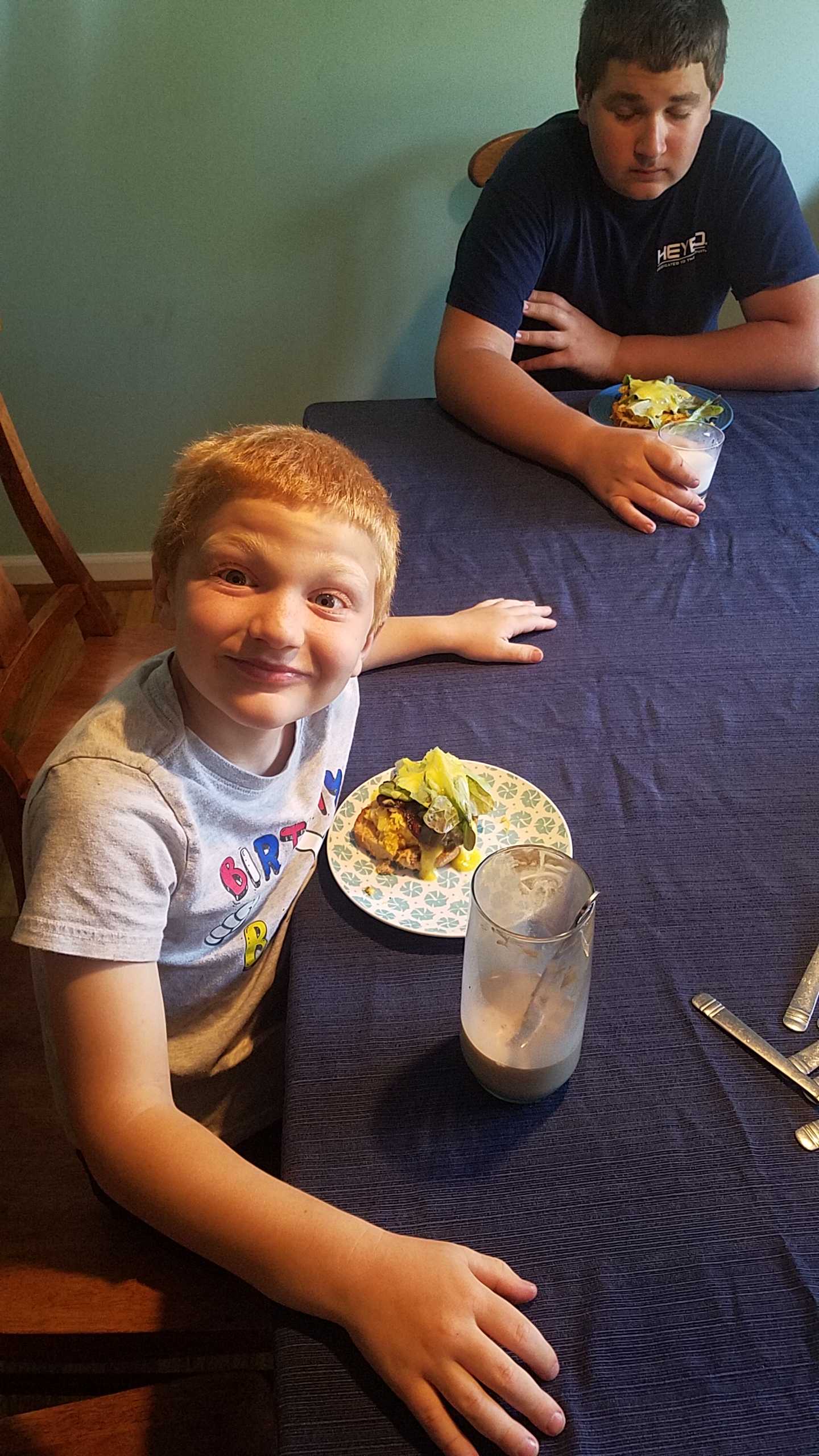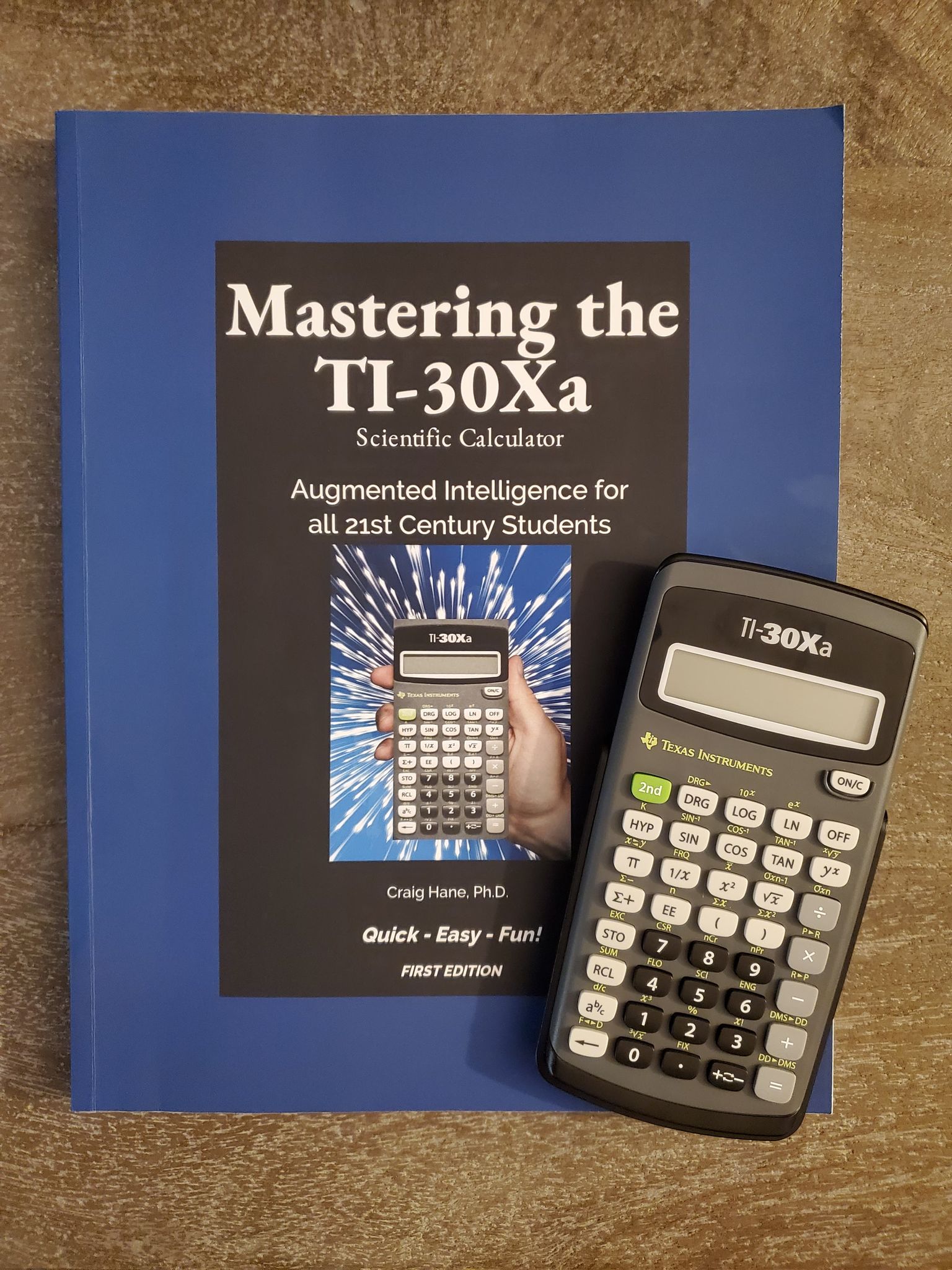
When I saw that the Review Crew was talking about the perfect picnic this week, I had to laugh. Our family loves picnics and when the weather is nice we often eat outside at least a couple times a week. We also tend to picnic a lot when we travel to save money and allow everyone a chance to move around and stretch their legs. However, I find that our picnics are never perfect and often do not fit the vision that I have in my mind.
*Some links are affiliate links, see disclosure below for more information*
A Perfect Picnic
In my mind a perfect picnic involves delicious homemade food, a soft blanket on the grass, cooperative and happy children, sunshine, and quiet fun. There would be a variety of delicious sandwiches with lots of tasty toppings, chicken salad, pasta salad, deviled eggs, and all sorts of other tasty treats.
Real Life
My real life picnics rarely look like that. Some days we plan to eat in our own yard on the grass, but then the ants want to join us. Other days we plan for a sunny picnic and it rains so we have to reschedule or eat on the porch. Other times, the drinks fall on the sandwiches and flattens them.
Eating outside is normally fun for children, but there are also the times when the toddler is having a meltdown because he no longer likes his favorite food.
Often, I don’t have the time to make a homemade picnic and so it ends up being tuna salad kits or summer sausage with cheese and crackers. Nothing like the fancy lunch in my perfect picnic vision.
Enjoy Your Reality and Make Memories
Years ago I would get so frustrated because the perfect vision in my head never seemed to be our reality. However, through the years I have learned that the ‘perfect picnic’ is the one we do together as a family. It will probably never look the same way in real life as it does in my head, but I can still make wonderful memories with my children.
When they look back on their childhood, it won’t be the ants and spilled drinks that they remember. It will be the time spent together, talking and laughing. It will be the sights and sounds of the places we stopped to picnic as we hiked or traveled.
If you are tempted to not do have a picnic (or insert some other memory creating event) because you know they never turn out quite like you planned, I encourage you to go ahead and do it anyway. It may never be perfect but it can still be good and worthwhile.
What do you think of when you hear ‘perfect picnic’? Be sure to hope on over to the Review Crew blog and see what the other Crew Members had to say about a perfect picnic.
Powered by Linky Tools
Click here to enter your link and view this Linky Tools list…
Resource Library and Affiliate Disclosure
When you sign up for the Schoolin’ Swag free resource library you will get a link and password to the library, we are adding to the library each month with new items. You will also get a bi-weekly newsletter email to keep you up to date on what we have going on.
This post may contain affiliate or referral links, including Amazon affiliate links. As always I will never recommend a product that I don’t believe in and you will never be charged more for purchasing through our links. It does help pay for the costs associated with the blog.
Disclosure: I received this complimentary product through the Homeschool Review Crew
I love teaching reading, history, science, and up until Algebra I don’t mind teaching math. Writing is another issue altogether and tends to be the most challenging subject for me to teach in our homeschool. I am always on the lookout for great resources to help me teach my children to be good writers and so I was happy to review the Excellence in Literature Handbook for Writers by Everyday Education.
I know the high value of writing in a world where communicating your ideas is so important and I understand that no matter what career or life path my children choose, good writing skills will be beneficial. My middle and high school students know all of the basics of writing and can write an essay, but they tend to struggle with correct grammar.
Section One
The Excellence in Literature Handbook for Writers is over 400 pages of writing resources and very comprehensive. It is broken down into two main sections. First, is an introduction to essays and arguments; this section helps students learn to write a quality essay. It helps them to understand different types of essays and research papers and breaks them down into key components. It also helps them learn to ‘argue’ their point of view in a productive way and how to structure different types of papers.
This section even goes so far as to teach about the functions of different types of paragraphs and how to use those paragraphs to form a good essay. There are descriptions and information as well as exercises that the student can do to practice those skills.
For example, there is a list of topic sentences and the student is asked to indicate the function of the paragraph for each topic sentence. Another section has a paragraph with blanks where there should be transition words. It is the students’ task to fill in the transition words to make the paragraph flow more logically.
Section Two
In the second section of this book you get into more of the nuts and bolts of grammar. This section is titled, Introduction to Usage and Style. There are hundreds of different grammar rules and word usages explained in this section. The table of contents is amazing, it goes into great detail so that you can easily find exactly what you need.
For example, there are seventeen sections just for pronouns. One of the sections that we used was on commas, because that is a struggle for my teens. I was easily able to go in and find and print the sections on commas because of the detailed table of contents.
Uses
This book can be used in a number of ways. We chose to mostly use this as a reference book for helping my students with essays that they had already been assigned. As I looked over their rough drafts, I would find the areas that they seemed to be struggling with. Then I could print out the material on that particular error and allow them to use it to go back in and correct their essay.
They can also have access to look up information as they are writing when they are unsure of the convention. In addition to basic grammar, this book contains information to help with references, bibliographies, clarity, logic, and structure, and even essay formatting.
If you wanted to use it as a writing curriculum, you could choose the various sections and assign the exercises or other writing assignments based on the content of that section (especially in part one).
Conclusions
Moving forward, I plan to continue to use this as a resource and also to add some specific assignments from part one based on weaknesses I see in their writing. I appreciate that I do not have to use the book in it’s entirely or in any particular order, but can customize it based on their skills.
Overall, I recommend Excellence in Literature Handbook for Writers for middle and high school aged students as a great resource for writing. I even plan to make sure my teens take a copy of this book with them to college because I feel like it will continue to be a great resource for their college level papers. Be sure to click on the graphic below to see how other families on the Review Crew utilized this resource.
Disclosure: I received this complimentary product through the Homeschool Review Crew
My six-year-old has finally learned all of his letters and is starting to sound out a few words. He is an active boy and had not really wanted to take the time to sit and learn how to read. Therefore, I was excited to try out The Reading Game, 2nd Edition by Allsaid & Duun, LLC.
I am always on the lookout for fun games and activities that can supplement our normal curriculum and make learning a bit more fun. Since my son has been resistant to learning to read, I was grateful for the opportunity to try this game and see if he enjoyed it.
Overview and Game Description
The premise of The Reading Game, 2nd Edition is that through this game your child can be reading their first book in just a week. This is a pretty lofty goal, so I was interested in seeing how well it worked.
The game starts with a simple memory match game using ten cards (five words) at a time. The child memorizes the words as you play the memory matching game and then moves on to the next ten cards. Once the child has learned two sets of cards, they are able to read sentences off of a larger picture card.
The child continues to learn more words in a similar fashion and once they reach thirty words they are able to read the corresponding picture book. The game includes six story books and the matching word cards for each of those books.
Our Experience
Once a child has successfully completed the entire game, they should have a reading vocabulary of 180 words, most of which are high frequency or Dolch sight words. The game is fairly open and go and requires very little prep on the part of the parent. I was even able to have my thirteen-year-old daughter help my son on the days that I was busy.
We played this game with my son 3-4 times a week over the course of about the last month. He loved the game and enjoyed the matching component. He was able to learn the first several sets of words and was so excited to be able to read the sentences. He even made sure to read them to his dad and grandparents.
However, he is not quite finished with the first level, and so still unable to read the first book. I am sure that some students who are quick to memorize will be able to read the book with-in the first week, but I would expect that many students would take longer than a week to get through the first level.
He does continue to ask to play the game and I see the progress that he is making, so we will continue to use the game. There is no phonics included in the basic game, but there are some instructions on including basic phonics once your child has mastered the words included in the game.
Conclusions
While some families may find it suitable for standalone reading instruction, I think this game fits in best as a supplement. It is a great way to learn the sight words and to increase reading confidence, but I would pair it with a solid phonics program.
Overall, we did not see the rapid results of reading in one week, but we did find this product to be an enjoyable game that increased reading fluency. Do you want a copy of the Reading Game for yourself? Head over to the Homeschool Review Crew Blog to enter the giveaway! The Crew will be giving away FIVE games. Not sure yet if the game is for you? Read more of the crew reviews, then enter the giveaway!”
The Review Crew is talking about homeschool travel advice this week. While we’re not exactly world travelers, we do enjoy getting out, visiting, and exploring. Fitting that into busy life and school schedules is always a challenge. Over the years we’ve found a few things that work, and more than a few that didn’t. Today, I want to share a few mistakes I have made and tricks learned along the way.
*This post contains affiliate links, full disclosure at the bottom of the page*
Travel Mistakes
When we first started combining homeschooling and travel, I made the mistake of adding way too much schoolwork to our trips. I was trying to do all the activities I could to turn it into a learning opportunity, but I was not leaving enough time for fun. We were overwhelmed trying to get all of the work done and see all of the sights.
The second mistake I made was turning everything into a ‘learning opportunity’. Combining travel with learning is an amazing way to teach many subjects and one we still utilize. However, not every trip or every adventure needs to have formal learning attached to it. Sometimes, it is best just to go and enjoy the trip or activity. Your children will naturally learn just through the experience but some things are best enjoyed without the burden of additional work.
Homeschool Travel Tips
1) Book bags and clipboards are your best friend when you travel. We often take along our regular school work to be done on long road trips. It can be a great use of the riding time and gives us more flexibility to take time off. However, if you don’t have a good system to keep things contained it can be easy for papers or books to get lost, and once it disappears into the black-hole it may as well be in Jupiter. These clipboards can not only provide a good writing surface, but can keep papers and pencils all neatly contained. As a bonus they come in different colors to make it easier if you have multiple children (or maybe mine are the only ones that will fight over which clipboard belongs to which child.)
2) Plan ahead and think about what activities will travel well and which subjects are better left at home. We do not typically bring everything with us on a trip. My children will choose one or two subjects and bring those materials. For example, reading is a great option because they can just bring their books. For my youngest son, he has a write-in math book that travels very well. However, my oldest does an online math program so he will just do a little extra math before and after a trip.
3) Choose activities that align with the areas that you will be visiting or the experiences that you will be having. For example, when we visited NASA at Cape Canaveral last year we listened to the Heroes of History biography about Alan Shepherd in the car as we traveled. On another trip to the mountains we did a literature study of My Side of the Mountain.
4) Utilize State and National Parks as well as other similar resources for rest stops. We have a National Parks Passport and the children love to find parks and get their stamps. We do not always have time to stop at every one of them along the route, or go out of the way to get to one, but we try to find at least one or two on any long road trip. We often pack our lunch and use the National Park as a place to eat lunch, learn a little bit about the nature or history of the park, and stretch our legs. We do not spend much more time than we would have to stop at a restaurant but they have had the opportunity to see something new and move around a bit before we get back on the road.
What are your favorite homeschool travel tips? Do you enjoy incorporating traveling into your homeschool? You can check out our Field Trips page for more information on some of our favorite trips. Make sure to check out all of the other travel advice over at the Review Crew blog!
Powered by Linky Tools
Click here to enter your link and view this Linky Tools list…
Resource Library and Affiliate Disclosure
When you sign up for the Schoolin’ Swag free resource library you will get a link and password to the library, we are adding to the library each month with new items. You will also get a bi-weekly newsletter email to keep you up to date on what we have going on.
This post may contain affiliate or referral links, including Amazon affiliate links. As always I will never recommend a product that I don’t believe in and you will never be charged more for purchasing through our links. It does help pay for the costs associated with the blog.
Disclosure: I received this complimentary product through the Homeschool Review Crew
We always look forward to reviews from Byron’s Games and seeing what new fun game they have created to help us learn through play! This game was especially exciting for me because I was able to combine my children’s love of games and my daughter’s love of music by playing Maestro Mastery – Explore the Composers.
About the Game
Maestro Mastery – Explore the Composers includes information about 52 different musicians that span in time from medieval to contemporary. The game comes with matching color coded cards, a timeline board, and a poster of the musicians.
This game is set up as a memory matching game, which makes it easy to play with no prior knowledge of the musicians. As you play the game you learn information about each of the musicians, get a better understanding of musical eras, and even have the opportunity to listen to some of their great music.
Our Experience
I had my 13-year-old daughter and six-year-old son playing the game together. When they first tried to play they found it a bit overwhelming. There are 2 decks of cards with 52 cards in each deck. They had followed the suggestion of only starting with one deck, but there were still a lot of cards for a memory game.
However, they then went into that one deck and chose a smaller number of musicians. Once they were dealing with fewer cards they felt like they could master the game. We started with just playing the memory matching portion of the game and reading about the musicians.
After playing the game a few times they added in the listening component. Byron’s Games includes instructions for going to a page on their website where you can listen to selections from each musician. As they found a match they could click on the link for that musician and hear music. We thought this was a great way to help them start to get a better understanding of the different types of music and become more familiar with famous pieces without any pressure to memorize them.
While they continued to play with only part of a deck, they were getting exposure to different musicians because they would play with different parts of the deck each time they played. I also feel like if you had more people playing using the whole deck would not feel as overwhelming.
We didn’t feel that we were ready for the extra challenge option; however, if you have only older students or after you have been playing long enough to want more of a challenge they have some extra challenges that combine the memory match cards with the musical selections. This would be a great way to include the game as part of a high school level music appreciation course or keep teenagers actively learning.
Conclusions
Overall, this game was a great fit for our family. We condensed the number of cards used at any one time to make it a little easier, but otherwise they enjoyed playing based on the instructions. We loved that it could be played by multiple ages and have different options for learning about the musicians and their music.
The Review Crew is talking about small business adventures this week, which is a topic near and dear to my heart. Our family’s small business is the reason I was able to leave my full time job and become a homeschooling mom. For the last 6 years, our small business has allowed my husband to work from home and spend more time with our family.
In addition to the small business that pays our bills, my children have run several small businesses of their own. They have sold fresh eggs from our chickens, homemade head bands, mowed lawns, and more to earn spending money and begin saving for a car and college expenses.
I have found that in addition to allowing them to have more spending money, small businesses are a great way for children to learn money management, math skills, responsibility, and other valuable life lessons. Often, they do not see the job as school, but it is some of the most educational time they spend in a day. It helps to prepare them for adulthood in ways a textbook never will.
A few weeks ago I had the privilege of speaking with my friend Shannon at The Stay at Home Family about how we helped our kids start a business. I hope that this interview is helpful in seeing the benefits of a small business and getting your child started in their own small business.
I would love to hear more about any small businesses that you or your children run. Share them in the comments or let me know what resources would be helpful for using a small business as a part of your homeschool. Check out the Review Crew blog to see what other Crew members wrote about their small business adventures.
Powered by Linky Tools
Click here to enter your link and view this Linky Tools list…
Resource Library and Affiliate Disclosure
When you sign up for the Schoolin’ Swag free resource library you will get a link and password to the library, we are adding to the library each month with new items. You will also get a bi-weekly newsletter email to keep you up to date on what we have going on.
This post may contain affiliate or referral links, including Amazon affiliate links. As always I will never recommend a product that I don’t believe in and you will never be charged more for purchasing through our links. It does help pay for the costs associated with the blog.
I don’t know about you, but we’re only now coming off a very cold and wet spell of weather. Some of our local creeks and rivers are flooding and some roads are closed. We’re in a beautiful week right now though! During those cold, wet days we had to be a little creative to give everyone the opportunity to ‘burn off some energy.’
*Some link in this post are affiliate links, see full disclosure at the bottom of the post for more information*
Something about cold rainy days makes me want to snuggle on the couch with a good book and a mug of hot cocoa. That same weather seems to have the opposite effect on my young boys, they tend to get really energetic and seem to be bouncing off the walls inside the house before 9 am on a cold rainy day.
I have found that keeping them engaged in other activities helps all of us have a better day. Whether we break out the board games, do a little exercise, or spend time playing ‘farm’. The more engaged they are, the less pent up energy and destruction we see through the day.
Toddler/ Preschool Indoor Activities:
Balance Board (We adore the monkey balance board that is linked there but if you have older children, I have also heard good things about these balance boards.)
Bilibo Seat (We were blessed with the opportunity to try this out after a family member got them for Christmas. I love that it is light weight and easy to move around, but encourages active and creative play.)
Farm Toys (In our home, farm toys have stood the test of time. Each one of my children has spent hours playing with various farm toys. They set them up, move them around, make up stories to go along with them and more. This set is great for the preschool age group. )
Elementary Indoor Activities:
Fit2B Kids Workouts ( I love my Fit2B membership for my own workouts but on those cold rainy days when you can’t get out, it is a great solution for getting young kids to move in a productive manner. The workouts of fun and silly but get the wiggles out and help them learn healthy habits.)
Legos (Legos are another choice that have stood the test of time in our home. They allow for so much creativity while also working on fine motor skills and following directions. We enjoy kits for building specific things as well as mixed boxes that give them the opportunity to create their own projects.)
Brain Blox Wooden Planks (A house, a barn, a dock, a castle, a race track… these planks can become so many different things. They are a great way to get a child engaged. )
Dutch Blitz (This card game is so much fun and it is fast pace and gets you moving just a bit. It is great for any age, once they know their numbers. Even my teens enjoy a good game of Dutch Blitz.)
Teen Indoor Activities:
Trivial Pursuit (One of the best things about playing board games with teens is that they can handle games that are challenging and engaging even to the adults around them. There are various versions of trivial pursuit and you can choose one that fits the interests of your family.)
Ticket to Ride (This game is lots of fun for all ages and I enjoy playing it with our teens. My elementary age son can even join in the fun.)
National Parks Trivia (My son got this for Christmas and it has been a big hit! We love going to parks so he had some knowledge to get started with this game, but we are all learning more each time we play.)
I hope you are able to use some of these ideas in your home on those days when you can’t get outside. You can also check out this post for more rainy day fun. Don’t forget to check out all of the other indoor game ideas over at the Review Crew Blog.
Resource Library and Affiliate Disclosure
When you sign up for the Schoolin’ Swag free resource library you will get a link and password to the library, we are adding to the library each month with new items. You will also get a bi-weekly newsletter email to keep you up to date on what we have going on.
This post may contain affiliate or referral links, including Amazon affiliate links. As always I will never recommend a product that I don’t believe in and you will never be charged more for purchasing through our links. It does help pay for the costs associated with the blog.
Disclosure: I received this complimentary product through the Homeschool Review Crew
Reviewing the PersonalFinanceLab Budgeting Game, Stock Market Game and integrated curriculum from PersonalFinanceLab.com was an easy decision. My 9th grade son was just finishing up a personal finance class and really interested in the topic and my 7th grade daughter had been asking questions about investing, her college fund, and other financial topics. We were excited to have a game they could play that would also help them learn more about those critical life skills.
There are three main parts to this program: Budget Game, Stock Market Game, and Curriculum. We used all three but focused on the two games and using family discussions to extend the learning as they were playing the games.
Budget Game
I started by setting up accounts in the budget game for both my 9th and 7th grade students. This game set the players up as college students with part time employment. As the administrator of the game, I could make changes to various expenses and situations. For example, the default budget had a car payment, but since my children already have plans to pay cash for a used car I took that payment out of the equation.
Once the game starts, the players have to pay the bills each month, decide how to spend their time (studying, working, playing), and deal with unexpected events (flat tire, medical bill, etc). Not only did the game keep track of the financial budget numbers but also looked at quality of life and other factors. This was to help students realize that working all the time would increase their budget but also decrease the time they had to study or the time they had with friends and family. It brought up some really good conversations about balance.
When I set up the game I was able to choose whether it stayed with the student/part time job or if I wanted them to graduate and move onto full time employment. I set it up to allow them to move onto full time employment so that they could learn more about the benefits and challenges that would face them as they begin their first full time jobs in a few years.
Thoughts and Opinions
Each ‘month’ in the budget game only took about fifteen or twenty minutes to complete and both of my children enjoyed playing. They also enjoyed competing to try and get the best results.
When talking to the children, my daughter mentioned that she learned about the difference between debit and credit cards and my son said he learned more about using a limited income and how unexpected expenses could affect your budget. They both said they would recommend the game for anyone ages 11-16 that was interested in learning more about how to handle their money.
Stock Market Game
My children enjoyed the budget game but I think it is safe to say, that the Stock Market Game was the family favorite. In addition to setting up accounts for the two children who did the budget game, I also set one up for my husband.
The children were so excited to compete against him in the game and it gave him a good chance to really try the game out and be able to discuss what they were learning. They are continuing to play the game, but currently my husband is in the lead! (Hopefully this bodes well for his ability to manage our retirement accounts.)
Each player started with $100,000. When I set up the challenge I could change what types of investments that they had available, how long the challenge would last, various rules for trading, and I could include assorted lessons and videos to help them understand the process and some of the terminology/trading concepts.
In the interest of honesty, I did not even fully understand some of the options I was giving them and how it all worked. While we hold mutual funds and other investments for retirement, I have never spent much time studying the stock market or looking at individual stocks or equities. However, set up was easy and they were provided with a lot of great information in the videos and lessons to help them more fully understand their options.
One of the first things that my husband noted was how realistic the platform was and how up to date the data was. We knew it was supposed to be based on real life data, but he would check it against the app he used on his phone to keep track of our investments and found it to match up well.
Thoughts and Opinions
I loved that the children were excited to play the game, and enjoyed checking it each day before we sat down to lunch or dinner so that they could discuss it with their dad. With the pandemic and political situations, the market has been a little volatile and it was a great chance for them to better understand how things could change quickly.
The children appreciated that there were a variety of different investments they could choose from, the competitive aspect of it, and that it used real stock prices.
They did think that it was a little bit challenging to figure it all out in the beginning because there was a lot of available information and options. However, both agreed that once they got going with it, it was easy to use and they want to continue to use it. They felt like the program was best for ages 11-up. It could even be used by an adult that wanted to learn more about investing and the stock market.
Curriculum
Since we were using this program as a fun game and a follow up to another personal finance course, I did not require my children to complete the entire curriculum. They did use several of the videos to get a better understanding of components they were not already familiar with. For example, they watched a video on different types of stocks. When I went in to set up the challenge, I could require which ever lessons that I wanted to and it was easy to set up.
If you wanted to use this as a full course, you could simply require the lessons and have a complete personal finance course. The lessons included both articles and videos on everything from navigating the program, trading stocks, credit score, and net worth. There were also different levels for lessons depending on your child’s age or experience.
Conclusions
Overall, this review was a huge success in our house. The children loved it and my husband and I felt like it was a great learning opportunity and opened up the doors to some great conversations. It is important to us that we give our children a good foundation in financial literacy as we prepare them for adulthood. This program was a great tool in working toward that goal.
If you are interested in learning more about the stock market or have a student that is ready to learn about budgeting or investing make sure to check out PersonalFinanceLab.com. You can also click on the graphic below to see how other families used these games in the homes.
While it is still officially winter, things on the homestead are ramping up for spring. We have had several new animal arrivals, new garden preparations, seeds ordered, and more. All of these preparations along with what feels like 40 days and 40 nights of rain, have me longing for spring.
New Arrivals:
Over the winter we had our laying hens, ducks, and guinea along with two goats. However, with the coming spring and in preparation for spring livestock and chicken shows, our numbers are growing. We recently got six new baby chicks for the spring chicken show. Each of my older three children are responsible for two of the chicks and they will each choose one to show in late April.
Next, we put our two livestock show pigs on the ground a couple weeks ago. My two older boys will feed, water, and train these pigs until the April livestock show. There they will be judged on how they handle the pig as well as the pig itself. There are several options after the show, but our pigs go to a local meat processor in order to fill our freezers with most of the pork we need for the year.
Finally, my daughter got a new goat for the spring show. Since the two goats that she keeps year round are Houdini and Wilhelmina (after Harry Houdini and his wife), she decided to name this cute little one, Theo. Theo was Harry Houdini’s younger brother. She will care for the goat and train the goat until the April show and possibly the fall livestock shows. After she is done showing him, she will find him a good permanent home, since we do not have the space to keep adding a new goat each year.
Garden Updates:
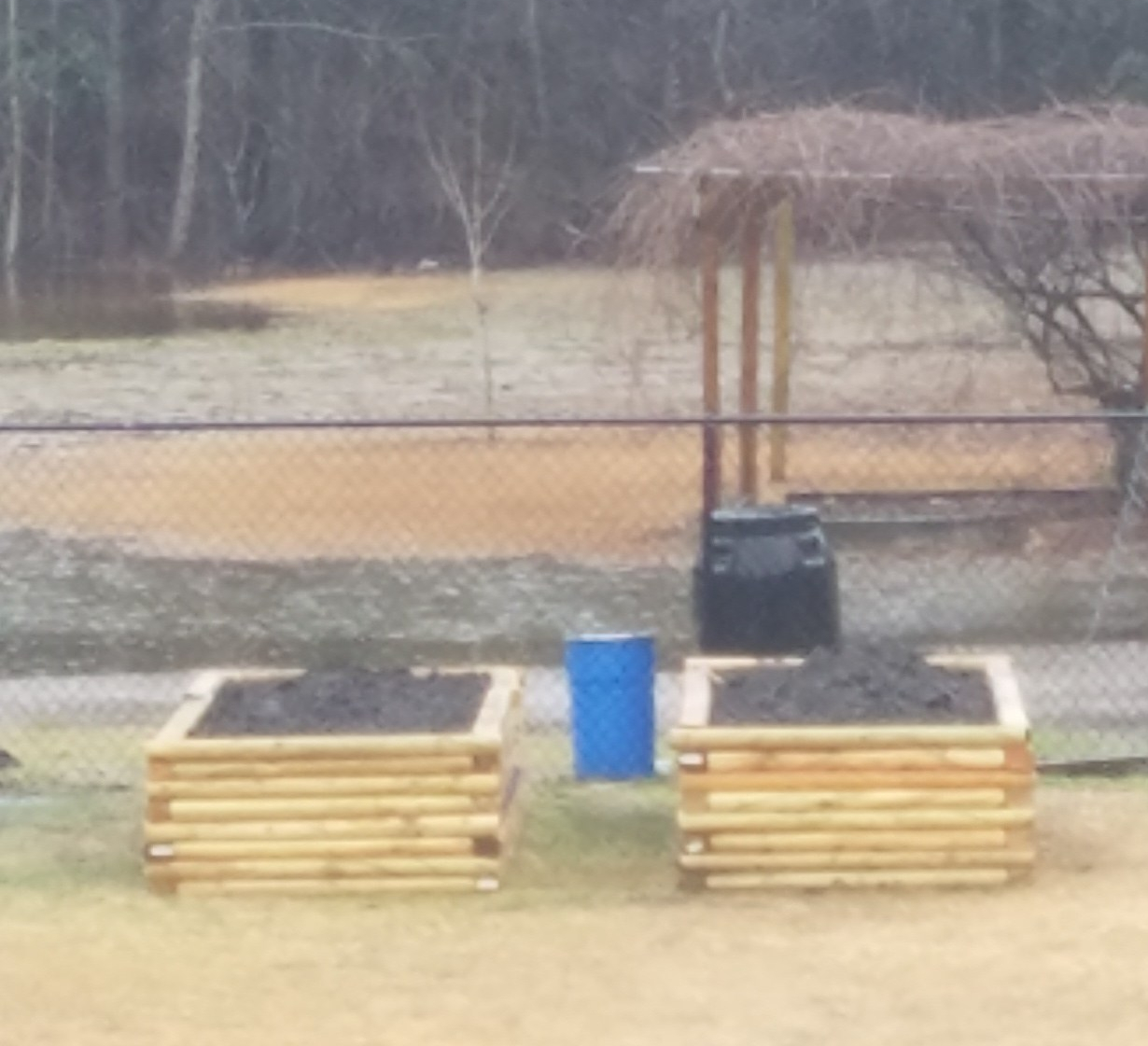
My husband and I have a running joke that he bought me dirt for Valentine’s Day. That might seem like a slight to some, but I was actually really excited. He got me exactly what I asked for, two raised garden beds and some topsoil to fill them. We have been gardening for years, but the sandy soil that is in our yard makes it a challenge. I am excited to try out the raised beds with more fertile soil and see if we can increase our yields.

He purchased all of the materials and worked with my oldest son to build the beds and fill them with topsoil. We also had enough topsoil left over to amend our current garden as well!
Coming Soon:
The weather is still a bit cool for most crops and the rain of the last few weeks has made it too wet to plant even the things that are seasonal. However, if it dries out a little next week we should be able to get carrots and a few greens planted.
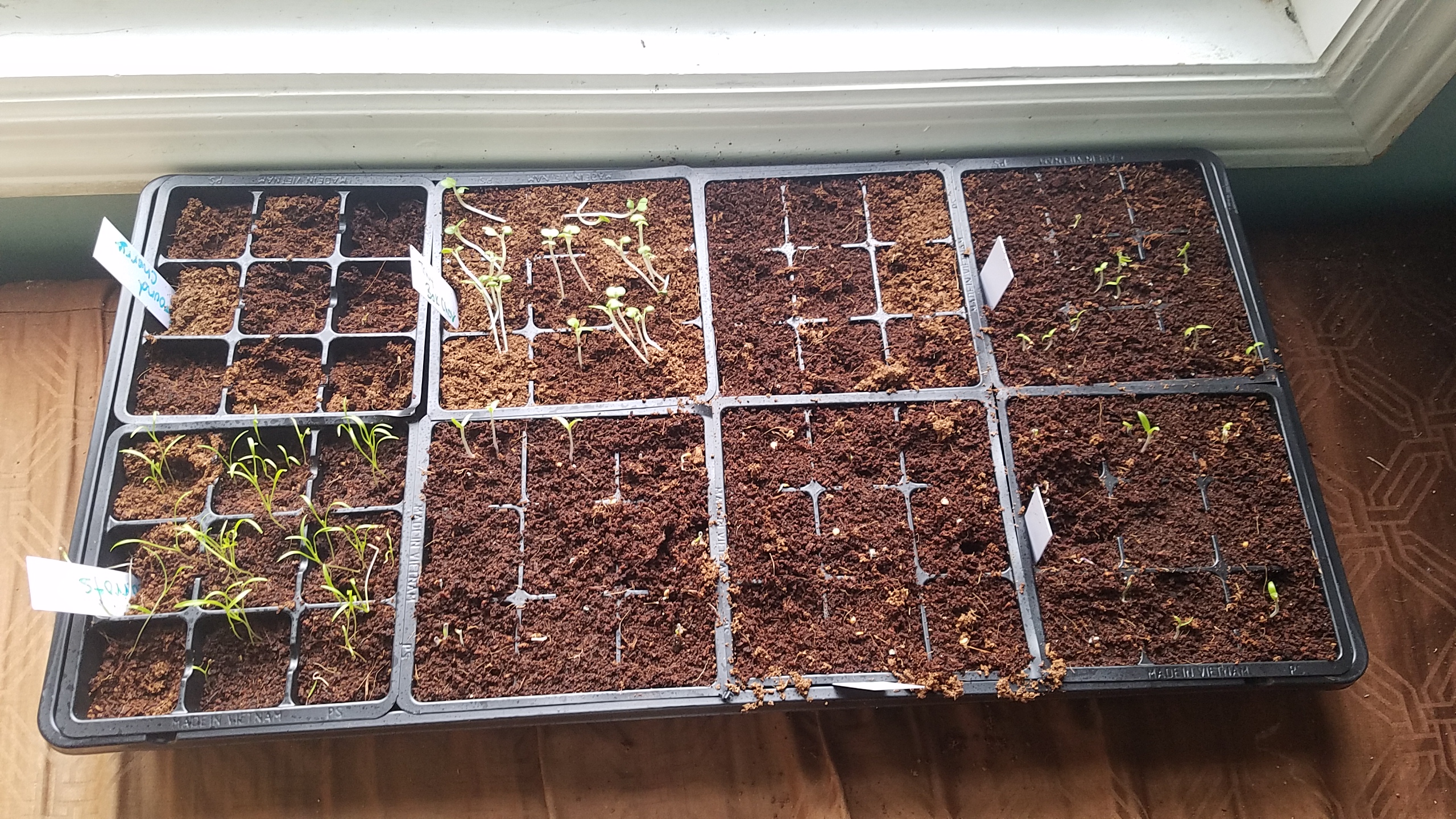
Next month, we should be able to plant many spring crops including carrots, parsnips, spinach, lettuce, kale, and potatoes. We also have a variety of peppers, tomatoes, and eggplant seeds started indoors to transplant once the weather is warm.
We are also getting ready to add some more turkeys to the homestead next month. The first round will be just for meat and then at the beginning of summer we will get turkey poults for the fall turkey show.
Conclusions
This is a busy but fun time on the homestead. We are working hard to get ready for spring and learning a lot in the process. My oldest son in spending some time this year working out some challenges in several homestead ideas so that he might be able to expand into a bit of a small business next year, I am creating an agriculture class for his sophomore year, and my six-year-old has big plans to help me with the raised beds.
Are you growing anything in your yard or working with any livestock?
Resource Library and Affiliate Disclosure
When you sign up for the Schoolin’ Swag free resource library you will get a link and password to the library, we are adding to the library each month with new items. You will also get a bi-weekly newsletter email to keep you up to date on what we have going on.
This post may contain affiliate or referral links, including Amazon affiliate links. As always I will never recommend a product that I don’t believe in and you will never be charged more for purchasing through our links. It does help pay for the costs associated with the blog.
Deals and Freebies
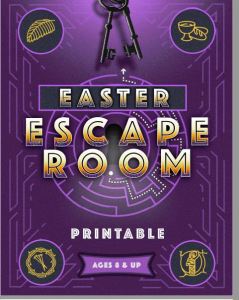
It might feel a little early (or cold) to be thinking about Easter, but it will be here soon! If you are looking for a great study to do with your children in preparation for Easter, today is the last day to get 40% off of this new study by Proverbial Homemaker with Tauna Meyer Just use Code: HEISRISEN
Did you get a chance to watch the Mars Rover land this week or have a child that just loves learning about space? This Space unit study is on sale from now through Sunday for only $5!
The Review Crew is talking about “A Day in the Life of a Homeschooler” this week. One of the things I love most about homeschooling is that each day can be different. We have lots of flexibility and can adapt our school around our life and not life around school.
For us that means that several days a week we try to focus on our academic book work, but that other days might be learning animal science by training for our local livestock show or the state poultry judging competition.
Other days that might mean dressing up in their historical costumes to help teach a zoom history lesson or Pre-COVID even help teach field trip groups at our local historic site.
Many days it involves something in the kitchen. Learning fractions with cookies, cooking a historic meal, or snacks that match the letter of the day.
Then we can’t forget the music! It might be a fun SQUILT lesson, their daily music lessons, or just a family practice session. There is always something fun when it comes to music time.
Here are a few fun pictures of some of our various homeschool days! We love the flexibility and opportunity to turn any day or event into a learning opportunity. What do your homeschool days look like?
What do your homeschool days look like? Do your days tend to be the same or is there a lot of variety? What is your favorite part of the day? Be sure to check out what all of the other Crew Members had to say here.
Resource Library and Affiliate Disclosure
When you sign up for the Schoolin’ Swag free resource library you will get a link and password to the library, we are adding to the library each month with new items. You will also get a bi-weekly newsletter email to keep you up to date on what we have going on.
This post may contain affiliate or referral links, including Amazon affiliate links. As always I will never recommend a product that I don’t believe in and you will never be charged more for purchasing through our links. It does help pay for the costs associated with the blog. Deals and Freebies