Junior Year 2024 Curriculum Choices


So many times, people tell me they are worried about homeschooling, or non-homeschoolers will ask if we are doing public school for high school. I remember when we first started homeschooling, and I was not sure what high school would look like.


However, with my oldest graduated and in college and my daughter going into her junior year, I can say that homeschooling high school is actually easier than homeschooling in the younger years.  Students are more independent, and I have become more of a facilitator than a teacher.


My daughter is on a slightly different path than my son, so her junior-year courses look somewhat different from those he took. She wants to focus on her music and work towards an associate’s degree in music (and possibly one in biblical studies).


Therefore, we are taking a few core classes from the community college, some life skills electives, and a big focus on her music. Our plan is for her to complete the core classes when she graduates, which will leave her with only music classes at the community college.


Fall Semester:


She is taking English 111, Public Speaking, and College Success this semester from the community college. She chose to take all of these courses online. High school juniors and seniors can take community college classes for free in our state.


Spring Semester:


She will take English 112 and one or two more courses this spring. She will probably take US History and Music Appreciation, but we will make a final decision once the class schedule is available. Our community college partners with several local schools to provide classes, and my daughter is interested in taking some of the same classes as some friends in a local private school. So, she will make a decision in the spring based on what she needs and what they are taking.


At Home:


This year, at home, she is taking Culinary Arts. We desire for all of our children to leave our home with an excellent working knowledge of cooking, food safety, and culinary skills. We created a course a couple of years ago for my son.

We used Good Eats episodes to teach various skills, had hands-on experience included, and a food safety course. We also added in some activities from SchoolhouseTeachers.com. My daughter will complete the same course, except we traded out a few lessons based on their interests. For example, my son is a hunter and enjoys making his own jerky, so we did a jerky lesson for him, but we are baking more for my daughter.


My daughter is continuing her viola lessons with Practice Monkeys for her music this year. Her instructor, Mrs. VanKleek, is specifically working with her on the skills she needs to be prepared for her time at the community college while also continuing her Suzuki curriculum. In addition, my daughter is working with a local instructor to enhance her piano skills for playing at church. She currently plays in our youth group band but hopes to soon be ready to play for Sunday morning worship.


We are also looking into voice lessons and her potentially joining a new local youth orchestra. In addition, she is talking to several friends about teaching some beginner lessons.


Morning Time


In addition to her for credit courses, she will be joining us for our family morning time. During our morning time we will be doing Bible and World Watch each day. We will also do a rotation of other subjects including fine arts, hymn study, logic, and more. 

Since she had plenty of courses for her required credits, we will not be using morning time as a high school credit this year, but you can check out High School Credit for Morning Time Studies to find out how to make it a credit or check out Morning Time Plans 2024 to see exactly what resources we are using this year.

Deals and Freebies

If you have not tried SchoolhouseTeachers.com, you don’t want to miss this sale!

Tuttle Twins is having a Back to School Sale! Great deals on books and their new Academy.

New subscribers can get 3 months of World Watch for FREE! This is a great deal.

5th Grade Curriculum Choices 2024

*Some links are affiliate links; see full disclosure below*

My ten-year-old is going into fifth grade! He developed a love for reading last year, which made me so happy. He struggled in his earlier years with reading, but once it clicked he made great progress and started reading for pleasure. He also loves fishing, hiking, and anything science. He would love to be able to skip math, but alas I feel math is an important part of his education.

Reading:

He will be working through All About Reading Level 4 to continue to strengthen his phonetic skills. Now that he is reading well independently, we may skip some parts of the curriculum, but I find there are still some important skills to learn.

He will also be using Read Aloud Revival’s family book clubs, The Prairie Primer (see history section below for more info), and plenty of independent reading.

All About Reading

Spelling

We have been working on All About Spelling, and he will continue to work his way through that. There will be even more focus on that this year now that his reading is more comfortable. We found All About Spelling years ago when my oldest was a struggling speller, and it has been our family favorite ever since.

Writing

For writing, we will be using Master Books Handwriting A to Zoo to review some handwriting skills. He will also be doing First Language Lessons to work on some grammar. In addition, nature journaling and some other creative writing assignments will help improve his skills.

Math

He will be continuing with Math for a Living Education this year. We both love the format; it worked very well for him. There is generally enough practice for him without it being too much busy work. If there are concepts where he struggles, we can add in some extra practice.

I am still looking at options for extra practice with math facts to help him speed up his computation skills.

Science:

This year both of my younger boys wanted to learn about rocks and geology. They became intrigued on our trip out west this spring and wanted to keep learning. I had never taught a geology course, but I dug around to see what we had and what resources were available. We believe in a young earth creation and wanted primarily resources that aligned with those beliefs. Using Master Book’s Geology book and Northwest Treasures Rocks and Minerals for Little Eyes book, I created our own geology study. You can find out more and get a free copy of it over at our post: Creationist Geology Unit Study for Elementary and Middle Grades.

In addition, we will be doing nature study at least weekly (we often do it more when the weather is comfortable.) Sometimes our nature study is as simple as going outside and observing, but we also love to use our subscription to Homeschool Nature Study to take things a little further and help me find some great activities and ideas.

History:

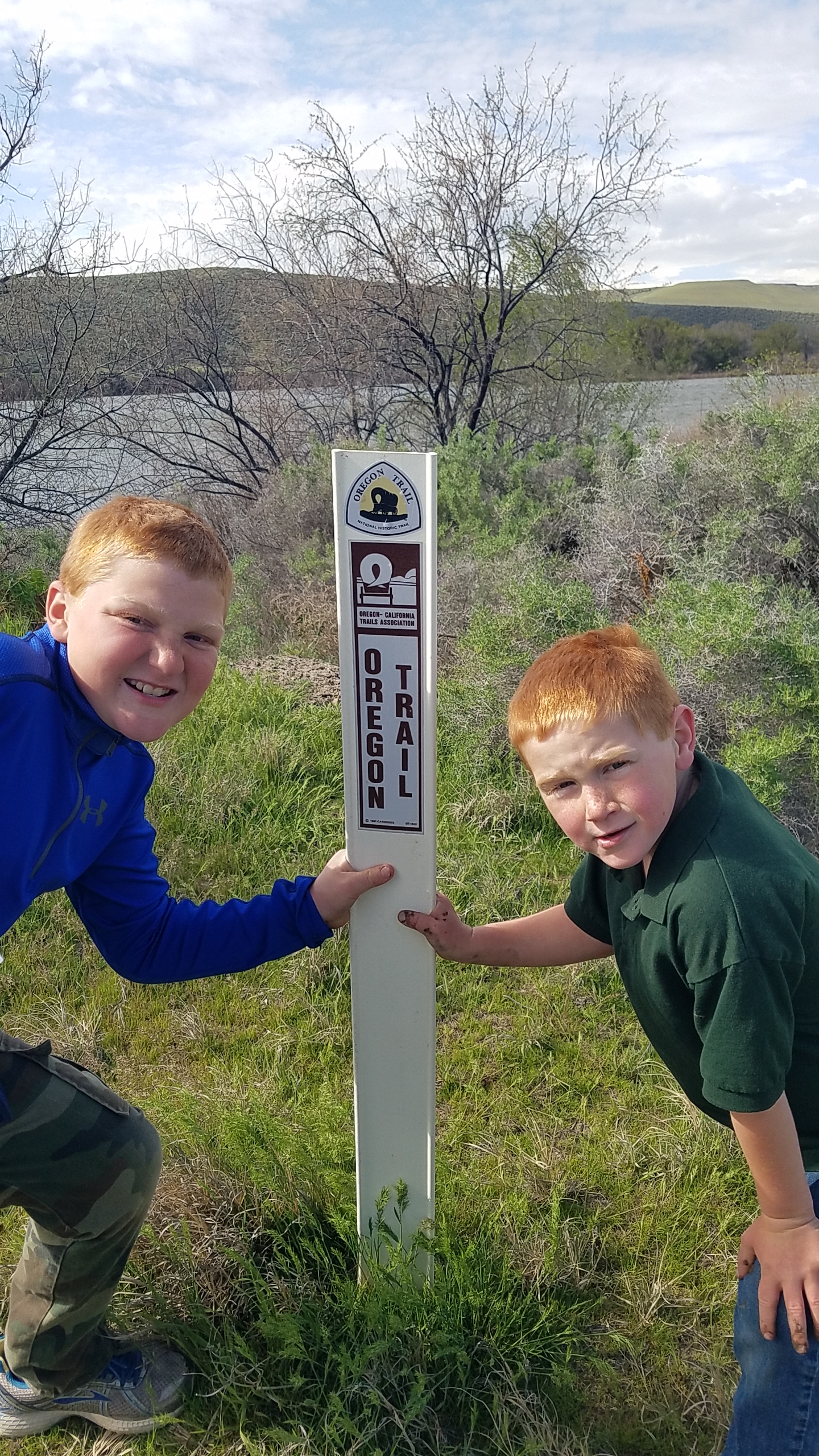
We are generally a Story of the World family for history, but last year we did the new Tuttle Twins American History Volume One book. I had planned to go back into Story of the World Volume 3 this year, but the boys were very interested in the history of the western part of the United States. We had a chance to visit parts of the Oregon Trail and a Pony Express stop as well as many other historical places west of the Mississippi on our spring trip. So, I decided to use a curriculum that would allow us to dive a little deeper into some of those areas.

We are using the Prairie Primer, which is a unit study style program that teaches history, science, health, and more through the Little House on the Prairie book series. We will not be doing all of the activities and will focus mostly on the literature and history components.

Art

This son is the one I refer to as my little artist. He loves to draw, paint, and create. We will continue to use our membership with You Are An Artist chalk pastels for his online art lessons and provide him with lots of time and materials to be creative.

This year he plans to focus on some of the acrylic paint lessons that are included in our membership to broaden his art skills. He also plans to explore independently with water colors and other mediums.

Morning Time:

Morning time is my favorite part of our school day. We will do our daily Bible study and watch World Watch for current events each day. In addition, we plan to do a rotation of fine arts studies, poetry, Tuttle Twins books, and more. You can find out more about the resources we are using this year at Morning Time Plans 2024.

We have a seven-month-old in the house, so I am holding all of our plans in an open hand and praying for the best. We will do what we can, when we can, and trust that God will fill in the gaps. I will adjust as we go along, but I think this is a good start and I am excited about our choices this year.

Resource Library and Affiliate Disclosure

When you sign up for the Schoolin’ Swag free resource library, you will get a link and password to the library; we are adding to the library each month with new items. You will also get a bi-weekly newsletter email to keep you up to date on what we have going on.

Resource Library 

This post may contain affiliate or referral links, including Amazon affiliate links. As always, I will never recommend a product that I don’t believe in, and you will never be charged more for purchasing through our links. It does help pay for the costs associated with the blog.

Deals and Freebies

If you have not tried SchoolhouseTeachers.com, you don’t want to miss this sale!

Tuttle Twins is having a Back to School Sale! Great deals on books and their new Academy.

New subscribers can get 3 months of World Watch for FREE! This is a great deal.
Our First Grade Choices 2024

My six-year-old is so excited to get started with first grade. He actually started his math over the summer because he did not want to wait. I am not naive enough to think that means we won’t have bad days or tough subjects, but I am glad he is enjoying school at this point.

It is important to evaluate curriculum options each year based on what worked and did not work in the past and on the individual student.

*This post contains affiliate links, see full disclosure below.*

Reading

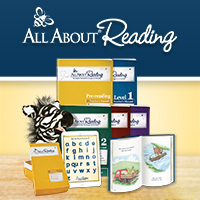
We found All About Learning Press years ago when we struggled with spelling, and it has been an excellent fit for all my children. We started All About Reading Pre-Reading level last year and learned all of his letters.

Due to some speech difficulties we put aside the letter sounds for until this fall so that he had time to work on them in his speech therapy. This year I plan to finish the Pre-Reading level and begin working through level 1. I love the phonetic approach and the fun touches included in this program.

All About Reading Pre-reading

We will be supplementing this with some great programs from Schoolhouse Teachers. They have a fantastic series with a short video for each letter to reinforce what we are learning in AAR.

We will be continuing lots of reading aloud and he loves to listen to audiobooks in his free time or while he is working on chores. We also utilize our Read Aloud Revival membership for fun literature study.

Math

Math for a Living Education is a math series from Masterbooks. My son loved the kindergarten level so much that he finished it in April and he has already begun the first grade level.

We love how they weave a story through the book to show real-life examples of math skills. I also find that there is enough practice without being overwhelming or feeling like busy work. (If you have a child that needs extra practice, they offer a separate book with additional reinforcement.)

In addition, we will be using some calendar math from Schoolhouse Teachers to reinforce essential math concepts as well as days of the week, months of the year, etc.

Science

After our bucket list National Parks trip last year, both my ten and six year-olds really wanted to learn more about rocks. I dug around to see what we had and what was available for elementary geology from a Christian perspective and decided to create my own course using materials from a couple different companies including Master Books and Northwest Treasures. You can get a free copy of my creationist geology plan and find out more over at this post.

In addition, we will be doing nature study at least weekly (we often do it more when the weather is comfortable.) Sometimes our nature study is as simple as going outside and observing, but we also love to use our subscription to Homeschool Nature Study to take things a little further and help me find some great activities and ideas.

History

My original history plans had us moving back into Story of the World. However, after our trip and based on my children’s interests, we decided to use the Prairie Primer this year for history and literature combined. This plan goes through the Little House on the Prairie book series and incorporates history, science, and other subjects.

We will mostly focus on the literature, history, and cooking projects that are included. However, I may also add in a few of the other subjects as we have time and interest. I will note that there are some nutritional lessons that I would disagree with ( I think its just outdated information) so we will just skip those components.

I think the boys will enjoy learning more about the history of the settling of the western part of the United States and be able to make connections to some of the wonderful places we visited on our journey.

Art/Music

Nana would probably cringe if she heard me say it, but I am not an artist, so I love having an art program that will help my children in my area of weakness. We have been using You Are An Artist Chalk Pastel lessons for several years with my older children, and we love them.

Music is another area where I like to call in help teaching, and we use Practice Monkeys for music lessons. We have been with them since 2018, and I cannot say enough good things. Joseph will continue to take violin lessons as well as receive some help from my high school aged daughter. They offer Zoom Suzuki violin, cello, guitar, and piano lessons at a super affordable rate for families.

Handwriting

I am excited to be trying Master Books Handwriting A to Zoo this year. I love that in addition to handwriting he will pick up some fun animal facts and that it gives glory to the Creator. I also appreciate that it is fairly open and go, which is important for me as I balance teaching three students and having a baby in the house.

Morning Time

In addition, we will do family Bible and World Watch during our morning time each day. We will also rotate in a variety of other subjects. You can see more about what we are incorporating during Morning Time this year and learn why it is my favorite time of the day in this post: Morning Time Plans 2024

A Typical Day

All of these subjects (except music lessons and some of our nature study) can be completed in the morning. If my first grader is being diligent about his studies, he can be finished in time for lunch with everything on his checklist. Violin and nature study are the exceptions because the music lesson is scheduled in the afternoons and we often do our nature walks and hikes in the afternoons as well.

This schedule allows him to get a good foundation in the academic subjects but still have lots of time for free play and exploration. We try to ensure he gets several hours outside each day and plenty of time for building with legos and other projects. Over the years, I have come to realize that children can learn as much through that free play as they do through academic instruction.

I would love to know what your favorite resources are for first grade! Also, if you have any questions, please ask them in the comments.

Resource Library and Affiliate Disclosure

When you sign up for the Schoolin’ Swag free resource library, you will get a link and password to the library, we are adding to the library each month with new items. You will also get a bi-weekly newsletter email to keep you up to date on what we have going on.

Resource Library 

This post may contain affiliate or referral links, including Amazon affiliate links. As always, I will never recommend a product that I don’t believe in, and you will never be charged more for purchasing through our links. It does help pay for the costs associated with the blog.

Deals and Freebies

If you have not tried SchoolhouseTeachers.com, you don’t want to miss this sale!

Morning Time Plans 2024

Over the years, we have changed many things in our homeschool, but through it all, we have tried to maintain some form of “morning time.” There have been years when morning time more typically happened in the evening (we could rename it family time), but we have tried to keep that learning time together.

We have incorporated a variety of subjects, and it looks a little different each year, but two things have remained the same: we learn together as a family, and we incorporate some type of Bible study.

*Some of the links in my posts may be affiliate links. See below for more information. *

This year will be the first year with one of my children, out of the nest, so to speak. My oldest is headed off to college this year. I also have a young baby that will add a bit of noise and chaos to our mornings. In order to be realistic with the baby, I am trying to keep mornings simple this year.

Every Day Morning Time Choices

Our two main morning priorities will be our daily family Bible reading and World Watch. Over the years, we have used a wide variety of Bible curriculum and enjoyed many of them, but I often found it hard to be consistent when using curriculum and trying to make it work for all ages. However, several years ago, I read Help Your Kids Learn and Love the Bible and realized I was over complicating things.

Now, as a family, we read one chapter a day from the Bible, going through an entire book. This keeps it simple and easy to maintain, even during busy seasons. We read (or listen to it on my phone app) the chapter and then discuss it. My husband bought me a wonderful set of commentaries that we pull out if we have questions or want to dig deeper into a verse.  We have found this to be hugely impactful and easy to maintain.

After the Bible, World Watch is our second priority. We even kept these two components when we were traveling last spring. If you are not familiar, World Watch is a news program with a Christian perspective designed for students. It is ten minutes a day and covers a variety of major news topics and fun interest stories.

 I find that it has opened the door for many conversations, helped my teens better understand what is happening in the world, and given us all more perspective.  We have found that watching and discussing works well for our family, but I did want to mention that they now also have downloadable worksheets that you could add to your World Watch time if you felt your student needed that or to help you use it for high school credit.

Morning Time Rotations

In addition to our two main components, we will try to incorporate one additional subject each day. Those will include fine arts, hymn study, logic, poetry, books of the Bible, and any other topics that I want to fit in as a family. Sometimes, we may do the same subject each day for several weeks; other times, we may rotate daily depending on our needs. This allows us to cover various topics without adding too many different things in one day (which would make it unmanageable).

For those rotations, we will be using the following resources:

Fine Arts: We will be using the Fine Arts program from You Are An Artist. They have a variety of fine arts courses that focus on different eras and topics.

Hymn Study: For the hymn study, we will use the studies I have already written and some new ones I will add throughout the year.

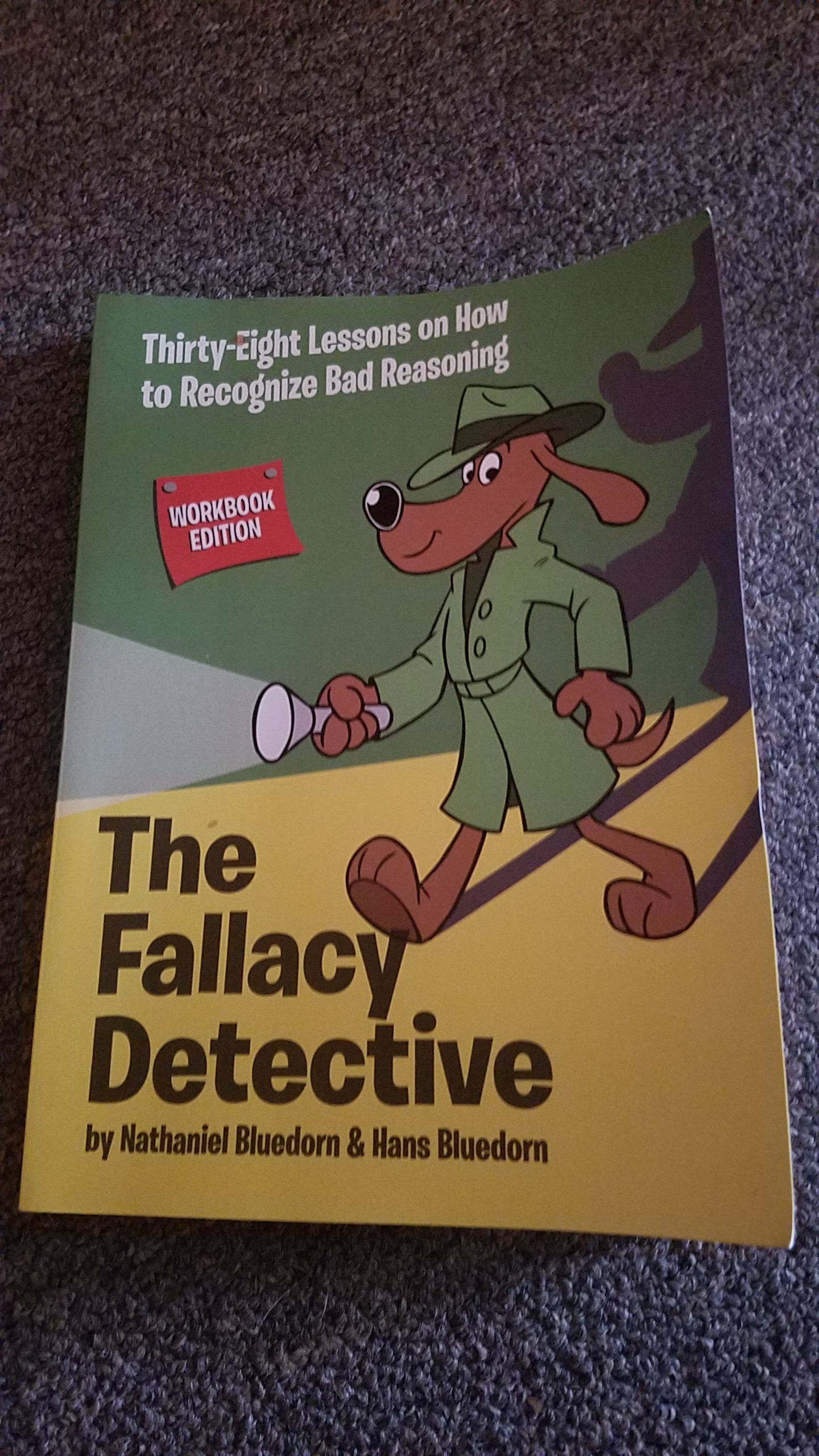
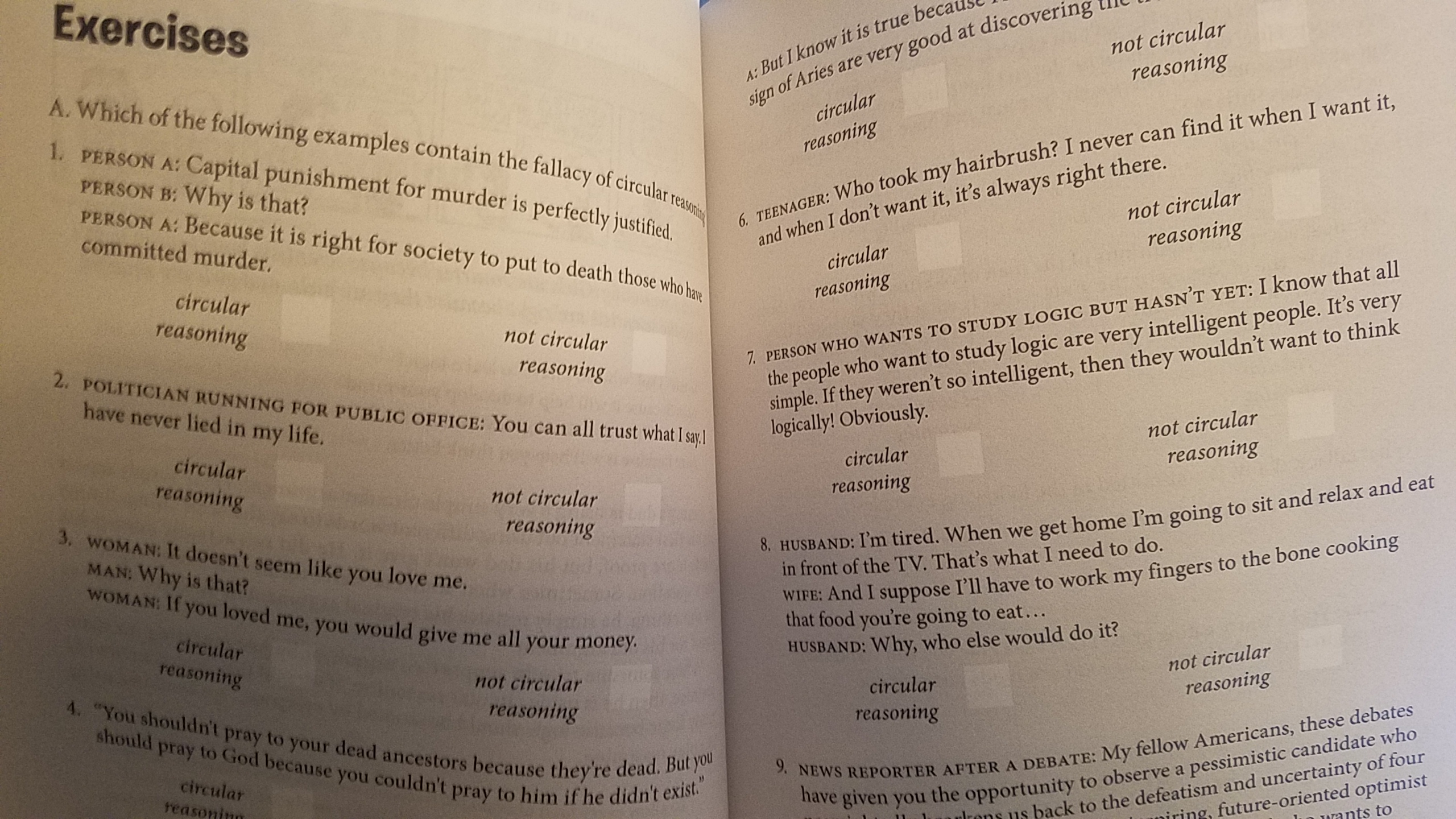
Logic: We use the book The Fallacy Detective to study logic and logical fallacies. While I don’t particularly care if my children can remember a fallacy’s exact name, I appreciate how it helps them identify fallacies in different arguments. (And they have come to love calling them out by name.)

Poetry: For poetry, we love the Poetry for Young People series. It is a great way to learn more about a poet and their poetry through read-aloud.

Books of the Bible: I realized that while we were covering a lot of Bible in our home, my younger boys had not memorized the books of the Bible, so we decided to grab the Books of the Bible set from Danika Cooley to work through this year and help them not only memorize the books but also understand a little more about them.

I am looking forward to our morning time together this year. We plan to do it right after breakfast to start our day together, but when that doesn’t work, we can be flexible and do it any time. I would love to hear what you are using for your morning studies this year.

Resource Library and Affiliate Disclosure

When you sign up for the Schoolin’ Swag free resource library, you will get a link and password to the library. We add new items to the library each month. You will also get a bi-weekly newsletter email to keep you updated on what we have going on.

Resource Library 

This post may contain affiliate or referral links, including Amazon affiliate links. As always, I will never recommend a product that I don’t believe in, and you will never be charged more for purchasing through our links. However, it does help pay for the costs associated with the blog.

Deals and Freebies

Schoolhouse Teachers is also offering a BOGO great sale! They are a great place for a one-stop shop curriculum or for having many options to fill in different electives and courses into what you have already chosen.

Don’t miss this FREE Shipping deal from All About Learning Press! We utilize both All About Spelling and All About Reading in our homeschool.

Tuttle Twins has some great new books available, as well as their new Academy on pre-order!

Field Trip Friday: Petroglyph National Monument

You might be exploring Petroglyph National Monument with teens if you hear one of them say, “I wonder if hundreds of years from now people will be looking at today’s graffiti this way.”

Petroglyph National Monument is a site in Albuquerque, New Mexico, with several different trails featuring rocks with petroglyphs.

(We have been taking advantage of my son’s Every Kid Outdoors Pass and visiting as many National Park sites as possible. For this post, I will use National Park to mean any park site, including historic sites, monuments, etc.)

*Some of the links in my posts may be affiliate links. See below for more information. *

Our Suggested Itinerary

Petroglyph is different from many parks because it is located in a city, and the different trails are several miles apart. Your first stop should be the information center. This is a small center that offers information and a gift store. There are also vault toilets at this location.

This is where you can get your passports stamped, your junior ranger books, and a good map of the trails. There is one small trail behind the information center, but no petroglyphs are there.

Once you have your map, you can choose one or more trails. We only had a few hours at this site, as it was a stop along our route for the day. So, we chose to only go to the Boca Negra location. This location has three trails, picnic tables, and a bathroom.

Some of the trails are wheelchair accessible, and they have viewing tubes for those who can’t get up close. However, we hiked one of the trails up the canyon and were able to see many different petroglyphs up close. There was also an amazing view of the area from the top of the trail. We enjoyed the hike and the petroglyphs but did not feel like we missed out on anything by not being able to go to the other locations.

If you only want to visit one or two trails and the information center, you can do this park in about two hours. However, if you have more time, you could check out the other trails and spend a full day exploring.

Science and History at Petroglyph National Monument

The primary focus of this park is the petroglyphs. There is much to learn about indigenous cultures from the drawings they left behind. While there are some information boards about the petroglyphs, we found that we needed more information to dig into the history. We purchased the Easy Field Guide to Southwest Petroglyphs to help my children learn more.

From a science and nature perspective, the canyon is volcanic rock, which provides a really interesting nature study. You can also see a variety of different desert plants and animals. We enjoyed seeing all of the plant and animal life, but if I had it to do over again, I would get field guides like this plant guide and this guide for animals to bring with us.

If you get a chance to visit, let me know how you like it. Don’t forget to take your park passport and get it stamped! We have found that the passport is a great way for the children to get a souvenir at each park with no additional expense after the initial purchase.

Where:

Information Center: Albuquerque, NM Unser Blvd. NW at the Western Trail intersection, approximately 3 miles north of I-40

Trails are located within a few miles of the information center.

Hours of Operation:

Information Center is open from 9 am to 4 pm seven days a week (closed on major holidays)

Costs: Free

Homeschool Discount: n/a

Website: https://www.nps.gov/petr/index.htm

Food: No food is available on site, but restaurants and parks are nearby.

 Pro tip: find a grocery store that sells Biscochitos, the New Mexico state cookie. The anise flavor is delicious.

Resource Library and Affiliate Disclosure

When you sign up for the Schoolin’ Swag free resource library, you will get a link and password to the library. We add new items to the library each month. You will also get a bi-weekly newsletter email to keep you updated on what we have going on.

Resource Library 

This post may contain affiliate or referral links, including Amazon affiliate links. As always, I will never recommend a product that I don’t believe in, and you will never be charged more for purchasing through our links. However, it does help pay for the costs associated with the blog.

Deals and Freebies

Schoolhouse Teachers is also offering a BOGO great sale! They are a great place for a one-stop shop curriculum or for having many options to fill in different electives and courses into what you have already chosen.

How Does Bear Feel?: A Timberdoodle Review

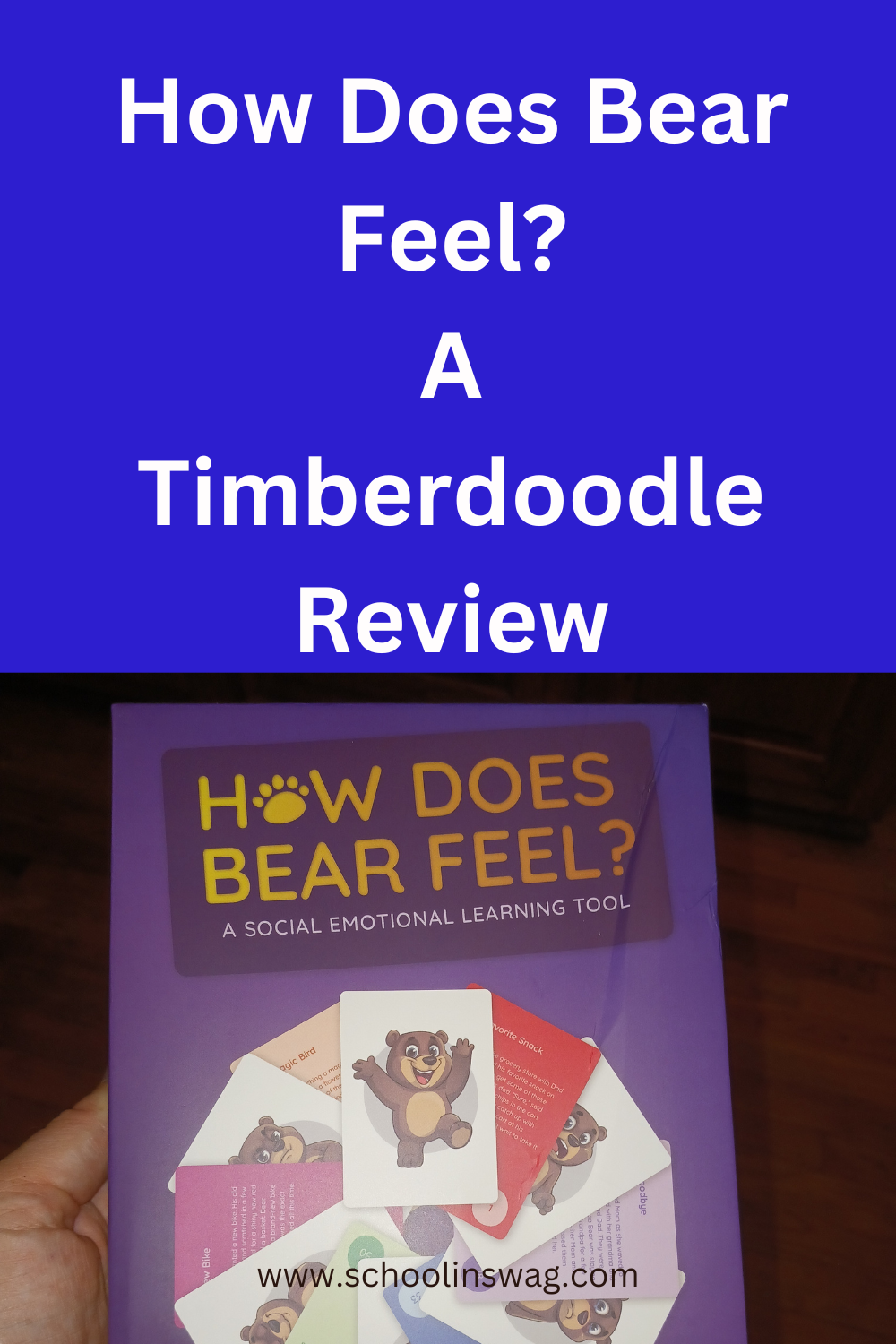
Emotions can be intense and confusing for young children. Even as adults, we sometimes struggle to put our emotions into words, and it is often much more challenging for young children. I was excited to get the chance to review Spark’s How Does Bear Feel?: A Social Emotional Learning Tool for Timberdoodle.


What is How Does Bear Feel?

How Does Bear Feel? is an activity that teaches children about different emotions and helps them recognize the body language cues associated with those emotions. The kit includes 50 double-sided story cards (100 stories), 20 bear emotion cards, and an instructional card.


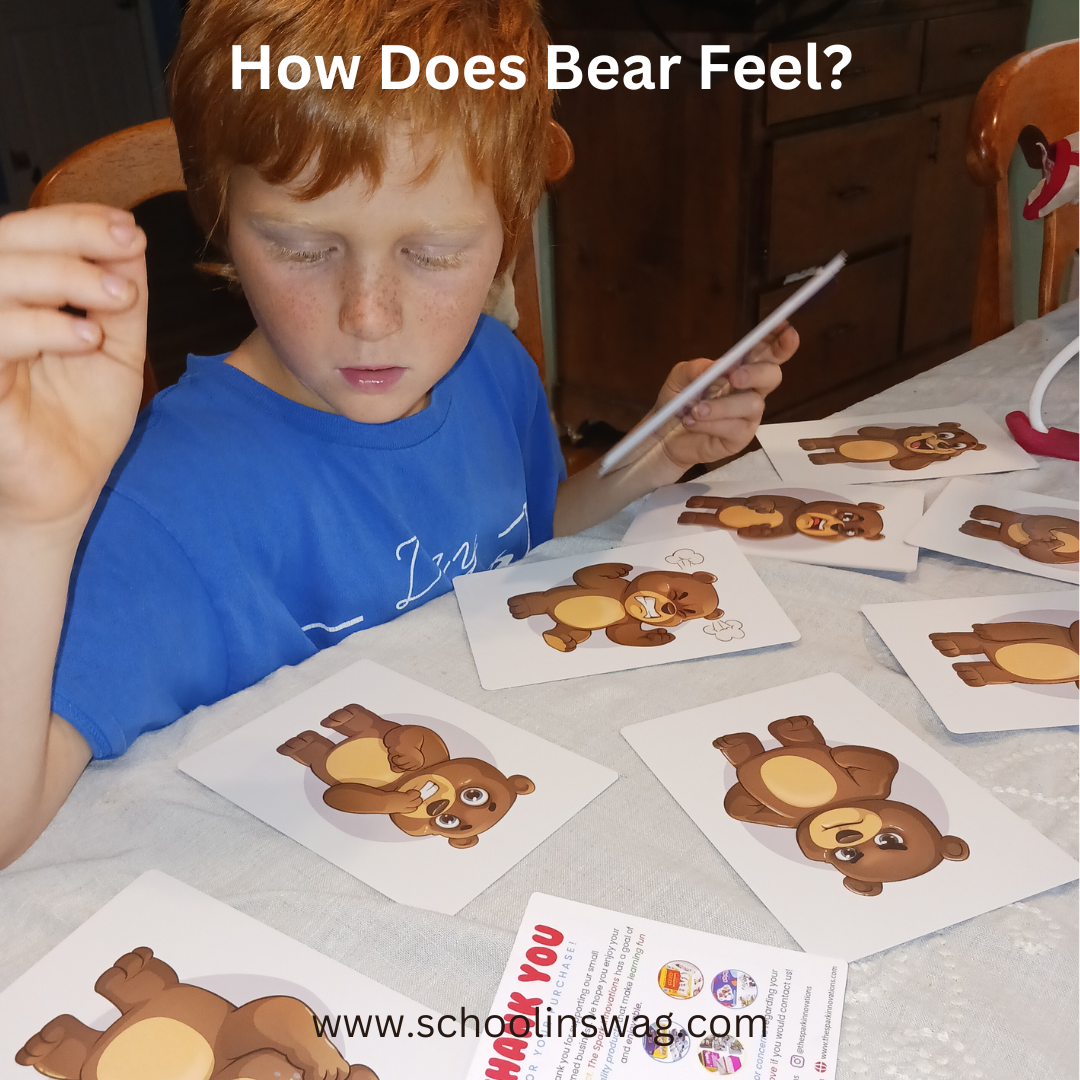
You read a story card aloud, and the students help to pick out which of the bear emotion cards they think the bear would feel based on the story. Then, they can also talk about how the card displays that emotion.


For example, the big smile shows he is happy. The open mouth and arms up show a surprised bear. The crossed arms and frown show an angry bear.
The other side of the instruction card also shows a miniature version of each of the emotion bears and names the emotion.

How Did We Use How Does Bear Feel?


I used How Does Bear Feel? with my son, who is just finishing up kindergarten. He sometimes struggles with expressing and handling his emotions. We sat down and made it a game. I would read a card, and he would find the emotion bear he thought matched.

Then, he would name the emotion and tell me why he thought that was the right bear.
Sometimes, I would ask him about other emotions that might also be correct to help him think about the situation.

For example, a bear might be happy and surprised simultaneously. He enjoyed the game and had no issues understanding how to play.
You could also use the bear emotion cards to help students talk through their own experiences or make up different scenarios that apply to them.

What Did We Think?


Overall, I thought that How Does Bear Feel? was a great tool for helping young students learn to understand and talk about emotions. I really appreciated that it not only helped them name the emotions but also examined body language to help them recognize and understand body language in others.


I appreciated that it had twenty different emotions to help students work through different nuances of emotion and see that they can feel a variety of emotions in any one situation. I also liked that it was flexible in the amount of time spent using the product. You could do a card a day in just a minute or two. You could also sit for as long as the student was interested and go through different story cards.

This product is generally great for ages three to six but could also be used for older students struggling in this area.


If you have a young child who is struggling with expressing emotions, understanding social cues, or handling big feelings, go to Timberdoodle and check out How Does Bear Feel?. You can purchase it individually or it is included in their Pre-K kit.

Field Trip Friday: Petrified Forest National Park

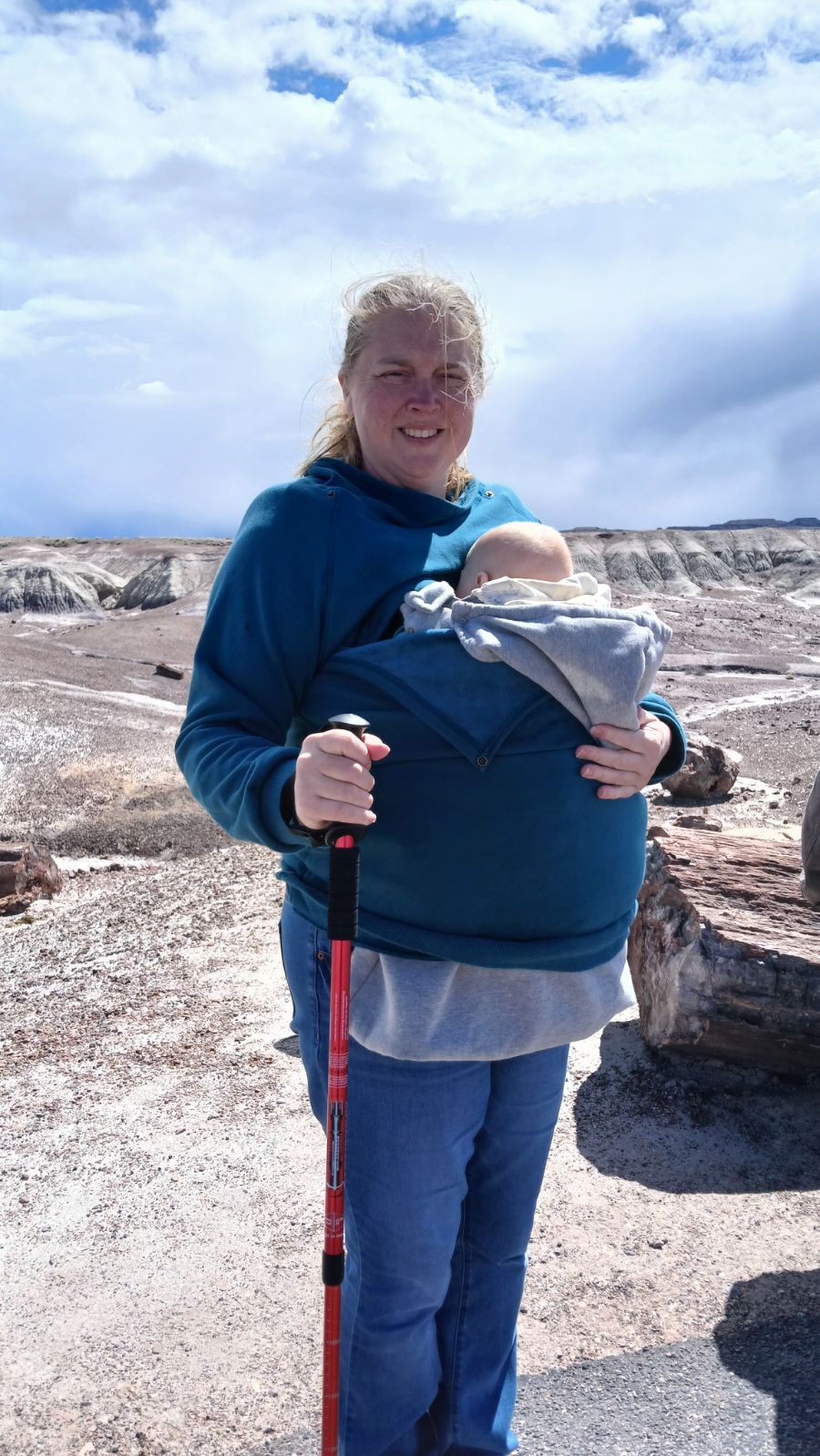
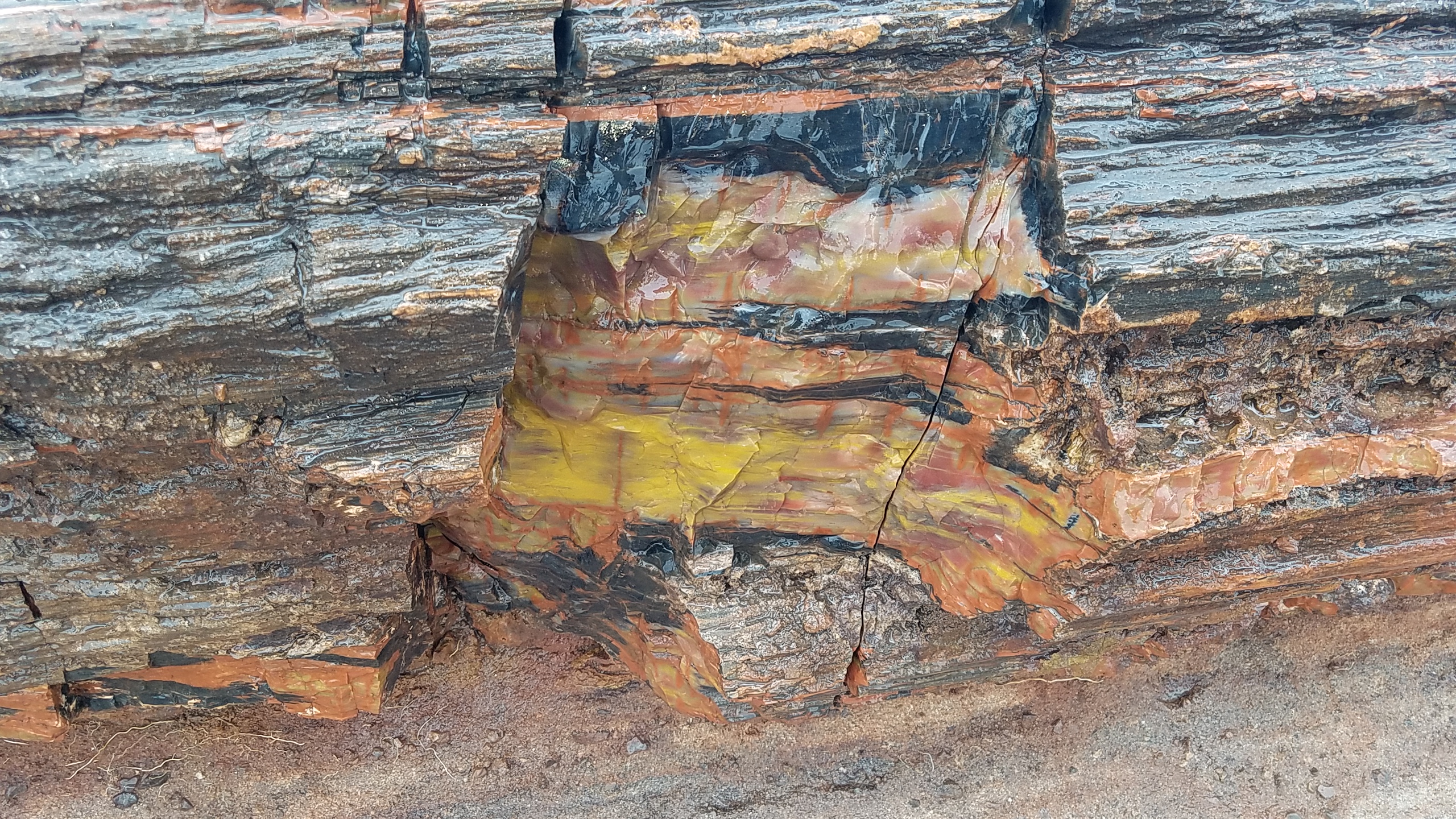
Is it a tree? Is it a rock? At Petrified Forest National Park, the answer to both questions is yes. We left New Mexico and headed west to Arizona to visit several national parks. Petrified Forest National Park was first on our list and it did not disappoint.

(We have been taking advantage of my son’s Every Kid Outdoors Pass and visiting as many National Park sites as possible. For this post, I will use National Park to mean any park site, including historic sites, monuments, etc.)

*Some of the links in my posts may be affiliate links. See below for more information. *

Our Suggested Itinerary

There are two visitor centers at Petrified National Park, one at either entrance, and they are twenty-eight miles from visitor’s center to visitor’s center. Due to bad weather the day before, we only had a half-day in the park. We could see most of what we wanted, but if possible, I would recommend a full day if you do a lot of hiking.

There are some excellent trails throughout the park, but if you do not have much time or have people with physical limitations that make hiking difficult, you can still see a great deal from various overlooks.

We started at the park’s south end with the Rainbow Forest Museum and Visitor’s Center. We chose this due to our location, but it worked out perfectly. We visited the visitor’s center to pick up our junior ranger books, took a short hike behind the visitor’s center to learn more about the petrified wood, and then started through the park.

If at all possible, you will want to drive the entire twenty-eight miles through the park. There are many parking lots and “overlooks” where you can see various features. Some you can see right from the parking lot, and others may require a short walk.

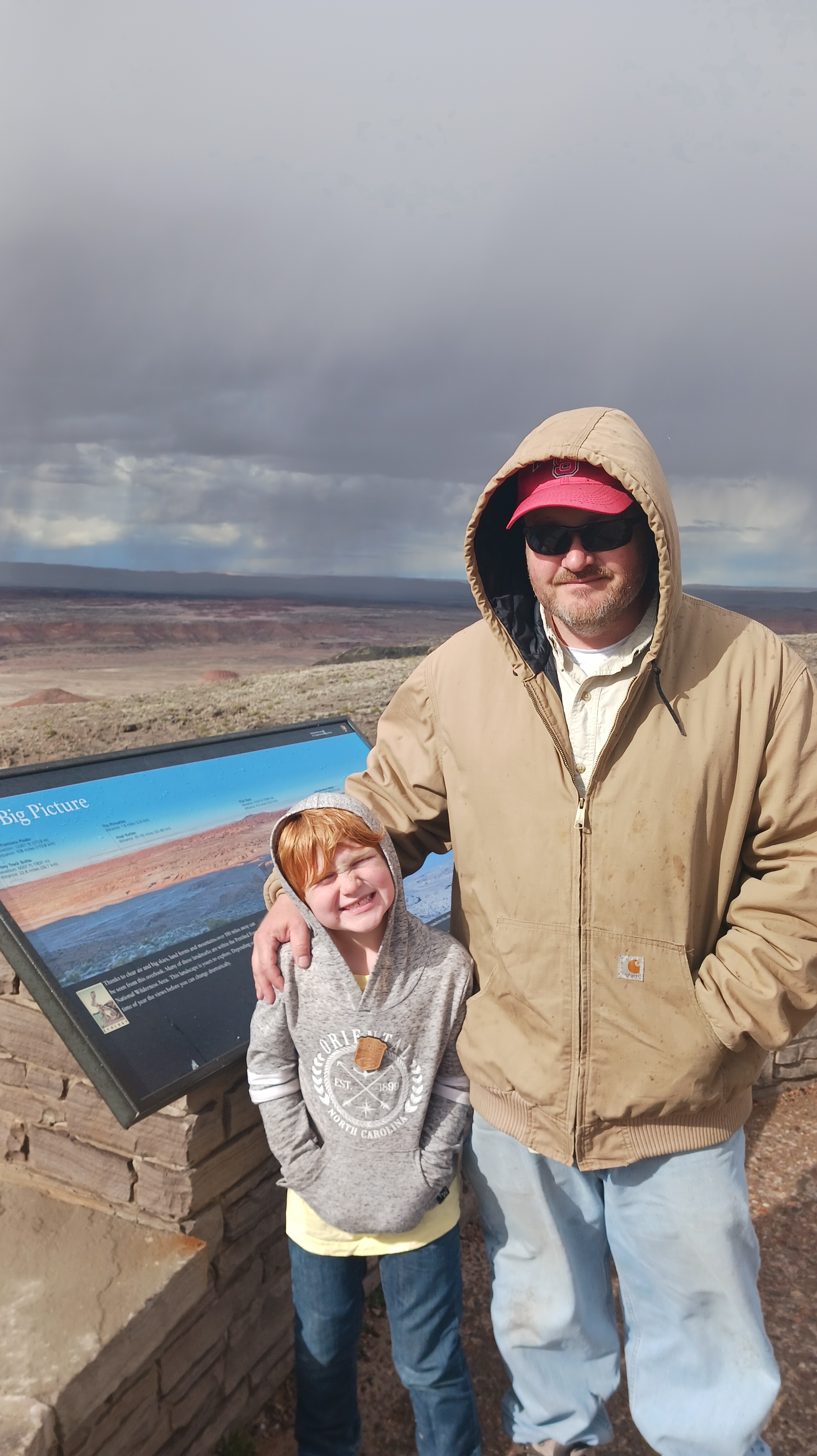
There are also some longer hikes available. On the day we were there, it was overcast and rained, so we mostly stuck to shorter hikes to make sure we were not too far away from the van in case the weather worsened.

The south side is very focused on the petrified wood, and there are many pieces you can see and some you can touch. Be sure to grab a map at the visitor’s center to know what is available at each stop; some are just trailheads, others are overlooks, and some have picnic shelters and restrooms. If you were in the park all day, one of these stops would have made a great lunch stop. No food is available on the stretch between the two entrances (except for an ice cream shop).

We personally really enjoyed the Giant Logs and Crystal Forest trails. They were short, relatively easy trails with great up-close views of the petrified trees.

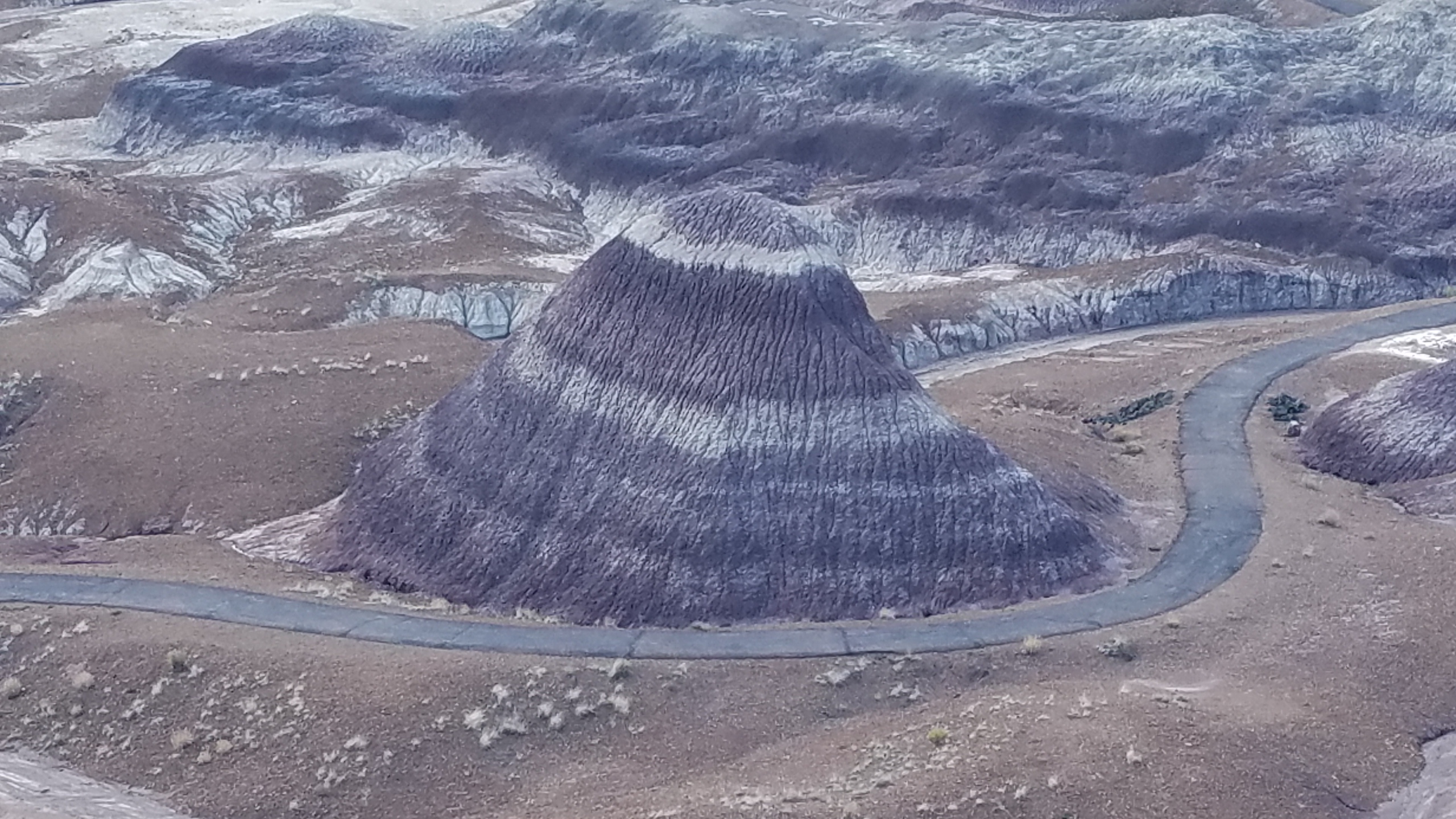
When you cross into the northern side of the park, it is known as the “Painted Desert.” The terrain changes and there are some beautiful scenic overlooks over dessert mesas with brilliant, colorful layers. Even on a cloudy gray day, it was stunning to see.

Along the way is a small museum and national landmark, the Painted Desert Inn. It was closed when we reached it on our visit, so check the current hours of operation if you want to stop there.

At the end of the twenty-eight-mile drive is a second visitor’s center, a lovely gift shop, and a restaurant. If your children have completed their junior ranger booklets along the way, they can turn them in here (you can also get them here and turn them in at the other visitor’s center if you are going in the opposite direction). They also have junior paleontologist booklets you can get, and you work through them at several National Parks sites.

We arrived at this point after the restaurant had closed, but the gift shop had some beautiful (and expensive) pieces of petrified wood. They also had a small box of pieces you could buy that was very reasonable and made a great souvenir. (It is illegal to collect petrified wood from within the park.)

Tips for the Area

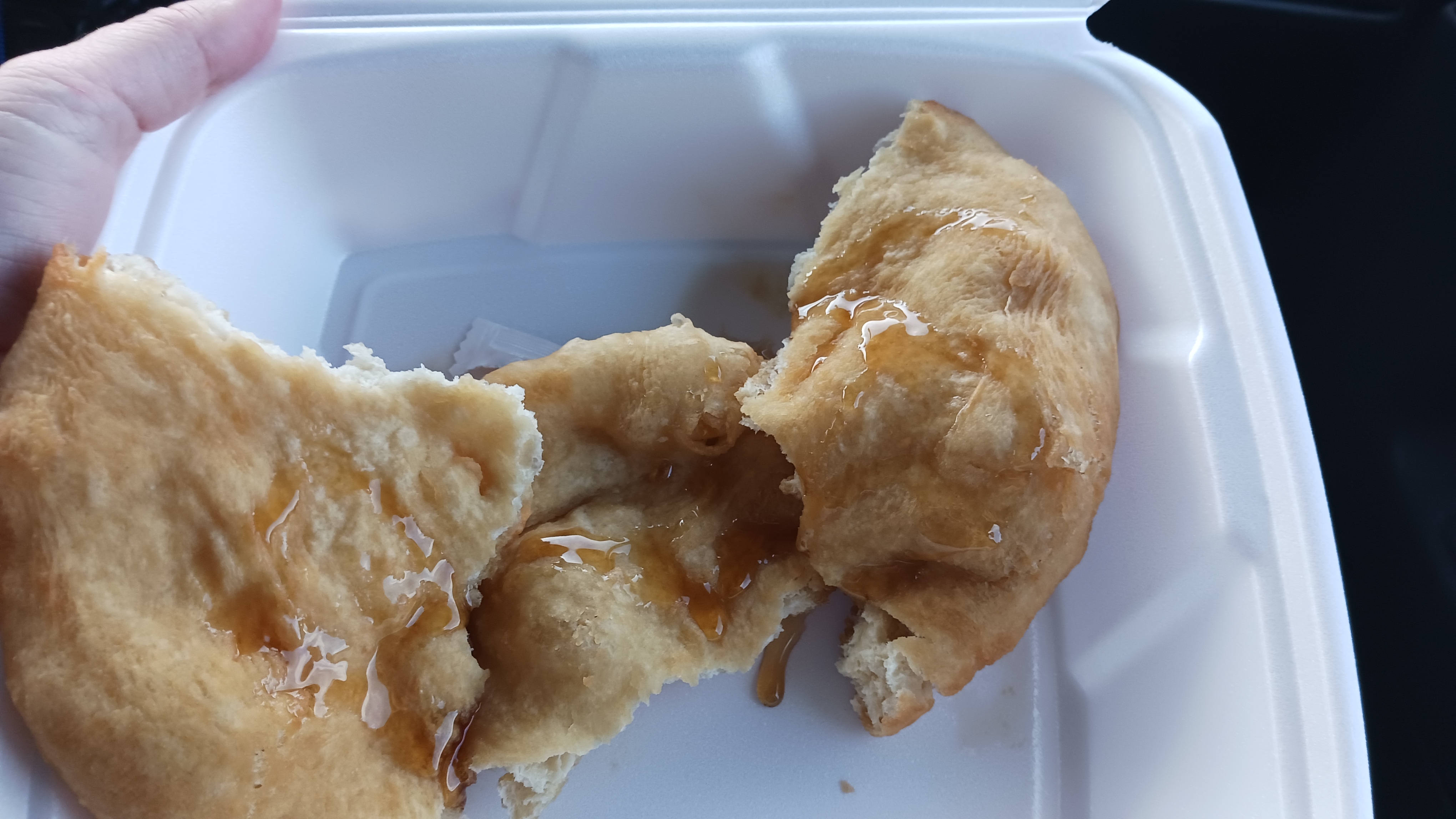
If you are finished at the park and looking for a treat, there is a little “hole in the wall” type restaurant in Holbrook, AZ just a short drive from the park called Mr. Maesta’s. We stopped because they had fry bread and Indian tacos. The inside had an eclectic atmosphere with LOTS of vintage decor. We picked up the fry bread and tacos to-go and they were delicious.

If you wish to camp (tent or RV) nearby, check out Homolovi State Park. It was a beautiful park in its own right with some amazing Native American ruins and nice hiking trails. It is also in a great spot to do day trips to several other sites.

Science at Petrified Forest National Park

Petrified Forest National Park is full of science opportunities. There is so much to learn about the petrified wood and the science behind the Painted Desert. Students can learn how different minerals cause the different layers to be different colors. The process of petrification is explained along the short trail behind the visitor’s center (a brochure with more details is available at the trailhead).

There are also exhibits about the different plants and animals that call the area home.

All the displays at national parks present information from an evolutionary point of view. However, as creationists, we still felt there was much to learn from visiting and understanding the basic process. We then added listening to a couple of episodes of Jonathan Park and reading about the Petrified Forest from Answers in Genesis to our learning to help my children understand how the Genesis Flood could have caused the petrified forest.

There is also a little bit of history with a pull-out dedicated to an old Studebaker and the things done by the CCC.

If you get a chance to visit, let me know how you like it. Don’t forget to take your park passport and get it stamped! We have found that the passport is a great way for the children to get a souvenir at each park with no additional expense after the initial purchase.

Where:

Northeastern Arizona

Westbound Interstate 40 travelers should take Exit 311, drive 28 miles through the park, and connect with Highway 180 at the south end. Travel 19 miles on Highway 180 North to return to Interstate 40 via Holbrook.

Eastbound Interstate 40 travelers should take Exit 285 into Holbrook and then travel 19 miles on Highway 180 South to the park’s south entrance. Drive the 28 miles north through the park to return to Interstate 40.

Hours of Operation:

Park Road Hours

Park hours are 8 am to 6 pm.

Visitor Centers and Museum Hours

Painted Desert Visitor Center and Rainbow Forest Museum & Visitor Center

8 am to 5 pm

Painted Desert Inn National Historic Landmark Hours

9 am to 4 pm

Costs:

$25 per vehicle (or $15 for an individual) or Free with a pass

Homeschool Discount: n/a

Website: https://www.nps.gov/pefo/index.htm

Food:

There is an ice cream store at the Painted Dessert Inn and a restaurant at the north entrance. (Also, see my note above about some great fry bread a short drive from the park.)

Resource Library and Affiliate Disclosure

When you sign up for the Schoolin’ Swag free resource library, you will get a link and password to the library. We add new items to the library each month. You will also get a bi-weekly newsletter email to keep you updated on what we have going on.

Resource Library 

This post may contain affiliate or referral links, including Amazon affiliate links. As always, I will never recommend a product that I don’t believe in, and you will never be charged more for purchasing through our links. However, it does help pay for the costs associated with the blog.

Deals and Freebies

Schoolhouse Teachers is also offering a BOGO sale right now! You can get two years worth of curriculum for your whole family for less than $300.

We love the Who, What, Why book series from Thinking Kids Press and now is a great time to buy with 20% off! You can check out our review here.

Timberdoodle Hidden Systems Book Review

What Are Hidden Systems?


Most people use the internet, electricity, and running water every day. Have you ever wondered exactly how they all work? We know that electricity comes through a power line, and pipes bring water into our homes. However, most people don’t understand how the systems work to make it happen.  

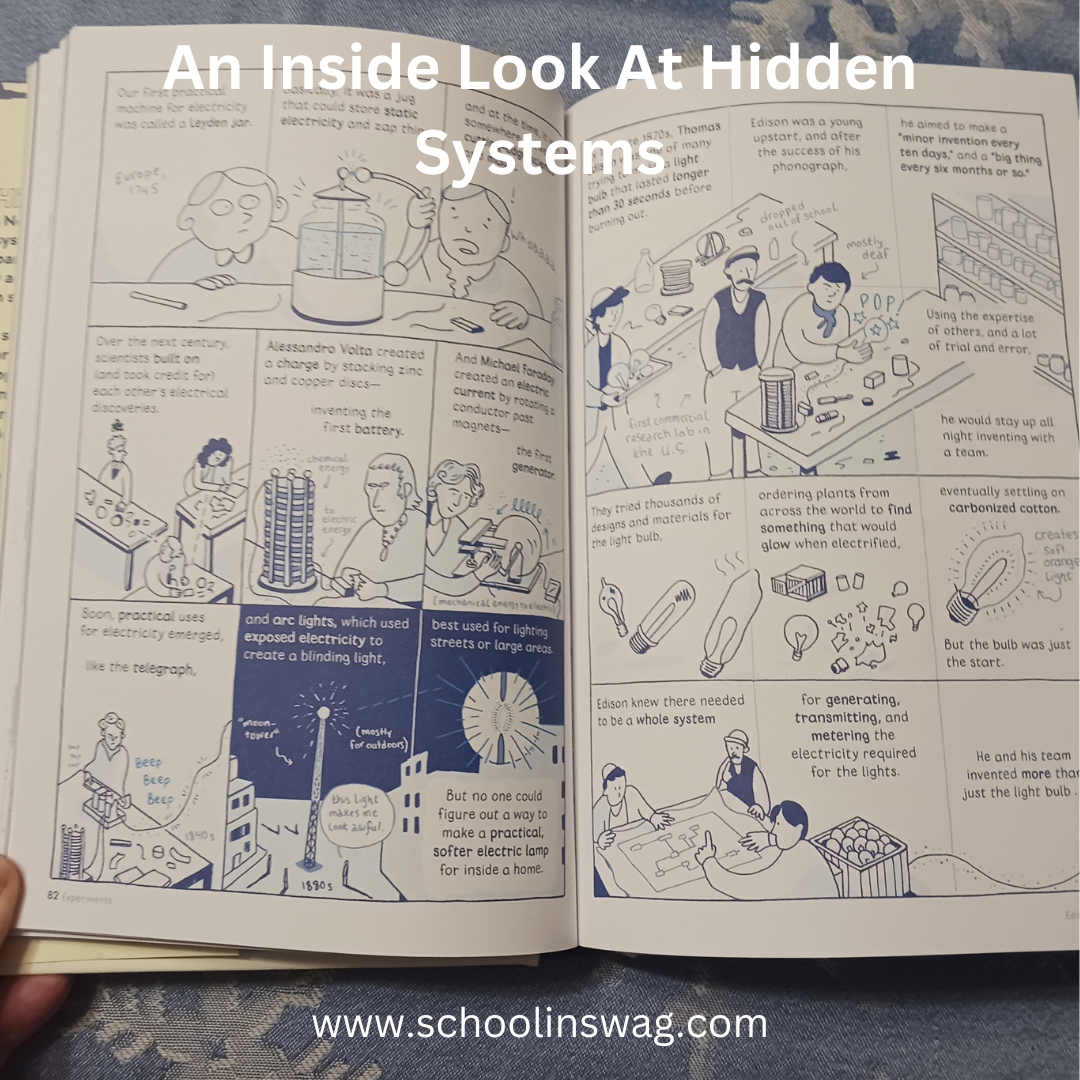
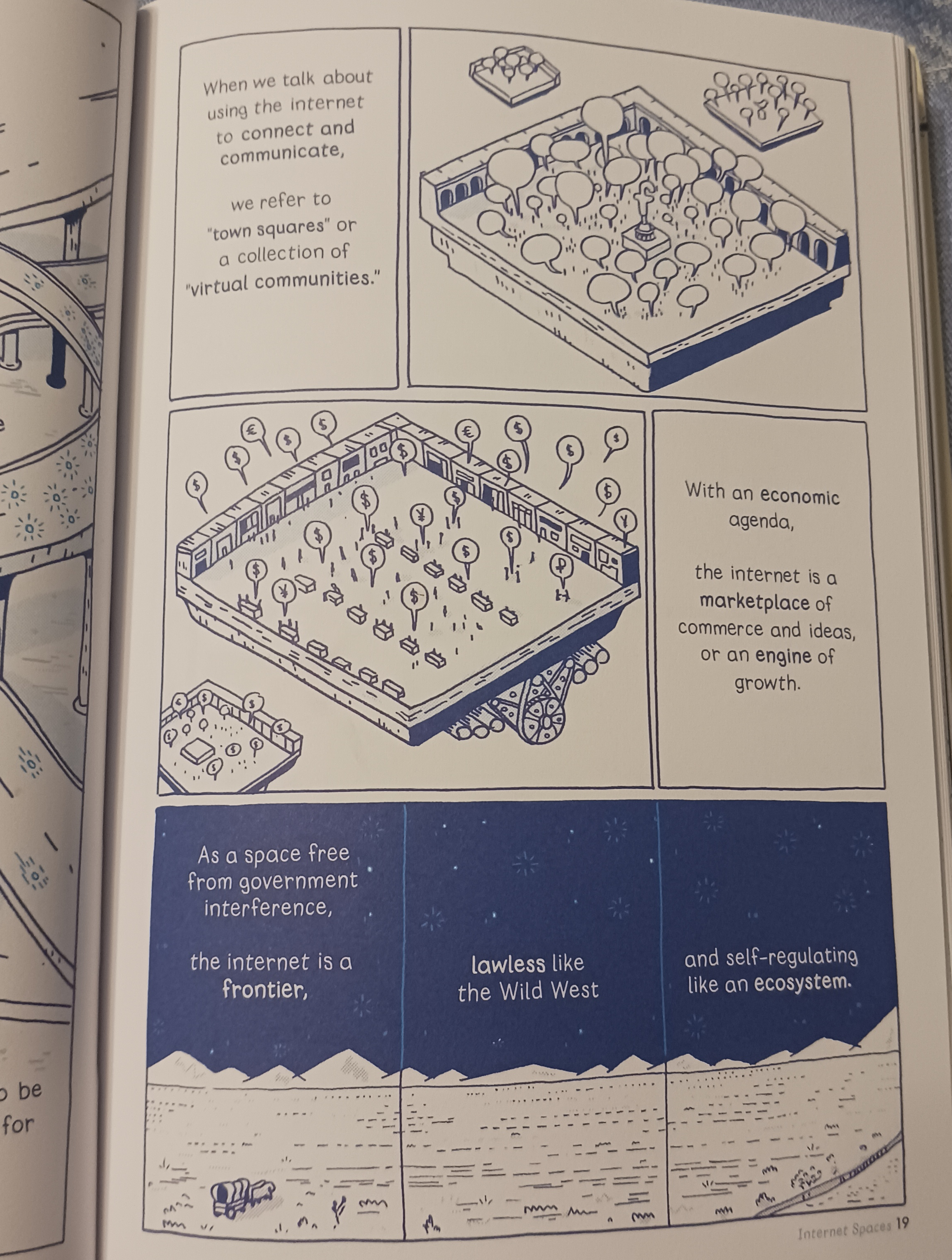
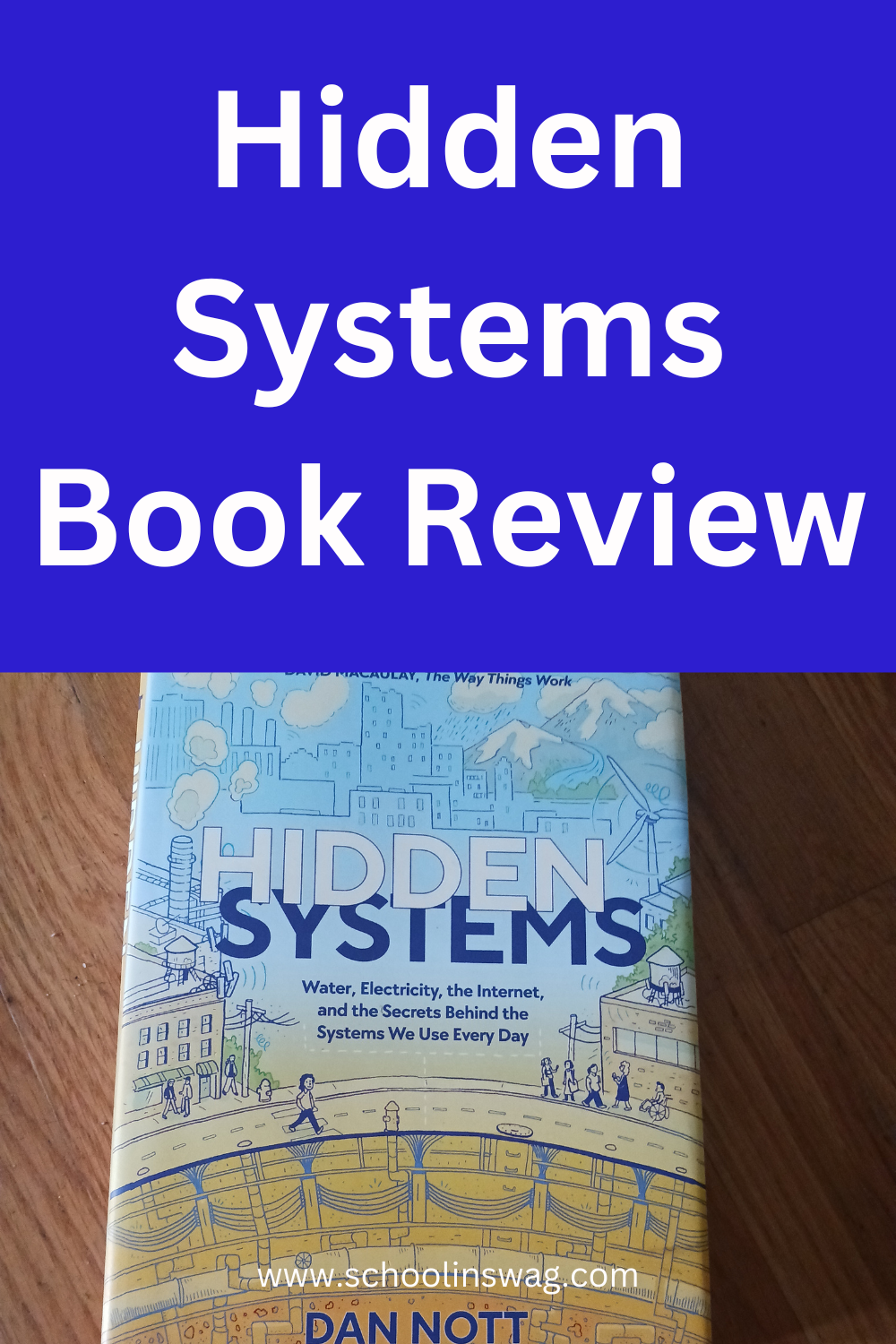
Timberdoodle allowed me to learn through a review of Hidden Systems, a graphic novel by Dan Nott that explains these systems. This delightfully illustrated graphic novel goes into great detail about the Internet, the power grid, and the water system.

I am dating myself, but I grew up in an age without the internet. I remember being in high school when e-mail became a “thing,” and I would drive to the local community college library to check my e-mail. When I went away to college, we had to either use the computers in the library or pay extra to get internet in our dorm rooms. However, it didn’t take very long before the internet became a household tool, and now it’s available on our phones and wirelessly in many places we shop and visit.

I know how to use the Internet, and both my husband and I run online businesses, but I can honestly say I never really understood how the Internet was set up or the physical structures that make it work.

Hidden Systems effectively explains how the Internet is built using simple, everyday language and well-drawn illustrations.

The book goes on to talk about the electric system and the water systems in the same way. The water system starts with the Earth’s natural water cycle and system and goes on to talk about man-made systems. It discusses how the two are connected, how sometimes man-made systems can have unintended consequences for the natural systems, and how we must work together to have systems that provide needed resources without destroying other natural resources.

Who Can Use Hidden Systems?

Timberdoodle uses this book in the grade 12 kit. I think the book could be used for a variety of ages. Elementary students could learn valuable information from the graphics but are not necessarily ready for all of the content. The content at the end that discusses the use of resources and power discrepancies can create a great conversation and discussion with teens. There are many viewpoints on some of these topics, and while you may disagree with the author on all of his points, it is an excellent catalyst for discussion on the many sides of each issue.

Overall, this book contains a lot of great content on the different systems. I recommend the part about the various systems for any age, but the content on equity, Indigenous peoples, and such is best for middle grades and older.

This book could be used as an independent read and would be interesting to many students who enjoy graphic novels or are interested in how things work. It would also work great as a part of a science class or as a family read-aloud with discussions.

Hidden Systems is available from Timberdoodle as a stand-alone purchase or as part of their grade 12 kit. You can find out more on their website.

Creationist Geology Unit Study for Elementary and Middle Grades

“Rocks, rocks, rocks, I’ve never seen so many rocks. I’m ready to see some trees.”

Those words came out of my teenage son’s mouth as we traveled around part of the western United States this spring. We live on the East Coast, and most of the rocks we see come from somewhere else. The land is beautiful but flat and sandy.

While he was joking about wanting to see some trees, we really enjoyed seeing all the different rock formations, canyons, and even petrified trees.  So, it was no surprise that my two elementary-aged boys wanted to learn more about rocks this year.

Why Geology?

We do our science studies together as a family in elementary and middle school. We usually choose a topic together each year. We primarily use Apologia, but this year, when my son said he wanted to learn about rocks, I went digging to see what we had and what resources were available to teach about rocks and geology from a creationist point of view.

Resources for a Creationist Geology Study

We already had the Wonders of Creation: Geology book from Master Books, which is geared towards students in grades seven to twelve. The two that I am teaching this year are grades one and five. Wonders of Creation: Geology also does not contain hands-on activities because it is a spine used as part of another curriculum.

However, I really liked the content and the fantastic illustrations in Wonders of Creation: Geology, so I decided to use it as a spine and create my own study.

I found an excellent book for younger children called Rocks and Minerals for Little Eyes by Patrick Nurre. This book is designed for pre-K to second grade and includes some very basic content and a lovely selection of hands-on activities. It was perfect for the students I am teaching this year, but they also have other levels if your students are older.

Next, I searched our Homeschool Nature Study subscription to see what was available. To my delight, there is a whole unit on rocks. This included hands-on studies, notebooking pages, and more.  We have a “bingo” card to fill out with different hands-on activities, outdoor activities, indoor projects, and so much more.

Finally, I knew we would need some rocks to study. Part of our study will be collecting rocks where we can find them, but thankfully, we also had a small rock collection to get us started. We had picked this up secondhand, but there are lots of options on Amazon. This set will give us a more extensive variety of rocks to study and help us have some known rocks to compare to the ones we find.

Once I had gathered my materials, I set out to make a plan. The Wonders of Creation: Geology and Rocks and Minerals for Little Eyes covered many of the same topics but in a different order. The materials are more basic since Rocks and Minerals is for a younger audience.

How Are We Using our Geology Resources?

Therefore, I decided to start each topic with that book and then go into the Wonders of Creation: Geology book. Once I laid out a schedule that incorporated both of those books, I added the components of the Rocks Nature Study course according to where they fit best with the other material. I have put this information on an easy-to-use and edit chart in our free resource library for anyone who wants to use these materials to teach geology.

I set up my timeline to cover each topic over two weeks. During those two weeks, we will read the sections in each book, complete activities from the Rocks and Minerals book, and do the related nature study activities.

We Are Covering in Our Creationist Geology Study?

  • Creation
  • The Flood
  • What the Earth is made of/Parts of the Earth’s surface
  • Different Types of Rocks
  • Different Geological Processes (fossilization, erosion, etc.)

Based on that timeline, I have twenty-two weeks of geology study. While many curricula use the thirty-six-week timeline, we like to take December off of our regular studies for Christmas-themed studies. By finishing early, we can use those last weeks of school in the spring to further our hands-on rock study with nature hikes and field trips. If you want or need a full thirty-six weeks, you can take more time to cover the other topics or add more in-depth study using library books about specific topics.

Geology Field Trips

There are so many field trip options for this study! You can start with simple trips like a nature hike in a local park to look for rocks. There are also a variety of museums that have rock and mineral exhibits. You can visit a mine and learn more about that process and see what the different rocks and minerals look like when they are found in the Earth. Various state and national parks also focus on geological features or remarkable rocks and minerals.  I’m sharing about different national parks in my Field Trip Friday series.

We are looking forward to diving into our geology study, learning more about the rocks and geological features we saw on our trip, and getting outside to explore rocks “in the real world.”  If you have studied rocks and geology, what were your favorite resources?

Remember, if you want to study geology this year, you can download our curriculum plan in our free resource library.

Resource Library and Affiliate Disclosure

When you sign up for the Schoolin’ Swag free resource library, you will receive a link and password to the library. We add new items to the library each month. You will also receive a monthly newsletter email to keep you updated on what we have going on.

Resource Library 

This post may contain affiliate or referral links, including Amazon affiliate links. As always, I will never recommend a product that I don’t believe in, and you will never be charged more for purchasing through our links. However, it does help pay for the costs associated with the blog.

Deals and Freebies

Schoolhouse Teachers is also offering a BOGO sale right now! You can get two years worth of curriculum for your whole family for less than $300.

We love the Who, What, Why book series from Thinking Kids Press and now is a great time to buy with 20% off! You can check out our review here.

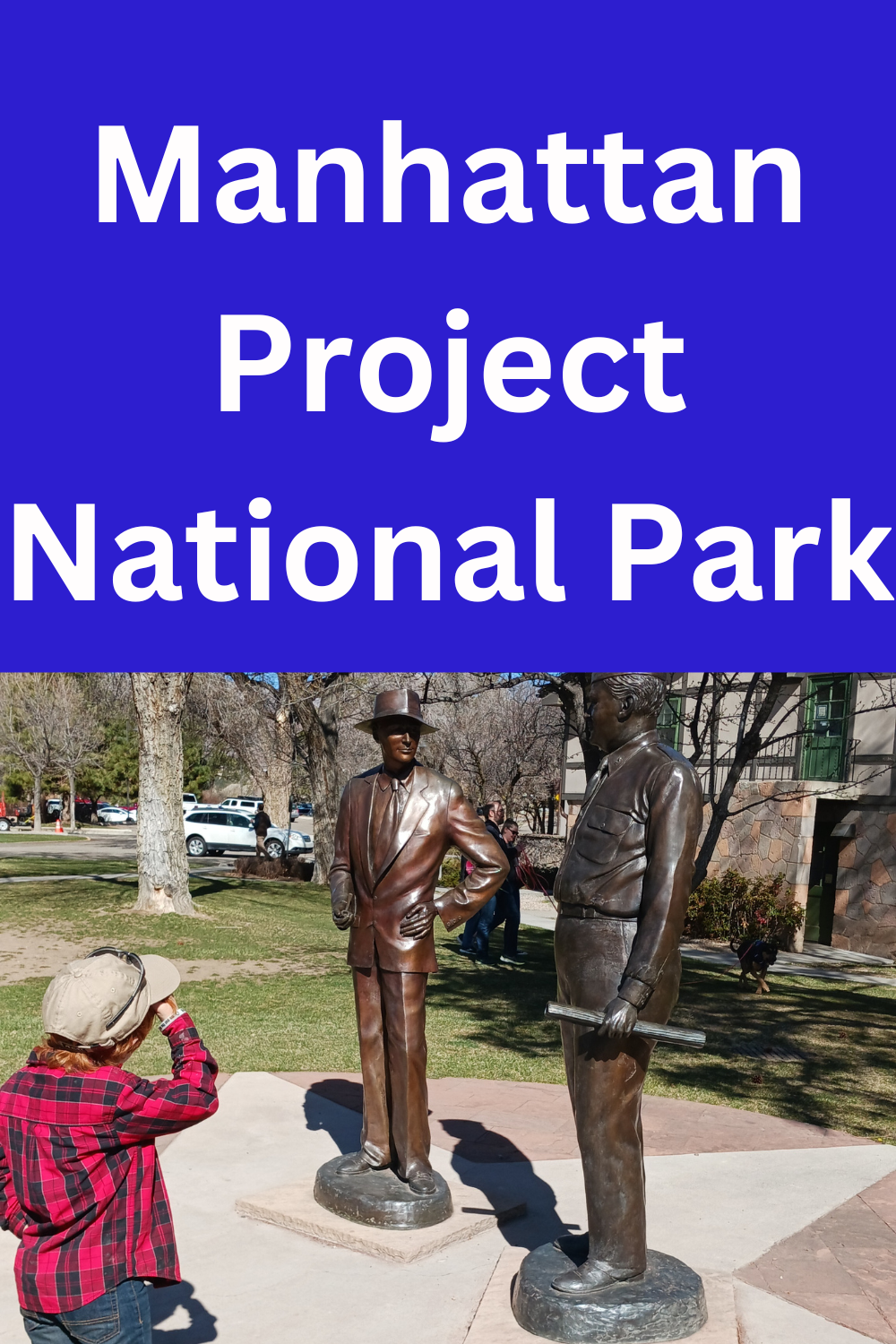
Field Trip Friday: Manhattan Project National Park

Have you ever heard of the Manhattan Project? It might make you think of New York City, but if you are familiar with World War II, you will know that the Manhattan Project created and tested the atomic bombs.

(We have been taking advantage of my son’s Every Kid Outdoors Pass and visiting as many National Park sites as possible. For this post, I will use the term National Park to mean any park site, including historic sites, monuments, etc.)

*Some of the links in my posts may be affiliate links see below for more information. *

Our family loves history, but my husband, in particular, is a history buff, and he was very excited to visit part of the Manhattan Project National Park. While several parks are spread over more than one state due to their large size (Yellowstone) or just because they are close to a border, this one is unusual in that it is in three distinctly different locations. The three parts of this park are in Tennessee, New Mexico, and Washington states.

Our trip only brought us to the portion in New Mexico, but we hope to make it to the Tennessee portion on our next adventure.

Our Suggested Itinerary

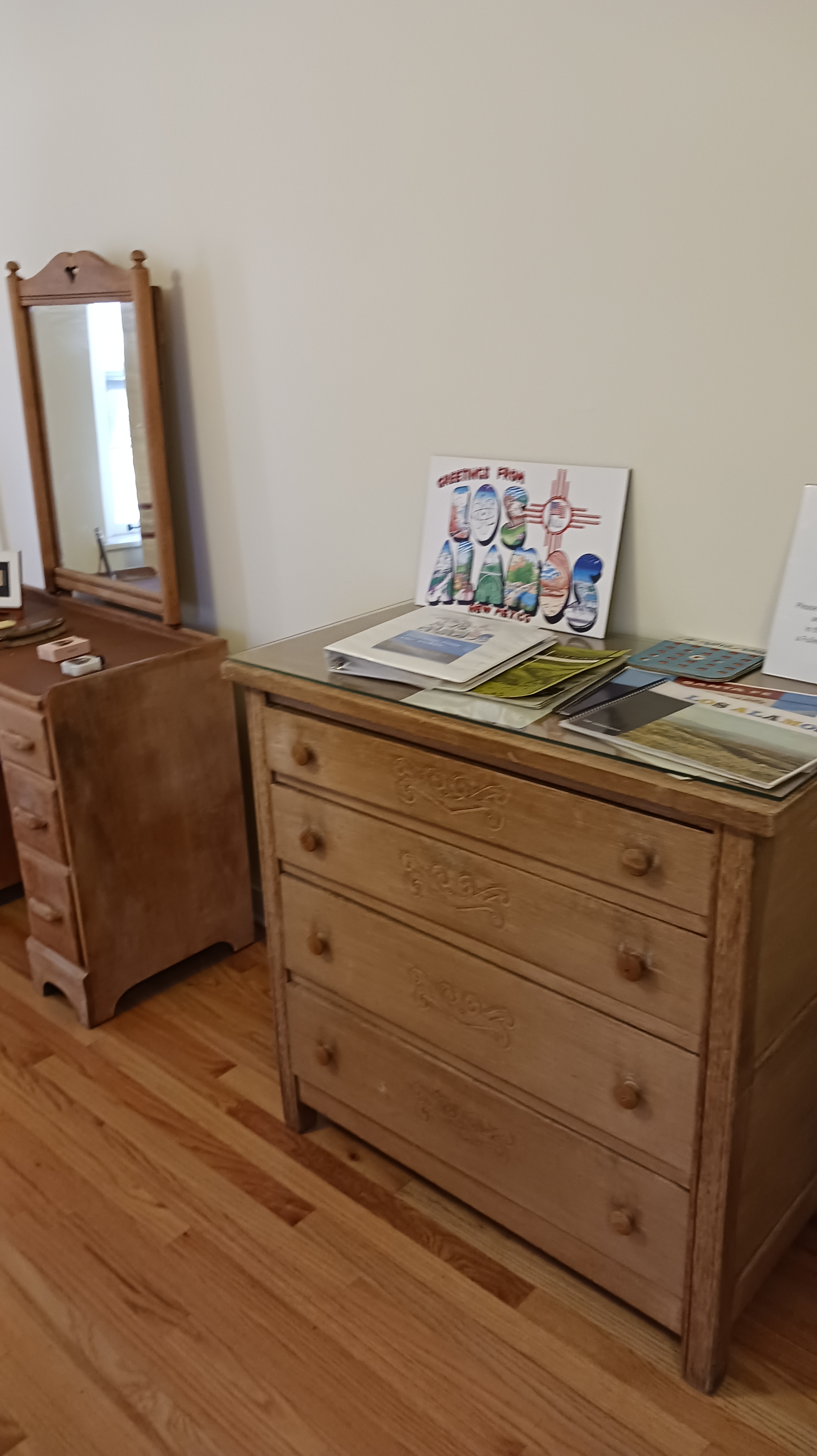
The New Mexico portion of this National Park is actually very small. It consists of a small two-room visitor center with a few informational boards. However, they also have a map for a walking tour of the area near the visitor’s center, where you can see various buildings that were an integral part of the town that was built there due to the Manhattan Project.
On the tour, there is also a wonderful (and free) science museum, which includes a short film about the town’s and the Manhattan Project’s history.

I would recommend starting at the visitor’s center to get your passport stamps and Junior Ranger badges. The wonderful rangers and volunteers there will show you the map and help you get your bearings. Then you can start your walking tour. Our family took about an hour to complete the walking tour portion.  The tour is approximately a mile from the visitor’s center and goes back to the science museum. The local history center also has some guided tours available.

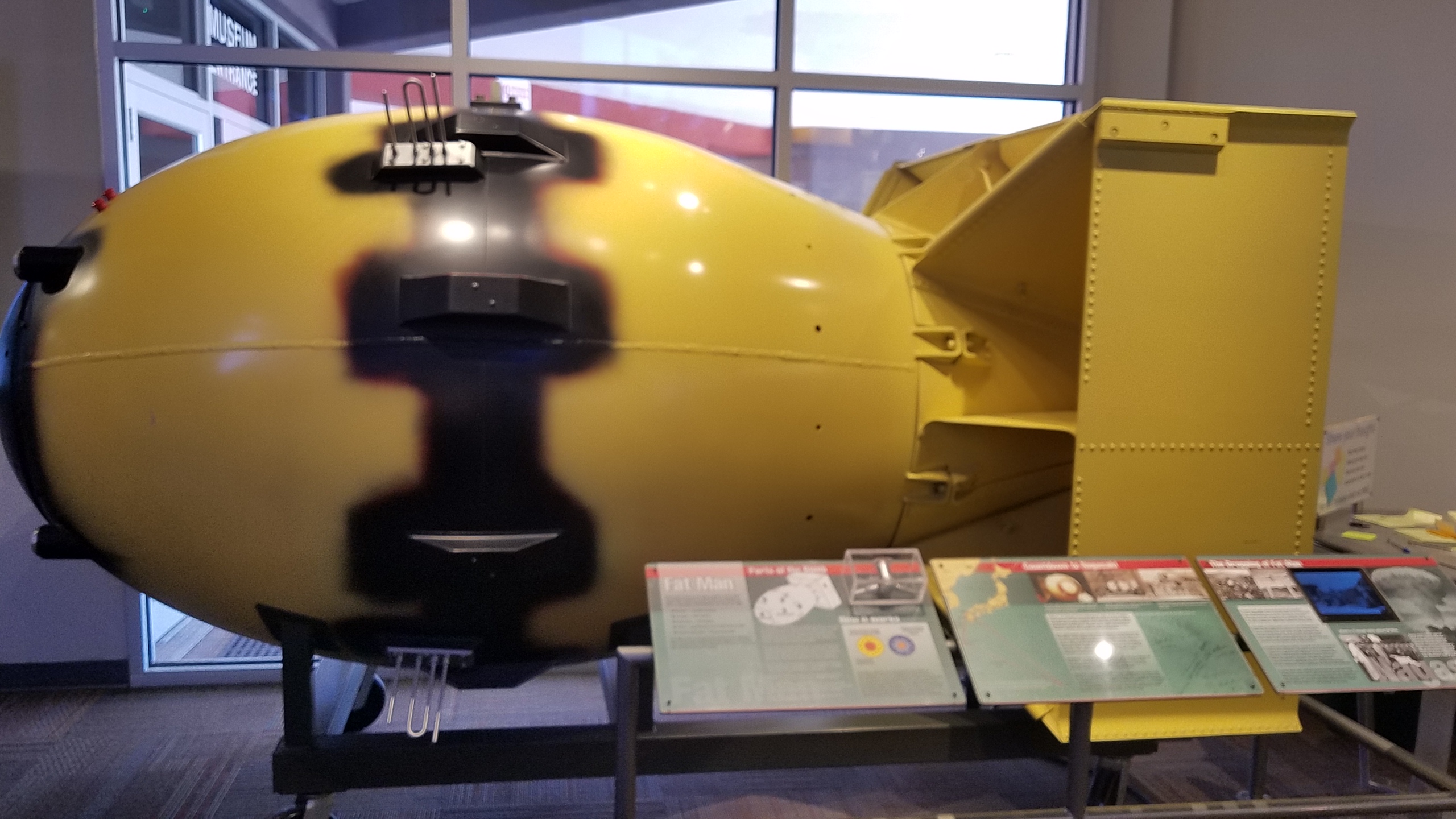
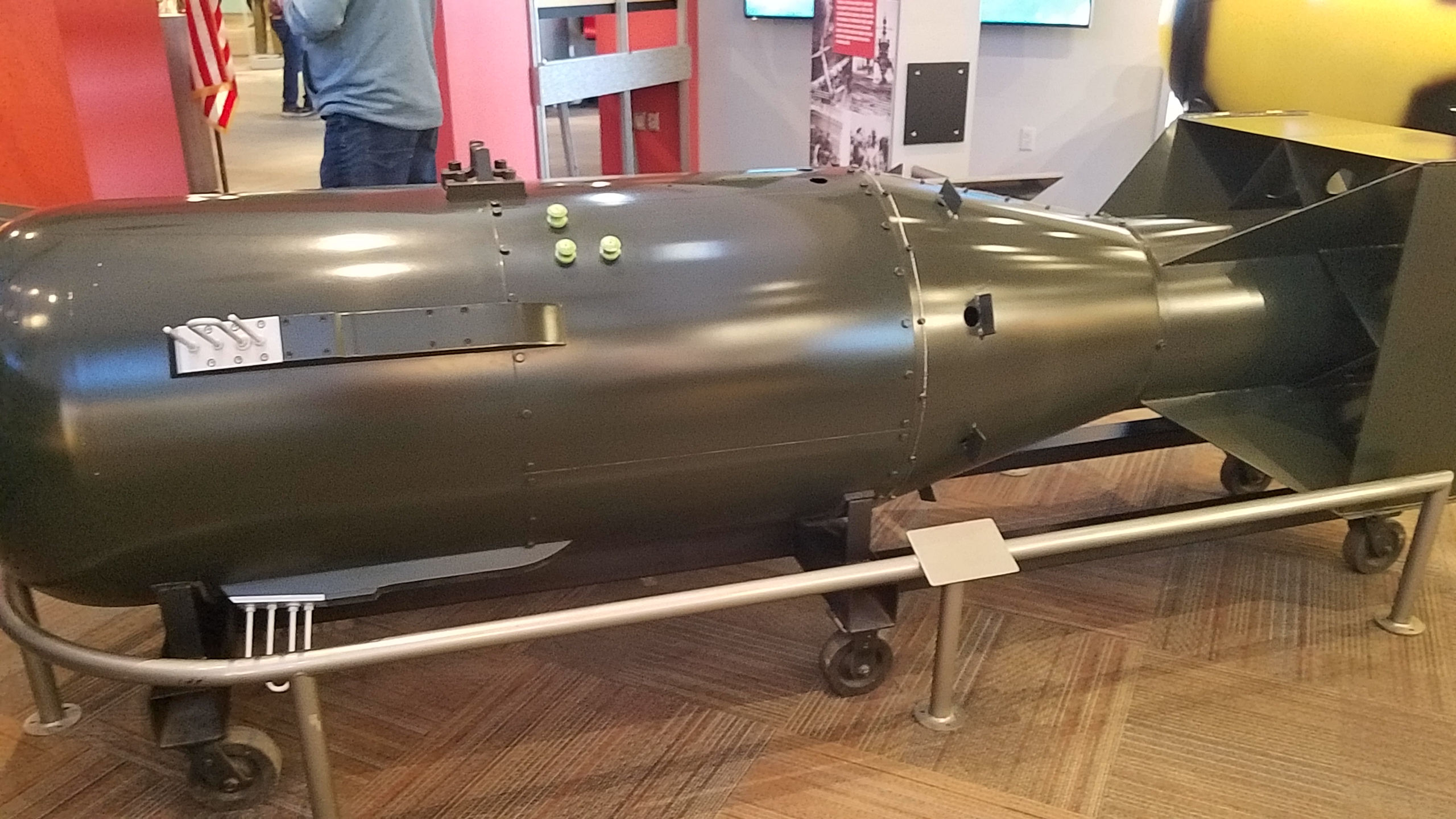
We went to the Bradbury Science Museum at the end of our tour. There, you can watch a film about the history of the Manhattan Project and see and interact with multiple other exhibits about nuclear science. There were earthquake simulators, models of the atomic bombs, information about nuclear defense, and more. This science museum had exhibits for all ages. We only had about an hour to spend at the museum, and we got a good feel for the various exhibits and watched the film. However, if you had more time, you could spend two to three hours exploring the museum.

History and Science at Manhattan Project National Park

The Manhattan Project National Park (New Mexico site) is one where history and science naturally come together.  The site and the town reflect the fact that it was built during the wartime period. For example, one of the housing sections was bathtub row because they were the only homes in town with bathtubs because they were built before the war. Due to the war efforts, the materials were unavailable to put bathtubs into the new construction.

The Bradbury Science Museum, a partner with the park site, provides an abundance of science related to the Manhattan Project. There are exhibits about how atomic bombs worked, a simulator that shows the difference between how bombs and earthquakes shake the ground, magnetics, and more. We especially appreciated that the content was appropriate for a wide variety of ages and knowledge levels.

If you can visit, let me know how you like it, and remember to take your park passport and get it stamped! We have found that the passport is a great way for the children to get a souvenir at each park with no additional expense after the initial passport purchase.

Basic Information About Manhattan Project National Park (New Mexico Site)

Where:

Los Alamos Visitor Center

475 20th Street, Suite C

Los Alamos, NM 87544

Hours of Operation:

National Park Visitor’s Center:

Friday-Monday 10:00-3:00 (Closed Major Holidays)

Bradbury Science Museum:

Tuesday through Saturday, 10 a.m. to 5 p.m.

Sunday, 1 to 5 p.m.

Costs:

Free

Homeschool Discount:

No Fees

Website:

https://www.nps.gov/mapr/index.htm

Food:

No food is available on site, but restaurants and parks are nearby.  

Resource Library and Affiliate Disclosure

When you sign up for the Schoolin’ Swag free resource library, you will receive a link and password to the library. We add new items to the library each month. You will also receive a monthly newsletter email to keep you updated on what we have going on.

Resource Library 

This post may contain affiliate or referral links, including Amazon affiliate links. As always, I will never recommend a product that I don’t believe in, and you will never be charged more for purchasing through our links. However, it does help pay for the costs associated with the blog.

Deals and Freebies

Schoolhouse Teachers is also offering a BOGO sale right now! You can get two years worth of curriculum for your whole family for less than $300.

We love the Who, What, Why book series from Thinking Kids Press and now is a great time to buy with 20% off! You can check out our review here.