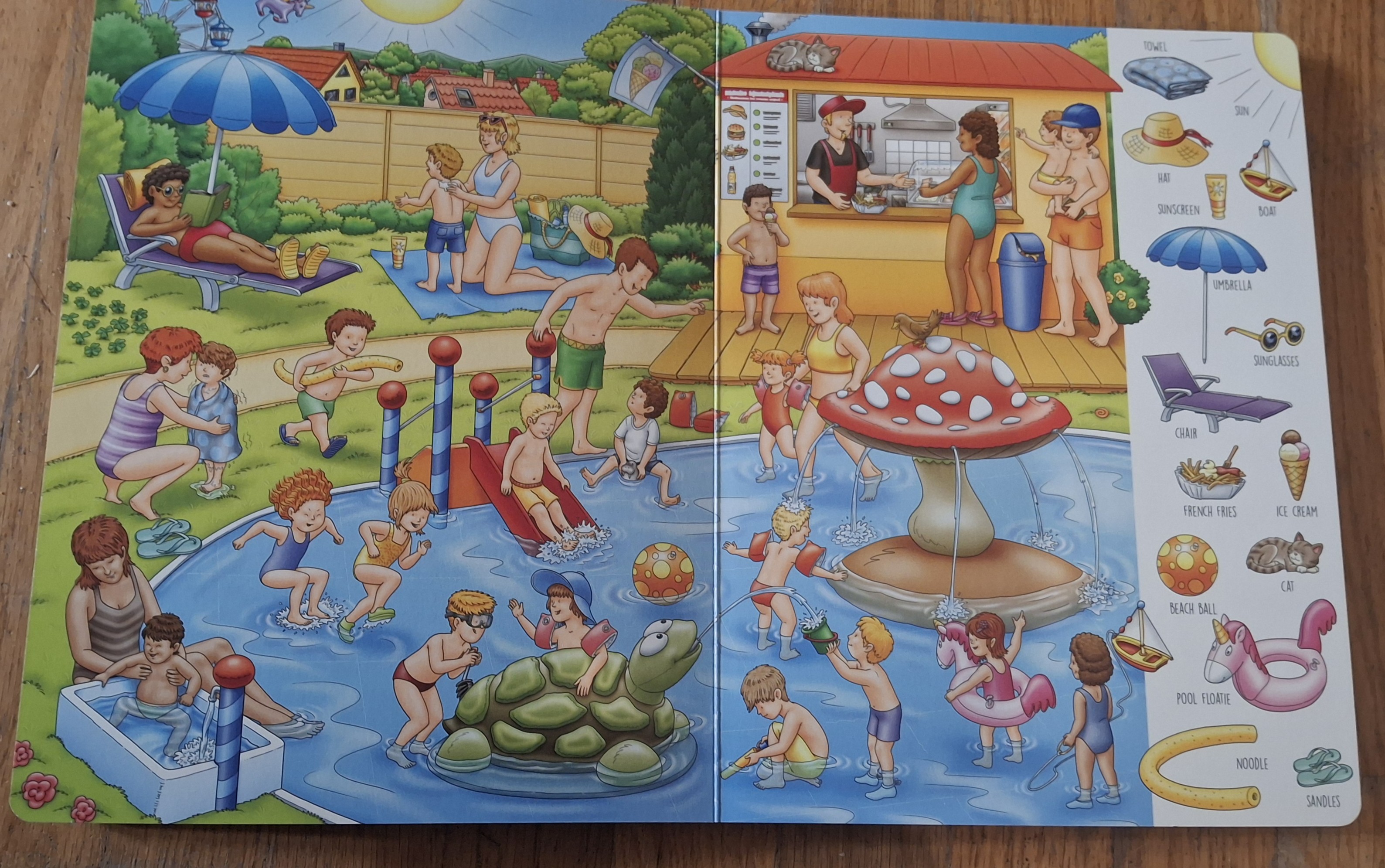
Wimmelbook My First 100 Words from Timberdoodle is a beautiful board book-style book by Max Walther. Each page layout features a different full-color scene, and the right-hand margin has a series of words and matching pictures from the scene.
What is Wimmelbook My First 100 Words?
For example, the first page features a family in their kitchen having breakfast.
The side column features words such as:
Frying pan
Mug
Grapes
Cucumber
Jam
Eggs
Coffee maker
Toaster
Etc.
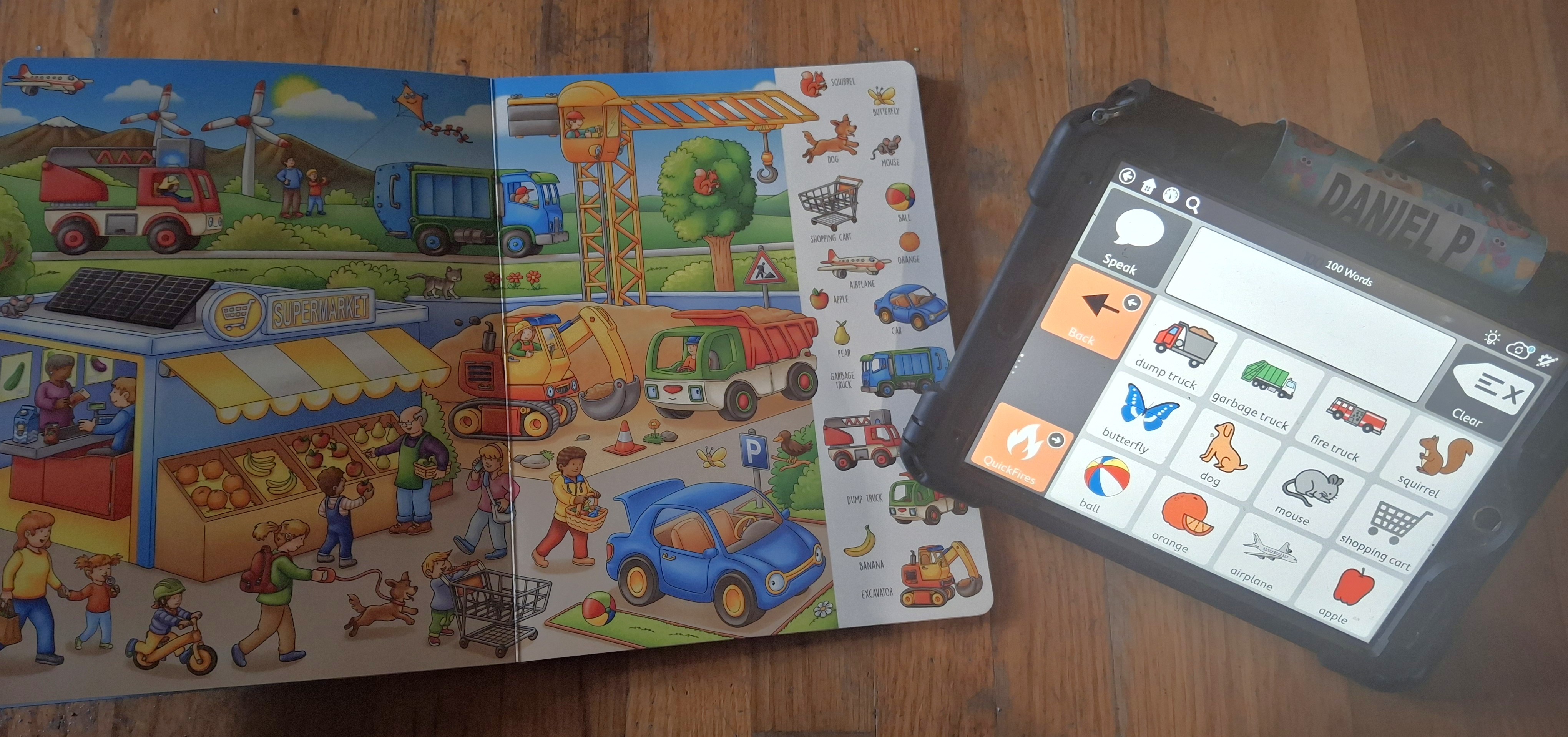
Other scenes include a day care or preschool environment, a transportation scene, a pool, a playground, a zoo, and a bedroom, which gives you a wide variety of words and pictures.
The only words in the book are the ones that are in the margin naming the different items. This opens up many ways to use the book.
You can use it to practice visual identification by trying to find the objects named in the margin in the illustrations. You can ask your children to tell you a story about what they see, or you can make up stories to tell them and work in some of the new “vocabulary” words from the margin.
How Did We Use the Book?
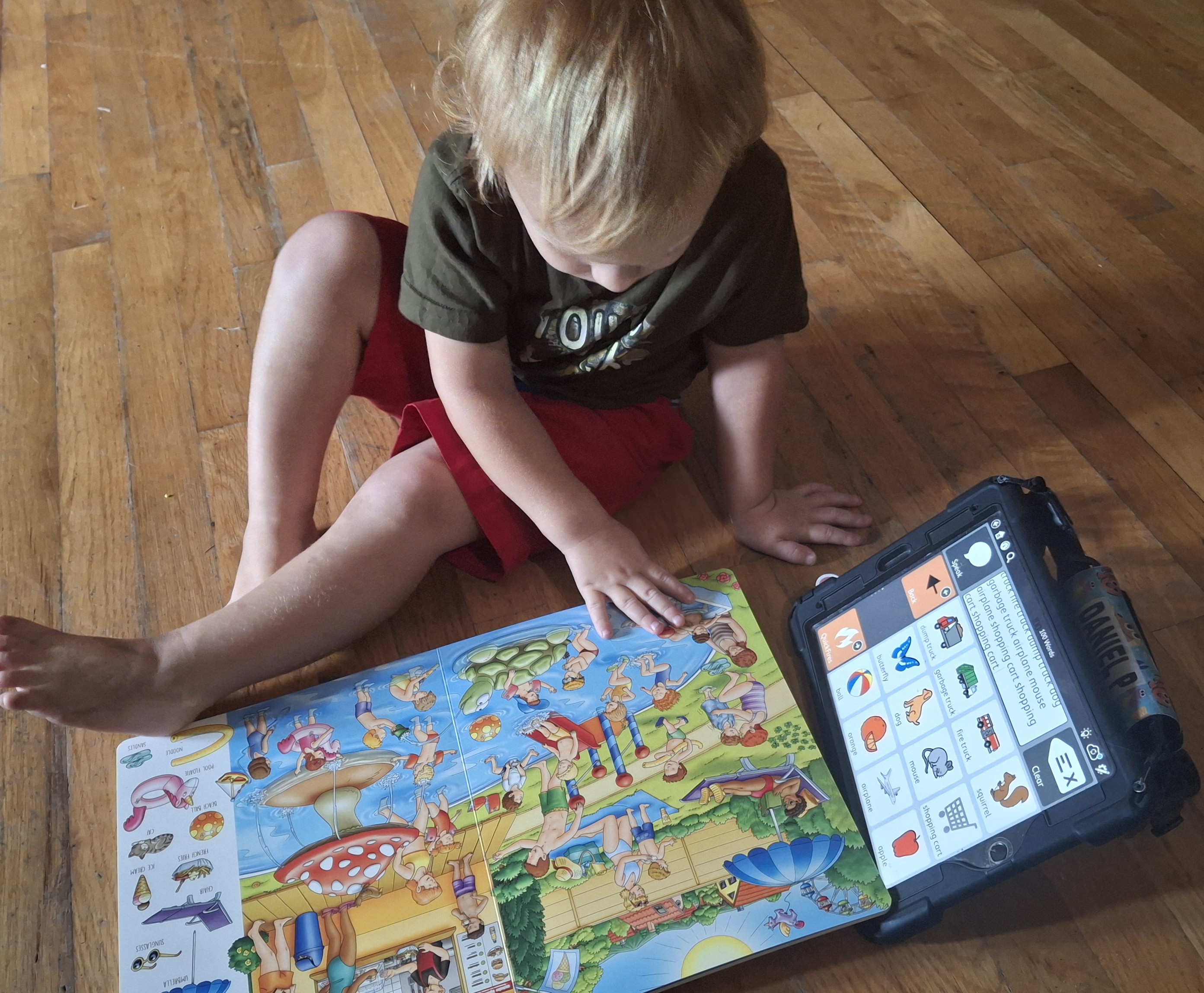
I primarily wanted to try this book with my two-year-old son. He has a significant speech delay and uses a combination of verbal words, sign language, and an AAC device to communicate. At home and with his speech therapist, we work to expand his vocabulary to help him communicate with us and others, so I am always looking for new resources.
This book was great because it gave me fun pictures and vocabulary to work with, and it was not overwhelming. While he is not yet ready to make up stories about the pictures, he could enjoy me telling him stories as I pointed out different elements.
We could also use it to practice new words on his AAC device. I could show him a picture in the margin and have him find it and press it on his AAC device.
While I hadn’t intended to use it with my eight-year-old, I found it was a great resource to use with him as we work on creative writing. I could give him one of the scenes and ask him to write about what was happening while using at least a certain number of the words from the margin.
Overall Thoughts
This book is a great educational tool for a variety of ages. While it primarily focuses on young children in the toddler-to-preschool range, it also applies to elementary-aged students.
The board-book construction makes it sturdy and helps it withstand toddlers’ rough handling. The illustrations are bright and engaging.
While you cannot “read” this book in the traditional sense, it helps develop visual skills, vocabulary, and verbal skills.
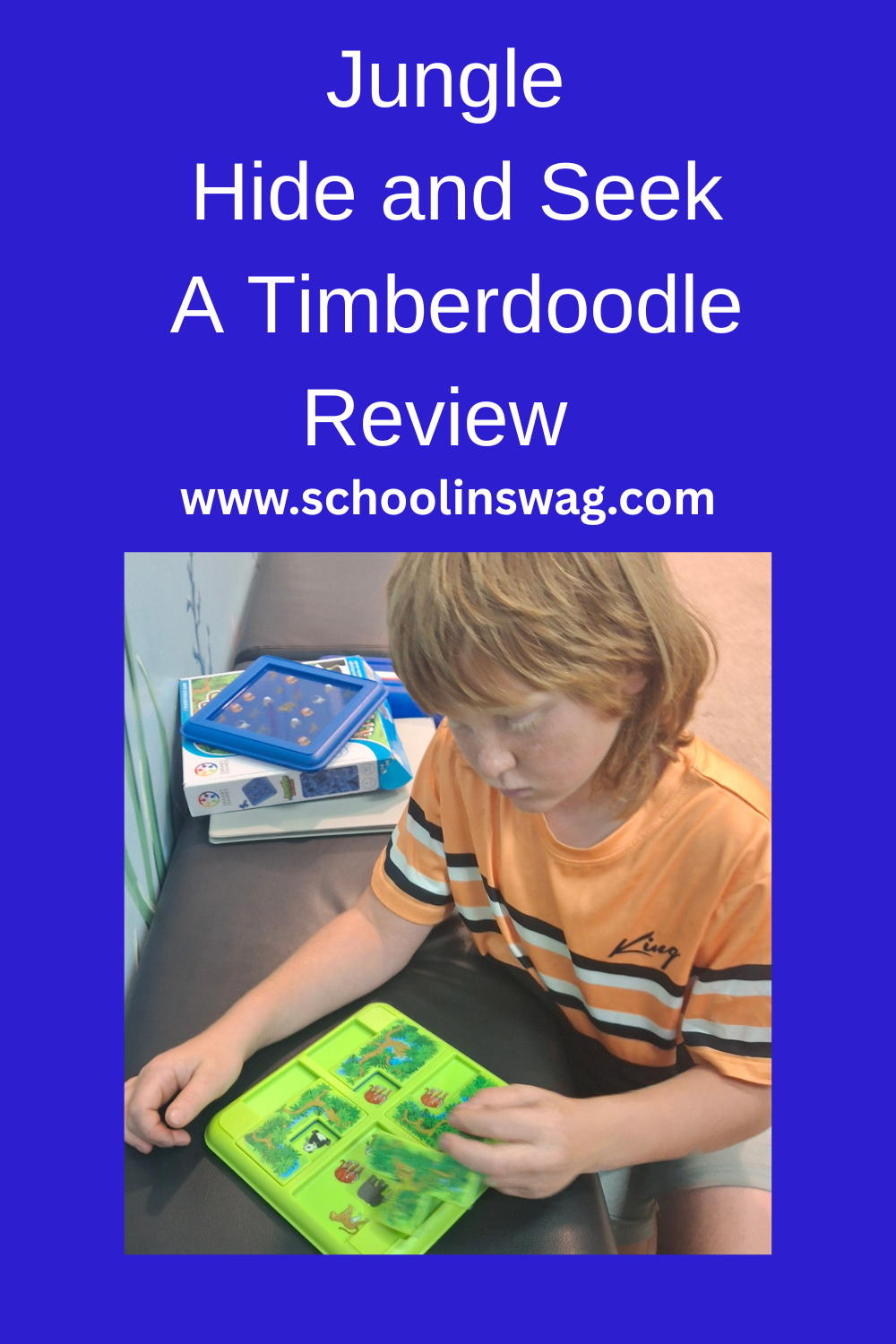
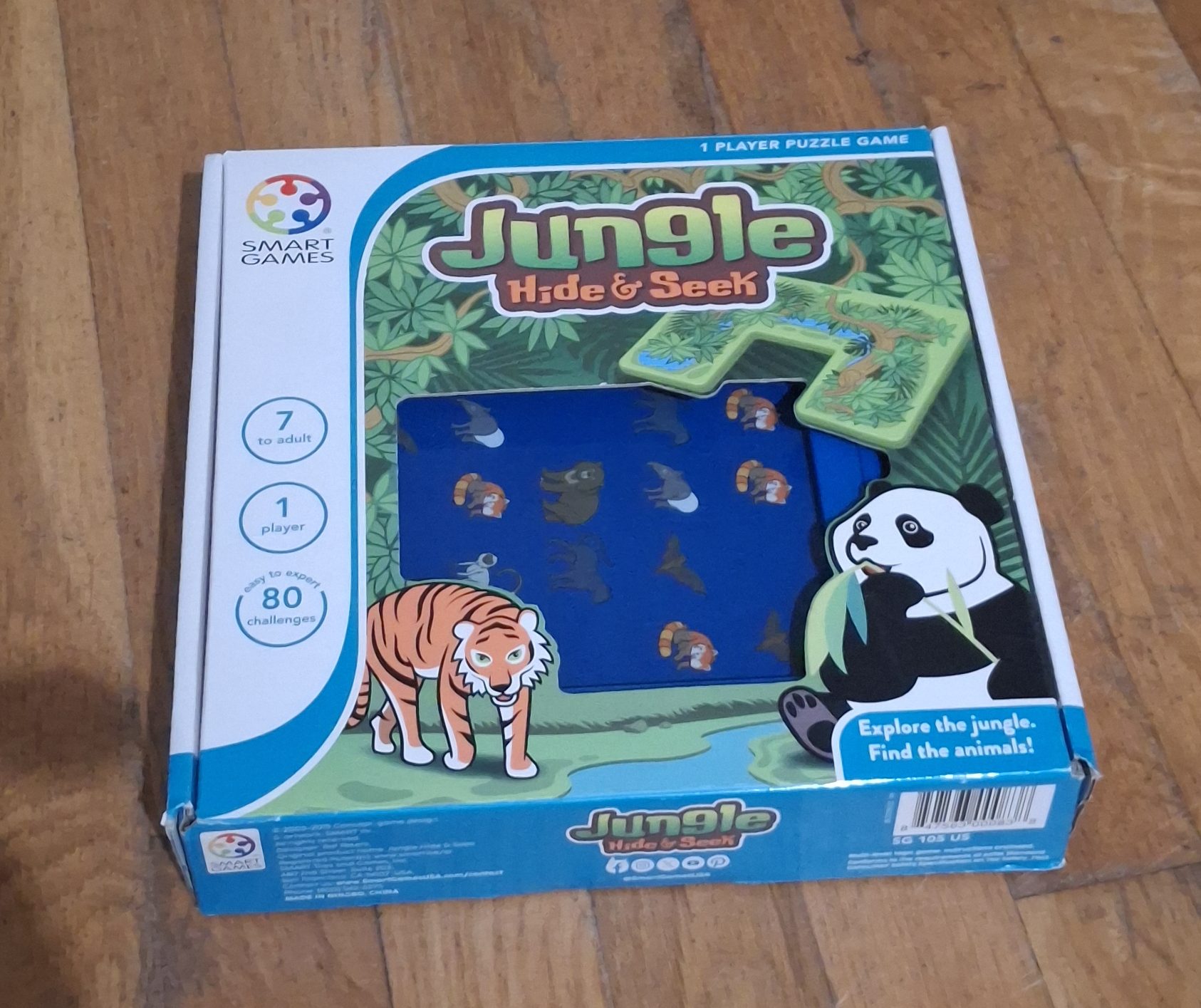
How challenging can a puzzle with only four pieces be? Jungle Hide and Seek will challenge your brain to leave the right animals showing by turning, moving, or flipping the puzzle pieces. This Timberdoodle game is more challenging than it looks.
What is Jungle Hide and Seek?
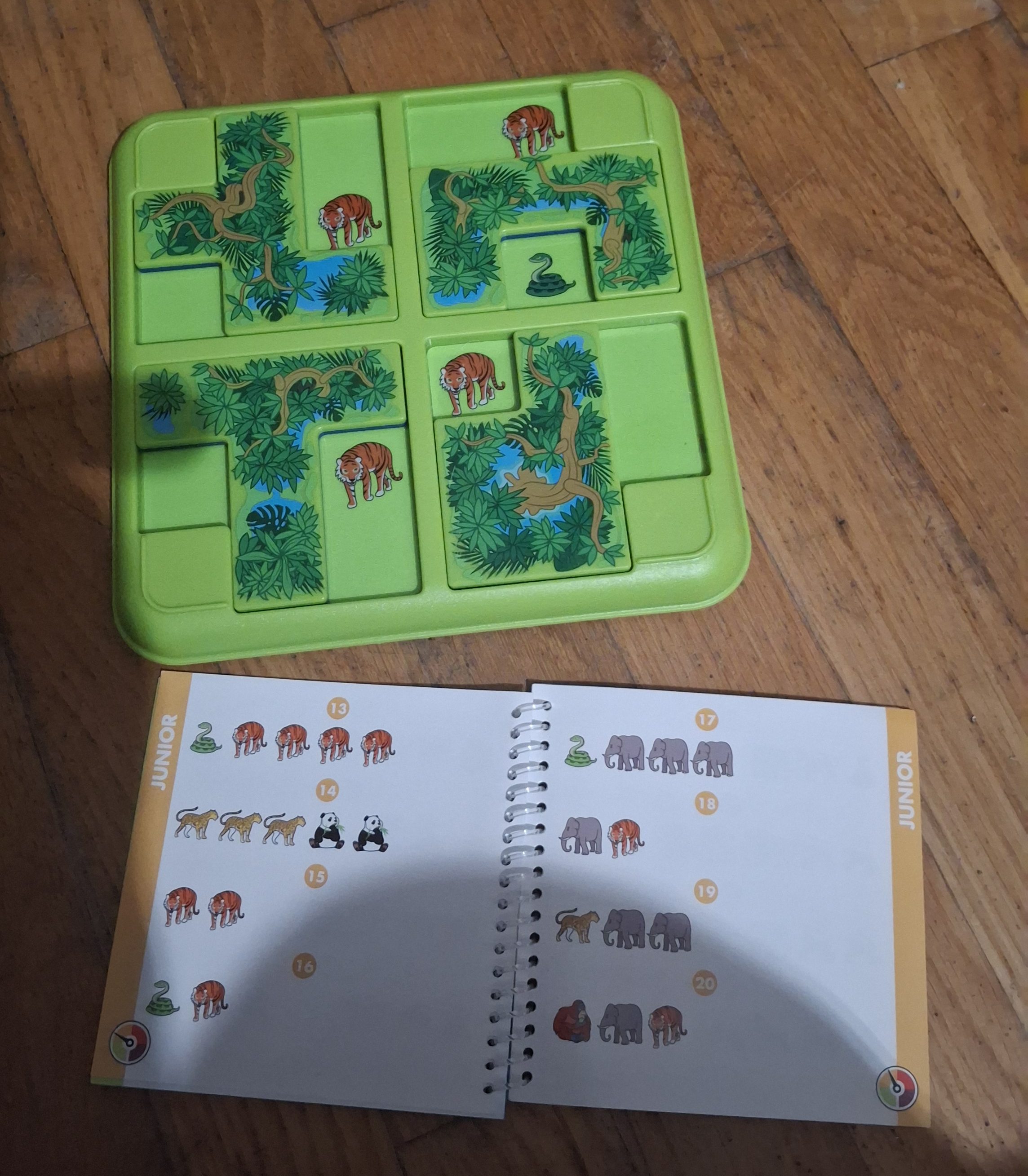
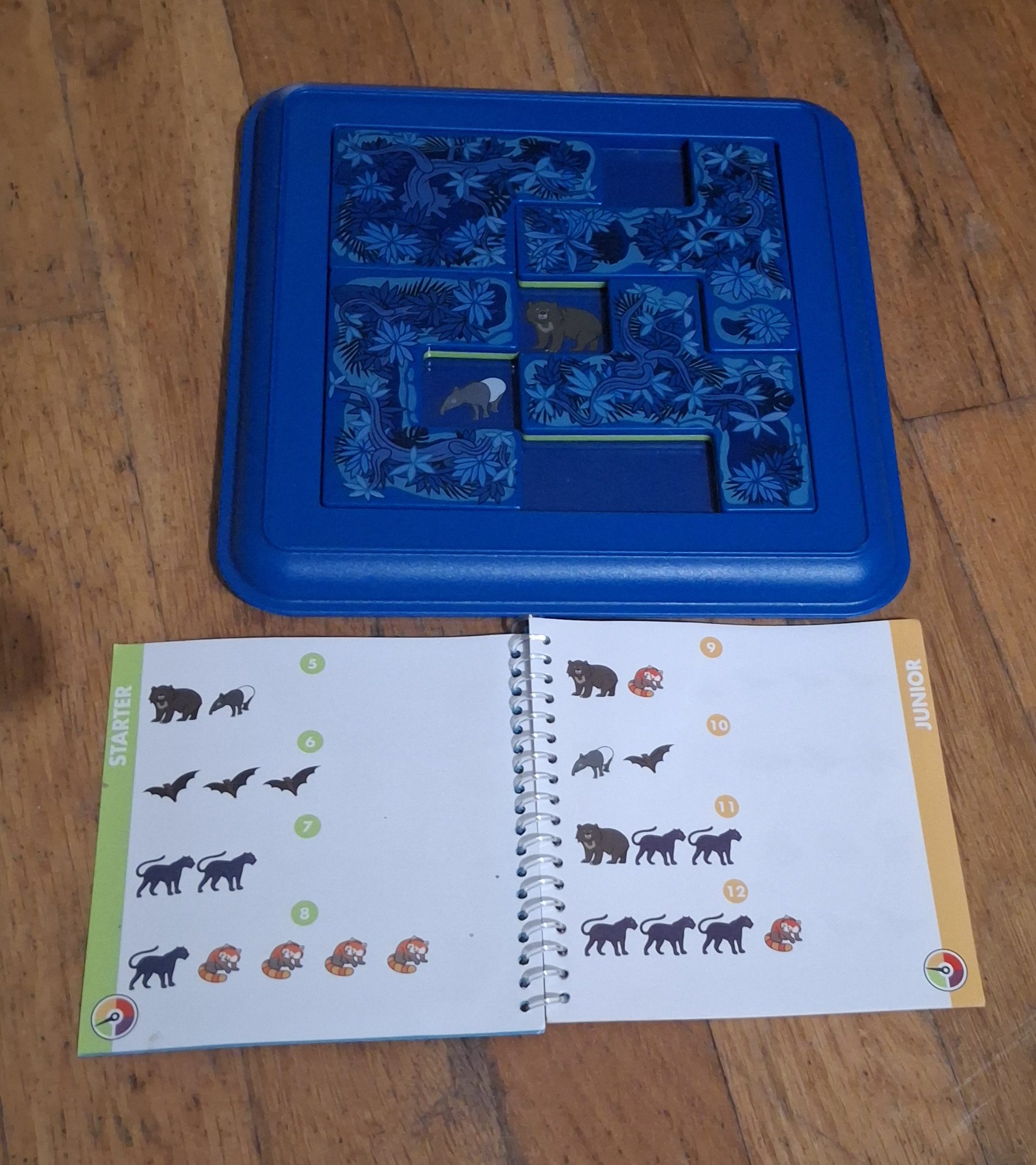
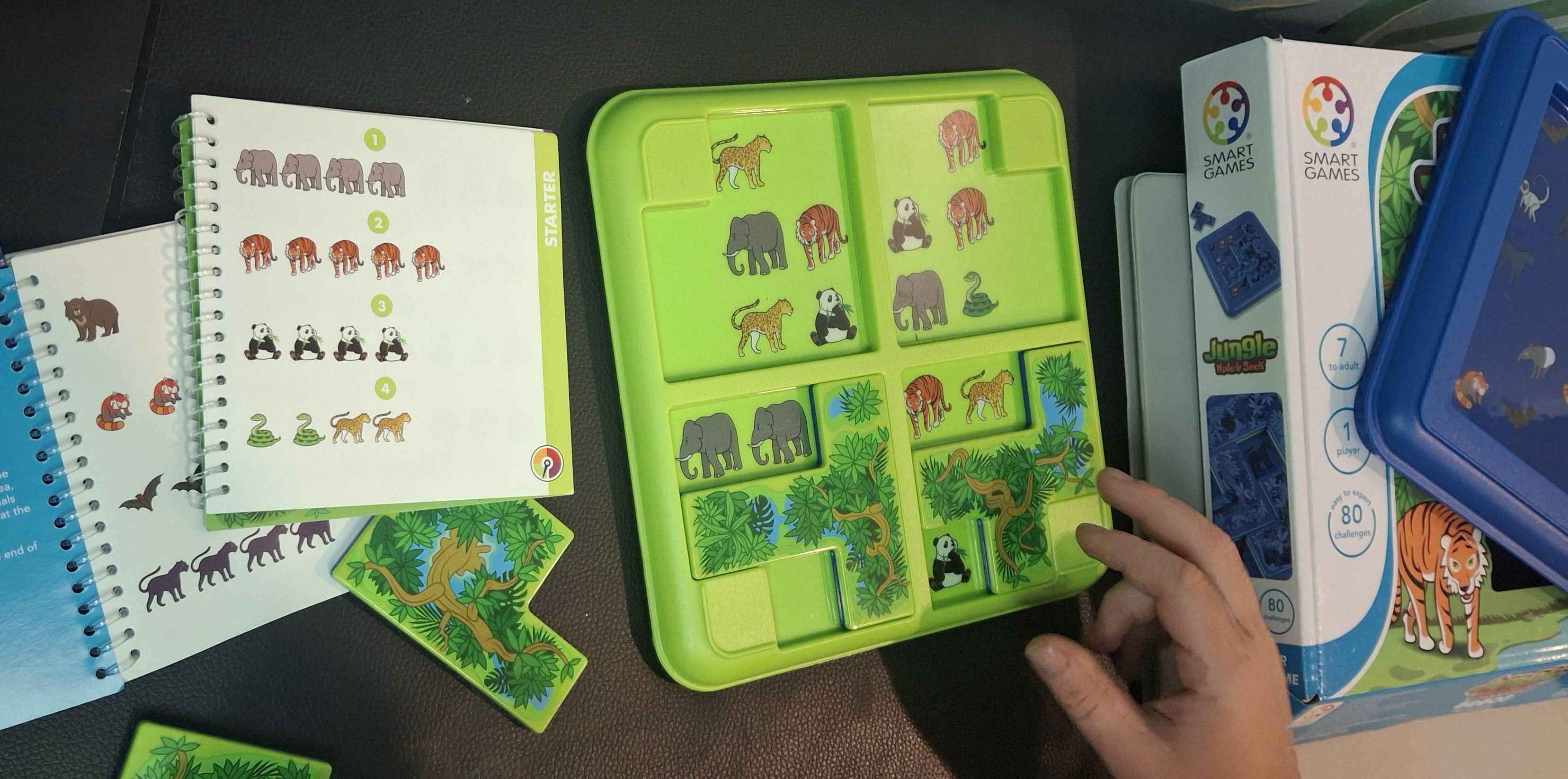
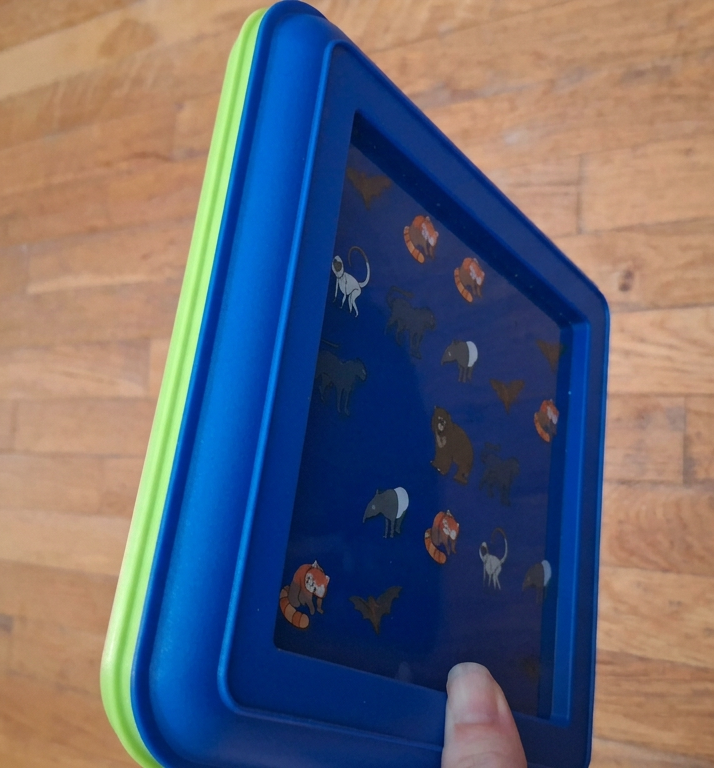
Jungle Hide and Seek is an independent puzzle game that uses two different boards, two books of puzzle challenges, and four two-sided puzzle pieces to offer a wide variety of puzzle challenges. The player must cover up all of the animals except the ones listed on that particular challenge. The concept is simple, but some puzzles are quite challenging.
How Do You Play Jungle Hide and Seek?
To begin, open the book and choose the puzzle challenge you want to complete. While you can choose from the daytime or nighttime book, I highly recommend starting with the daytime book. The daytime board is separated into four sections (one for each puzzle piece), and the puzzles are a bit easier.
Levels:
Starter
Junior
Expert
Master
Once you have chosen a puzzle, you use the puzzle pieces to cover up all of the animals on the board, except for the ones shown on your puzzle. You have to figure out which piece goes in which section and how to turn it to cover the correct animals.
If you get stuck, there is an answer key in the back of each of the books.
Day Time VersionNight Time Version
Our Experience with Jungle Hide and Seek
When we first tried this game, my eight-year-old was convinced that he wanted to start with the nighttime puzzles. However, he quickly realized they were more challenging than he was ready for and switched to the daytime set.
As he worked on the first few, he sometimes thought there was no solution, but over time, as I gave him a few clues here and there or reminded him to keep trying, he was able to figure out each one he attempted.
I also noticed that once he succeeded with a few, he was more motivated to keep trying on the harder ones because he knew he would get it right eventually.
While we most often play games together at our kitchen table, we also took this one to an appointment for his younger brother and played it in the waiting room. It is compact and quiet and once he got the hang of the game, it did not need any input from me, so it was a great way for him to engage his brain while I focused on the appointment.
Who Would Enjoy Jungle Hide and Seek?
This is a game many ages can enjoy, especially with the different-level puzzles. It is recommended for ages 7+, and I think that is fairly accurate. The bright colors and fun animals engage younger children, and they could certainly try it. However, in general, I think the challenges would be too difficult for most children under 7. The animals may make the game look like a child’s game, but I think teens and adults would still find the upper-level puzzles challenging.
It is a quiet and quick game, great for giving children something to do independently for a few minutes. The different levels of challenge let students keep enjoying it even after they master the easier levels.
Compact and Easy to Carry
Overall Thoughts
Jungle Hide and Seek from Timberdoodle is a fun, easy game for building visual skills, strategy, and logic without it feeling like work. The bright colors and fun animals make it exciting and engaging for children.
It is a quick, low-stress, low-prep game that people of all ages can play and enjoy. The various levels allow students to be challenged without it being too hard or frustrating. You can find out more and get your game at Timberdoodle.
FAQs
What ages is this game for?
The company recommends ages 7+, and I believe it would be most enjoyed by children ages 7 through the early teenage years, though older teens and adults may also enjoy the challenge.
How many players?
This is a single-player game, though you can take turns if multiple people want to play.
Does the game require reading?
Other than someone reading the instructions, this game does not require reading.
Having already tried (and loved) IQ Gears and IQ 6 Pro, I was happy to review IQ Circle from Timberdoodle. These independent player games challenge the brain and are lots of fun!
What is IQ Circle?
IQ Circle is a logic game that involves puzzle pieces that are connected spheres of different sizes and colors and a circular game board with spaces of different sizes and dividers at different intervals.
The puzzle book also includes 120 puzzles of varying challenge levels.
How Do You Play IQ Circle?
To begin playing, you open the book and choose which puzzle challenge you would like to complete. There are five levels, and I suggest starting with the starter level until you get a feel for how the game works.
Levels:
Starter
Junior
Expert
Master
Wizard
You will use the puzzle book to find a challenge, then fit all the spherical puzzle pieces onto the board without any going over a divider. The concept is simple, but the challenges really work the brain.
One thing to note that we did not realize at first, but quickly learned when the first puzzle was not working out for us, is that the dividers on the board do not come in equal intervals, and it is critical to line them up with the puzzle book to make it all fit.
The colored sections show you where those pieces go, and then you have to figure out the rest.
Our Experience with IQ Circle
My twelve-year-old son got to try this one out first. He opened it and immediately started on the first puzzle, but soon realized the pieces shown didn’t fit correctly.
After taking a few minutes to read the directions more carefully and look at the board more closely, he realized the board wasn’t lined up correctly. Even though it is a circle, position matters for these puzzles.
Once he figured that out, he worked through several puzzles in the starter level and then moved up to junior and expert. He had a great time with it and continues to work on the puzzles, but he is not quite ready to move up to Expert and Wizard.
As an adult, I really enjoyed this game as well. While it works the problem-solving and strategy part of my brain, it is also relaxing to think through the solutions.
“IQ Circle was really fun and it helped me work on my problem solving abilities.” Benjamin, age 12
The game helps develop flexible thinking, problem-solving, visual skills, and logic. It was a fun challenge, and we plan to add it to our Friday game time rotations. My son has also asked about bringing it on long car rides, and I think it will be a great option.
Who Would Enjoy IQ Circle?
This game is for many ages, especially with the different-level puzzles. It is recommended for ages 14+, but I think middle schoolers could also enjoy it, especially the easier levels. The puzzles are more challenging than some of the other IQ games.
It would also be great for adults looking for a break from life or work stress and a way to keep their brains active.
With all the different tasks, you could spend as little as five minutes playing or spend an hour or more doing multiple tasks.
This compact carrying case makes it perfect for playing on the go!
Overall Thoughts
IQ Circle from Timberdoodle is a fun, easy-to-understand game that challenges the brain and builds focus, strategy, and logic skills without feeling like work. It is small and compact, easy to store and use on the go. It requires minimal setup: open it, choose a puzzle, and start playing.
I could see this being great for long car rides, something for busy hands to work on during a read-aloud or during periods of waiting. Also great for a break between school subjects or as something independent to do while waiting for assistance with other subjects. You can find out more and get your game at Timberdoodle.
FAQs
What ages is this game for?
The company recommends ages 14+, and I would say it’s for anyone from middle school through adulthood.
How Many Players?
This is a single-player game, though you can take turns if multiple people want to play.
Can you get the little bear to his mom, the girl to her tent, or the rabbit to the other rabbit? What about a combination of multiple figures needing to be moved to the right spot? Grizzly Gears has a challenge for everyone!
What is Grizzly Gears?
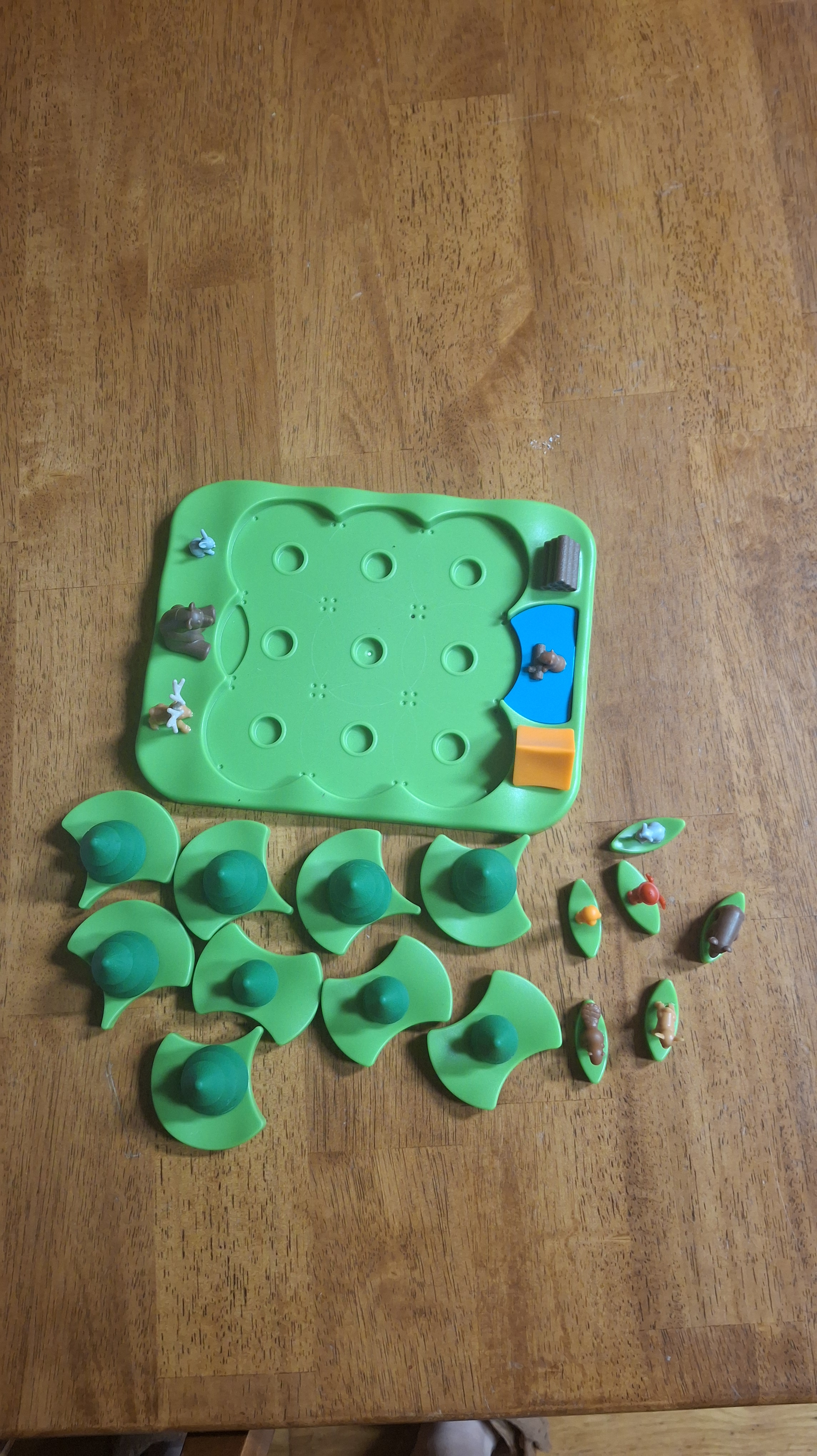
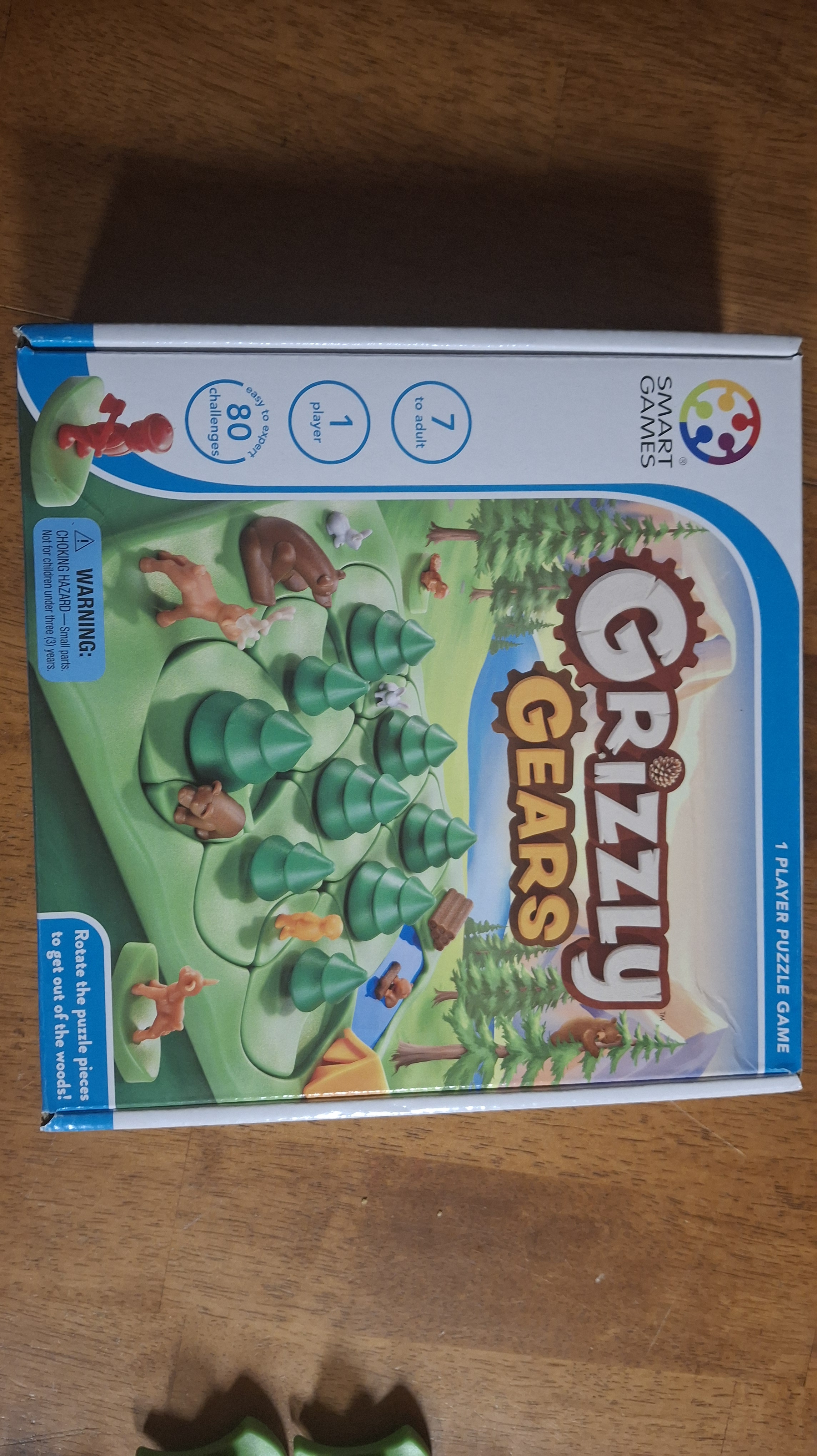
The game includes a small game board that holds multiple tree pieces, has several figures (bear, tent, wood pile, etc) in fixed positions on the board, and six loose pieces that coordinate with the ones in fixed positions.
For example, Mama Bear is in a fixed position on the board, and there is a baby bear piece; the tent is in a fixed position, and there is a little girl piece that coordinates with it.
The set also includes a puzzle book with instructions, 80 different challenges, and an answer key.
The goal of the game is to get the pieces that are at play in each puzzle challenge to the right spots.
How Do You Play Grizzly Gears?
To begin playing, you open the book and choose which puzzle challenge you would like to complete. There are different levels, and I suggest starting out with the starter level, at least until you get a feel for how the game works.
Levels:
Starter
Junior
Expert
Master
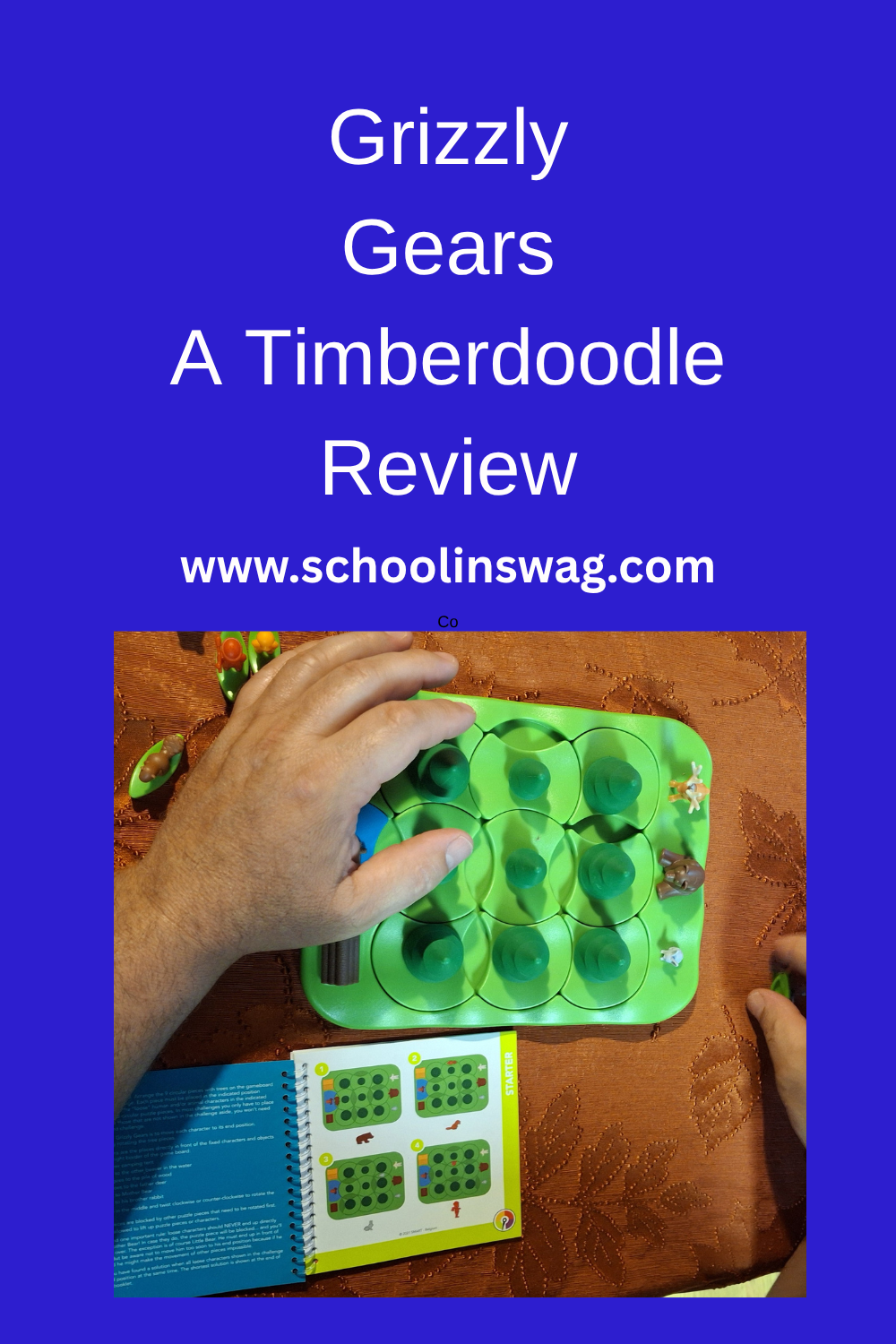
Next, you set up the board based on the challenge that you chose. Each challenge includes a picture showing which trees go in which positions and which loose pieces are included. Then you have to get the loose pieces to their correct spots.
To get them to the correct spots, you have to twist the trees, which work like gears and move the other trees and the loose pieces. You have to find the right combination of moves to get all the pieces where they need to be.
In the easier challenges, you are only moving one loose piece, but later challenges include more pieces.
There is an answer key in the back of the challenge book in case you get stuck; it shows how to solve the problem in the fewest moves.
Our Experience with Grizzly Gears
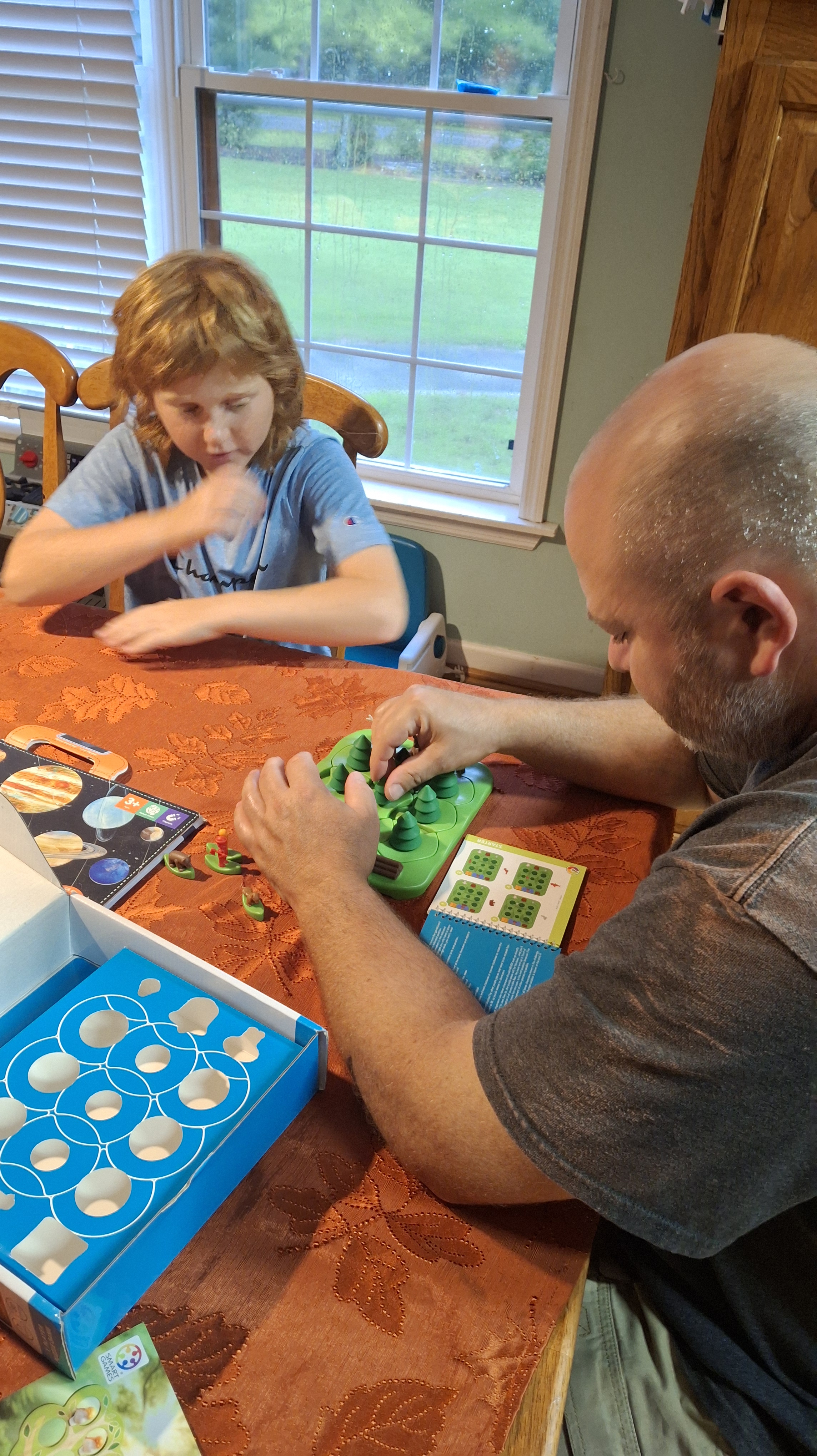
We broke out this game for the first time during a game night where my husband and I helped our three youngest boys (ages 12, 8, and 2) play different independent games.
My eight-year-old was the first one to try it out, and once he got the hang of it, he loved it. I highly recommend having an adult help explain the game and set it up the first time, as it can be a little confusing at first. However, once you get a feel for how it works, students can do it independently.
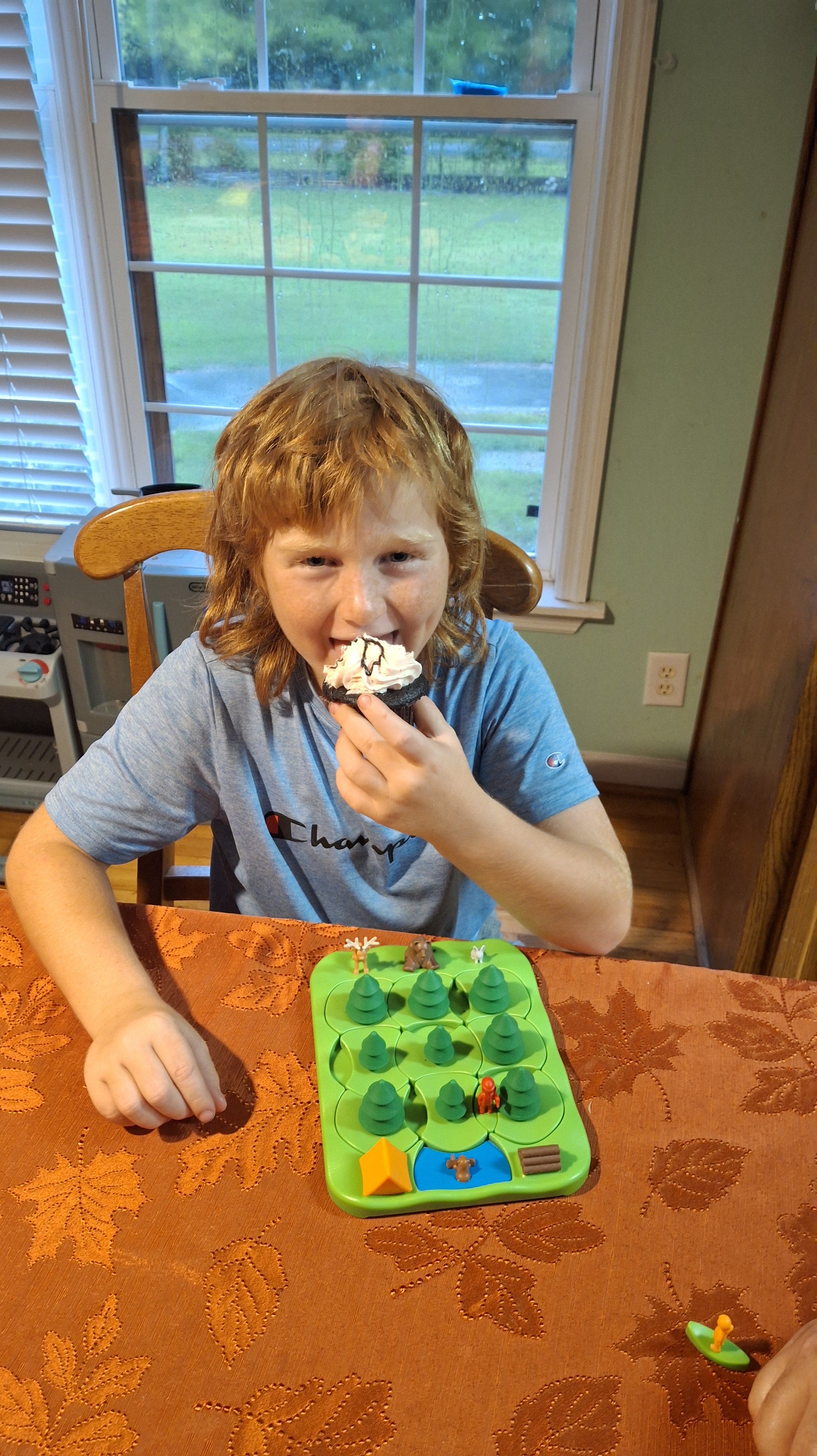
My son worked with his dad on several of the challenges, and it was a great way for them to spend quality time together and for his dad to help him work through the problem-solving aspects. He even got to enjoy a cupcake while he worked, so it was a fun and memorable time.
Game nights are the best nights!
Once he got the hang of a few of the easier levels, he was excited to move up to the next level and try moving more than one piece.
My twelve-year-old also took a turn and found it fun. While the two-year-old did not understand the game (understandably), he had a lot of fun turning the gears and helping out his eight-year-old brother one evening while I was cooking dinner.
The game helps develop problem-solving, visual skills, and logic. My children didn’t see it as an educational game, but it was great brain work. We plan to add it to our Friday game time rotations.
Who Would Enjoy Grizzly Gears?
This is a game many ages can enjoy, especially with the different-level puzzles. It is recommended for ages 7+, and I think that is fairly accurate. A younger child could certainly try and might be able to do the easier challenges, but some of them are quite difficult.
It is a quiet and quick game, great for giving children something to do independently for a few minutes. With all the different tasks, you could spend as few as five minutes playing or spend an hour or more doing multiple tasks.
Add it to your game night rotation, use it as a quiet activity between school subjects, use it as an independent activity while you cook dinner, or use it any time you want a fun, brain-stimulating activity.
Overall Thoughts
Grizzly Gears from Timberdoodle is a fun, easy game for building visual skills, strategy, and logic without it feeling like work. It is a quick, low-stress, low-prep game that people of all ages can play and enjoy. The various levels allow students to be challenged without it being too hard or frustrating. You can find out more and get your game at Timberdoodle.
FAQs
What ages is this game for?
The company recommends ages 7+, and I would say any age from elementary school through adulthood.
How Many Players?
This is a single-player game, though you can take turns if multiple people want to play.
Does the game require reading?
Other than someone reading the instructions, this game does not require reading.
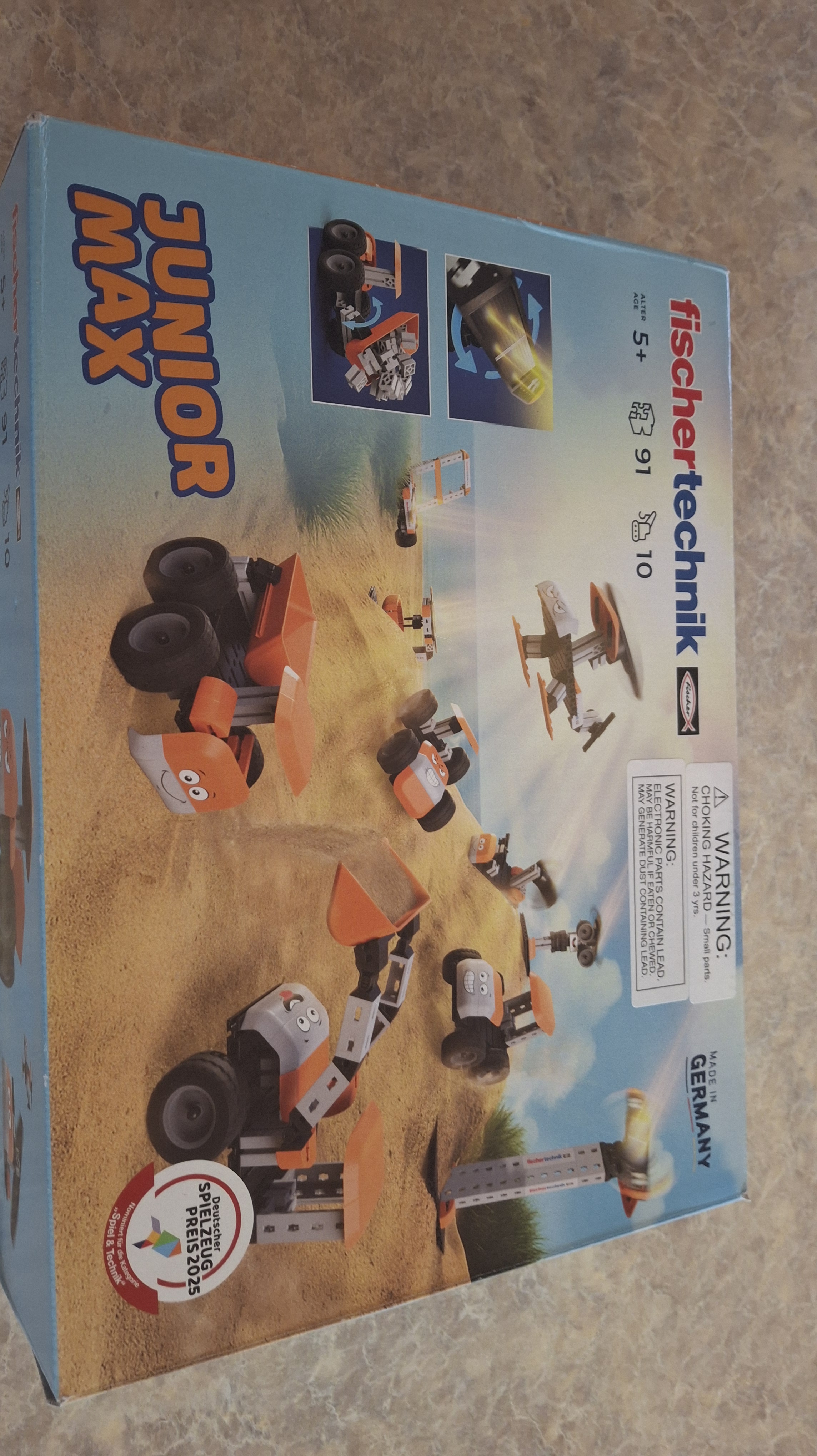
We love building toys of any kind in our house; my boys will build with wooden planks, Legos, magnetic tiles, and more. However, Fischertechnik Junior Max from Timberdoodle is more than a building toy; it is a chance to learn basic engineering concepts through play.
What is Fischertechnik Junior Max?
This fun, hands-on building kit lets children use the same components to build multiple projects. More than just blocks that click together, these pieces slide in and connect in different ways and include wheels that turn, etc.
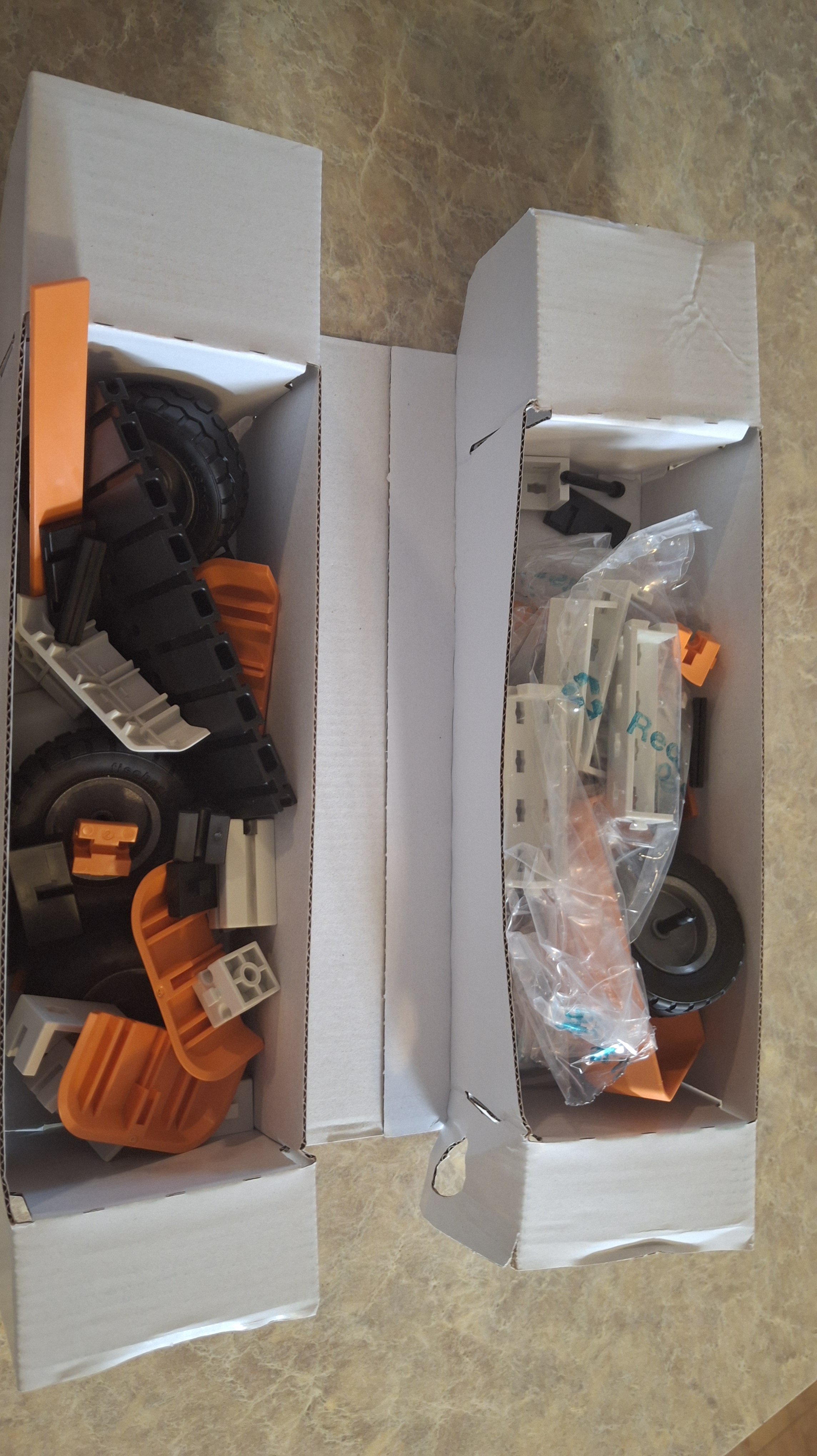
The kit includes about 90 components that can be put together in a variety of ways. Students can use the included manual to make 8 different models.
How Do You Use Fischertechnik Junior Max?
Students begin by following the step-by-step instructions to build whichever model they choose. They can build the models in any order that they choose. Once they have tried some or all of those, students can use their imagination and come up with their own projects to build.
The pieces slide into place and stay securely. The wheels move and move the components, just like in real simple machines.
The box shows all of the fun projects included in the kit.
Our Experience with Fischertechnik Junior Max
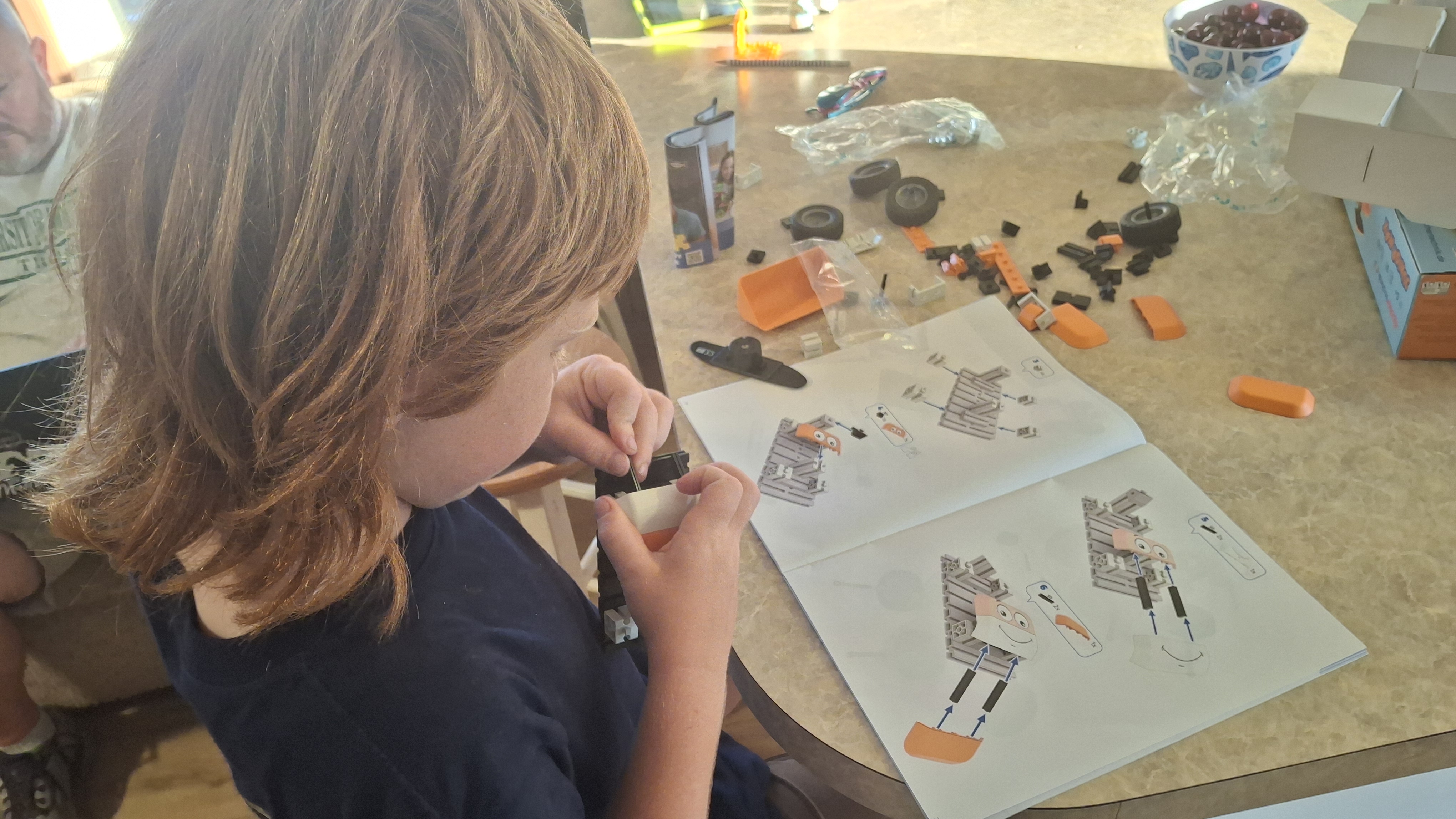
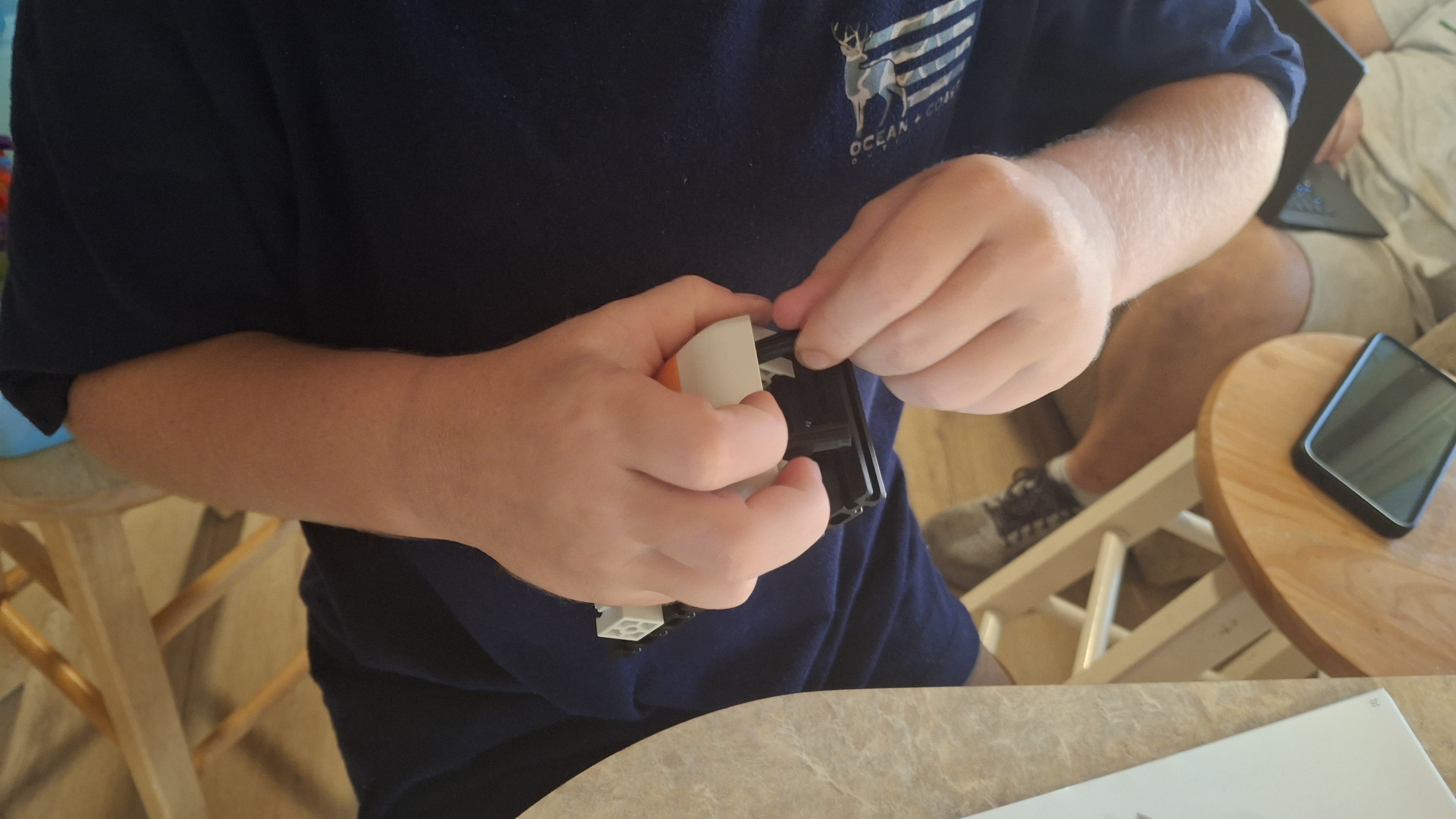
My eight-year-old was excited to try these. He loves building, machines, and anything hands-on. We looked over the instructions together, but then he completed the projects independently.
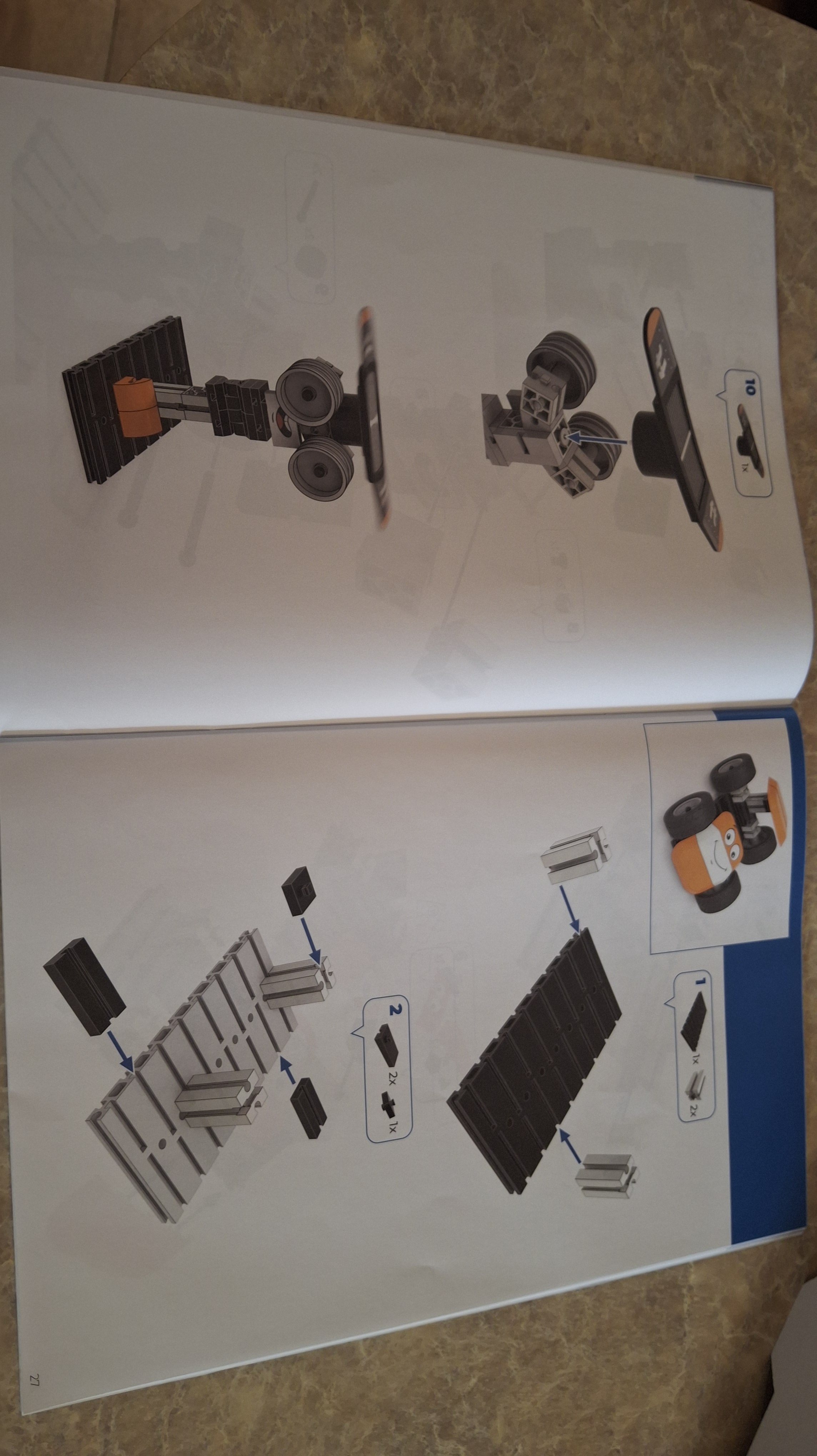
We loved that the projects could be completed in just a few minutes, and the instructions were fairly easy to follow. They use colored instructions that gray out the pieces you’ve already put together, making it easier for the student to see each new step. This also allows even non-readers to work on the projects independently.
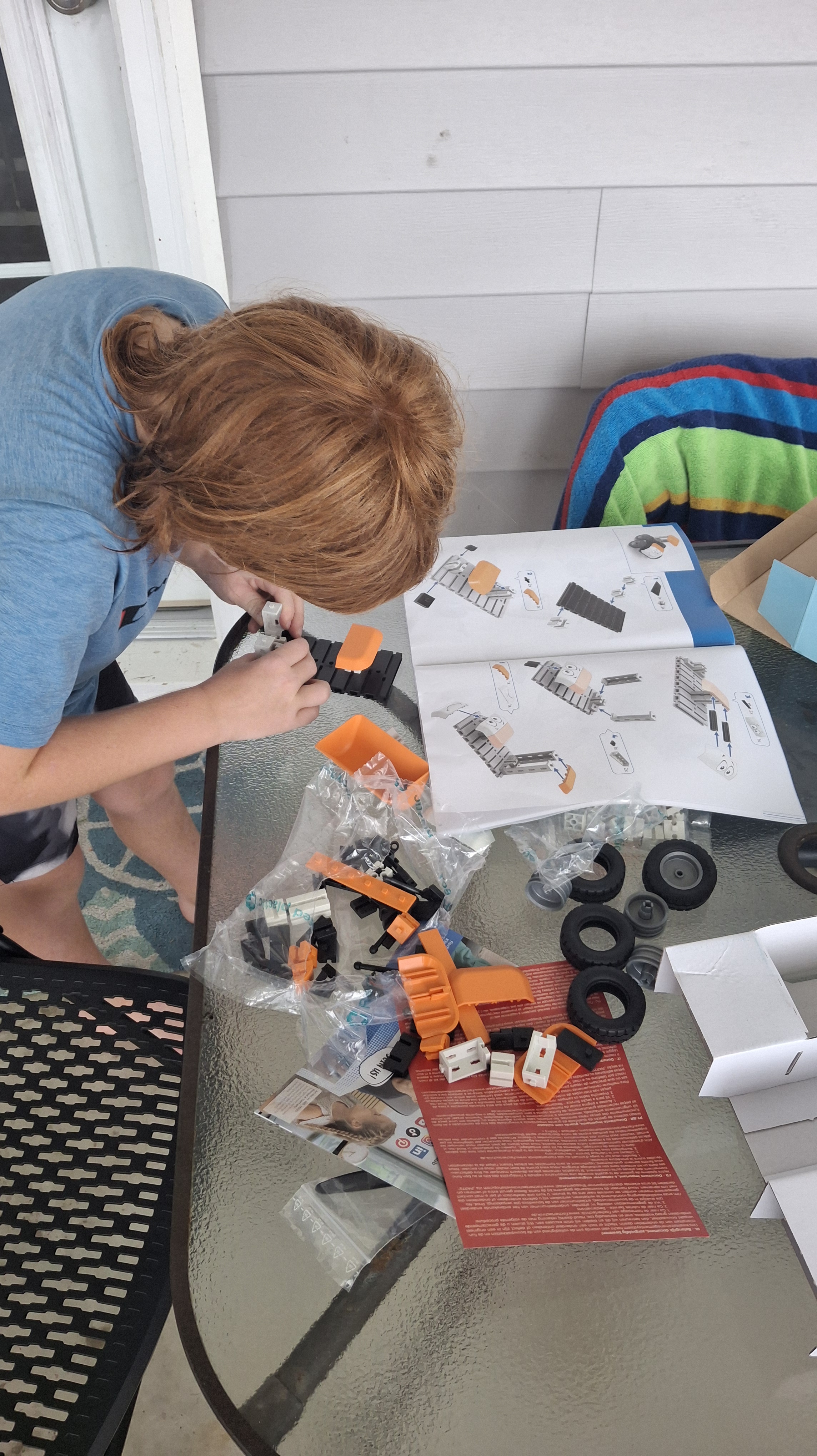
The components fit together easily and were not too challenging for young hands; the sliding mechanisms made things fit securely without a lot of pressure or strength required.
Once he had done a few projects, he was excited to play with the different components and put them together to make his own creations. My two-year-old enjoyed playing with the “machines” that his brother created, but he is too young to really build anything with the kit.
Who Would Enjoy Fischertechnik Junior Max?
I recommend this kit for children ages 5-8, or possibly as young as four with adult assistance. It is especially great for those who enjoy building things or are interested in different machines and equipment. They can build the projects and then play with the machines they have built. Unlike many other kits, the wheels actually turn and the parts move, which makes them more fun for play after the build.
The parts were easy for small hands to work with.
Overall Thoughts
We really enjoyed this kit. The age range is fairly narrow (they do have other, more complex kits for older students), but it is a perfect introduction for younger students. It encourages creativity, imagination, and fine motor skills. You can find out more and get your set at Timberdoodle, where you can also see other Fischertechnik sets.
Note how the color contrast and graying help students see which steps need to be completed.
FAQs
What ages is this set for?
Recommended for ages 5+. I would recommend it for ages 5-8, possibly 4 with assistance.
What skills does this set teach?
Problem-solving, fine motor skills, spatial awareness, and basic engineering concepts
Does the set require reading?
No, the instructions are illustration based and can be followed by non-readers.
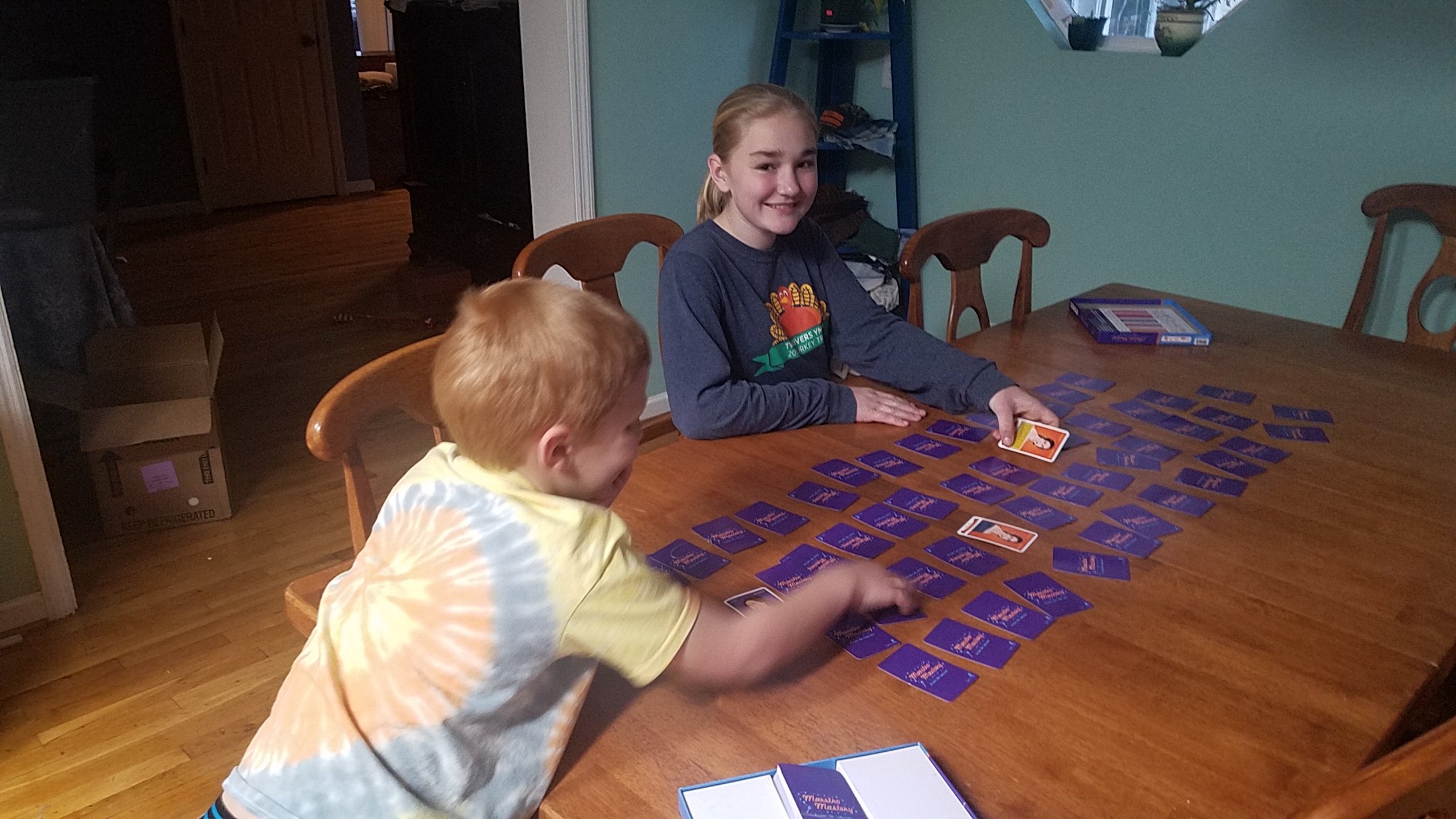
We have used some educational games off and on throughout my years of homeschooling, but I often wished we had more time to incorporate them. We typically either used them as evening family activities here and there, or we intentionally included one on a day when it fit well with whatever else we were studying. I also said we would play them more when we had “extra” time.
The truth is there is no “extra” time; there is always something that can fill that time, and if I do not schedule it, it most likely will not happen.
Scheduling Game Time in Our Homeschool
When talking about events, schedules, and such, I often tell people that if it is not in my Google Calendar, then it is not happening. I rely on that calendar to keep me on track. With our homeschooling day, I could say if it is not in my planner, then it is not happening.
Thus, this year, I am intentionally including educational games into our homeschool plan. For morning time this year, I am including our two “staple” subjects (World Watch and Bible) as well as one additional subject for each day of the week.
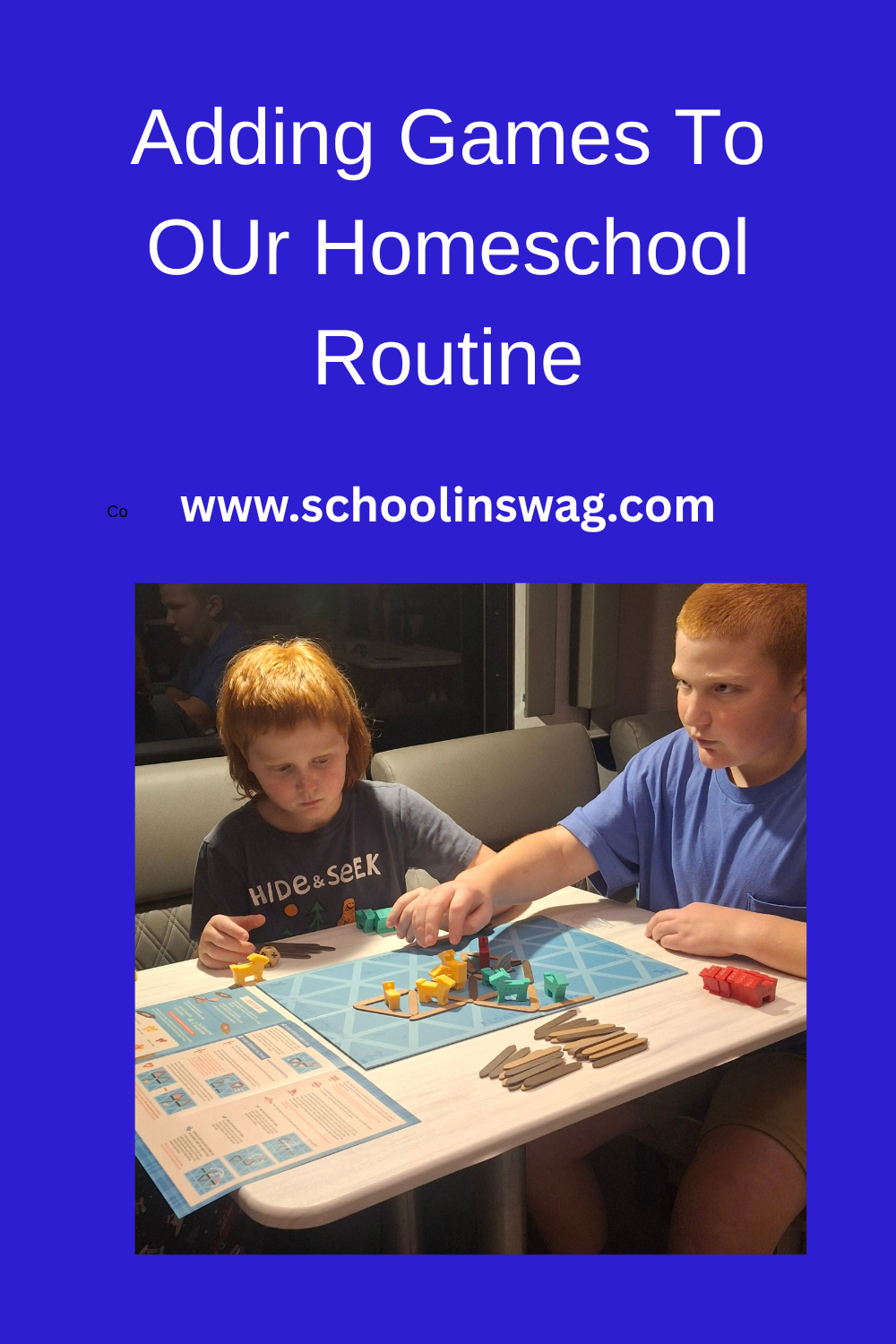
On Fridays, game time will be that extra subject for our morning time. So, each Friday we will set aside at least 30 minutes to play an educational game together. I believe this intentionality will help ensure that we actually get game time most weeks.
I also believe the game time will add something fun that the boys can look forward to during the school week.
A Fun History Game
What Do You Mean by Educational Games?
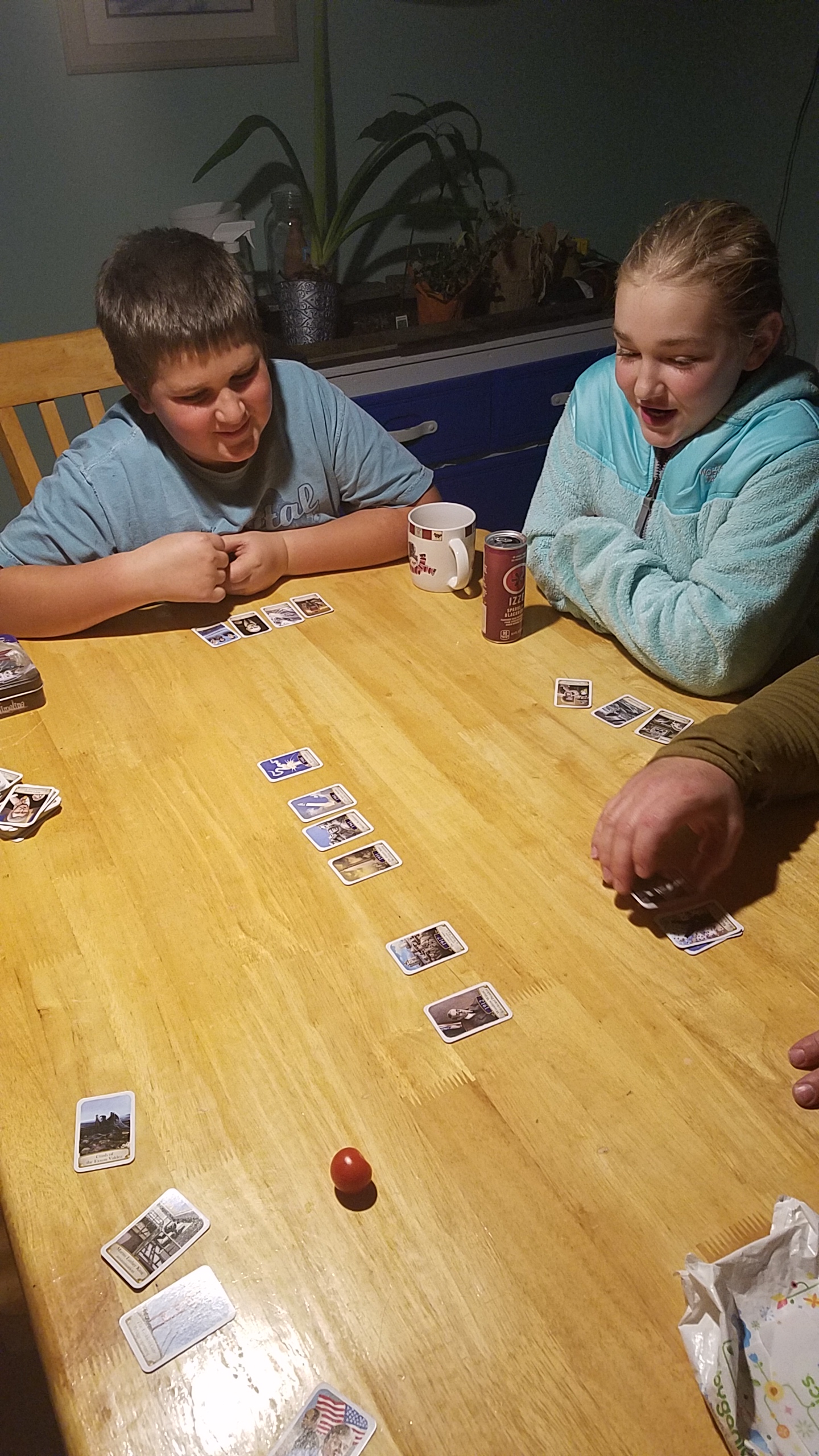
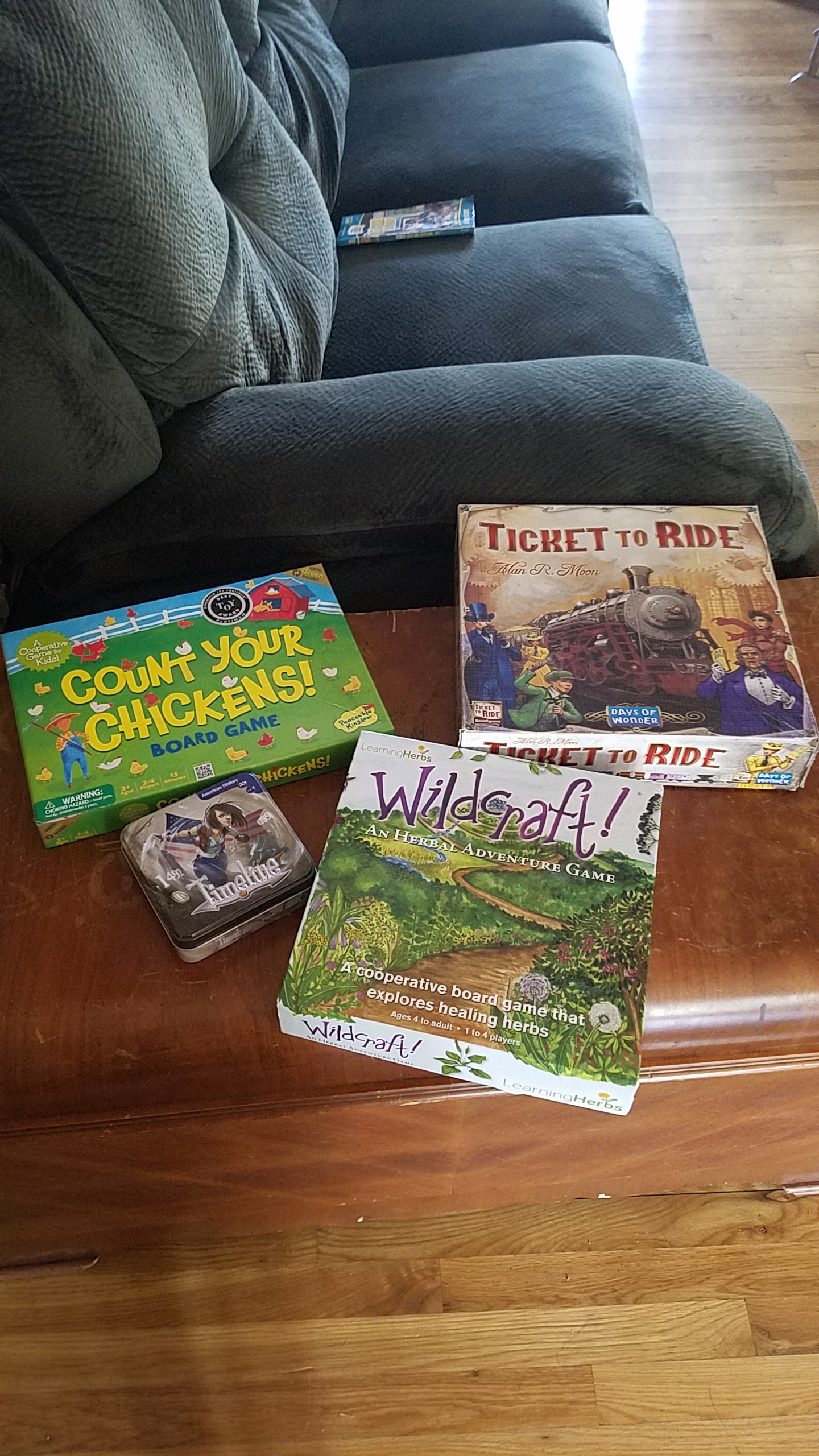
A wide variety of educational games are available. Some of them are very specifically educational, such as the Math Sprint Game or the history game, “Get Your Kicks on Route 66”.
Other games are less specific in their educational goals but are still valuable educational tools. For example, there are many logic games (like the ones from Fun Squared Games) that help students build logic skills that help them across many subject areas. Other games might build memory skills, fine motor skills, or imagination.
Whether it is a specific content area or general brain building, all of these games provide valuable tools for your child’s education.
Go to our educational game page to check out more game reviews and ideas.
Other Ways to Incorporate Games in Your Schedule
Friday morning might not work for your schedule, but there are lots of different ways you could add them in.
A few examples:
One afternoon after your regular subjects
Plan a time for them after so many days of successfully completing a goal.
Set aside a whole day for them once a month or once a quarter.
Use the shorter ones as a break between subjects.
Have some children play games while you get one-on-one time with a different child and then rotate.
FAQs
What do educational games teach?
There are so many different options; you can use games for logic, counting, spatial awareness, math, history, science, and more.
What ages can use educational games in your homeschool?
Games can benefit all ages, even high schoolers.
Resource Library and Affiliate Disclosure
When you sign up for the Schoolin’ Swag free resource library, you will get a link and password to the library. We add new items to the library each month. You will also get a monthly newsletter email to keep you up to date on what we have going on and occasional extra newsletters about special events or deals.
This post may contain affiliate or referral links, including Amazon affiliate links. As always I will never recommend a product that I don’t believe in and you will never be charged more for purchasing through our links. It does help pay for the costs associated with the blog.
Deals and Freebies
Schoolhouse Teachers is now offering a lifetime option! They are a great place for a one stop shop curriculum or a way to have a lot of options to fill in different electives and courses into what you have already chosen.
*Some links are affiliate links; see full disclosure below*
My eleven-year-old is going into sixth grade! How is he already old enough for church youth group and moving up to the Navigators group in our Trail Life troop?
He also enjoys fishing, hiking, and all things science. This is his first year running cross country for the local homeschool team. He would love to be able to skip math, but alas, I feel math is an integral part of his education.
Reading:
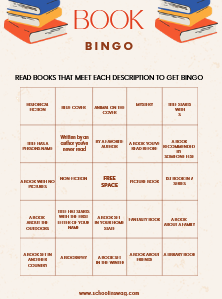
Since his reading is solid and he loves to read, we are going to do a fun and easy (for Mom) Book Bingo for his literature this year. The book bingo will give him a lot of autonomy in his reading, but also make sure he is getting in a variety of different books.
We are also continuing to use the Family Book Clubs from Read Aloud Revival, which are always fun and engaging.
Finally, don’t tell him that it’s actually school work, but he is participating in a local book club where they read a book each month and gather together to discuss it. Last month, they read Robin Hood, and this month, they are reading Sense and Sensibility.
Spelling
We have been working on All About Spelling, and he will continue to work his way through that. He really struggled with spelling, but over the last couple of years, he has shown tremendous progress, and we are excited to continue. We discovered All About Spelling years ago when my oldest child was struggling with spelling, and it has been our family’s favorite ever since.
Writing
For writing, we will be finishing Master Books Handwriting A to Zoo to review some handwriting skills. He will also be doing the next level in First Language Lessons to work on some grammar.
I printed out a huge selection of fun journaling prompts, and he chooses one each day to write about in his journal to work on his creative writing. He will also be entering some essays into several contests, including those sponsored by our junior historians and the state fair, to work on those skills. Those real-life applications have been so beneficial in encouraging my children to write solid essays.
Math
He will be finishing Math for a Living Education this year. We both love the format; it worked very well for him. There is generally enough practice for him without it being too much busy work. If there are concepts where he struggles, we can add in some extra practice.
Science:
I needed to be realistic this year about the amount of time and focus I have available for schoolwork, while also managing a toddler and multiple speech and physical therapy appointments each week. Of course, it is also important to me that my children get the solid education that they deserve.
This is where Journey Homeschool Academy solved my problem. We are doing one of their elementary science courses (which is solid enough for a sixth grader) with both my second and sixth graders. The boys wanted to learn about Astronomy, and we are loving the Elementary Astronomy course so far.
The video-based content makes it easy for them to do while I’m focused on the toddler, but then we can do the hands-on activities together. The course has solid science content with a Christian worldview that is also easy for me to implement. It has been a win for all of us.
Additionally, we will conduct a nature study at least once a week (we often do it more frequently when the weather is favorable). Sometimes our nature study is as simple as going outside and observing. Still, we also love to use our Homeschool Nature Study subscription to take things a little further and help me find some great activities and ideas.
History:
We are jumping back into Story of the World Volume 3 this year. We love all the hands-on activities and recipes included in the workbook, and we have the audio version of the text that allows us to listen while riding to appointments during our busy weeks.
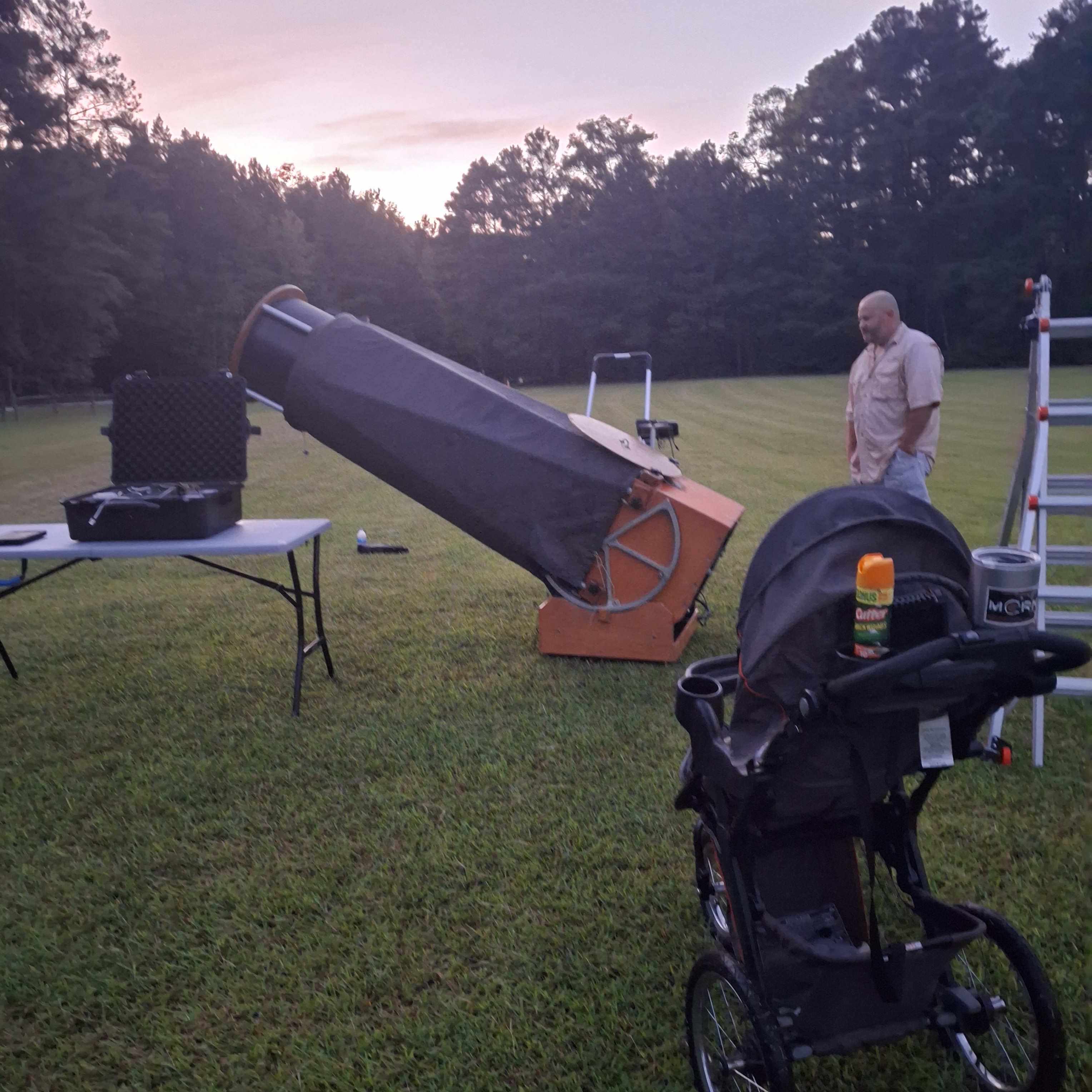
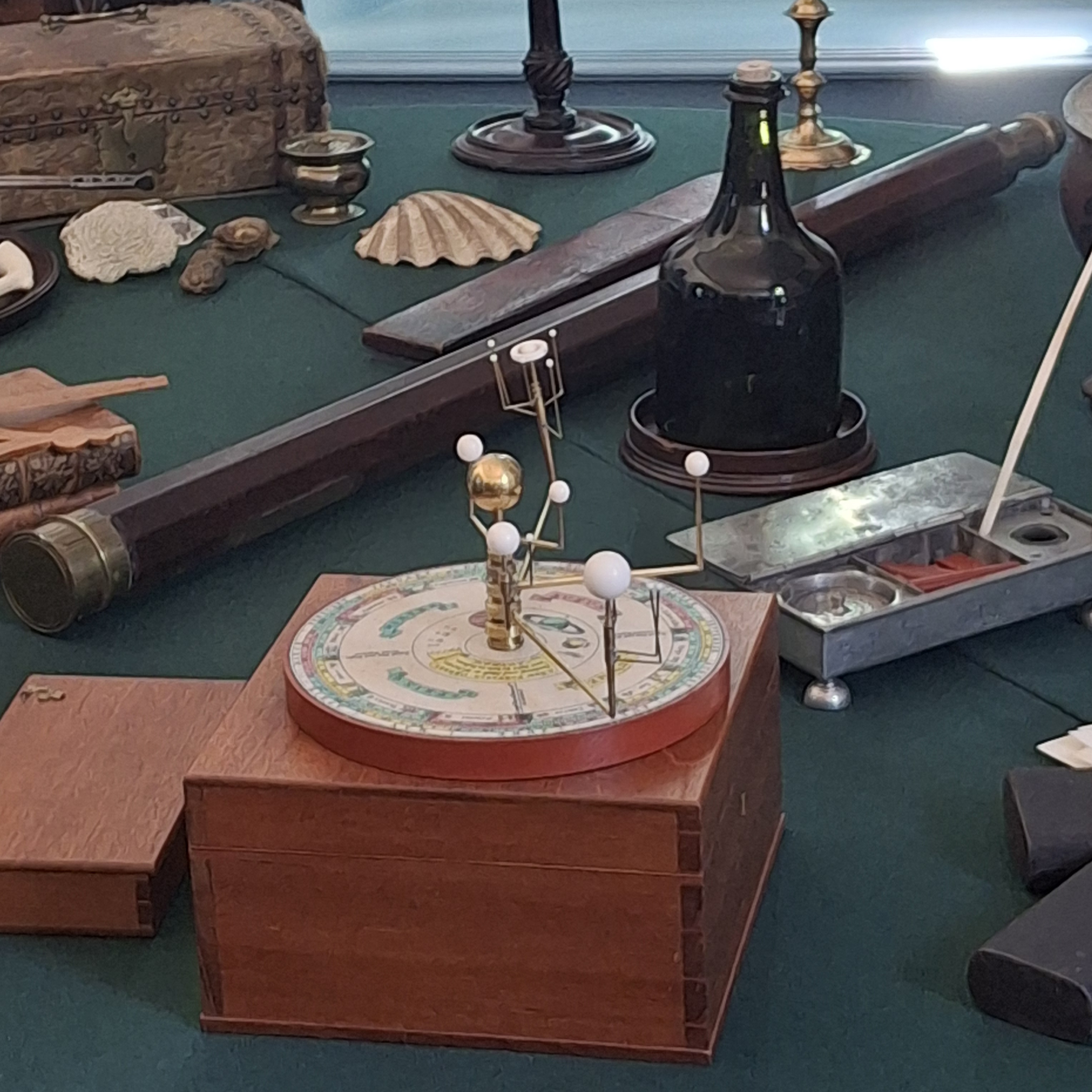
Our first field trip of the year combined our history and science studies! Astronomy in the 18th Century
Art
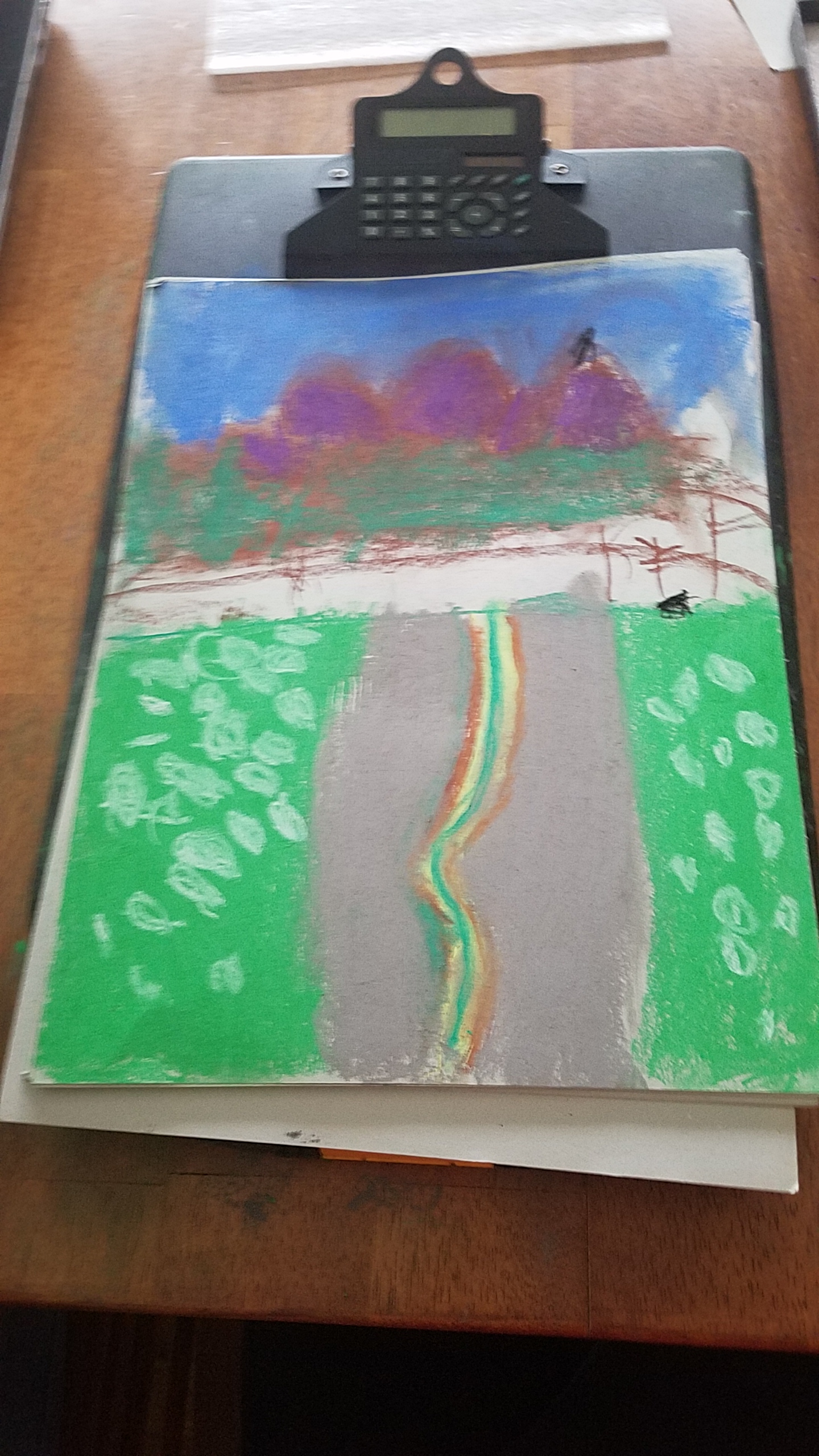
This son is the one I refer to as my little artist. He loves to draw, paint, and create. We will continue to use our membership with You Are An Artist chalk pastels for his online art lessons and provide him with lots of time and materials to be creative.
He also requested the opportunity to learn more about drawing, and so he is going to be trying some lessons from Timberdoodle’s Simply Draw.
Morning Time:
Morning time is my favorite part of our school day. We will do our daily Bible study and watch World Watch for current events each day. In addition, we plan to do a rotation of fine arts studies, poetry, Tuttle Twins books, and more. You can find out more about the resources we are using this year at Morning Time Plans 2025.
We have a toddler in the house and seven standing appointments each week, so I am holding all of our plans in an open hand and praying for the best. We will do what we can, when we can, and trust that God will fill in the gaps.
Resource Library and Affiliate Disclosure
When you sign up for the Schoolin’ Swag free resource library, you will receive a link and password to access the library. We add new items to the library each month. You will also receive a bi-weekly newsletter email to keep you up to date on our current posts.
This post may contain affiliate or referral links, including Amazon affiliate links. As always, I will never recommend a product that I don’t believe in, and you will never be charged more for purchasing through our links. It does help pay for the costs associated with the blog.
Morning time has been one of the few constants in our homeschool. As my children have changed, our schedules have changed, and our goals have changed, we have adapted our homeschooling curriculum in many ways, but having a morning time has remained a constant.
There have been years when morning time more typically happened in the evening (we should rename it family time), but we tried to keep that time of learning together. We have incorporated a variety of subjects, and it looks a little different each year.
Still, two things have remained the same: we learn together as a family, and we incorporate some type of Bible study.
What is Changing in our Morning Time Routine?
Last year, I worked hard to make sure we were consistent each morning with our time, even if we kept it simple some mornings. This year, we are keeping many of the same things in our “morning time.” However, between some speech and physical therapy appointments and my daughter having an early morning dual enrollment class twice a week, the timing is going to be a bit different.
I still want to be consistent because this is one of the most essential parts of our school day, but instead of a consistent time each day, I am working on a consistent time for each day of the week.
So, for example, on Mondays and Wednesdays, we will do morning time just after breakfast, but on Thursdays, we will do our “morning time” after dinner, and on Tuesdays, it will be after lunch. The value in morning time comes from the content and family togetherness, not the time of day.
What Do We Include In Our Morning Time Studies?
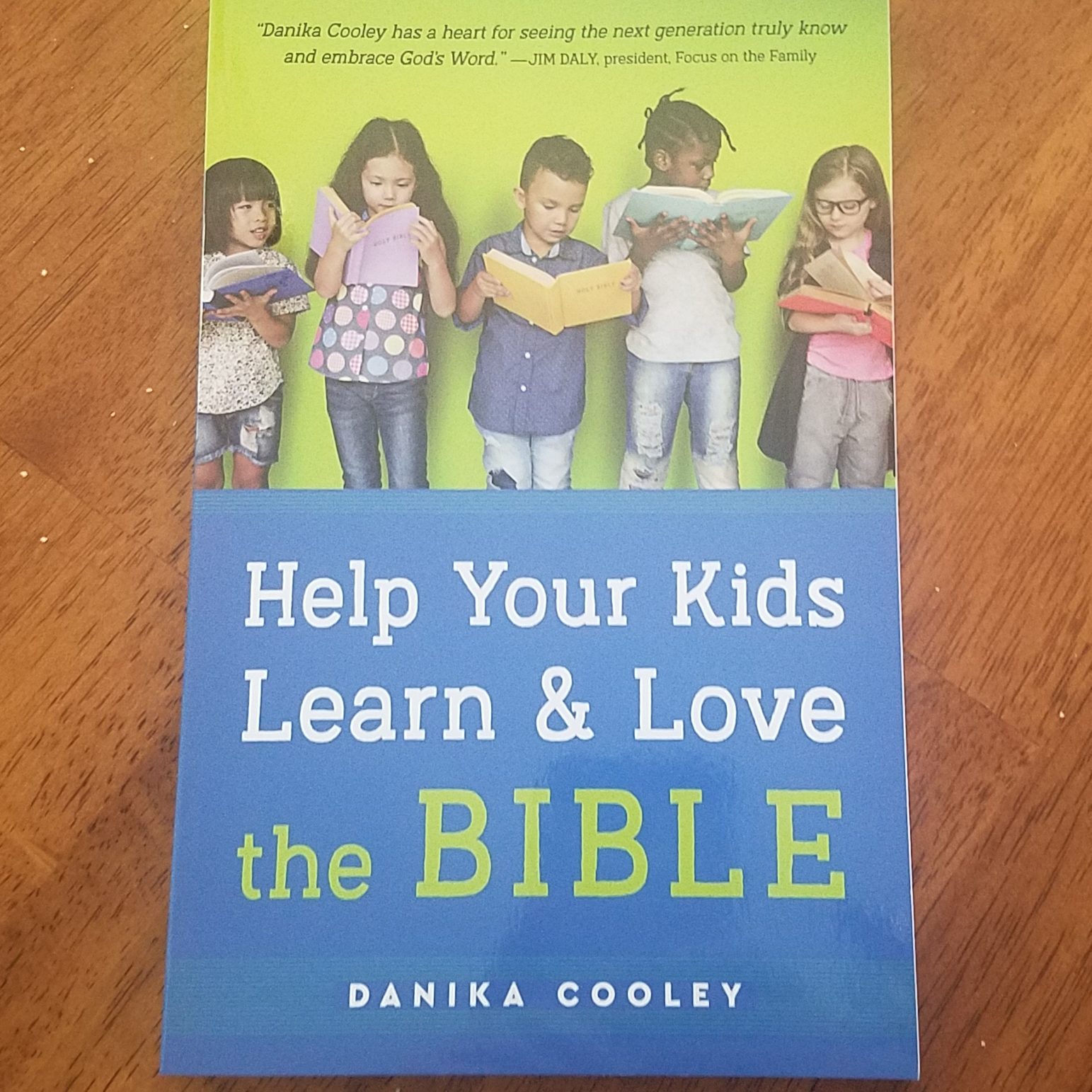
Our two main priorities for morning time will remain our daily family Bible reading and World Watch. Over the years, we have used a wide variety of Bible curricula and enjoyed many of them, but often I found it hard to be consistent when using curricula and trying to make it work for all ages. However, several years ago, I read Help Your Kids Learn and Love the Bible, and realized I was over complicating things.
Our Bible Study
Now, as a family, we read one chapter a day from the Bible, going through an entire book. This keeps it simple and easy to maintain, even during busy seasons. We read (or listen to it on my phone app) the chapter and then discuss it.
My husband bought me an excellent set of commentaries that we pull out if we have questions or want to dig deeper into a verse. We have found this to be hugely impactful and easy to maintain.
World Watch
World Watch is our second priority. We even kept these two components throughout most of our summer break. If you are not familiar, World Watch is a student news program with a Christian perspective. It is ten minutes a day and covers a variety of both major news topics and fun interest stories.
It has opened the door for many conversations, helped my teens better understand what is happening in the world, and given us all more perspective. We have found that watching and discussing works well for our family, but I did want to mention that they now also have downloadable worksheets that you could add to your World Watch time if you felt your student needed that or to help you use it for high school credit.
In addition to our two main components, we will incorporate one additional subject each day. Those will include fine arts, hymn study, logic, poetry, books of the Bible, and any other topics that I want to fit in as a family.
Sometimes we may do the same subject each day for several weeks, and other times we may rotate daily depending on our needs. This allows us to cover a variety of topics without trying to add in too many different things in one day (which would make it unmanageable).
Our Morning Time Rotations
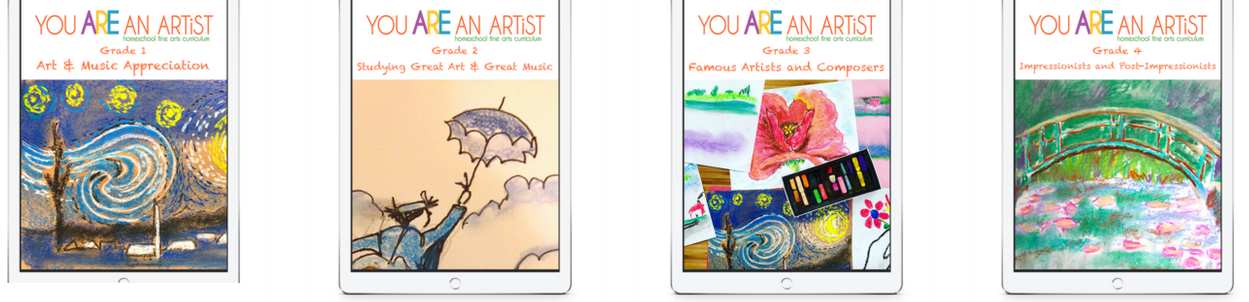
Fine Arts: We will be using the Fine Arts program from You Are An Artist. They have a variety of fine arts courses that focus on different eras and topics.
A few of the many fine arts options that are available!
Hymn Study: For hymn study, we will be using the studies that I have already written, as well as some new studies that I will be adding throughout the year.
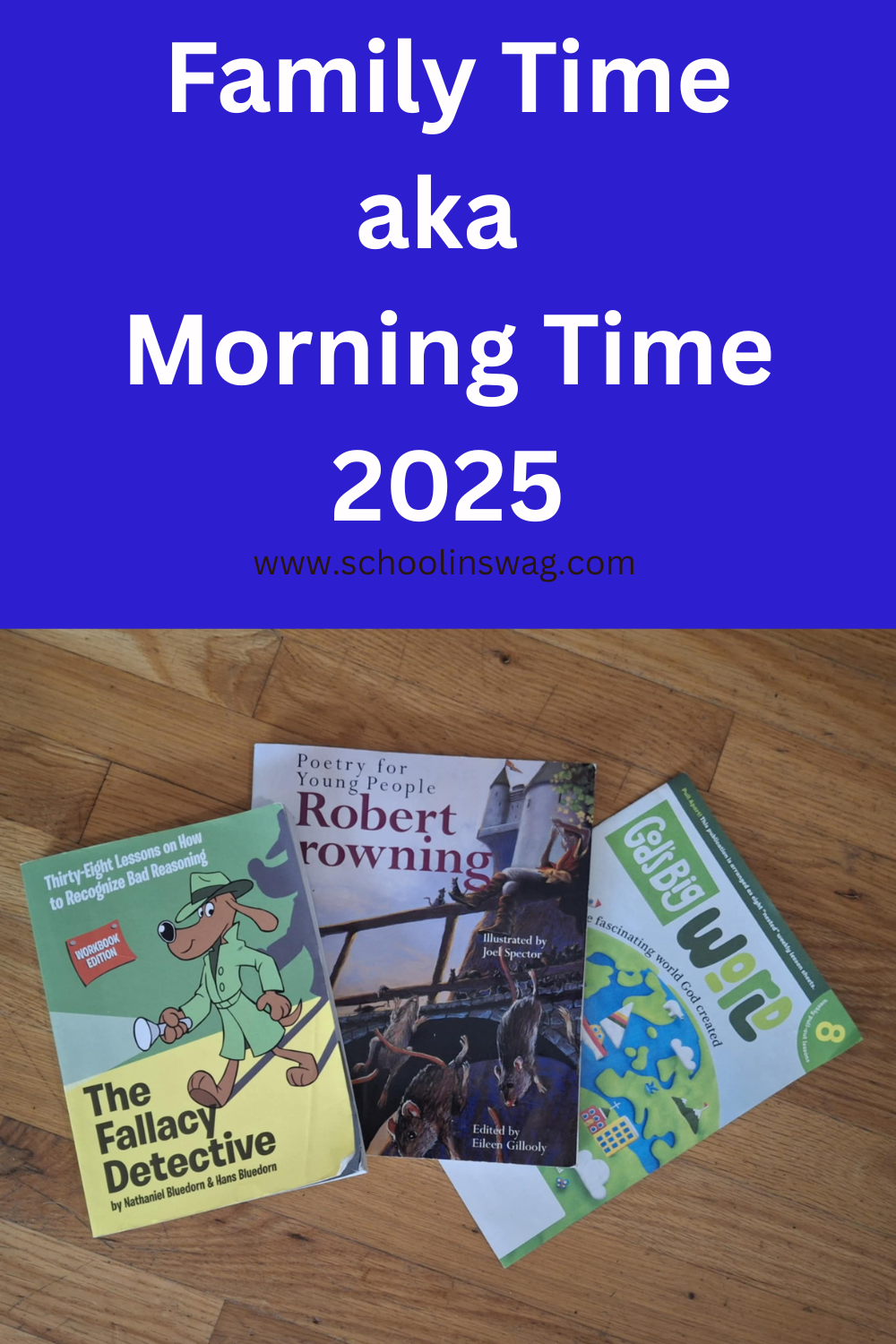
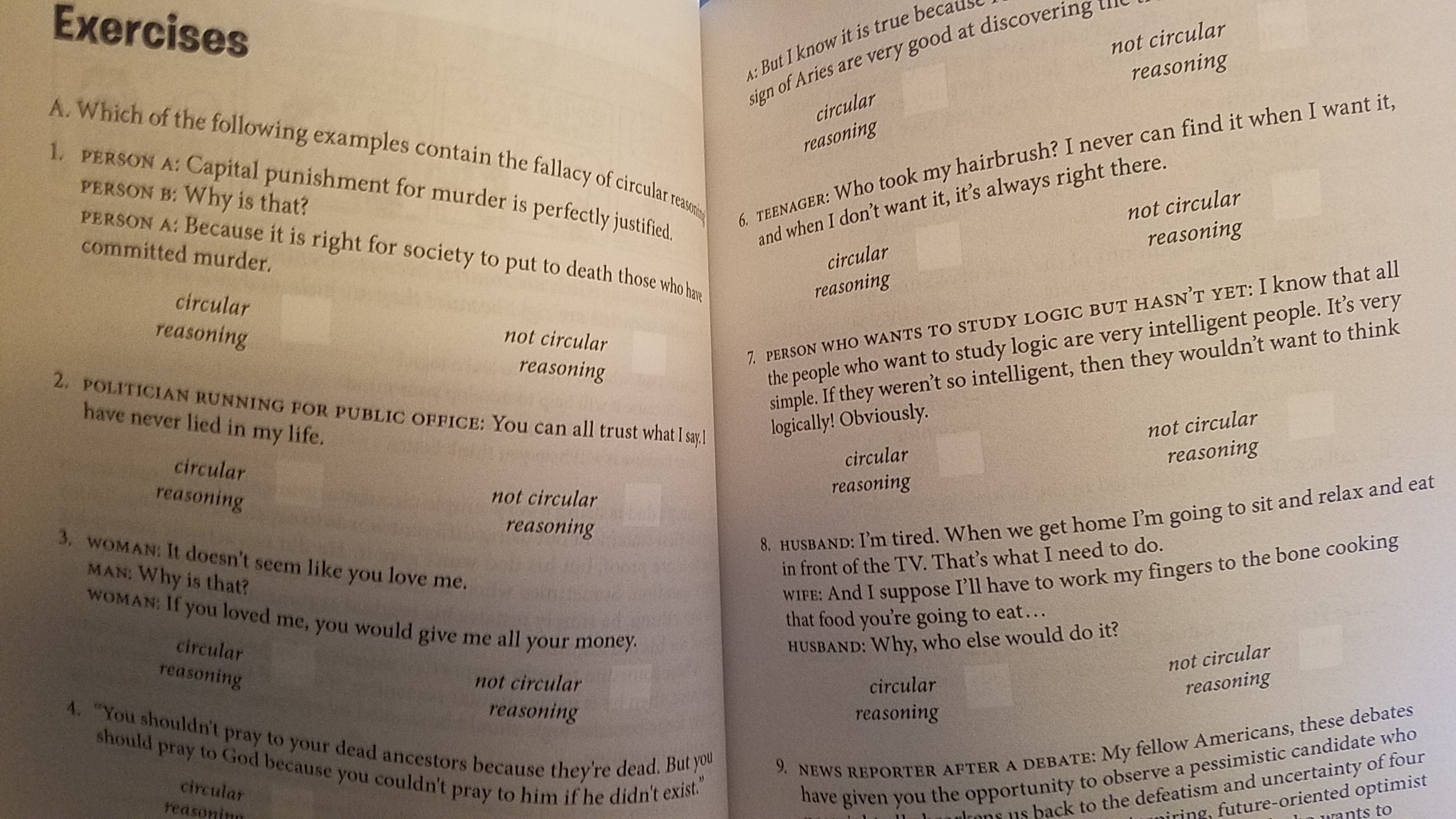
Logic: We use the book, The Fallacy Detective, for our study of logic and logical fallacies. While I don’t particularly care if my children can remember the exact name of a fallacy, I appreciate how it helps them identify fallacies in different arguments. (And they have come to love calling them out by name.)
Poetry: For poetry, we love the Poetry for Young People series. It is a great way to learn a little more about a poet and their poetry through reading aloud.
We are entering this school year amid a hectic life season (we have six scheduled appointments each week for speech and physical therapy), and the routine is going to look a lot different. Still, I am excited to get back into a routine.
I pray that our morning time helps keep us focused and working together and provides an anchor in the busyness of this season.There are so many different options for morning time. I’d love to hear how you incorporate it into your homeschool and if you have any favorite resources.
Resource Library and Affiliate Disclosure
When you sign up for the Schoolin’ Swag free resource library you will get a link and password to the library, we are adding to the library each month with new items. You will also get a bi-weekly newsletter email to keep you up to date on what we have going on.
This post may contain affiliate or referral links, including Amazon affiliate links. As always I will never recommend a product that I don’t believe in and you will never be charged more for purchasing through our links. It does help pay for the costs associated with the blog.
Find Christ-centered homeschool curriculum at SchoolhouseTeachers.com and set their hearts on the right path.
Tuttle Twins is having their BIG Back to School sale. They have up to 70% off book bundles and major discounts on their academy classes (which now has World History offerings). We love their books and their American History curriculum.
I’ve been telling you how much I love Journey Homeschool Academy for high school science ever since my son tried out biology several years ago. He went on to college sciences and said that he was well prepared because of his experience with Journey Homeschool Academy.
High School Biology
*links are affiliate links, see full disclosure below*
First, I love that the lessons use a Christian worldview. As a busy mom of five, I appreciated that at the high school level, they were designed for my students to complete independently with video instruction, lab guides, and online tests. It was so simple for me to set them and get them started. Finally, I appreciated that it was approachable, engaging, and rigorous.
What’s New in Our Journey Homeschool Academy Experience?
I am excited to try out one of their elementary courses this year. I have generally done teacher-directed science in the elementary years (mostly with Apologia and the geology course I created). However, in this particular season of life, I really wanted a science that could get done even when I needed to have my attention focused on a busy toddler or when I needed to be shuttling the baby to physical therapy or other appointments.
We will officially start Astronomy in September with our new school year. However, I have been checking out the video lessons and materials to get ready and to share more with you guys in case anyone else needs a helping hand with science this year.
The Basics of Elementary Astronomy with Journey Homeschool Academy
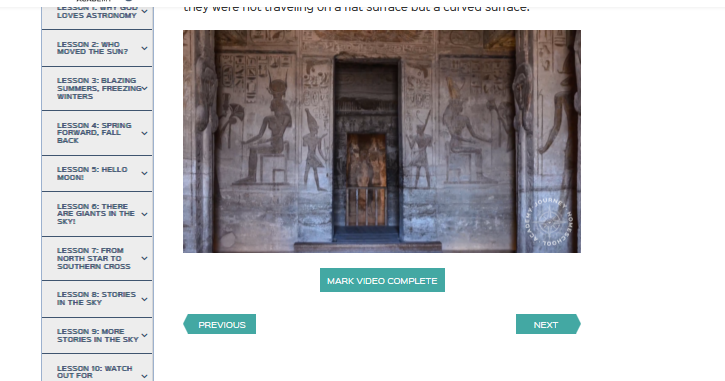
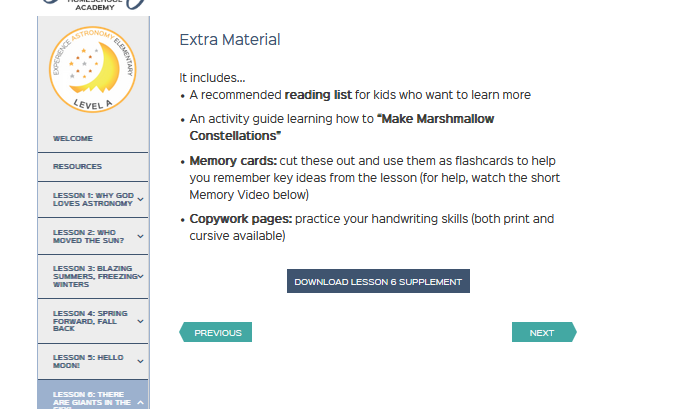
This elementary astronomy course has thirty lessons. Each lesson includes a video (around fifteen to twenty minutes long), a hands-on activity, memory cards (with a two to three-minute memory video), copy work, and suggested additional reading.
The videos cover the concept for the week and often share footage from a different location, like a virtual field trip. They are very reasonable in length and engaging, not just rote lectures.
A sample of the resources included in an elementary astronomy lesson.
The hands-on activities use primarily materials that would be found around most homes (especially homeschool homes, which tend to have a nice crafting collection). They are simple enough to complete but help reinforce the concept for the week.
The memory cards include a few of the most important facts from the week, and each week, a short two—to three-minute video discusses them.
There is copywork for each week in cursive or print form, and there is a quiz that you can use if you wish.
There is a lot of flexibility built into this curriculum, and you can use as many or as few of the resources as you choose and go at whatever pace you would like. Unlike the high school courses, you have lifetime access to this course.
Seven Things I love About Elementary Astronomy
I love that the video lessons are long enough to cover the material well but short enough to keep the attention of my active boys!
I love that they honor the Creator and give glory to God.
I love that it includes hands-on projects that are easy to complete.
I love that the course is only 30 weeks long, so we can easily complete it in a school year while still taking December off for Christmas schooling.
I can use it with multiple ages at one time.
It will give us another excuse to go outside and study God’s creation.
I love that I have lifetime access so we can go as slow or fast as we want, and I can use the course again in a few years with my youngest.
What Will I Add to Journey Homeschool Academy’s Elementary Astronomy?
This course easily stands on its own as a science course and would not need anything added. However, we love art in our house, and Nana over at You Are an Artist has some wonderful space-themed art lessons that will be the perfect complement to this course. You can purchase them separately as a course, or they are included in the art membership (which we love because we can choose whatever strikes our interest that day).
Overall, I am very excited about using elementary astronomy next year. It will simplify science instruction and help me ensure that it does not get pushed to the back burner. My children are excited about astronomy, a topic that I think the whole family can enjoy. Overall, I think the Journey Homeschool Academy elementary courses would be a great fit for families struggling to make time for science, wanting something easy to implement, or having a strong interest in astronomy.
Resource Library and Affiliate Disclosure
When you sign up for the Schoolin’ Swag free resource library you will get a link and password to the library, we are adding to the library each month with new items. You will also get a bi-weekly newsletter email to keep you up to date on what we have going on.
This post may contain affiliate or referral links, including Amazon affiliate links. As always I will never recommend a product that I don’t believe in and you will never be charged more for purchasing through our links. It does help pay for the costs associated with the blog.
Need to add in some healthy movement for you or your children?
Trouble focusing?
Benefits of Time Outdoors
Time outside can be the remedy for all of those concerns and more. Spending time outside in the fresh air and sunshine can make a tremendous difference in the atmosphere of your home and homeschool. This is true for both parents and children.
(Please note that I am not a doctor, and I am not trying to treat health problems. If you are having serious depression, etc, please seek medical care.)
I have noticed that when we are super busy, or the weather has been less than ideal, and we have not spent much time outside, my children struggle to focus on schoolwork, their attitude and behavior suffer, and they tend to be more sedentary.
While I do not start “bouncing off the walls” or appear like I’m vibrating because I’m restless like my children, I also notice that my attitude and focus are better when I spend some time each day outside. The sunshine brightens my mood, and the fresh air helps clear my mind. I try to go for a walk each day, and that 45 minutes of time outside gives me more focus and clarity for the rest of the day.
Educational Benefits
In addition to the physical and mental benefits of time outside, there are also educational benefits. Time spent outside in nature helps students learn by observing the vast world around them. As they begin to look and learn, they tend to become more appreciative of God’s beautiful creation.
While we sometimes take nature walks specifically to observe and study, I find that once you show children how to look for things around them, they begin to do it naturally during their free time outside. We might go for a walk and look for birds one day, but months later, they are still pointing out different types of birds as they spend time outside.
I will not discuss all the research on spending time outside, though I will include a list of good resources at the end of this post. Instead, I want to focus on simple ways to add more outside time to your schedule.
Strategies for Spending More Time Outdoors
1. Dress for the season
While there are some days when the weather is too bad to get outside, most days the key is just being well-dressed. When it is cold, it is easy to decide to stay inside, but I often pay for those days with challenging attitudes and bouncing children. It really is worth the effort to layer up and spend some time outside. In the summer, we use lots of sunscreen, light clothes, and water activities to battle the heat.
2. Take the books outside
Sometimes, going outside would be wonderful, but there is no time. You need to get reading, math, etc. done, as well as whatever else life throws at you. Taking school outside to a picnic table or blanket on the ground is a great option. The novelty and fresh air can make school a little more fun, and it is time you would already be spending with the added benefit of sunshine and fresh air.
Specific nature study is another great way to spend time outside while checking off the educational boxes. It can be as simple as observing what is around them and choosing something to learn more about. If you like to have ideas and more resources for nature study, check out the Homeschool Nature Study Membership.
3. Keep it Simple
We love to do fun things, try new parks, gather with friends, and explore different nature projects. However, spending time outside can be as simple as allowing children to play in the backyard, ride bikes, or walk in your neighborhood. Do not feel like every day or every time outside has to have a plan or special activities.
4. Think Outside the Box
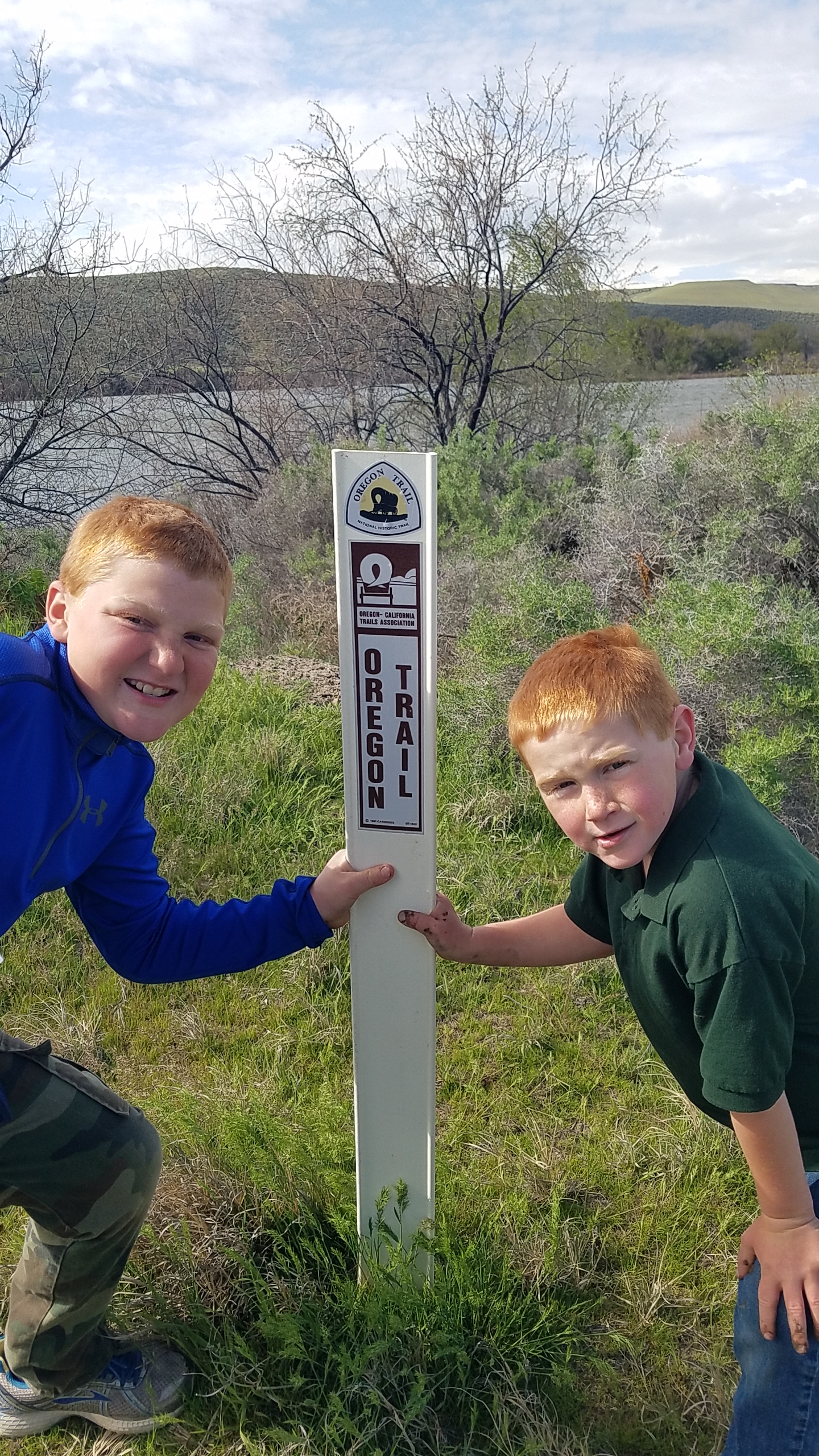
Finally, field trips are a great way to add some time outside. We enjoy going to our state and national park sites to learn more about science and history while exploring the outdoors. There are also local parks, conservation programs, and more that offer outdoor experiences. Sometimes, these fit into our curriculum; other times, they are just fun educational opportunities. If you are in North Carolina, our state parks offer an amazing assortment of outdoor events that you can learn about on their website.
When you sign up for the Schoolin’ Swag free resource library you will get a link and password to the library, we are adding to the library each month with new items. You will also get a bi-weekly newsletter email to keep you up to date on what we have going on.
This post may contain affiliate or referral links, including Amazon affiliate links. As always I will never recommend a product that I don’t believe in and you will never be charged more for purchasing through our links. It does help pay for the costs associated with the blog.