IQ Circle: A Timberdoodle Review

Having already tried (and loved) IQ Gears and IQ 6 Pro, I was happy to review IQ Circle from Timberdoodle. These independent player games challenge the brain and are lots of fun!

What is IQ Circle?

IQ Circle is a logic game that involves puzzle pieces that are connected spheres of different sizes and colors and a circular game board with spaces of different sizes and dividers at different intervals.

The puzzle book also includes 120 puzzles of varying challenge levels.

How Do You Play IQ Circle?

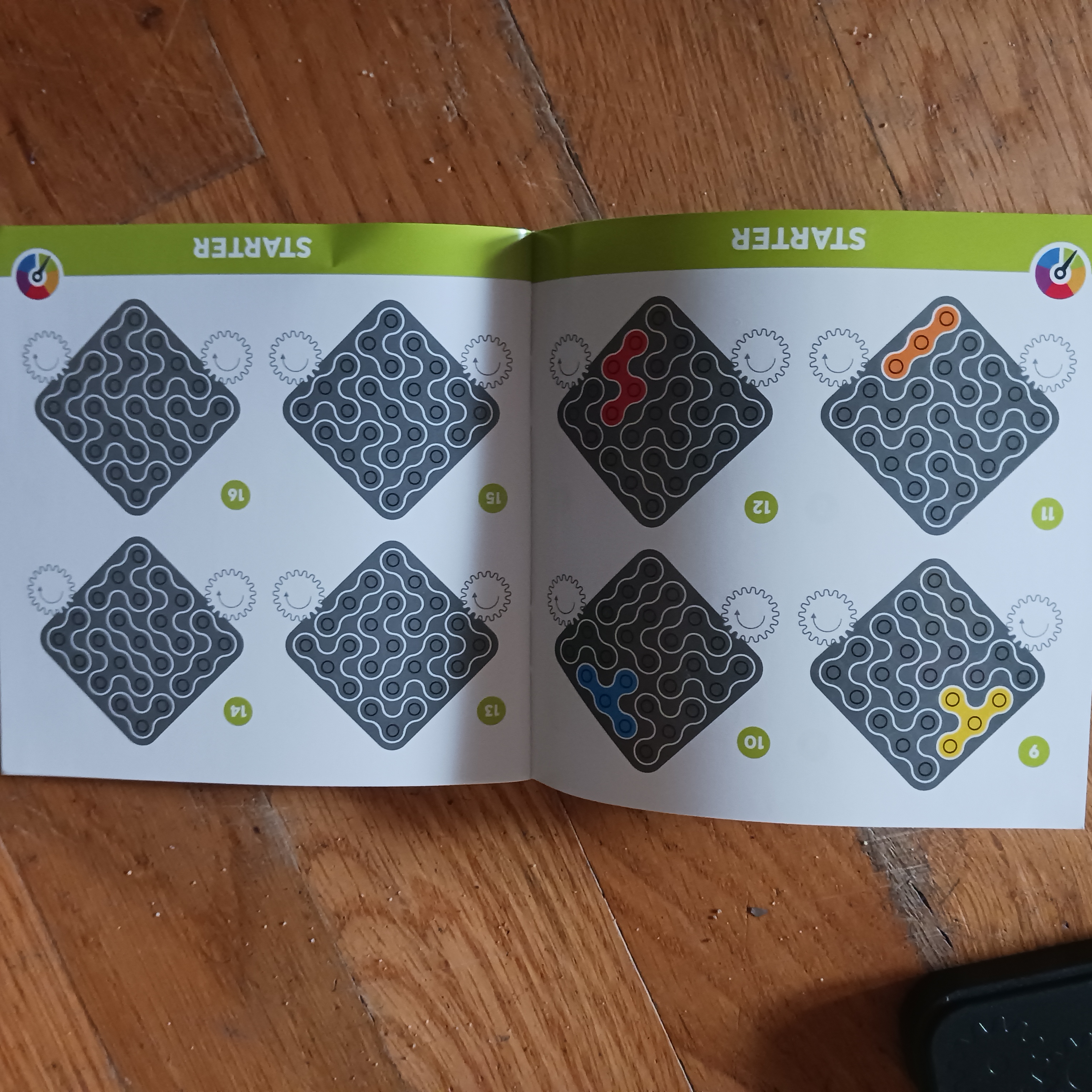
To begin playing, you open the book and choose which puzzle challenge you would like to complete. There are five levels, and I suggest starting with the starter level until you get a feel for how the game works.

Levels:

  • Starter
  • Junior
  • Expert
  • Master
  • Wizard

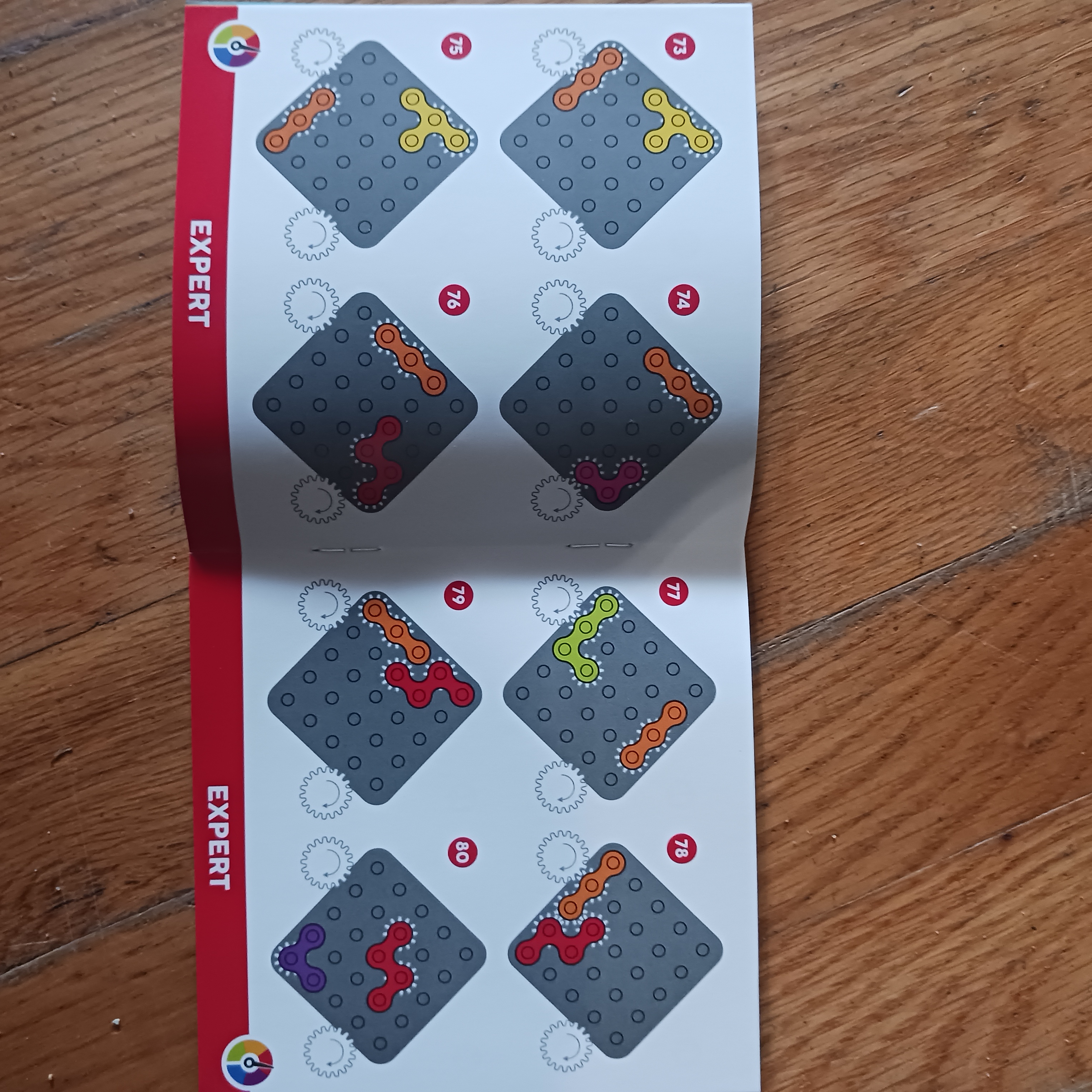
You will use the puzzle book to find a challenge, then fit all the spherical puzzle pieces onto the board without any going over a divider. The concept is simple, but the challenges really work the brain.

One thing to note that we did not realize at first, but quickly learned when the first puzzle was not working out for us, is that the dividers on the board do not come in equal intervals, and it is critical to line them up with the puzzle book to make it all fit.

The colored sections show you where those pieces go, and then you have to figure out the rest.

Our Experience with IQ Circle

My twelve-year-old son got to try this one out first.  He opened it and immediately started on the first puzzle, but soon realized the pieces shown didn’t fit correctly.

After taking a few minutes to read the directions more carefully and look at the board more closely, he realized the board wasn’t lined up correctly. Even though it is a circle, position matters for these puzzles.

Once he figured that out, he worked through several puzzles in the starter level and then moved up to junior and expert. He had a great time with it and continues to work on the puzzles, but he is not quite ready to move up to Expert and Wizard.

As an adult, I really enjoyed this game as well. While it works the problem-solving and strategy part of my brain, it is also relaxing to think through the solutions.

“IQ Circle was really fun and it helped me work on my problem solving abilities.” Benjamin, age 12

The game helps develop flexible thinking, problem-solving, visual skills, and logic. It was a fun challenge, and we plan to add it to our Friday game time rotations. My son has also asked about bringing it on long car rides, and I think it will be a great option.

Who Would Enjoy IQ Circle?

This game is for many ages, especially with the different-level puzzles. It is recommended for ages 14+, but I think middle schoolers could also enjoy it, especially the easier levels.  The puzzles are more challenging than some of the other IQ games.

It would also be great for adults looking for a break from life or work stress and a way to keep their brains active.

With all the different tasks, you could spend as little as five minutes playing or spend an hour or more doing multiple tasks.

This compact carrying case makes it perfect for playing on the go!

Overall Thoughts

IQ Circle from Timberdoodle is a fun, easy-to-understand game that challenges the brain and builds focus, strategy, and logic skills without feeling like work.  It is small and compact, easy to store and use on the go. It requires minimal setup: open it, choose a puzzle, and start playing.

I could see this being great for long car rides, something for busy hands to work on during a read-aloud or during periods of waiting.  Also great for a break between school subjects or as something independent to do while waiting for assistance with other subjects. You can find out more and get your game at Timberdoodle.

FAQs

What ages is this game for?

The company recommends ages 14+, and I would say it’s for anyone from middle school through adulthood.

How Many Players?

This is a single-player game, though you can take turns if multiple people want to play.

Bao’s Cloudland: A Timberdoodle Review

Sometimes the simplest activities are the best activities. Bao’s Cloudland from Timberdoodle is a simple logic game that involves one book of puzzle tasks and  12 wooden animals.

While the concept is simple, it provided hours of fun and learning for a wide variety of ages in our home.

What is Bao’s Cloudland?

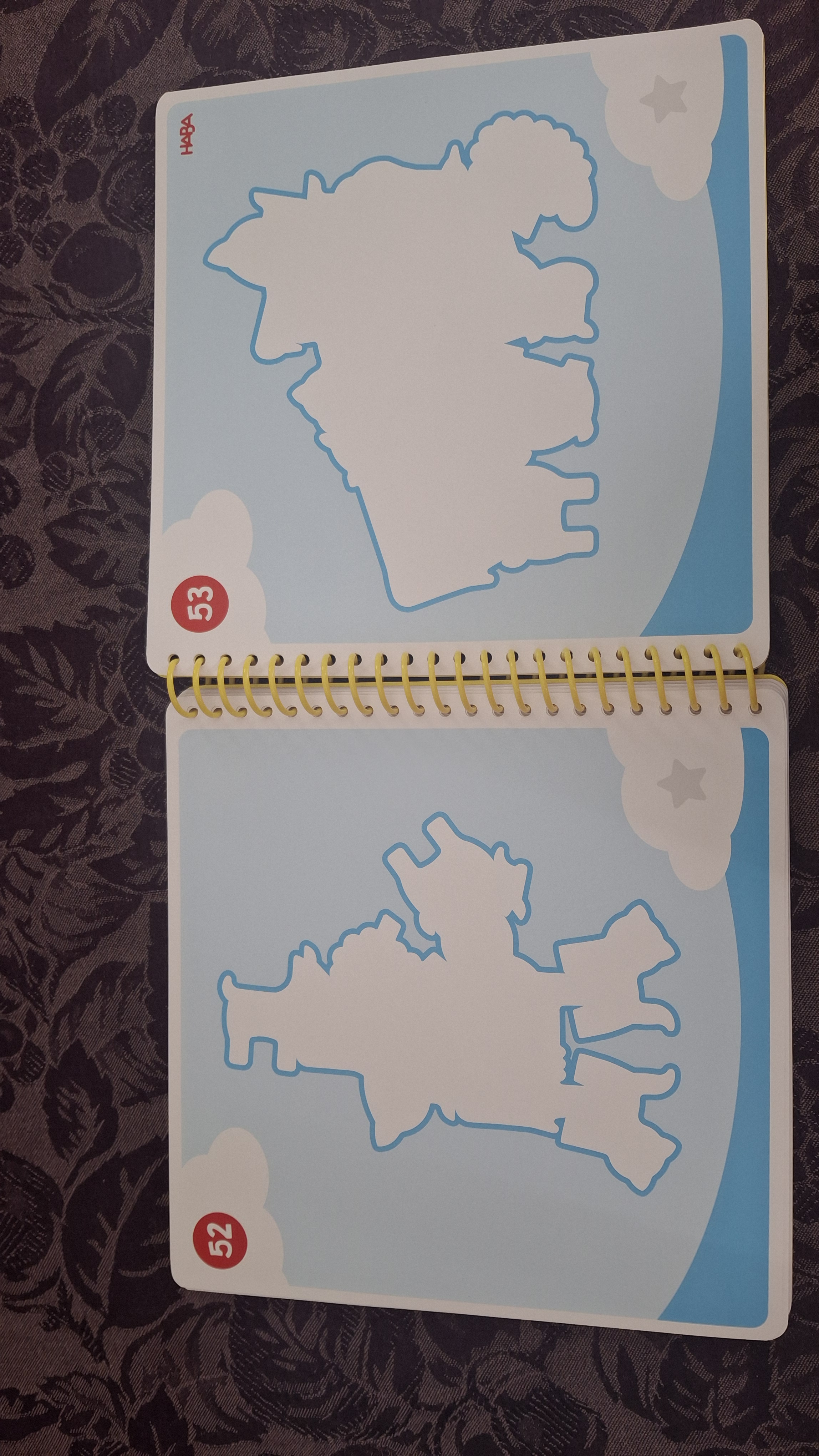
The game includes 12 colorful wooden figures, two of each kind: sheep, cow, cat, goat, geese, and pig. There is also a spiral-bound book with 60 different puzzle tasks, divided into different levels of complexity. These levels are ordered and marked by the color on the page, so it is easy for even non-readers to find the right level.

How Do You Play Bao’s Cloudland?

Bao’s Cloudland is simple and easy to understand. It is a one-player game (which is really convenient when you have a child who is “bored” and needs something to do). You simply pick the puzzle task of your choice, and then try to fill in the outline on the page with the correct animals to complete the puzzle.

There is a separate answer key book in case you get stuck, or your child wants to check and make sure that they are correct.

Our Experience with Bao’s Cloudland

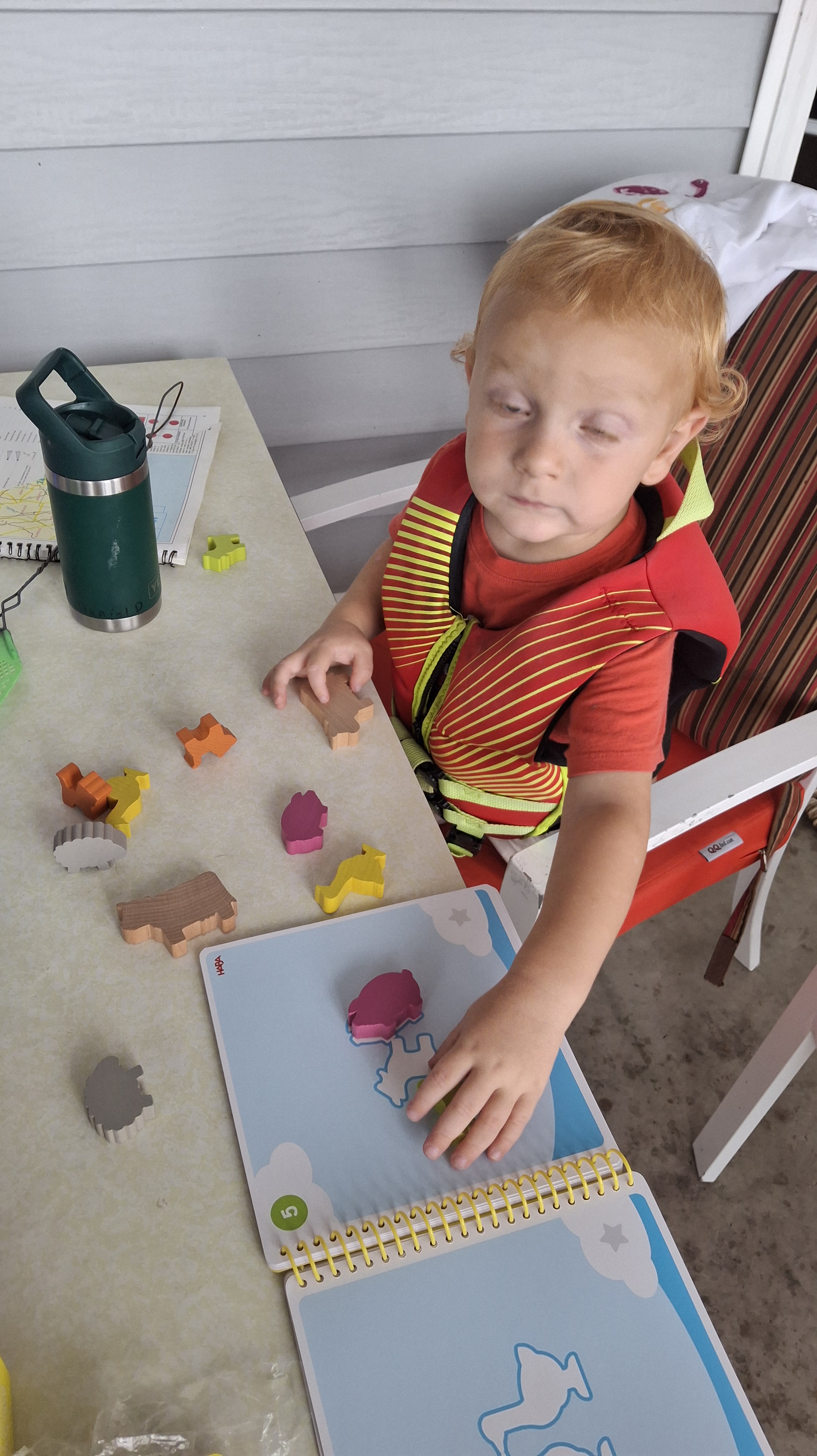
When we requested Bao’s Cloudland, I had my eight- and twelve-year-old sons in mind. However, I also have a two-year-old who loves animals and wanted to play with it as well. All three of them enjoyed the game.

I was expecting the two-year-old to just play with the wooden animals, but he was actually able to complete several of the easiest puzzles successfully. He could do a few independently, and for some of the others, he could pick out the right animals but needed help getting them positioned correctly within the outline.

The older boys could work in any of the levels, and while they quickly realized the easiest level was a bit too easy, they enjoyed the other two levels. I even took a few turns with them and found it to be an enjoyable way to stretch my mind.

We were actually on vacation at the river when we first tried the game, and even there they were happy to play while they took a break from the sun or in the evenings after dinner.

They were working on strategy, visual skills, and logic. However, they did not see it as an educational game, but it was great work for their brains.

Who Would Enjoy Bao’s Cloudland?

Honestly, I think this is a game that all ages can enjoy, especially with the different level puzzles. It is recommended for ages 3+, but as we saw with my toddler, even some two-year-olds could enjoy it. Often, when a game is rated for ages that young, we think it wouldn’t be of interest to older children or adults, but I think the whole family could enjoy this game.

It is a quiet and quick game, great for giving children something to do independently for a few minutes. With all the different tasks, you could spend as few as five minutes playing or spend an hour or more doing multiple tasks.

Overall Thoughts

Bao’s Cloudland from Timberdoodle is a fun and easy game to work on visual skills and logic without it feeling like work. It can be played and enjoyed by the whole family. You can find out more and get your copy at Timberdoodle.

FAQs

What ages is this game for?

Any age from toddler to adult.

How Many Players?

This is a single-player game, though you can take turns if multiple people want to play.

Gnome Sweet Gnome a Timberdoodle Review

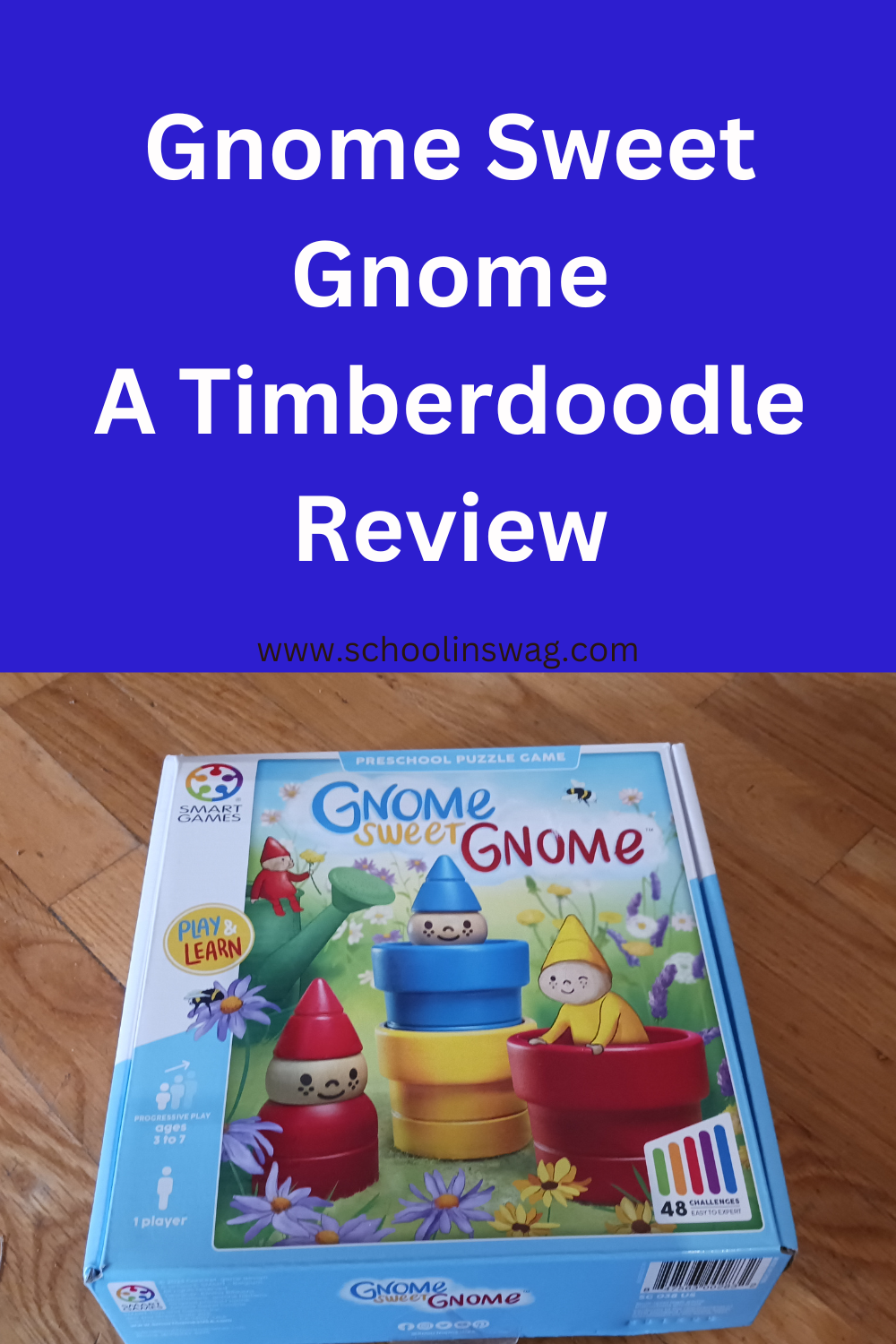
Children learn so much through play, and I love it when I find tools that can help guide that learning while still being fun and enjoyable for the child. I recently had the opportunity to review the game Gnome Sweet Gnome from Timberdoodle.

Gnome Sweet Gnome is a game that children can play independently. It has several different skill levels, making it great for developing skills. It works on fine motor skills, critical thinking, comparing sizes, and color recognition and is great for preschool through kindergarten or first grade.

What is Gnome Sweet Gnome?

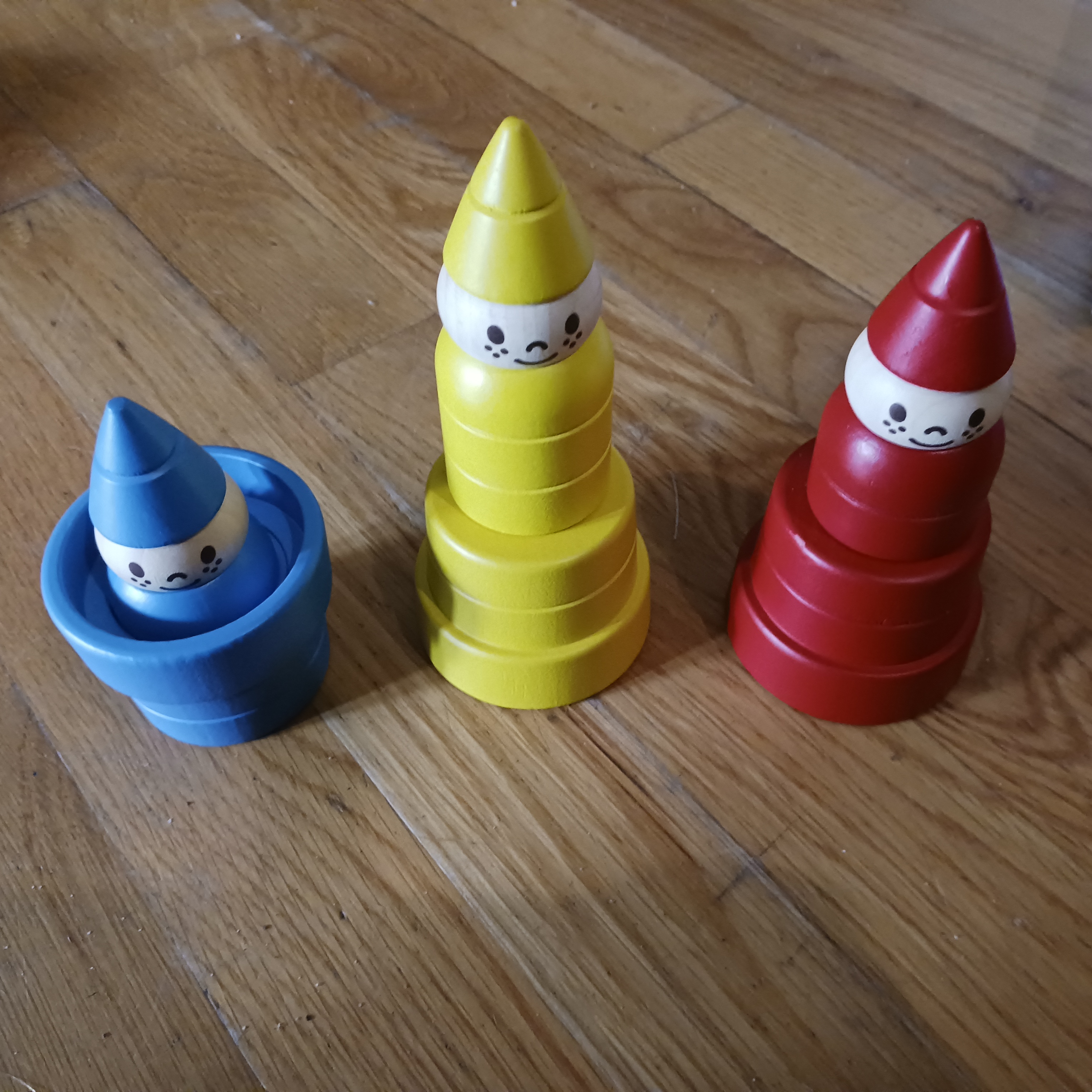
The game includes three different gnomes, each gnome is a different size and color. The Gnomes each come with a matching flower pot, each with a different depth. The different sizes and depths mean that when stacked in different combinations, you can see different amounts of the gnome. For example, if you put the smallest gnome in the deepest flower pot, you can only see the top of his hat.

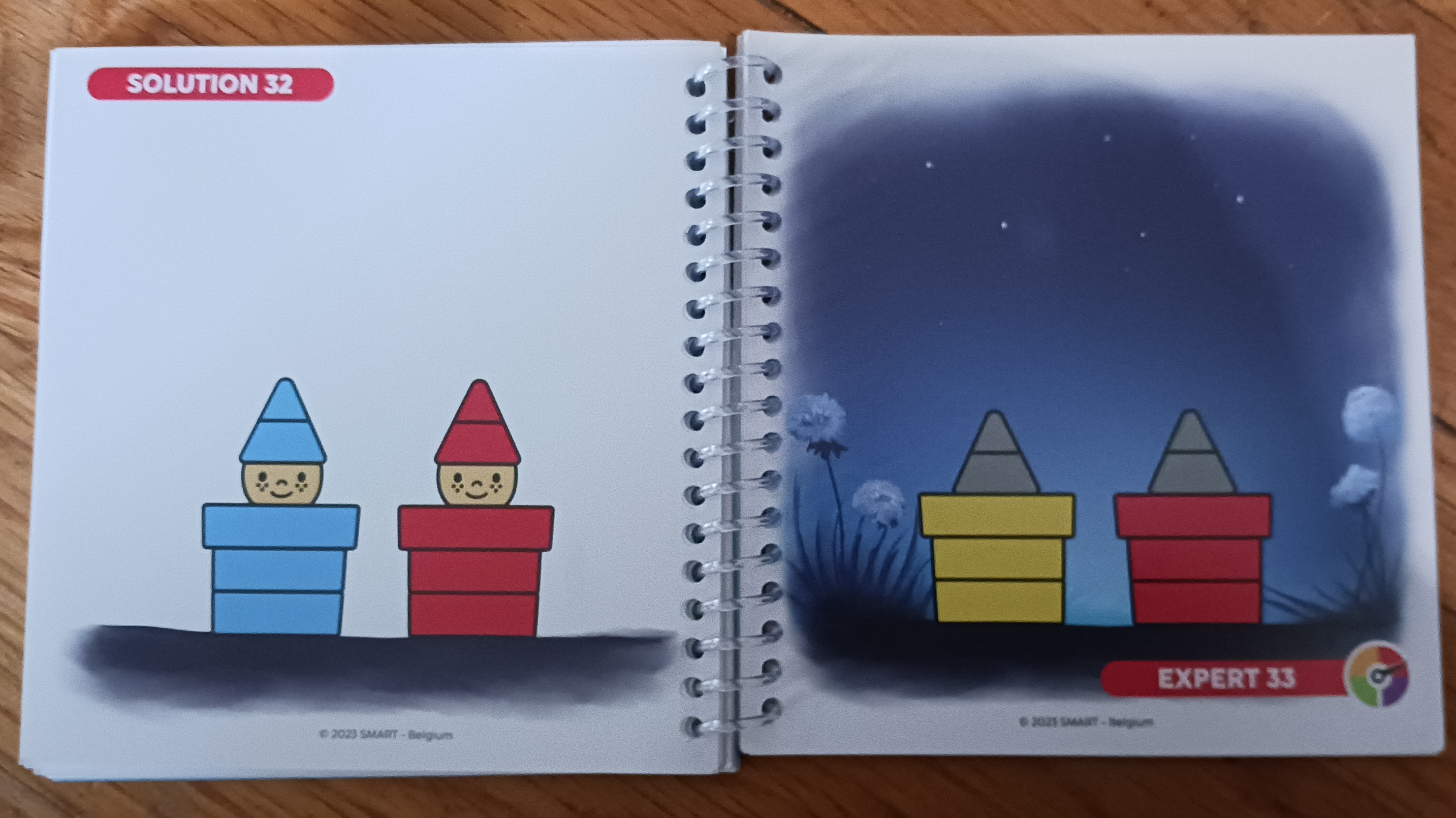
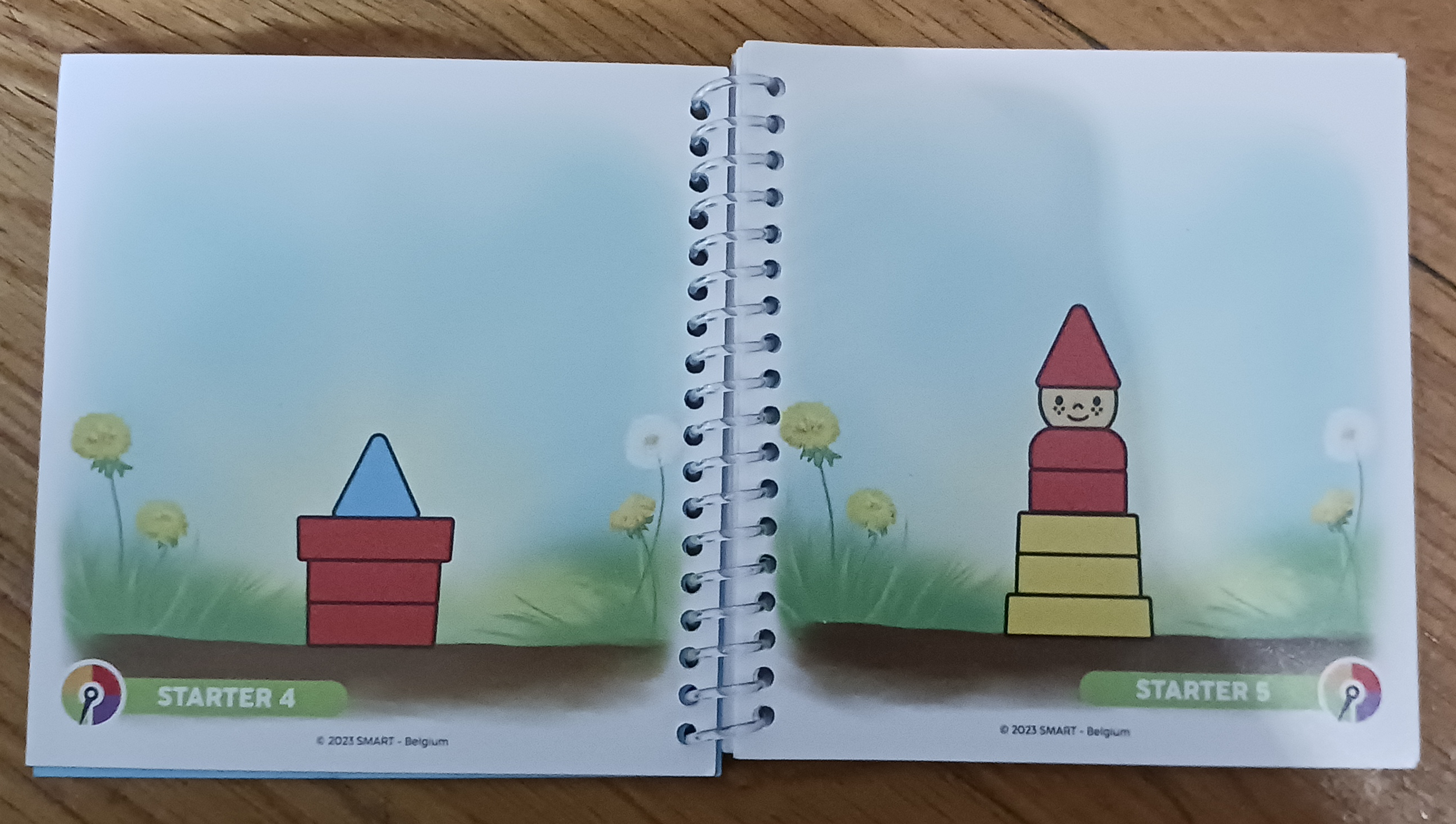
There are forty-eight challenges included with the game (each challenge is a different picture that the child needs to recreate). The challenges vary from easy to expert levels. I loved that the challenges were all enclosed in a spiral-bound book. That means no loose cards that are easy to misplace.

How Do We Play Gnome Sweet Gnome?

The beginning challenges use only a few pieces, and the challenge card shows the color for all of the pieces used. Then, they get a little more challenging by using more pieces but still showing all of the colors. On the final levels of difficulty, some or all of the colors are grayed. Other than the easiest level, all the challenges have a solution picture on the back of the page so the child can check their work.

This game can be completed independently, or a parent could work with the child to check their work and help them problem-solve. Depending on their attention span and ability level, children can work through anywhere from one challenge to the whole book. Younger children can start with the easier levels, and as they get more practice and confidence, they can move up to the more challenging options.

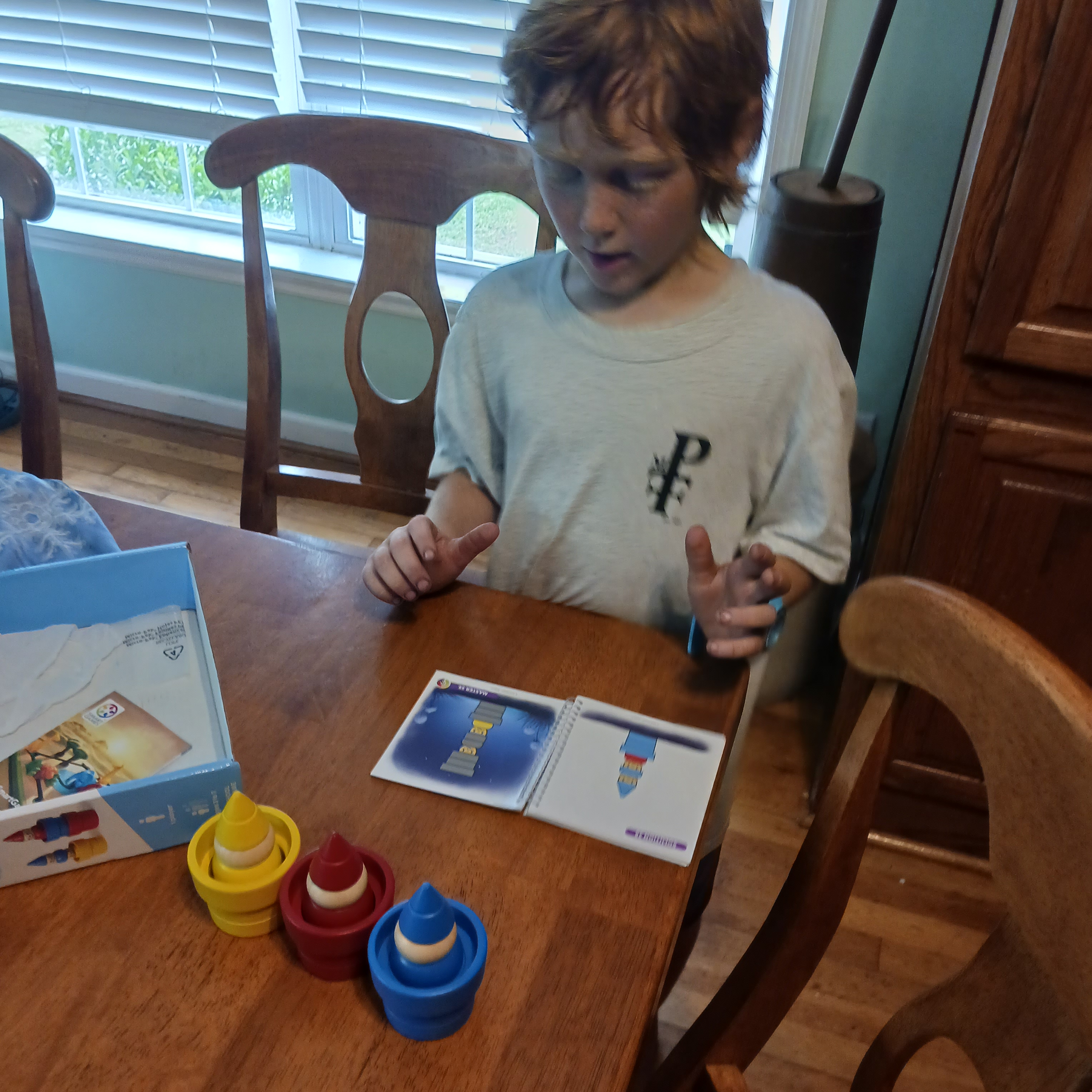
Overall, we really enjoyed this game. My six-year-old wanted to check it out and went through all the levels in one sitting. Even though he had completed them all, he still wanted to play again on other occasions, so it was not a one-and-done activity.

He loves playing Gnome Sweet Gnome!

This is also a great game to prepare students for the more challenging IQ Gears that we reviewed a few weeks ago for Timberdoodle. They work on similar skills at different levels.

Where Do I Find Gnome Sweet Gnome?

I highly recommend this game if you have a young child and want to work on fine motor skills (stacking), colors, or problem-solving. You can find out more and purchase Gnome Sweet Gnome at Timberdoodle. It is also included in their preschool kit.

IQ Gears a Timberdoodle Review

I love getting my hands on fun and educational games, little ways my children can keep their minds growing while they play. Thus, I was excited to get the opportunity to review Smart Games’ IQ Gears from Timberdoodle.  We had reviewed another game, IQ 6 Pro, from them last year, so I had high expectations.

The IQ Gears was similar to the IQ 6 Pro but with added fun and challenge. It is a puzzle game that can be played independently or together, with players challenging each other to different levels.

What is IQ Gears?

The game consists of a playing board and seven puzzle pieces. Seven pieces may not seem like a lot, but there are so many different combinations and challenge levels that it is great for a variety of ages. The included manual has over one hundred challenges at five different levels, ranging from starter to wizard.

Each of the seven pieces is a different color and shape. They also each have small gears on different parts of the shape. On the outside of the playing board are two larger gears. The goal is to get the puzzle pieces to fit back on the playing board in a way that connects the two outside gears. So you should be able to turn one outside gear and cause the other outside gear to turn.

There are many possible combinations to make this happen, but each challenge has specifics that have to be in place. For example, it might show you the position of several of the pieces, and you have to figure out where the other pieces will fit. Some of the challenges show positions but with the pieces whited out so that you have to figure out which pieces they are using and get them all in the right places. 

The easiest starter puzzles show the shapes of all the pieces on the board but only have a few of them colored in. All of these levels make it easy for people of different ages to enjoy the puzzle together.

How To Use This Game

As a homeschool mom, I loved that this game was working on critical thinking skills and was QUIET. It was very small and self-contained, so it worked well as a game for car rides. A child who needs to keep their hands occupied during read-aloud time could also use it.

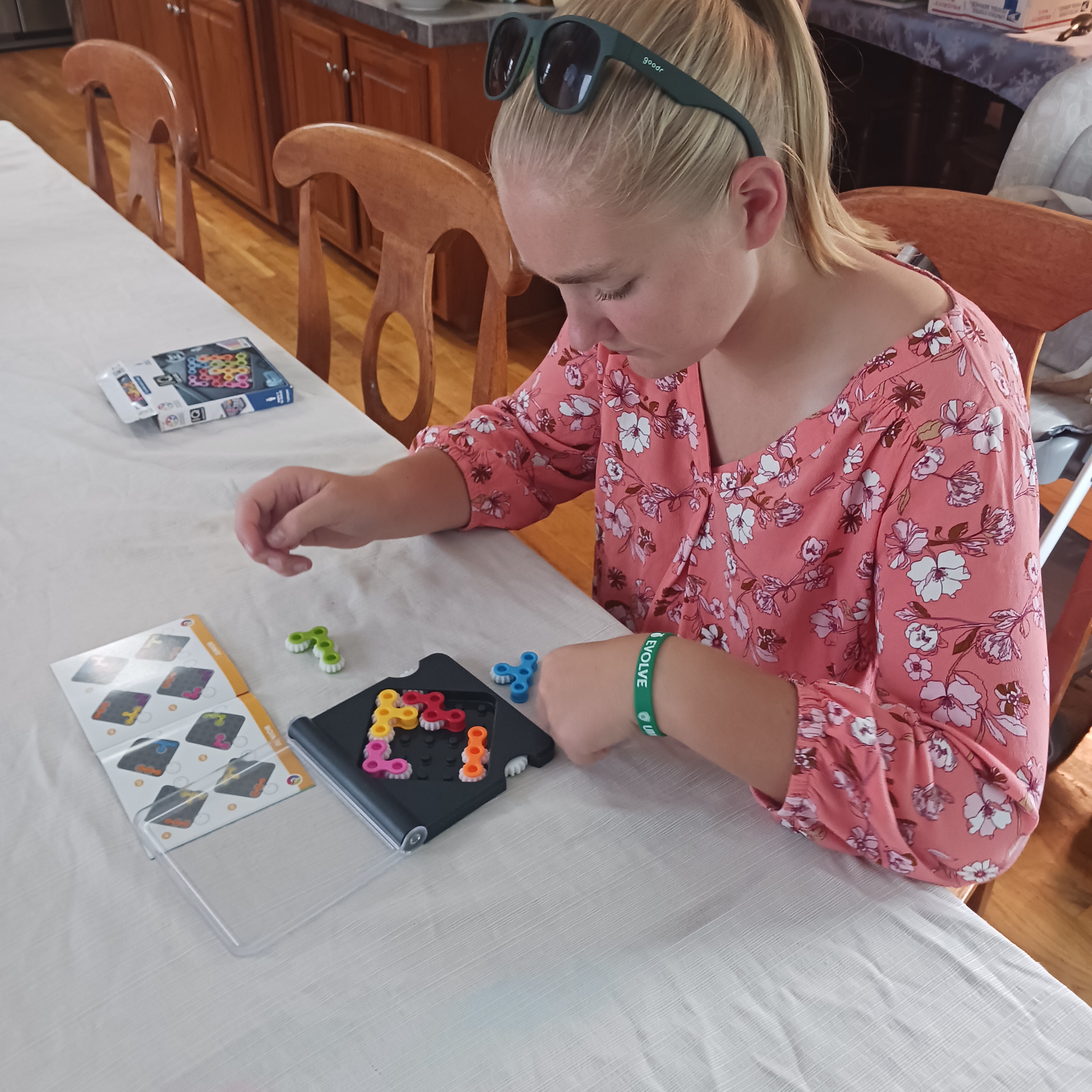
 It doesn’t have to be for school; it also makes a delightful family game to play in the evenings. It challenges teenagers and can be a great way to engage them in family time. My daughter was surprised at how challenging it was at first. She assumed that with only sevel pieces it would be too easy.

We enjoyed the game and were glad to add it to our collection. I encourage you to find out more about IQ Gears at Timberdoodle, where it can be purchased independently or as part of the 10th-grade kit.