Grizzly Gears: A Timberdoodle Game Review

Can you get the little bear to his mom, the girl to her tent, or the rabbit to the other rabbit? What about a combination of multiple figures needing to be moved to the right spot? Grizzly Gears has a challenge for everyone!

What is Grizzly Gears?

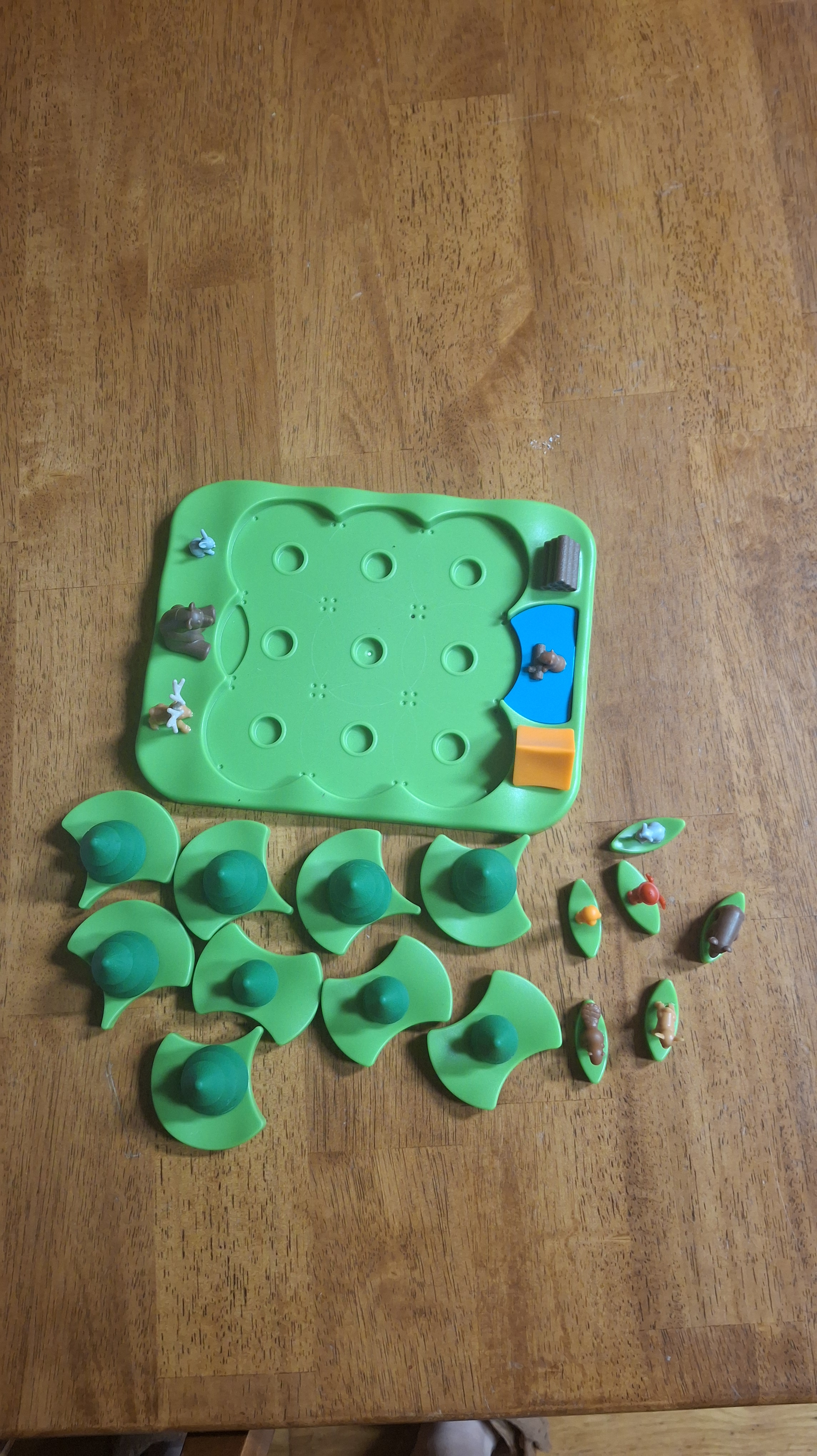
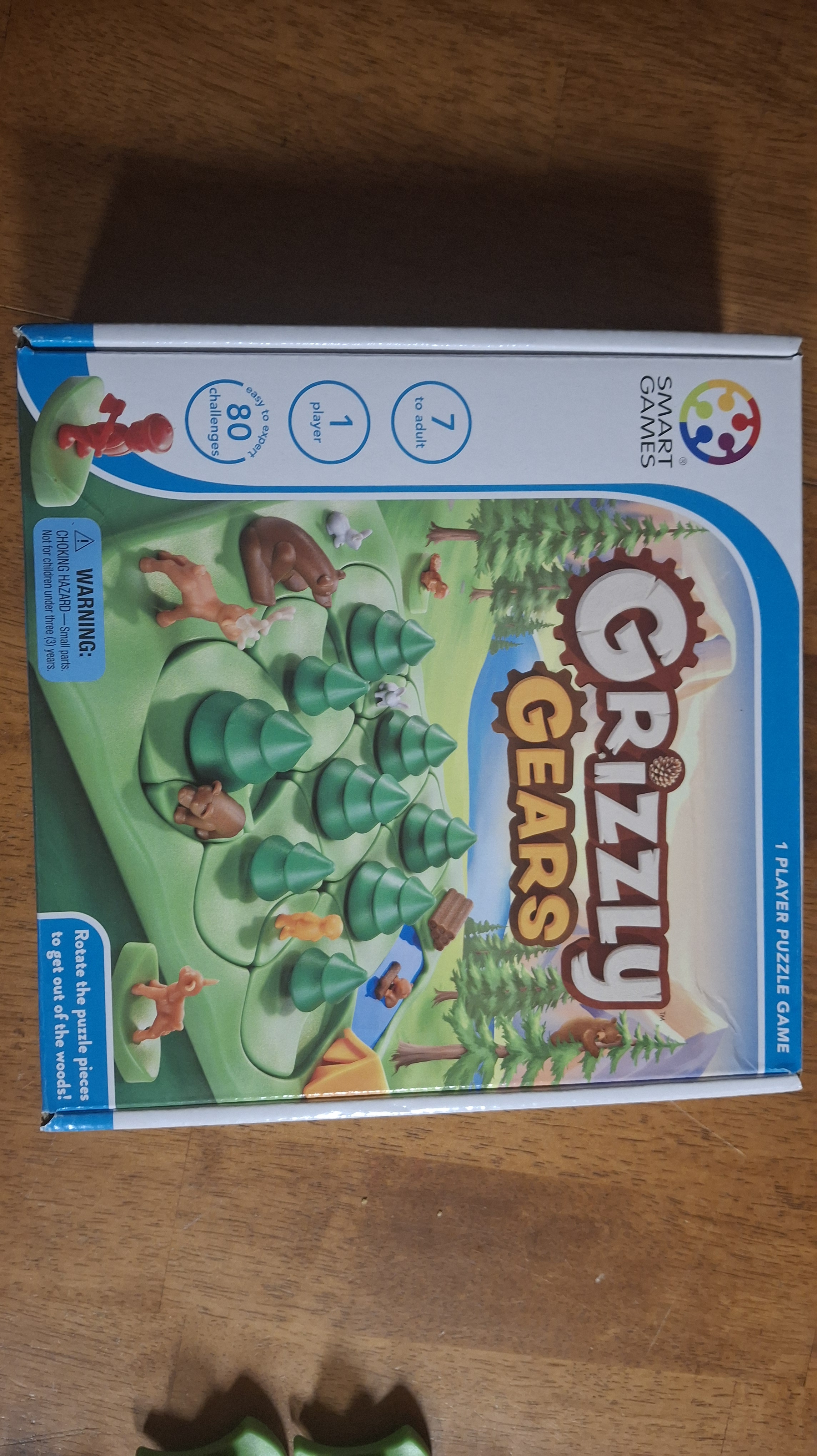
The game includes a small game board that holds multiple tree pieces, has several figures (bear, tent, wood pile, etc) in fixed positions on the board, and six loose pieces that coordinate with the ones in fixed positions.

For example, Mama Bear is in a fixed position on the board, and there is a baby bear piece; the tent is in a fixed position, and there is a little girl piece that coordinates with it.

The set also includes a puzzle book with instructions, 80 different challenges, and an answer key.

The goal of the game is to get the pieces that are at play in each puzzle challenge to the right spots.

How Do You Play Grizzly Gears?

To begin playing, you open the book and choose which puzzle challenge you would like to complete. There are different levels, and I suggest starting out with the starter level, at least until you get a feel for how the game works.

Levels:

  • Starter
  • Junior
  • Expert
  • Master

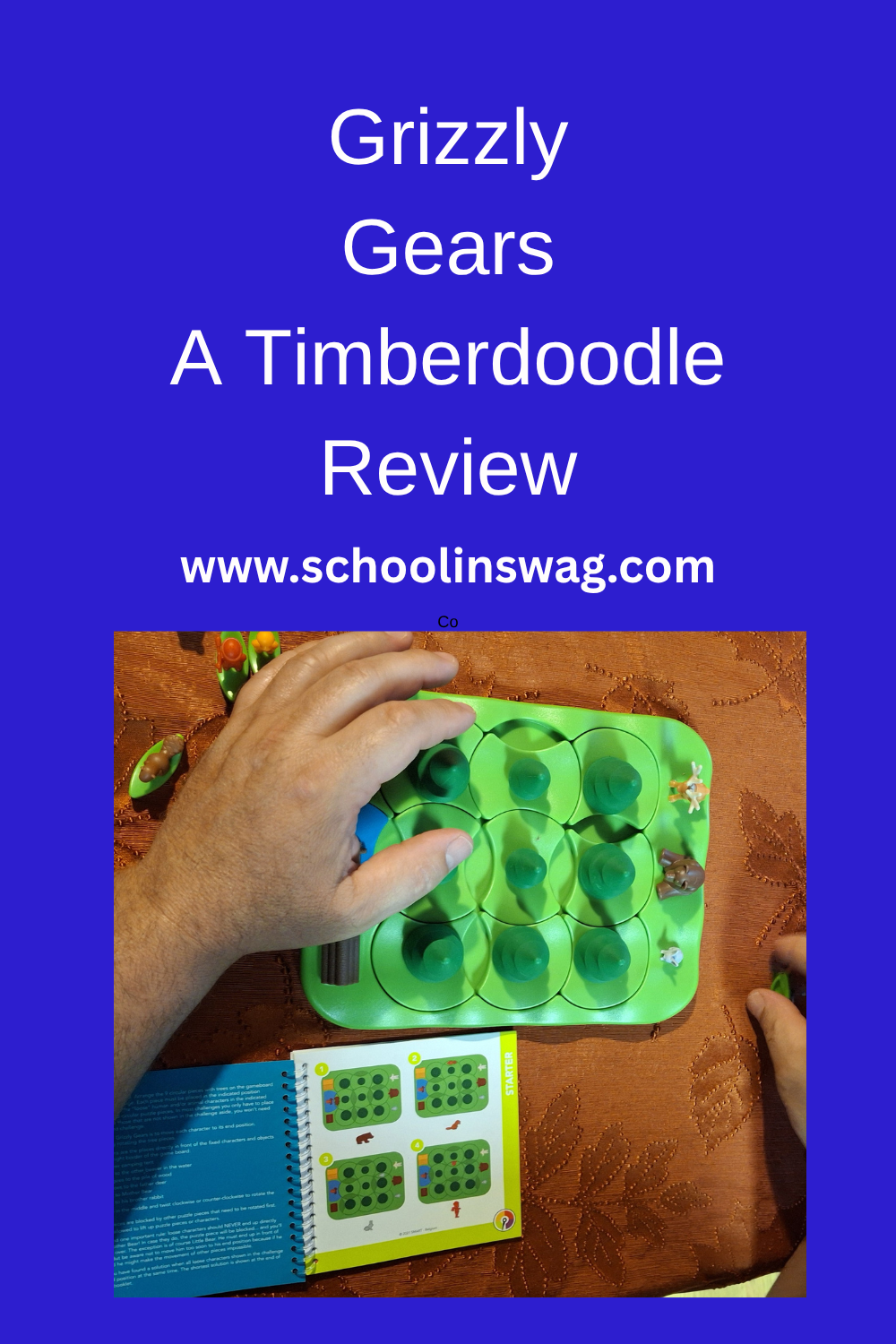
Next, you set up the board based on the challenge that you chose. Each challenge includes a picture showing which trees go in which positions and which loose pieces are included. Then you have to get the loose pieces to their correct spots.

To get them to the correct spots, you have to twist the trees, which work like gears and move the other trees and the loose pieces. You have to find the right combination of moves to get all the pieces where they need to be. 

In the easier challenges, you are only moving one loose piece, but later challenges include more pieces.

There is an answer key in the back of the challenge book in case you get stuck; it shows how to solve the problem in the fewest moves.

Our Experience with Grizzly Gears

We broke out this game for the first time during a game night where my husband and I helped our three youngest boys (ages 12, 8, and 2) play different independent games.

My eight-year-old was the first one to try it out, and once he got the hang of it, he loved it. I highly recommend having an adult help explain the game and set it up the first time, as it can be a little confusing at first. However, once you get a feel for how it works, students can do it independently.  

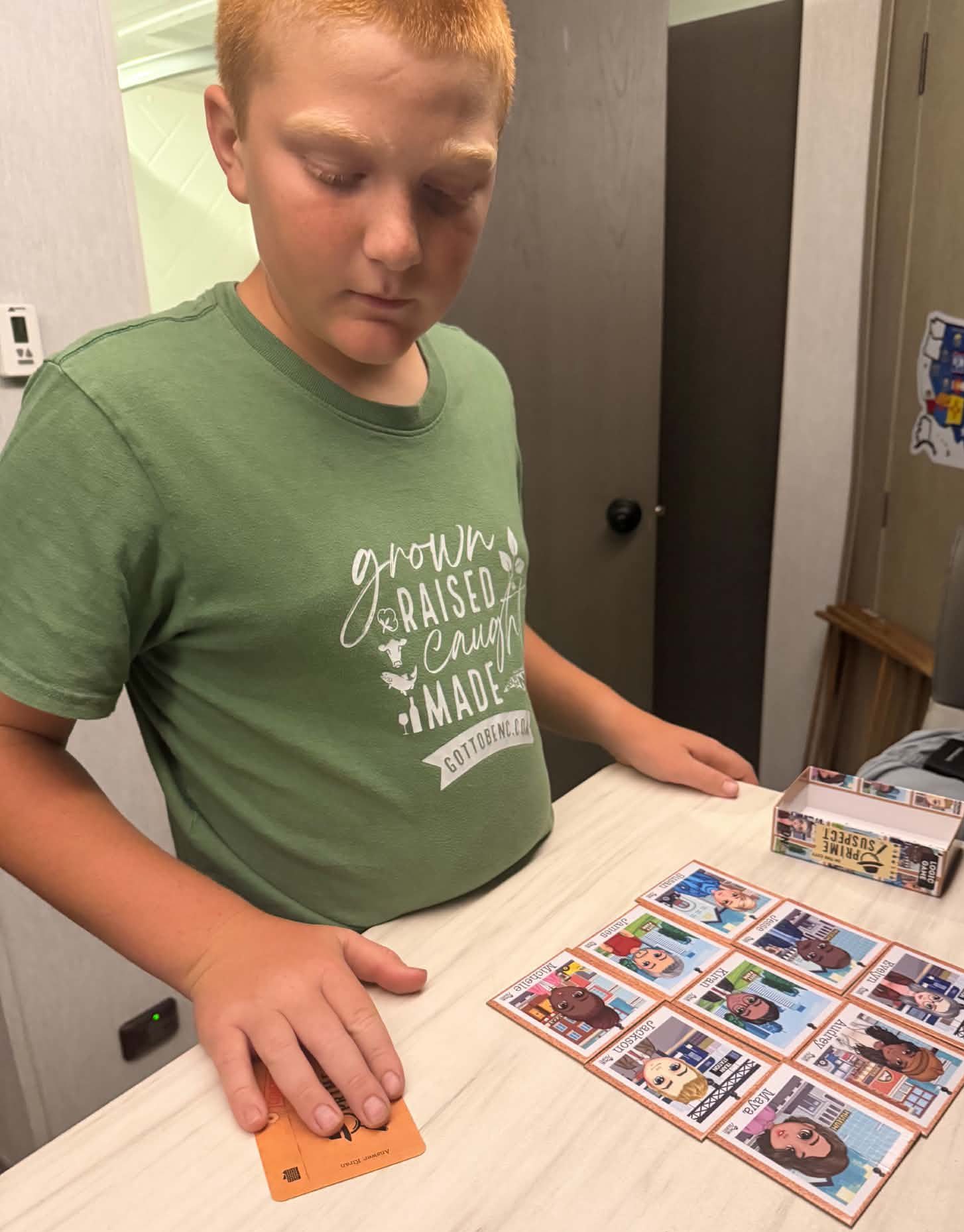
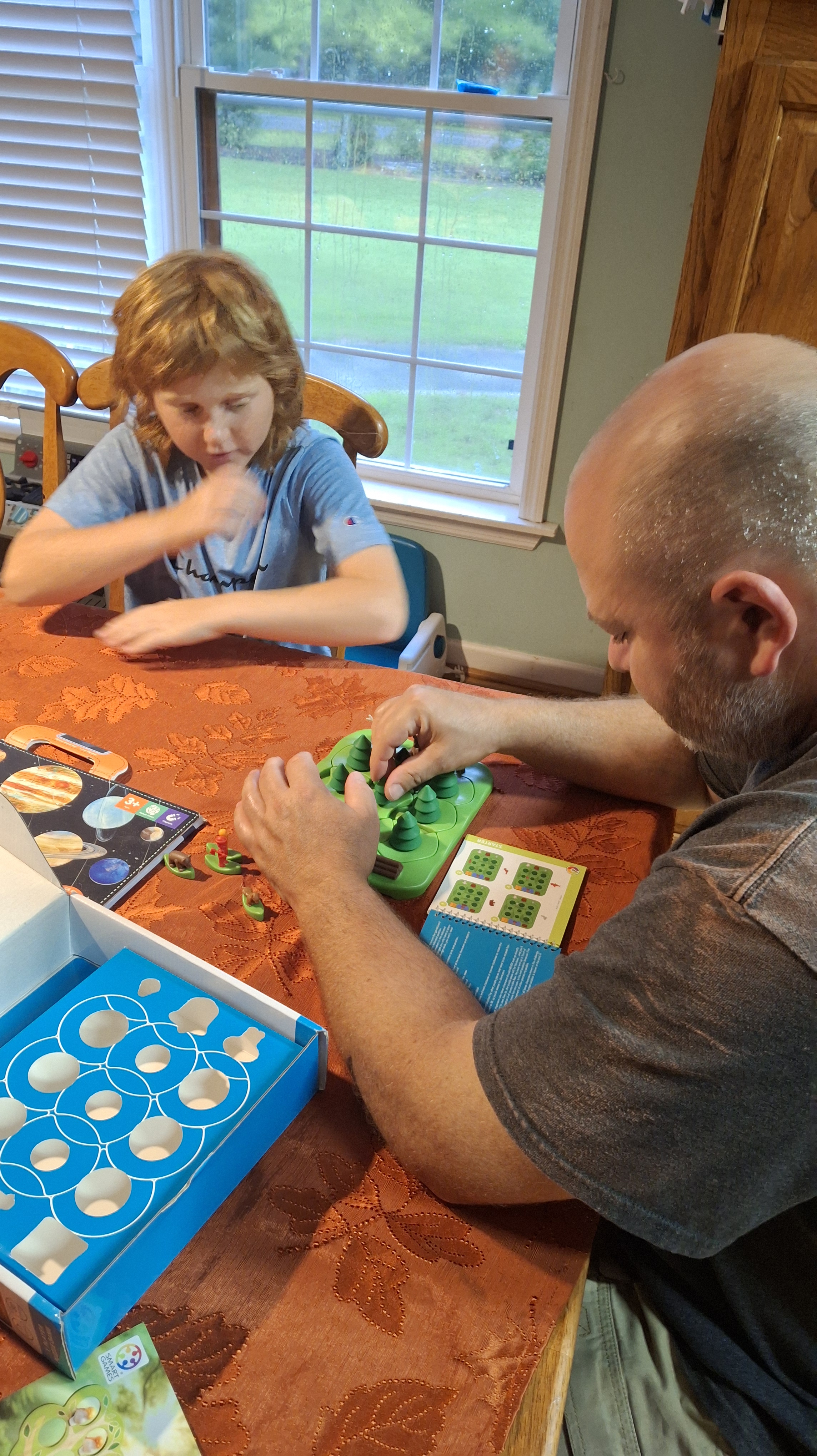
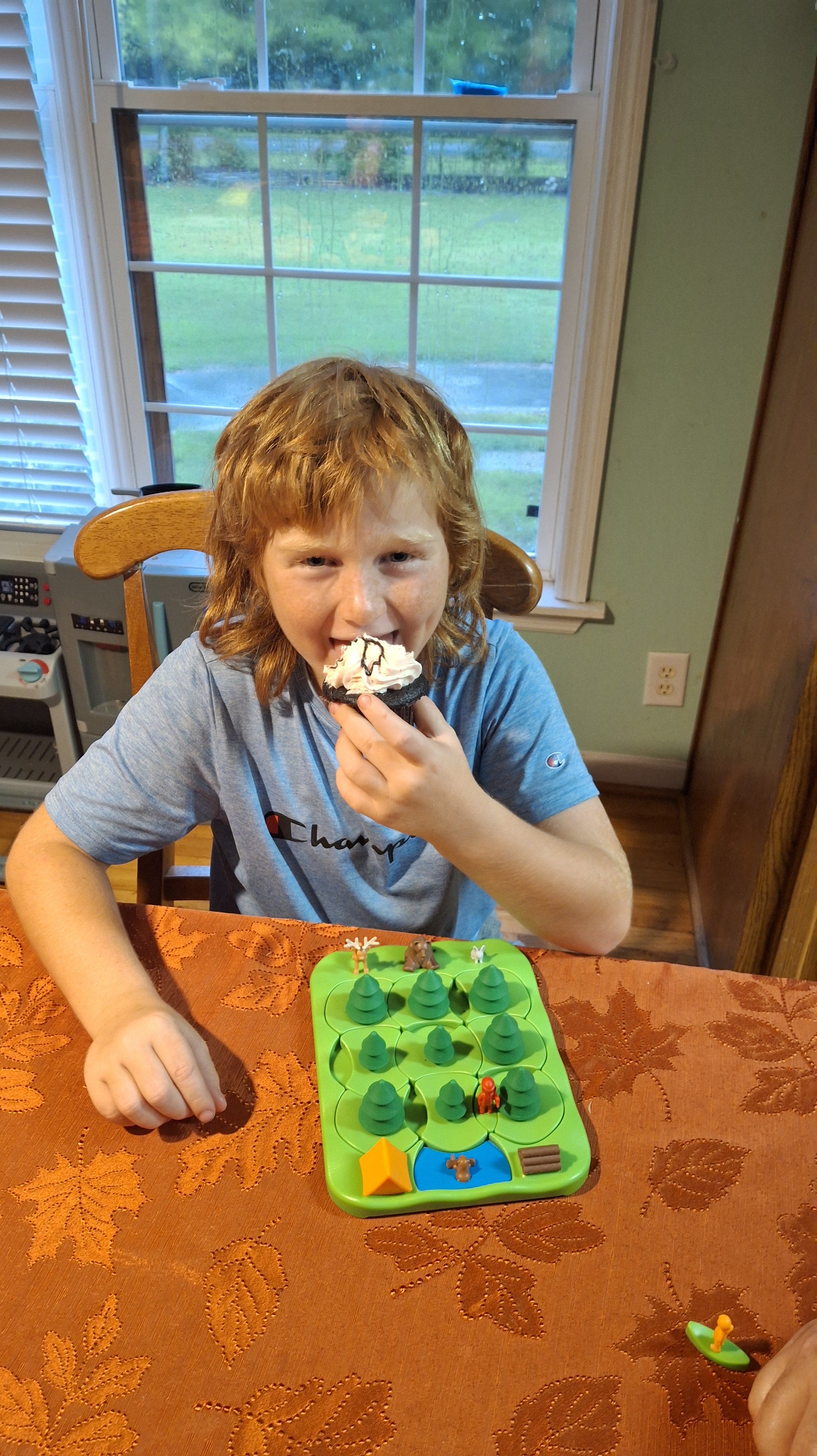
My son worked with his dad on several of the challenges, and it was a great way for them to spend quality time together and for his dad to help him work through the problem-solving aspects. He even got to enjoy a cupcake while he worked, so it was a fun and memorable time.

Game nights are the best nights!

Once he got the hang of a few of the easier levels, he was excited to move up to the next level and try moving more than one piece.

My twelve-year-old also took a turn and found it fun. While the two-year-old did not understand the game (understandably), he had a lot of fun turning the gears and helping out his eight-year-old brother one evening while I was cooking dinner.

The game helps develop problem-solving, visual skills, and logic. My children didn’t see it as an educational game, but it was great brain work. We plan to add it to our Friday game time rotations.

Who Would Enjoy Grizzly Gears?

This is a game many ages can enjoy, especially with the different-level puzzles. It is recommended for ages 7+, and I think that is fairly accurate. A younger child could certainly try and might be able to do the easier challenges, but some of them are quite difficult.

It is a quiet and quick game, great for giving children something to do independently for a few minutes. With all the different tasks, you could spend as few as five minutes playing or spend an hour or more doing multiple tasks.

Add it to your game night rotation, use it as a quiet activity between school subjects, use it as an independent activity while you cook dinner, or use it any time you want a fun, brain-stimulating activity.

Overall Thoughts

Grizzly Gears from Timberdoodle is a fun, easy game for building visual skills, strategy, and logic without it feeling like work. It is a quick, low-stress, low-prep game that people of all ages can play and enjoy. The various levels allow students to be challenged without it being too hard or frustrating. You can find out more and get your game at Timberdoodle.

FAQs

What ages is this game for?

The company recommends ages 7+, and I would say any age from elementary school through adulthood.

How Many Players?

This is a single-player game, though you can take turns if multiple people want to play.

Does the game require reading?

Other than someone reading the instructions, this game does not require reading.

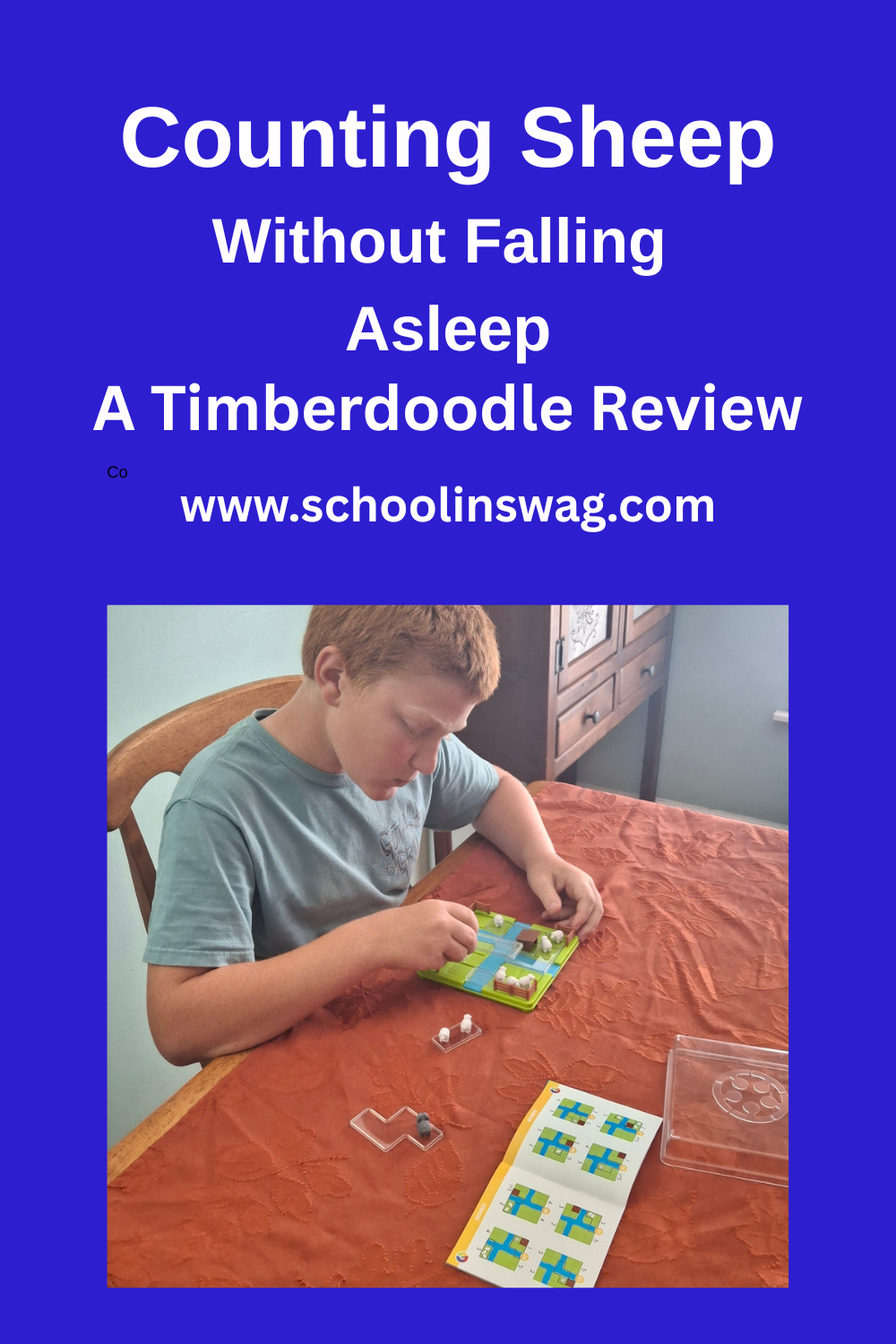
Counting Sheep Without Falling Asleep: A Timberdoodle Review

Sometimes the simplest activities are the best activities. Counting Sheep Without Falling Asleep from Timberdoodle is a simple logic game that includes a book of puzzle tasks, a small game board, and eight transparent puzzle pieces featuring sheep and a shed.

While the concept is simple, the game provides hours of fun and learning for a wide variety of ages.

What is Counting Sheep Without Falling Asleep

The game includes a small game board that is laid out with green squares for the grass and blue for the water. Then there are seven transparent puzzle pieces in different shapes, each with small white or gray sheep on it. Additionally, there is a small transparent piece with a shed on it.

The game board has a cover, so you can easily store the pieces. There is also a small book with 60 different challenges, divided into different levels of complexity. There are five levels, ordered and marked by color on the page, so even non-readers can easily find the right level.

Levels:

  • Starter
  • Junior
  • Expert
  • Master
  • Wizard

How Do You Play Counting Sheep Without Falling Asleep?

Counting Sheep Without Falling Asleep is simple and easy to understand. However, while the concept is simple, the varying levels of challenge mean that it can provide a fun mental challenge even for adults. It is a one-player game (which is really convenient when you have a child who is “bored” and needs something to do).

Simply pick a challenge of your choice, then make the puzzle pieces fit while avoiding sheep in the water and ensuring they fit as shown in the challenge. For example, the challenge might show you where a few pieces belong, and then you have to fit the rest without overlapping.

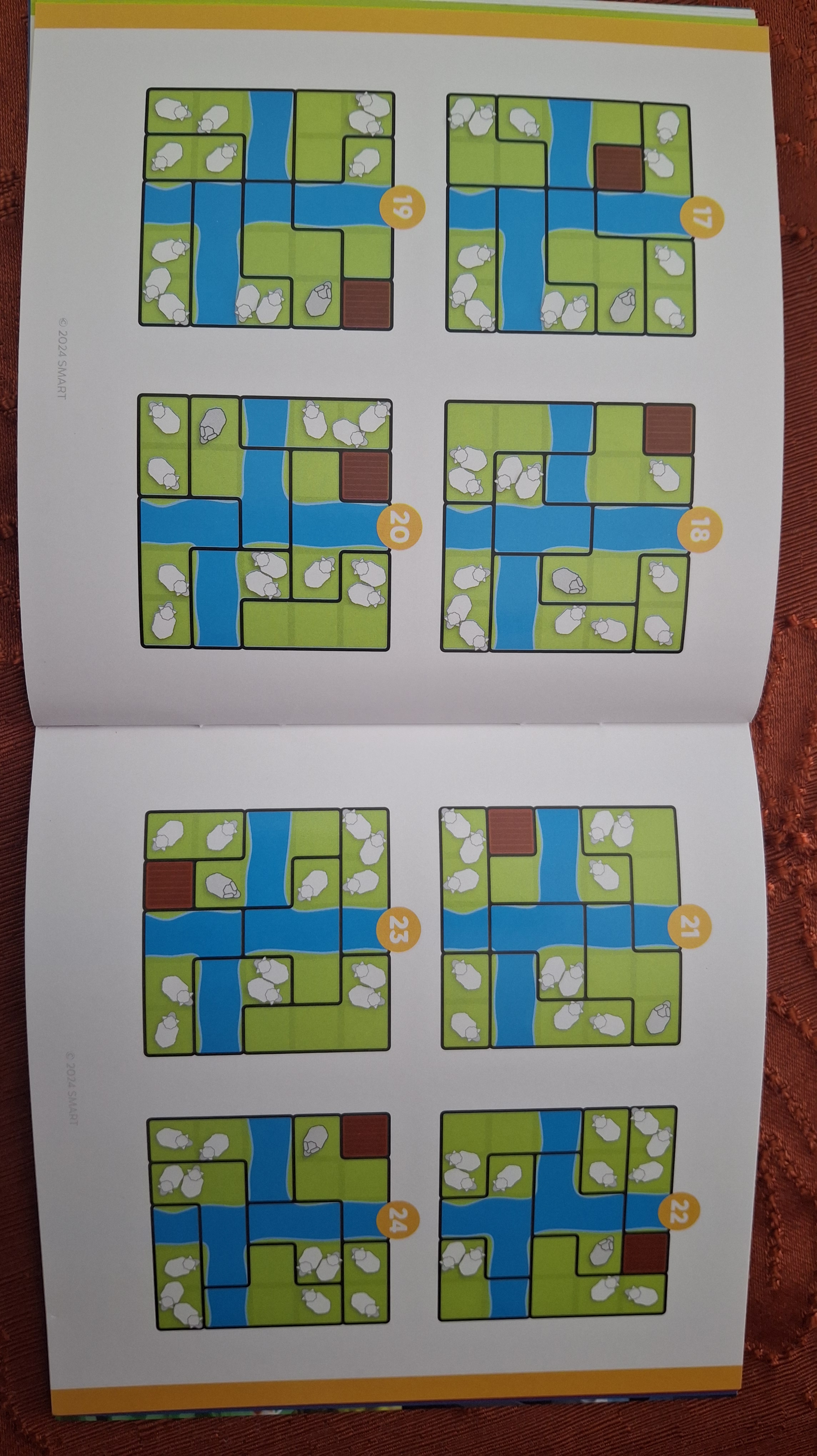
There is an answer key at the back of the challenge book in case you get stuck, or your child wants to check and make sure they are correct.

Sample Answer Key Page

Our Experience with Counting Sheep Without Falling Asleep

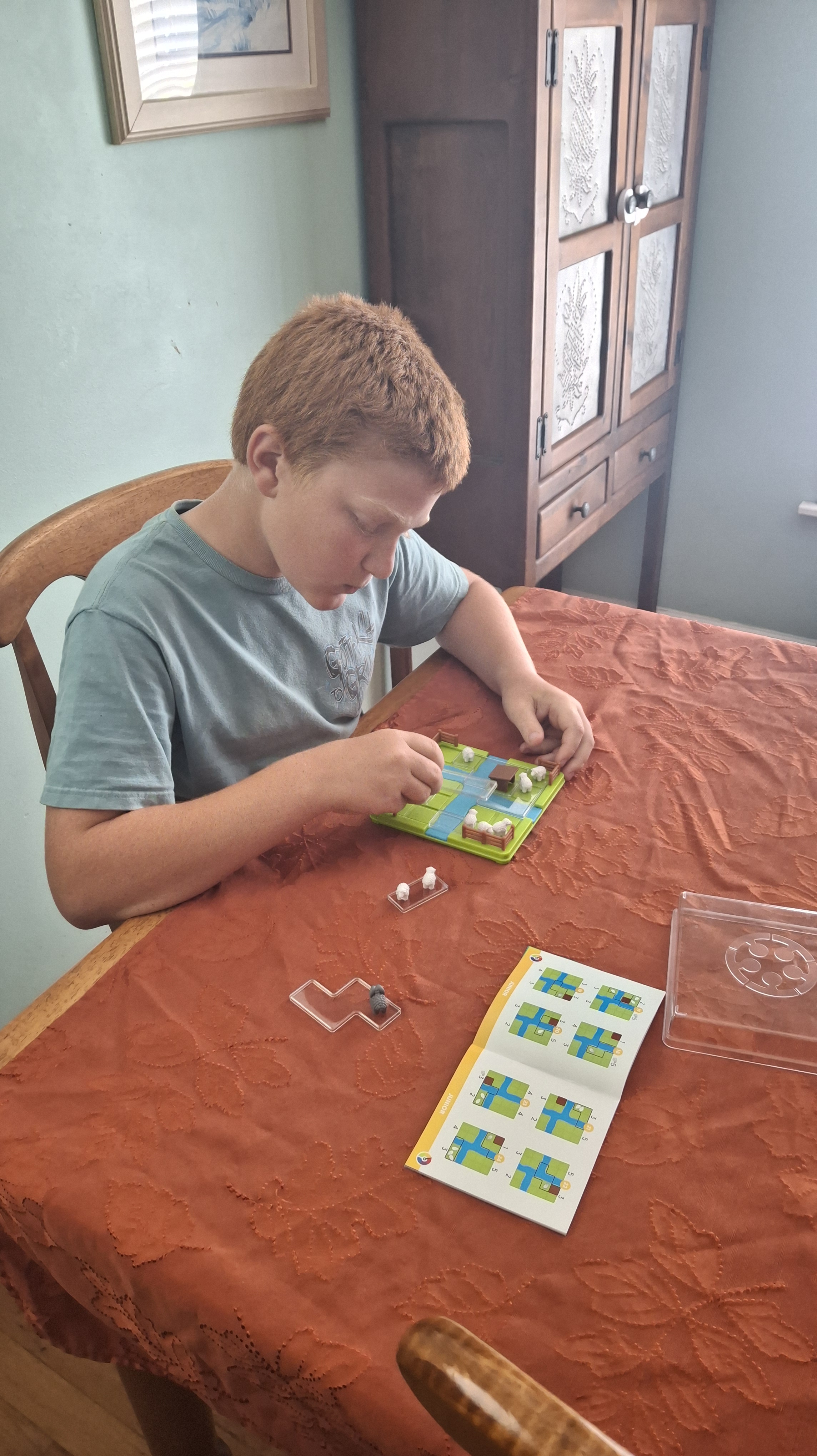
While the two-year-old thought the sheep were fun to play with, this game was best for my eight-year-old son and older. Even the beginning levels are a bit more challenging than some of the other similar-style games they have tried.

It worked really well for both my eight- and twelve-year-olds, and the adults enjoyed the challenge as well.

As a mom, I love how it doesn’t have to take hours to play, but they can play it for hours if they have the time. I also appreciated that the different levels meant everyone could work to their own abilities. I also really appreciated that the lidded game board made it easier to keep all of the pieces together.

While I love playing games with my children, the independent nature of this game means it works well when I’m cooking dinner or otherwise occupied. I think it would be great for them to play during school while I was working with a different child.

The game helps develop problem-solving, visual skills, and logic. My children did not see it as an educational game, but it was great work for their brains.

Who Would Enjoy Counting Sheep Without Falling Asleep?

This is a game that many ages can enjoy, especially with the different level puzzles. It is recommended for ages 7+, and I think that is fairly accurate. A younger child could certainly try and might be able to do the easier challenges, but some of them are quite difficult.

It is a quiet and quick game, great for giving children something to do independently for a few minutes. The cover on the game board makes it very portable, and it could even be used in the car.

With all the different tasks, you could spend as few as five minutes playing or spend an hour or more doing multiple tasks.

Overall Thoughts

Counting Sheep Without Falling Asleep from Timberdoodle is a fun, easy game that helps build visual skills and logic without feeling like work. It can be played and enjoyed by a variety of ages. You can find out more and get your set at Timberdoodle.

FAQs

What ages is this game for?

Any age from elementary school through adulthood.

How Many Players?

This is a single-player game, though you can take turns if multiple people want to play.

Bao’s Cloudland: A Timberdoodle Review

Sometimes the simplest activities are the best activities. Bao’s Cloudland from Timberdoodle is a simple logic game that involves one book of puzzle tasks and  12 wooden animals.

While the concept is simple, it provided hours of fun and learning for a wide variety of ages in our home.

What is Bao’s Cloudland?

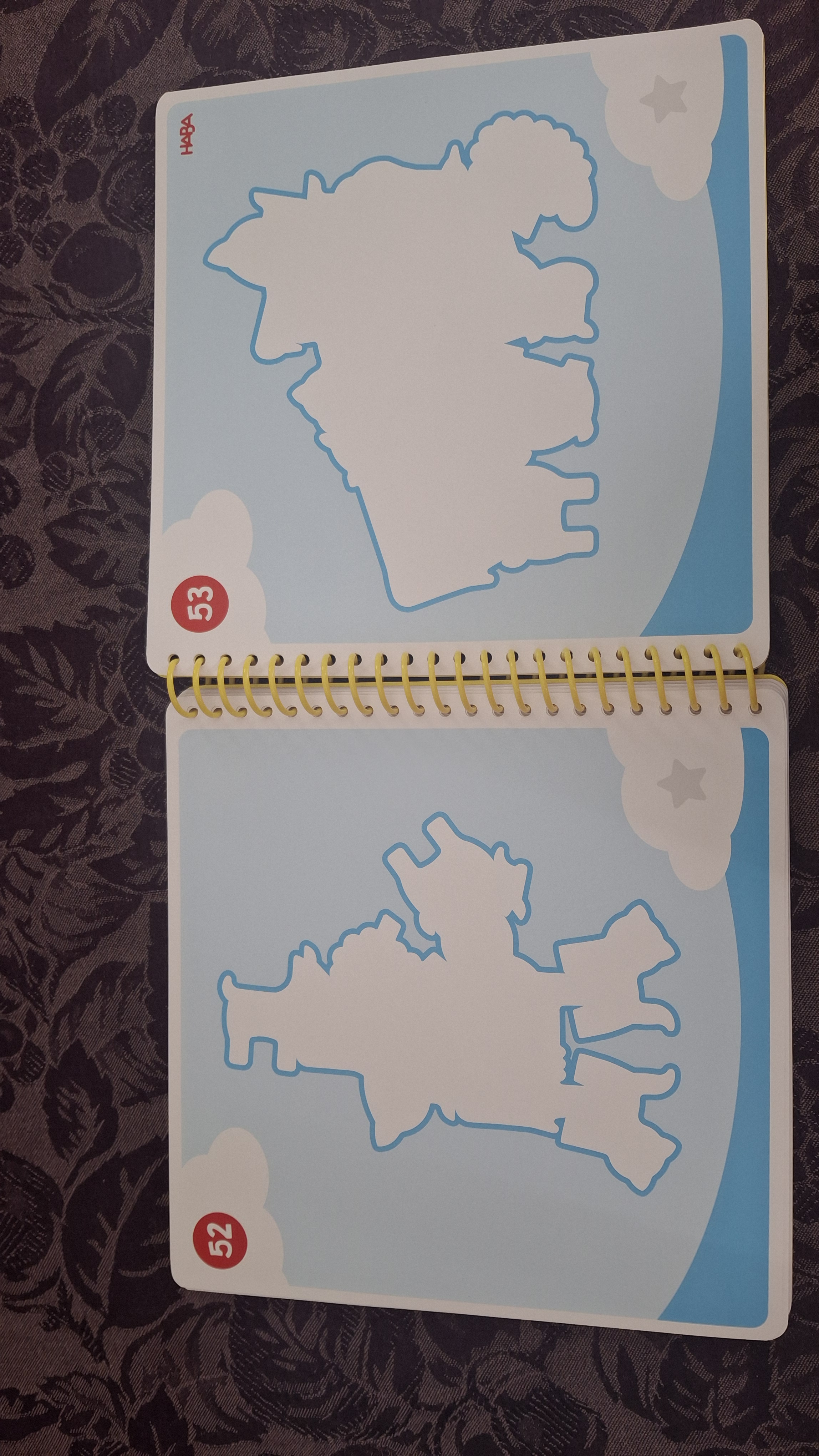
The game includes 12 colorful wooden figures, two of each kind: sheep, cow, cat, goat, geese, and pig. There is also a spiral-bound book with 60 different puzzle tasks, divided into different levels of complexity. These levels are ordered and marked by the color on the page, so it is easy for even non-readers to find the right level.

How Do You Play Bao’s Cloudland?

Bao’s Cloudland is simple and easy to understand. It is a one-player game (which is really convenient when you have a child who is “bored” and needs something to do). You simply pick the puzzle task of your choice, and then try to fill in the outline on the page with the correct animals to complete the puzzle.

There is a separate answer key book in case you get stuck, or your child wants to check and make sure that they are correct.

Our Experience with Bao’s Cloudland

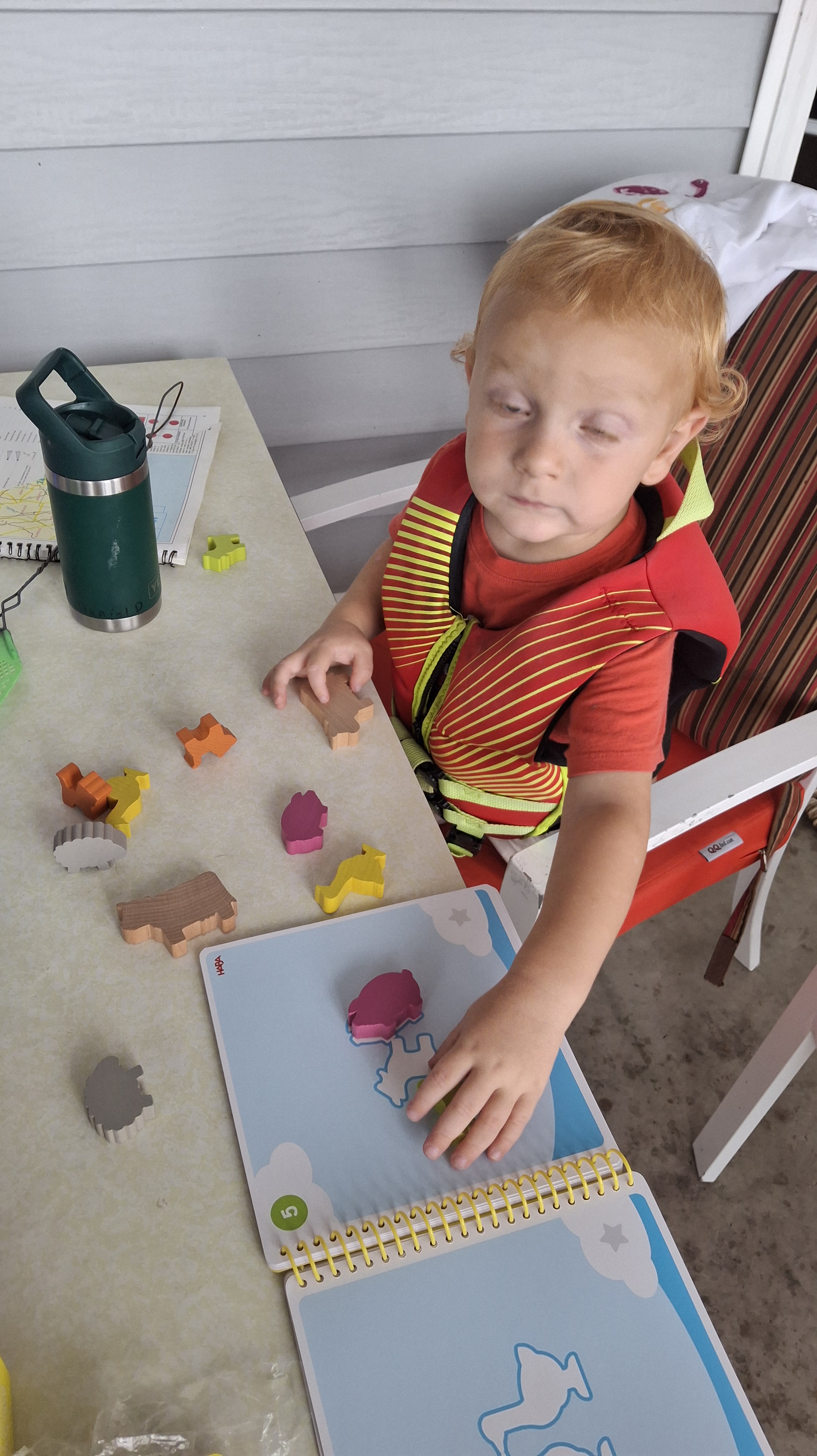
When we requested Bao’s Cloudland, I had my eight- and twelve-year-old sons in mind. However, I also have a two-year-old who loves animals and wanted to play with it as well. All three of them enjoyed the game.

I was expecting the two-year-old to just play with the wooden animals, but he was actually able to complete several of the easiest puzzles successfully. He could do a few independently, and for some of the others, he could pick out the right animals but needed help getting them positioned correctly within the outline.

The older boys could work in any of the levels, and while they quickly realized the easiest level was a bit too easy, they enjoyed the other two levels. I even took a few turns with them and found it to be an enjoyable way to stretch my mind.

We were actually on vacation at the river when we first tried the game, and even there they were happy to play while they took a break from the sun or in the evenings after dinner.

They were working on strategy, visual skills, and logic. However, they did not see it as an educational game, but it was great work for their brains.

Who Would Enjoy Bao’s Cloudland?

Honestly, I think this is a game that all ages can enjoy, especially with the different level puzzles. It is recommended for ages 3+, but as we saw with my toddler, even some two-year-olds could enjoy it. Often, when a game is rated for ages that young, we think it wouldn’t be of interest to older children or adults, but I think the whole family could enjoy this game.

It is a quiet and quick game, great for giving children something to do independently for a few minutes. With all the different tasks, you could spend as few as five minutes playing or spend an hour or more doing multiple tasks.

Overall Thoughts

Bao’s Cloudland from Timberdoodle is a fun and easy game to work on visual skills and logic without it feeling like work. It can be played and enjoyed by the whole family. You can find out more and get your copy at Timberdoodle.

FAQs

What ages is this game for?

Any age from toddler to adult.

How Many Players?

This is a single-player game, though you can take turns if multiple people want to play.