With children ranging in age from 2 to 19, it can be challenging to find games everyone can enjoy. The age range for Floats McGoats from Timberdoodle was pretty wide, and so I was excited to give it a try.
What is Floats McGoats?
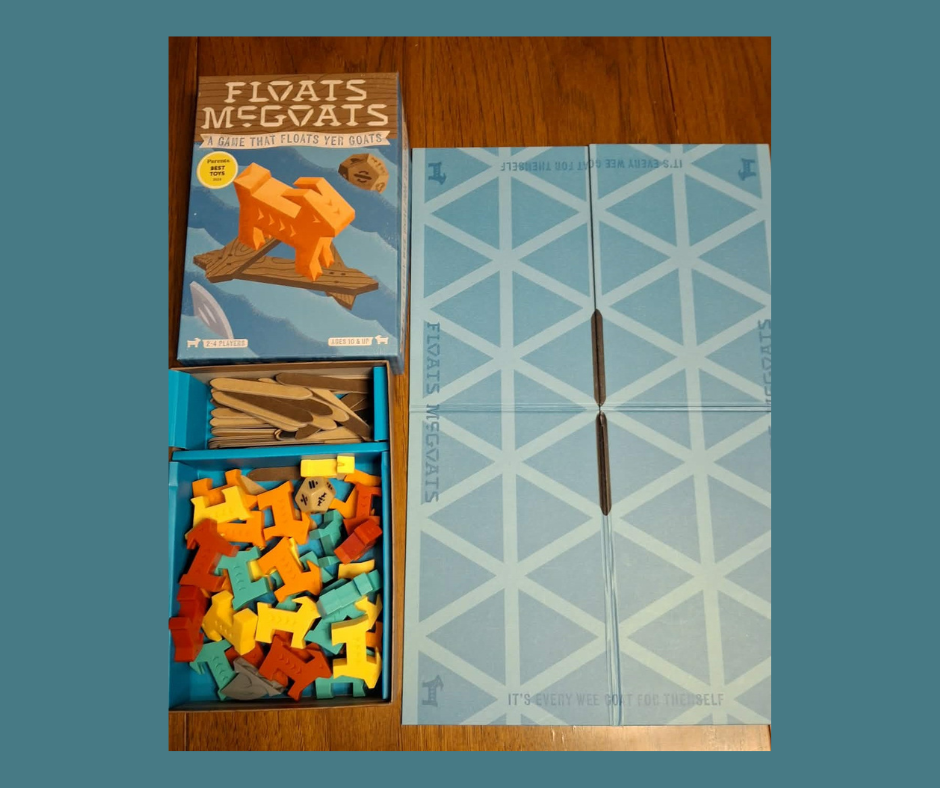
The backstory: A boat full of goats has capsized, and you must save your goats by getting them safely on a raft. Each player (2-4 players) has both adult and baby goats in a specific color. Players add boards to the raft to secure their goats. Each goat has to be surrounded on all three sides. During their turns, players roll the dice to determine if they are moving boards on the board, moving goats, adding new goats, or adding new boards.
Players have to use strategy to get enough of their goats onto the board and safely secure them on the raft. There is some luck involved in the dice roll, but the winner is often determined through strategy and logic.
Our Experiences with Floats McGoats
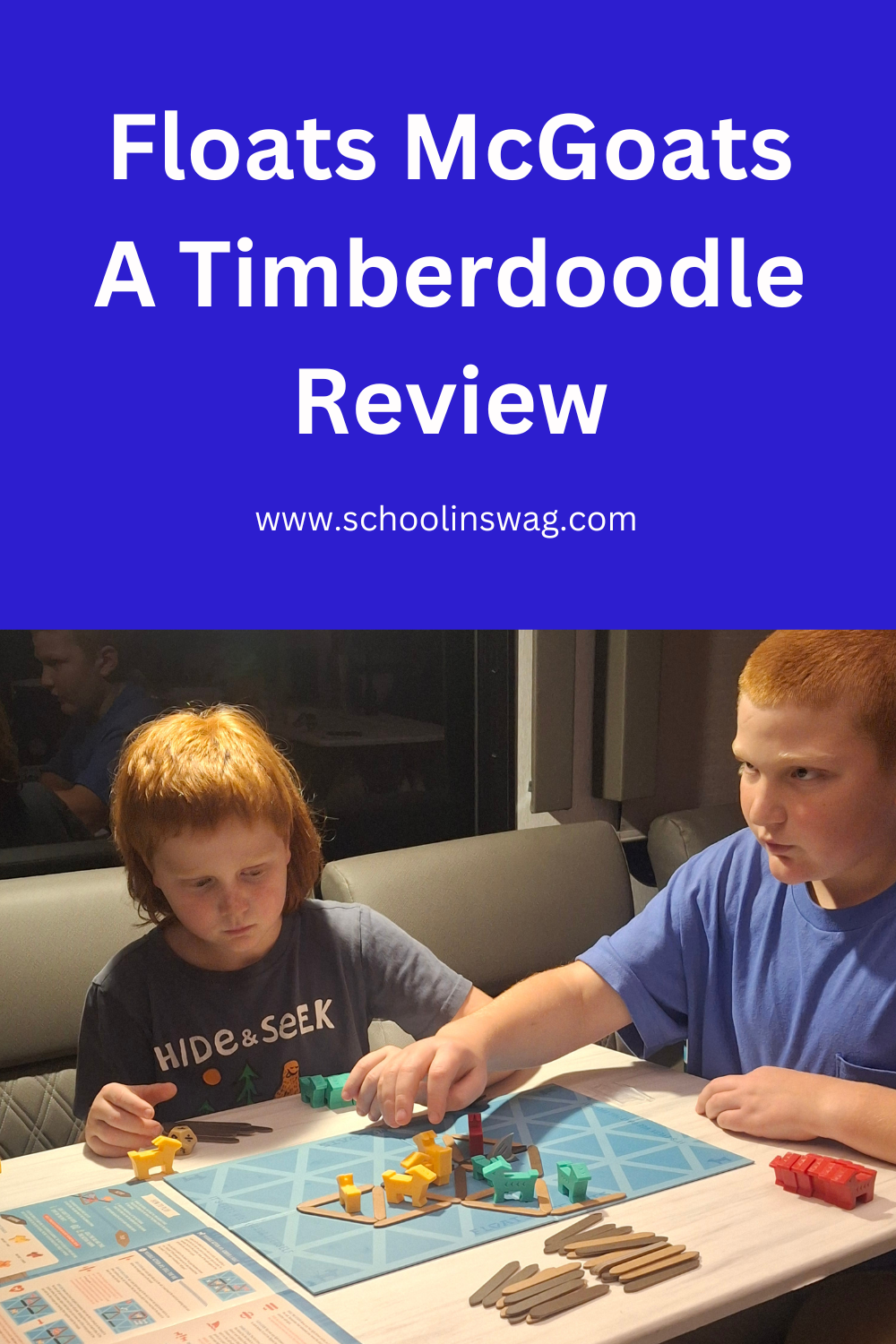
The boys were automatically excited to try it just because of the “funny name”. It took me a few minutes to read the instructions to understand what needed to happen, and then I explained it to my seven-year-old and my eleven-year-old. Within the first few minutes of play, they had the hang of the game and were enjoying themselves.
We took the game in our camper on a recent trip, and they played multiple rounds each day. Throughout the weekend, they played with my husband, my eighteen-year-old daughter, my nineteen-year-old son, and myself. While the two-year-old cannot really play Floats McGoats (though he did enjoy trying to steal the goats while everyone else played), everyone else enjoyed the game.
What We Loved:
A Game For Multiple Ages
Quick Rounds
Teaches Logic and Strategy
Fun and Educational
Our Recommendations
Overall, Floats McGoats was a great game. With busy lives and active boys, games that last for hours really do not work for our family. However, each round of this game took us only 10 to 15 minutes, which was awesome. If you have more time, you can play multiple rounds, and as players learn more, strategy games may take a little bit longer.
The recommended age was 10+, but my seven-year-old had no problems learning how to play. With a little parental support at the beginning, I think most elementary school students could learn to play, and it is also enjoyable for teens and adults.
Some educational games feel like education made into a game. However, Floats McGoats feels like a game that happens to be educational. My boys never realized they were learning strategy and logic.
I would recommend it to any family looking for a fun game to enjoy together, or to parents who want a way to encourage their children to work on logic and strategy. Visit Timberdodle to find out more and purchase your game.
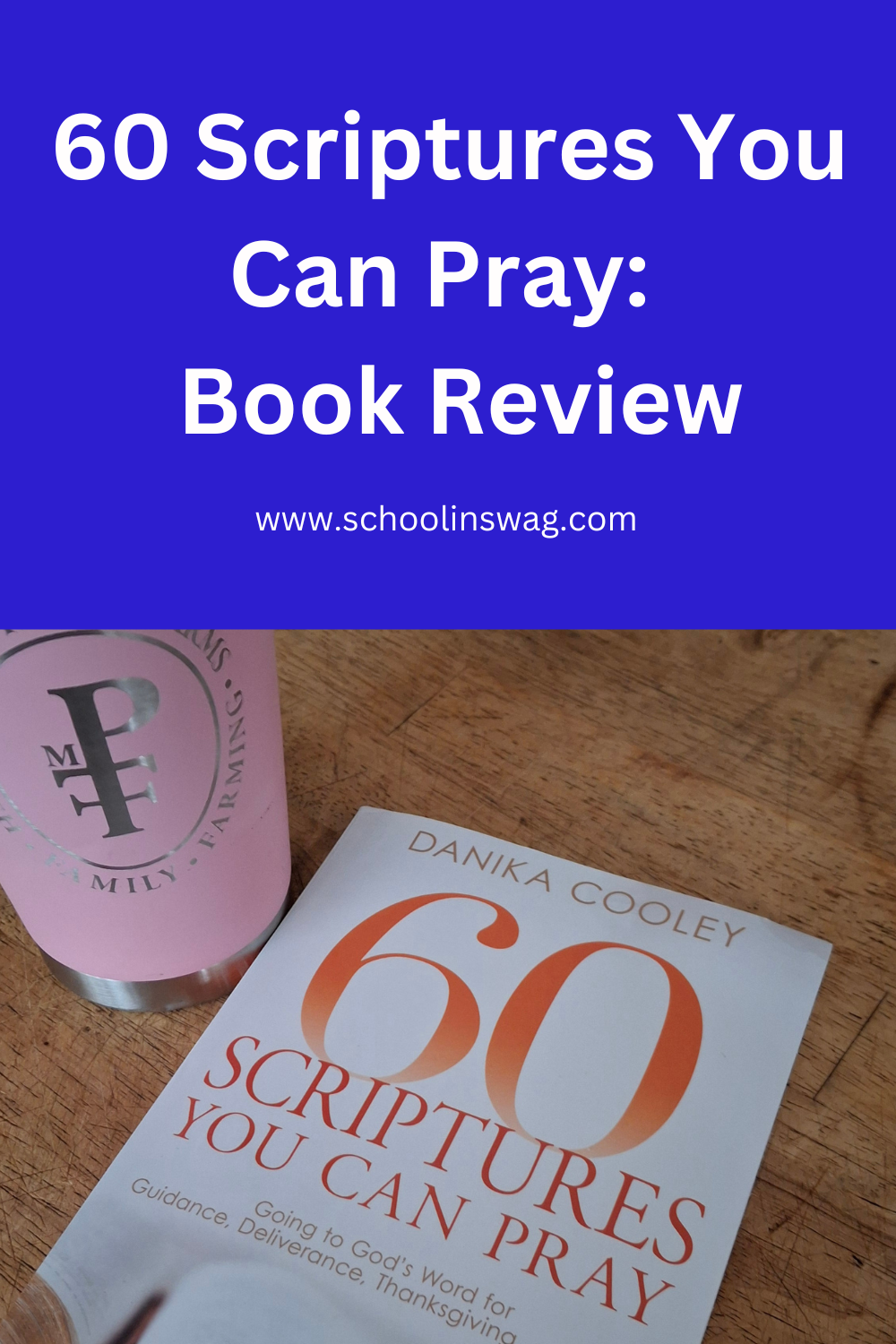
While our primary Bible study should be through reading the scripture itself, a good devotional can be a great way of helping us learn more about a topic or get a different perspective on the scriptures. However, too many devotionals are light on scripture and heavy on opinion or platitudes. 60 Scriptures You Can Prayby Danika Cooley is different.
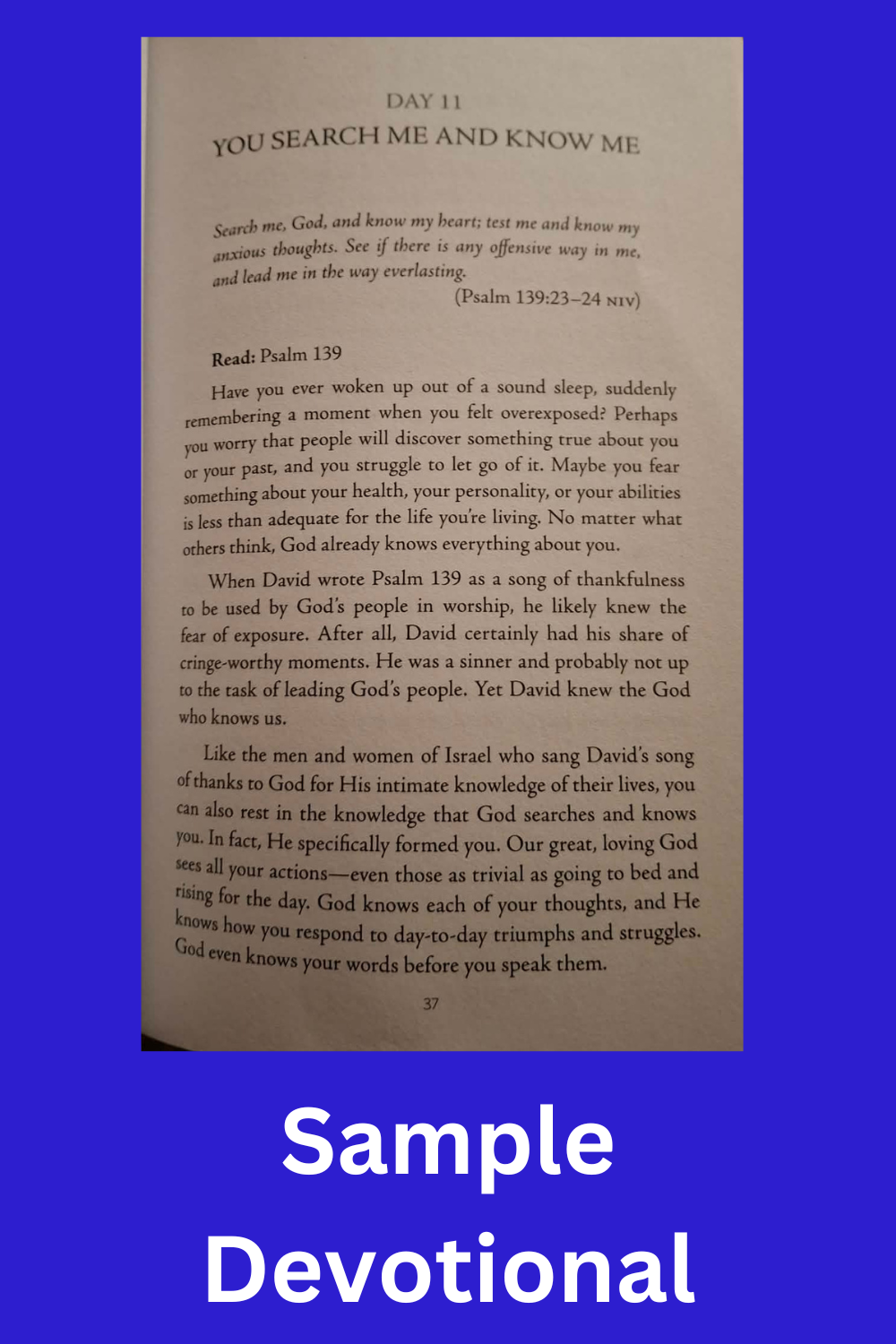
60 Scriptures You Can Pray is a beautifully written book of devotionals and prayers based directly on scripture. As stated in the title, there are 60 different prayers. Those 60 are broken into eight categories: Praise, Thanksgiving, Confession, Supplication, Intercession, Deliverance, Lament, and Guidance.
Each devotional starts where all good study starts, with reading the scripture. Then there is a short devotional on the scripture, followed by a prayer based on it.
They can be read in order or picked and chosen based on what you need that day (or season). I love that they are scripturally solid, but short enough for a busy mom to read one each day. Each one covers the front and back of a single page, and the recommended scripture reading ranges from about 10 verses to a chapter. So I can grab my hot tea and the book, take ten minutes to focus my mind on God, and spend time in prayer.
For example, day 29 is titled “May We Do His Will.” The scripture for the day is Hebrews 13, and the devotional discusses what it looks like to serve Jesus in today’s world. The prayer asks Him to help us carry out His will. In part, it says, “ Jesus is the Good Shepherd, and I am the sheep. Please equip me to do every good thing according to your will. Help me to carry out the good works you have ordained just for me,”
I highly recommend 60 Scriptures You Can Pray for teens or adults aiming to deepen or establish a prayer habit. This book offers a straightforward approach to integrating prayer and scripture into your daily routine, whether you’re just starting or looking to enrich an existing practice. Find it on Amazon or at Danika’s website, Thinking Kids Press.
Resource Library and Affiliate Disclosure
When you sign up for the Schoolin’ Swag free resource library you will get a link and password to the library, we are adding to the library each month with new items. You will also get a bi-weekly newsletter email to keep you up to date on what we have going on.
This post may contain affiliate or referral links, including Amazon affiliate links. As always I will never recommend a product that I don’t believe in and you will never be charged more for purchasing through our links. It does help pay for the costs associated with the blog.
When I started thinking about a focus word for this year, a few words came to mind almost immediately. Together, relationships, building… Those words all lead to the same thing for me, but I settled on together.
2025 was not a particularly bad year, but we did face many health issues, with multiple weekly appointments (up to eight a week at one point). As I look back on the year, I see a lot of progress, but I also feel like I became a secretary and chauffeur and lost focus on relationships.
For me, together is about building relationships and not letting the to-do list overrun that focus. We are still dealing with many of those regular appointments (though hoping to cross a few off the list this spring). So the schedule won’t miraculously become more open, but I’m planning to prioritize relationships even during these busy times.
It’s not just an individual relationship, but many relationships that I want to work on. In the words of a book I’ve been reading this year, we are better together. I want to make sure I’m prioritizing my Bible study so I can walk with the Lord. I want to continue to grow together with my husband. While I spend my days with my children, I want to make sure I am binding my heart together with them. Finally, there are other friends and relationships that I feel God is leading me to invest time and focus in.
I am finding ways to make sure my husband and I spend time talking and reconnecting after busy days (or weeks). I have put some things into place to help focus some attention on my relationships with my children. My husband and I are planning a “date night” with my oldest son and his girlfriend to chat and build that relationship without the chaos of having all of us together.
My middle child has been feeling a bit stuck in the middle and needing some extra attention, so as part of his Christmas, we gifted him one date a month with mom at a fast-food restaurant of his choice after one of the weekly appointments. I felt like having time already set for it would make it easier for me to implement.
In addition to these specific times, I really plan to focus on making sure I prioritize relationships in the day-to-day. For example, that may mean the laundry backs up some days (let’s be real, it already does) or that I spend time folding laundry while chatting with one of my children.
I have not worked out the specifics, but I’m trying to come up with a plan that lets me intentionally build other relationships and not let the to-do list keep me from doing so. I know that if God is leading me to those relationships, they need to be a priority. I’m in prayer as to exactly what that looks like in this season.
My prayer for 2026 is that I can grow closer to the Lord, my family, and others He has put in my life. Do you have a word or a focus for the year? I’d love to hear about your plans.
I’m old enough to remember when my teachers told us we wouldn’t always have a calculator in our pockets, and we were excited to spend an hour a week in a computer lab playing Oregon Trail and Reader Rabbit. In today’s world, not only do I carry a calculator in my pocket, but also a computer (my phone) that can perform tasks a computer lab computer could not.
My children are growing up in a world where computers are everywhere, and they have been using different forms of computers from a young age. However, as comfortable as they are with computers in their lives, they still need to be taught the skills to use them effectively.
CompuScholar Tech Essentials from Timberdoodle can help students understand how to use computers for a variety of school and personal tasks, from the basics of files and spreadsheets to basic programming.
CompuScholar Tech Essentials is a semester-long course, but students have access to it for a year and can complete it at their own pace.
What is Included in CompuScholar Tech Essentials?
Thirteen regular chapters with three supplemental chapters covering
File Management
Spreadsheets
Word Processing
Multimedia
Online Research
Presentations
Group Presentation Project
Coding Concepts
Program Flow
Algorithms
Software Projects (coding and designing your own program)
Digital Citizenship
Digital Safety
Operating Systems
Math Connections
Databases
How Does CompuScholar Tech Essentials Work?
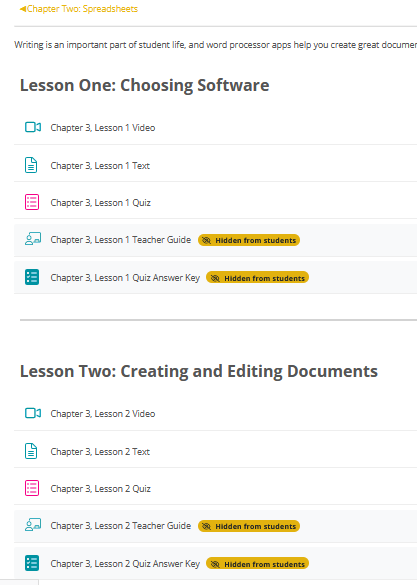
Each chapter includes several lessons, each with a video, text, and a computer-graded quiz. In addition, each chapter includes several activities to give students a real-world, hands-on application of the skills. Finally, there is an exam at the end of each chapter. The videos are all very short, in the three to five-minute range, so that lessons do not take long to complete each day.
Students work through each chapter, and the computer grades most of the assignments. The teacher can log in through the teacher portal, review grades and assignments, and make any adjustments. Once a student submits an assignment, they cannot change it unless the teacher reopens it. However, they may retake quizzes as needed.
CompuScholar Parent Portal
The parent account for CompuScholar contains a great deal of helpful information. There are answer keys, the ability to change grades, hints for activities, a teacher guide with discussion questions, a syllabus, and an optional course schedule. Parents can go in and change grades or reset activities. They can view students’ progress and the gradebook through the parent portal.
Our Experience with CompuScholar Tech Essentials
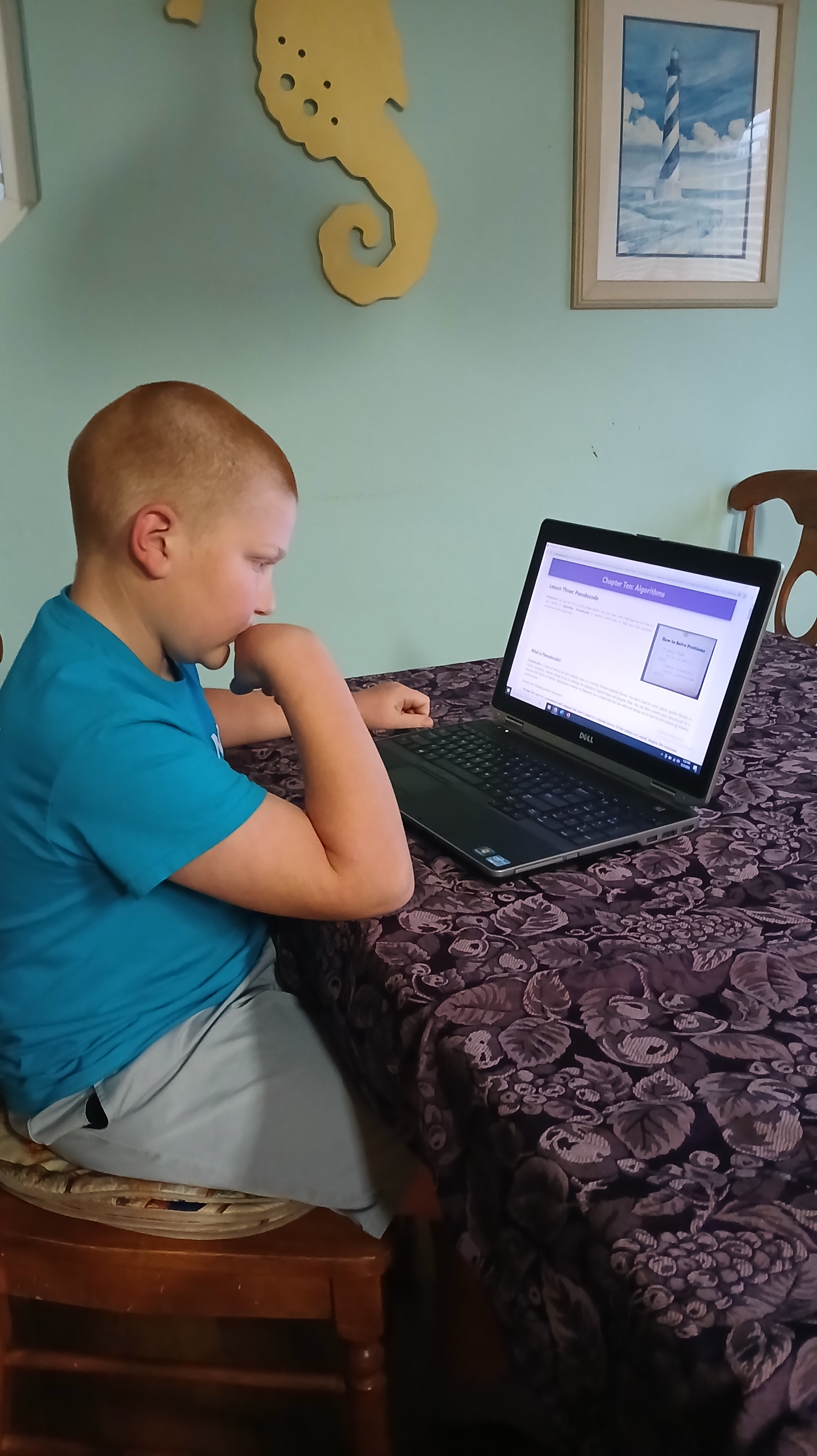
My son has been slowly working his way through CompuScholar Tech Essentials. Since we were adding it to an already full course load, we decided to have him complete it on a year-long schedule. Our fall schedule includes some light weeks and several hectic ones due to his 4-H participation and competitions. The flexibility of this course worked really well for us because during his lighter weeks, he could work through several lessons, and it was no problem if he skipped them altogether during his busy weeks.
Overall, he is enjoying the course and feels more confident using his laptop and completing other school assignments on it. He did struggle with a couple of sections, but since I could go in and look at his grade and reset things, we were able to work through his confusion and allow him to continue working through it independently.
As a parent, I love that I can adjust grades as I see fit, work it into our schedule, and reset assignments. However, I also love that it is primarily self-grading and independent, so it does not take a lot of my attention for him to work through it.
Conclusions
Overall, CompuScholar’s Tech Essentials course is easy to use and covers a wide range of essential computer skills that help students use computers safely and efficiently for schoolwork, future jobs, and personal use. I highly recommend it for middle and possibly even high school students, particularly those who have used computers for entertainment but have not yet learned all of the skills needed for more “professional use”. You can find out more and purchase this course (and other CompuScholar courses) from Timberdoodle. It is also included in their 6th-grade curriculum kit.
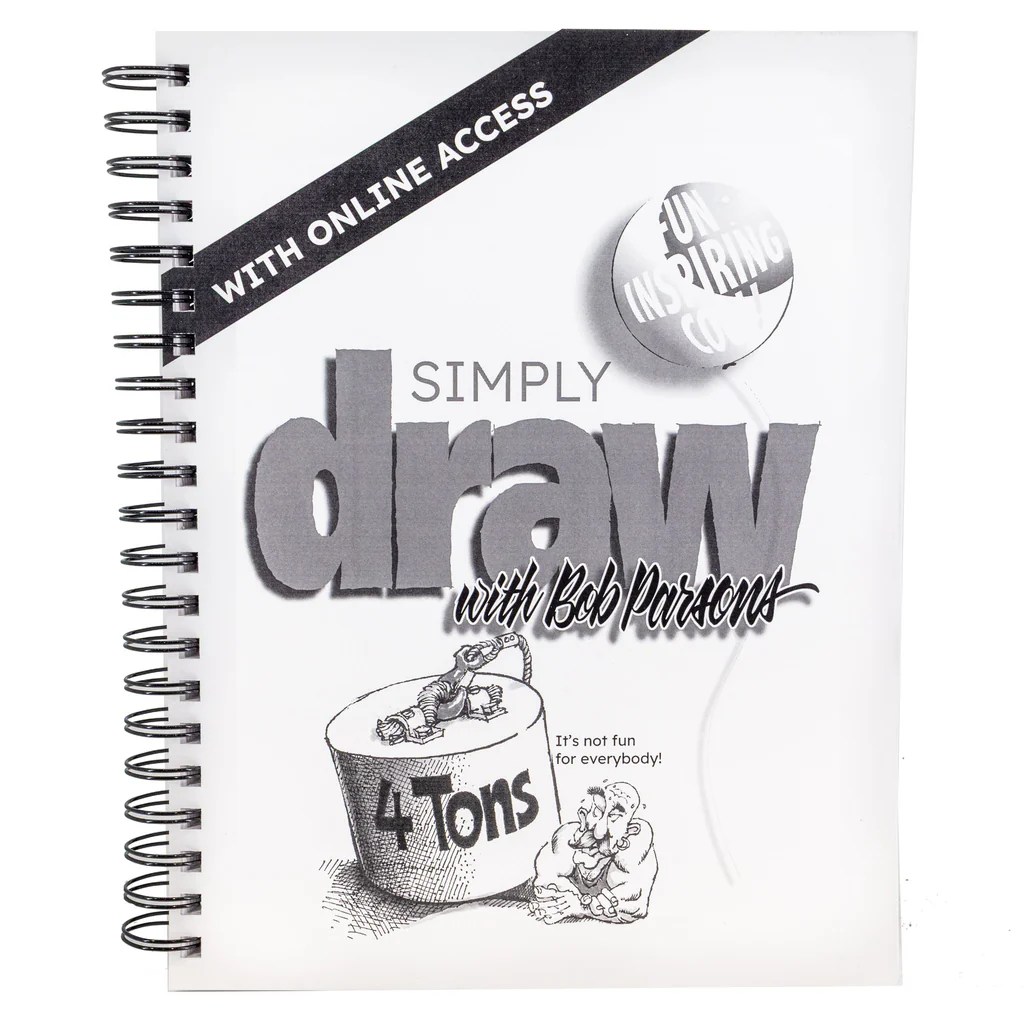
Simply Draw is an easy-to-use art curriculum from Timberdoodle that teaches students how to draw through simple, easy-to-understand lessons with clear illustrations and supporting video materials.
What is Simply Draw with Bob Parsons?
The 178-page book includes 77 lessons; approximately 20 of those lessons have accompanying videos. In addition, there are three extra video lessons to complete at the end of the curriculum.
In addition to the curriculum, students will need a few materials. They can get started with a couple of pens, pencils, and a good eraser. However, the curriculum also recommends some cardstock and cool grey markers. A good list of recommended pens and pencils is included in the first lesson.
What Lessons Are Included?
The lessons are short and take my son around fifteen minutes to read and complete. They start with the basics of drawing, including grip, posture, and drawing lines. The lessons become gradually more complex, so they are not overwhelming for the student.
Topics Covered:
Getting Started
Short Parallel Lines
Seeing Angles
Basic Shapes
Basic Drawing
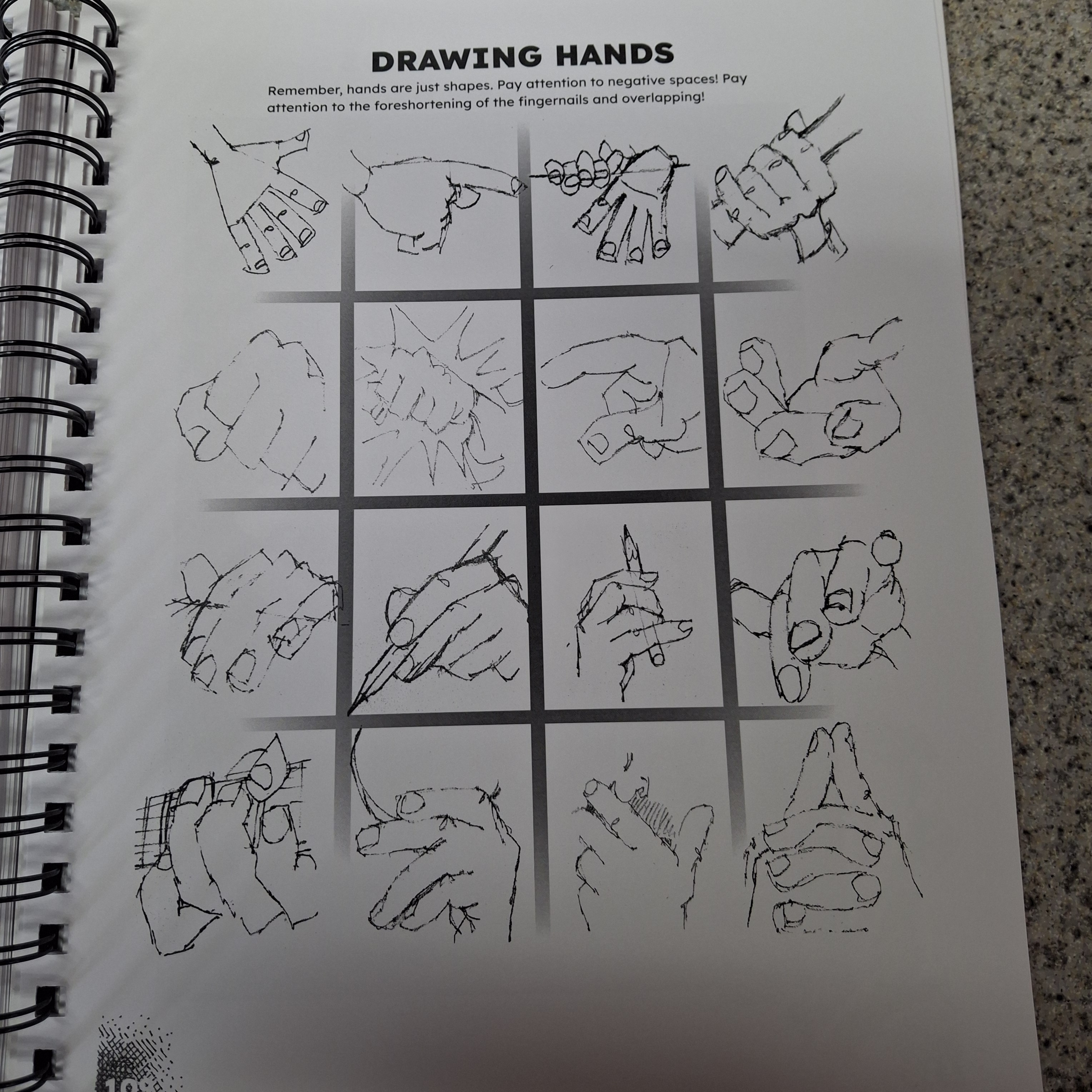
Hands
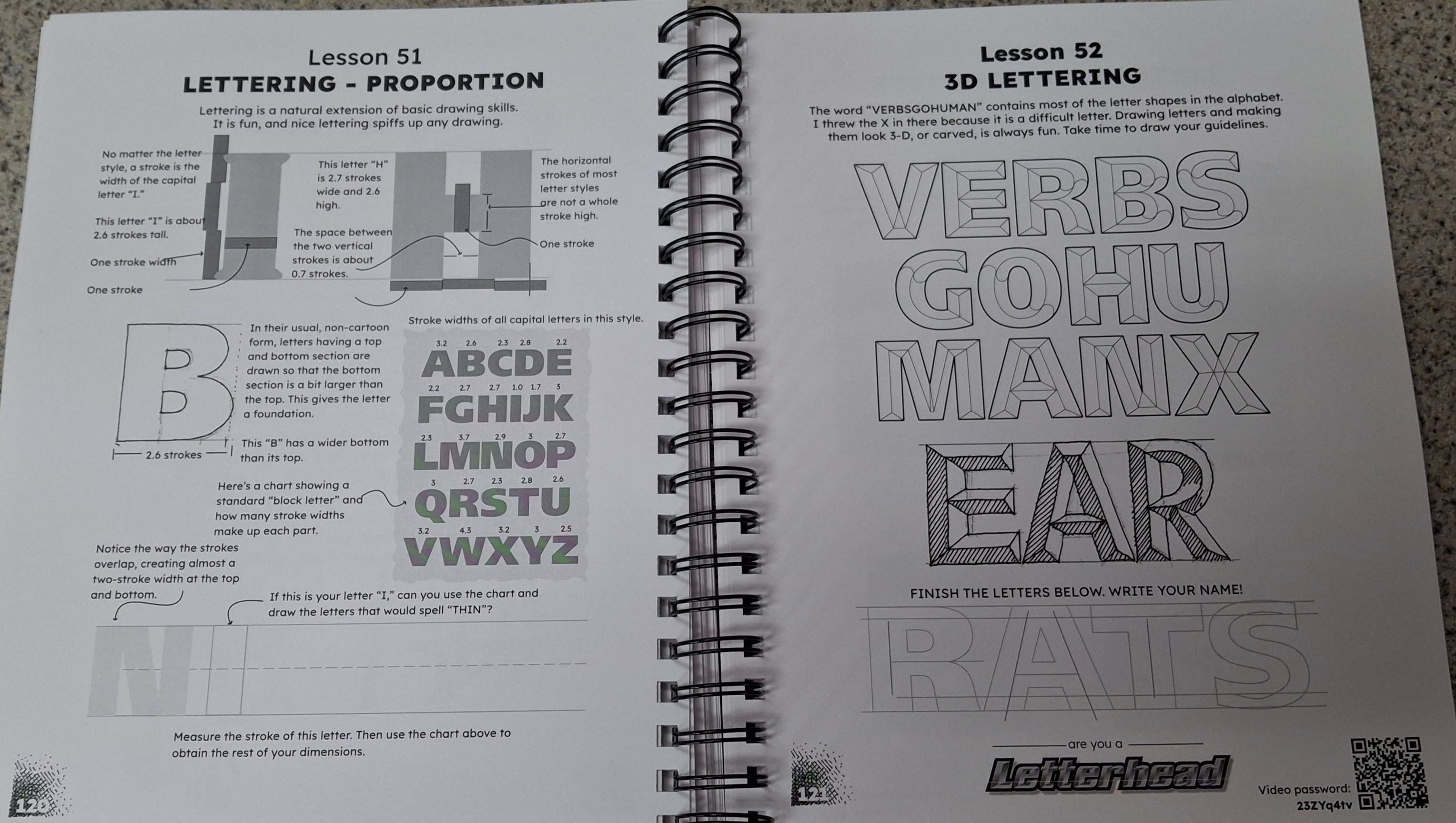
Lettering
Stick Figures and Action
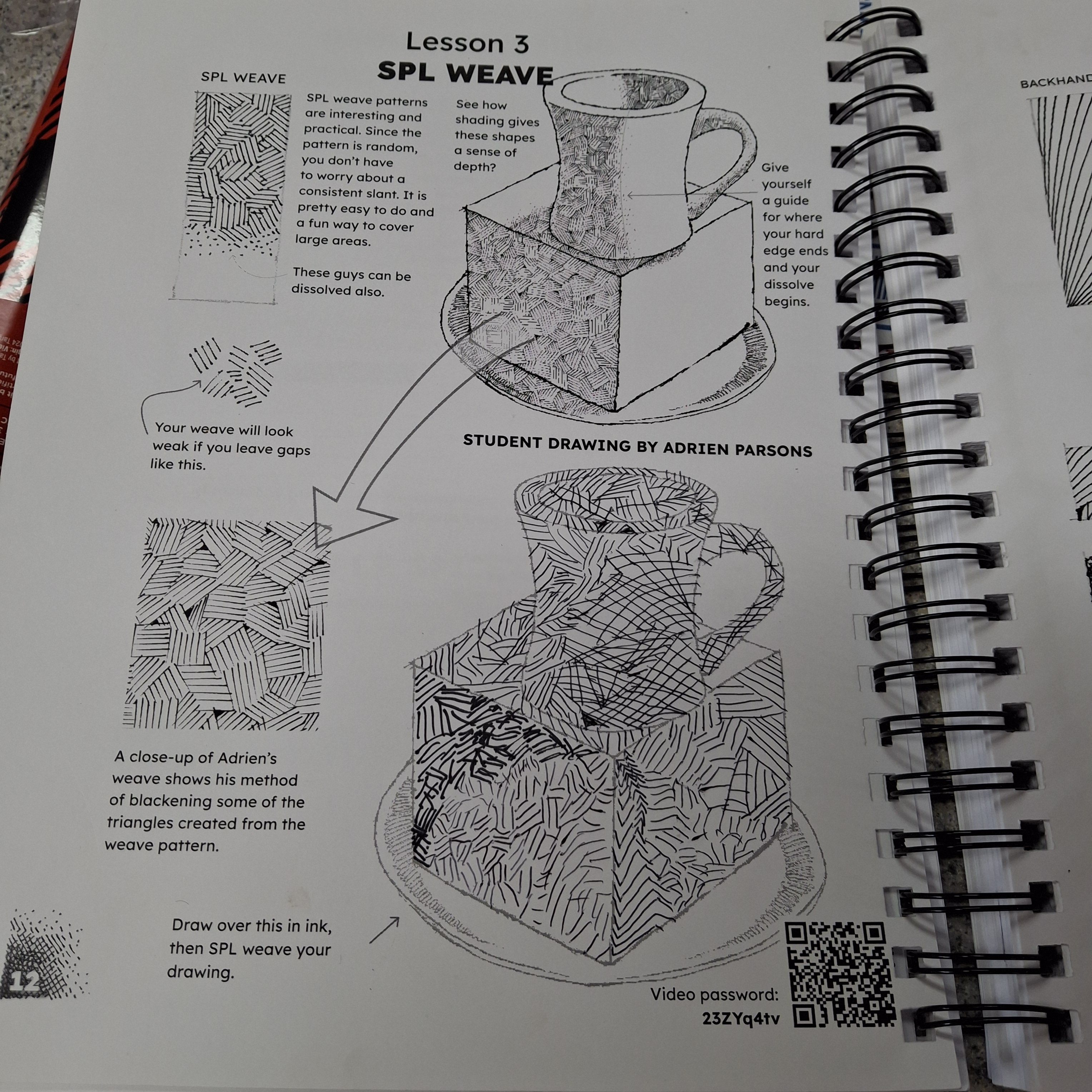
Textures and Patterns
Additional Lessons
Each lesson includes instruction given in short, simple statements with example pictures. The student has the opportunity to work through each step in the space provided, right there in the spiral-bound book, where they can still see the examples. The first few were basic lines, but then it moved on to having them use different techniques to shade pictures, including an apple, a rose, and Chuck Norris’s face. My son is a Chuck Norris fan, so this lesson was a big hit!
What We Loved About Simply Draw
Unlike some books that only teach students how to draw specific things, students can easily transfer the skills and techniques learned in this book to other drawings. Once students understand lines, angles, and basic shapes, they can begin putting those skills together to create different drawings.
I have noticed over the years that art, as with many other subjects, comes more easily to some students than others. Sometimes programs move too fast, and students get behind and feel like they cannot keep up. However, with Simply Draw, students can work through the book at their own pace. This program is easy to implement for both parent and student.
In addition to the instructions, there are many funny, comic-style drawings and silly sayings in the book that make it fun to work through and add an extra layer of enjoyment. For example, in the lesson with the cube, a man is “trapped” under it. He says, “When they said this job would be “smashing,” I thought they were British.
A Student Opinion
My eleven-year-old son loves art and has been doing a variety of painting and other art lessons for several years. However, he has really wanted to learn more about drawing and sketching. He loved taking this course and is excited to continue improving his drawing skills as he progresses through the rest of the course.
He said he enjoyed the program because it was easy to understand and that he felt it was improving his drawing skills.
Conclusions
Overall, Simply Draw is an easy-to-use program that only requires a few materials. It works well for students from elementary school through adulthood (it is best if they can read or have someone available to read to them). I’d highly recommend this program for students who want to learn to draw and sketch. Go to Timberdoodle to find out more and purchase your copy of Simply Draw with Bob Parsons.
*Some of these links are affiliate links please see disclosure below for more information*
I hope you are doing well this holiday season. I have compiled this list of sales to help you get the best deals from the comfort of your home. There are sales, freebies, and deals of homeschool curriculum, extras, and a few ideas for moms!
I will be adding to the list as new deals, including Cyber Monday deals become available. Our family is grateful for your support through buying from my links. We hope deals are a blessing to your family and also support the blog.
CYBER Monday Specials
25% off our hymn studies, field trip journal, and everything else in my store with code ChristmasSchool
25% off any of our hymn studies and other products now through Cyber Monday! Code: ChristmasSchool (We have some great new Christmas Hymn Studies.)
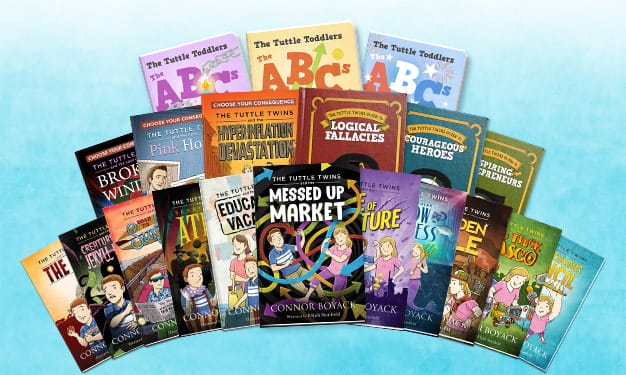
Tuttle Twins is offering several big sales through December 6th.
Not Consumed is offering some great deals including 30% off November 20-29, 2025 , Bible Studies are $10, $5 Shipping with $50 purchase, Free NC tote with $75 purchase, and Free shipping with $100 purchase. We love their missionary study and their Bible studies.
SchoolhouseTeachers.com has a great Black Friday Sale from 11/28 to 12/1. Get the Ultimate Annual Membership for just $249 using the code BlackFriday2025
All About Learning is offering this brand new FREE Christmas Pack full of fun activities!
#LifeSkillsNow has a couple of great deals right now!
Maestro Classics has some great Black Friday deals on Nutcracker and more.
You Are An Artist has this great FREE Grinch art lesson if you want to have a little fun after all that shopping! Or if you need a gift for a budding artist, their Membership is a great value.
For Mom
Tummy Team has some new low prices on their amazing membership. Give yourself the gift of healing and health. This online abdominal and pelvic floor rehab is well worth the cost.
Fit2B is my favorite online fitness program and they are offering 50% off almost all of their memberships and courses! This is a great deal on some excellent fitness options.
HomeschoolStyleCo. is having some great sales this week. They have some cute shirts for the children and for moms!
Looking for ideas for keeping Christ in Christmas? Check out this FREE class!
When you sign up for the Schoolin’ Swag free resource library you will get a link and password to the library, we are adding to the library each month with new items. You will also get a bi-weekly newsletter email to keep you up to date on what we have going on.
This post may contain affiliate or referral links, including Amazon affiliate links. As always I will never recommend a product that I don’t believe in and you will never be charged more for purchasing through our links. It does help pay for the costs associated with the blog.
Gratitude and Thankfulness are wonderful all year long, but we tend espcially focus on them during this time of year.
I’m excited to invite you to join us for this 30 Days of Thanks series, each day will include a new blog post with a different idea for teaching your children gratitude.
Today, I’m sharing how we use hymn studies to help the whole family be more grateful!
Jump on over to How to Homeschool my Child and check out my post today, and all of the other great posts in the series.
Thank you for visiting! I hope you are enjoying the Homeschool Summit.
Please click on the graphic below and use code Summits to get your free hymn study. If you wish, you may also use the link below to join our mailing list and get access to some other hymn study freebies.
When you sign up for the Schoolin’ Swag free resource library, you will receive a link and password to access the library. We add new items to the library each month. You will also receive a bi-weekly newsletter email to keep you up to date on our current posts.
*Some links are affiliate links; see full disclosure below*
My eleven-year-old is going into sixth grade! How is he already old enough for church youth group and moving up to the Navigators group in our Trail Life troop?
He also enjoys fishing, hiking, and all things science. This is his first year running cross country for the local homeschool team. He would love to be able to skip math, but alas, I feel math is an integral part of his education.
Reading:
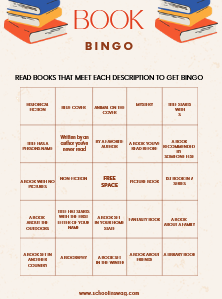
Since his reading is solid and he loves to read, we are going to do a fun and easy (for Mom) Book Bingo for his literature this year. The book bingo will give him a lot of autonomy in his reading, but also make sure he is getting in a variety of different books.
We are also continuing to use the Family Book Clubs from Read Aloud Revival, which are always fun and engaging.
Finally, don’t tell him that it’s actually school work, but he is participating in a local book club where they read a book each month and gather together to discuss it. Last month, they read Robin Hood, and this month, they are reading Sense and Sensibility.
Spelling
We have been working on All About Spelling, and he will continue to work his way through that. He really struggled with spelling, but over the last couple of years, he has shown tremendous progress, and we are excited to continue. We discovered All About Spelling years ago when my oldest child was struggling with spelling, and it has been our family’s favorite ever since.
Writing
For writing, we will be finishing Master Books Handwriting A to Zoo to review some handwriting skills. He will also be doing the next level in First Language Lessons to work on some grammar.
I printed out a huge selection of fun journaling prompts, and he chooses one each day to write about in his journal to work on his creative writing. He will also be entering some essays into several contests, including those sponsored by our junior historians and the state fair, to work on those skills. Those real-life applications have been so beneficial in encouraging my children to write solid essays.
Math
He will be finishing Math for a Living Education this year. We both love the format; it worked very well for him. There is generally enough practice for him without it being too much busy work. If there are concepts where he struggles, we can add in some extra practice.
Science:
I needed to be realistic this year about the amount of time and focus I have available for schoolwork, while also managing a toddler and multiple speech and physical therapy appointments each week. Of course, it is also important to me that my children get the solid education that they deserve.
This is where Journey Homeschool Academy solved my problem. We are doing one of their elementary science courses (which is solid enough for a sixth grader) with both my second and sixth graders. The boys wanted to learn about Astronomy, and we are loving the Elementary Astronomy course so far.
The video-based content makes it easy for them to do while I’m focused on the toddler, but then we can do the hands-on activities together. The course has solid science content with a Christian worldview that is also easy for me to implement. It has been a win for all of us.
Additionally, we will conduct a nature study at least once a week (we often do it more frequently when the weather is favorable). Sometimes our nature study is as simple as going outside and observing. Still, we also love to use our Homeschool Nature Study subscription to take things a little further and help me find some great activities and ideas.
History:
We are jumping back into Story of the World Volume 3 this year. We love all the hands-on activities and recipes included in the workbook, and we have the audio version of the text that allows us to listen while riding to appointments during our busy weeks.
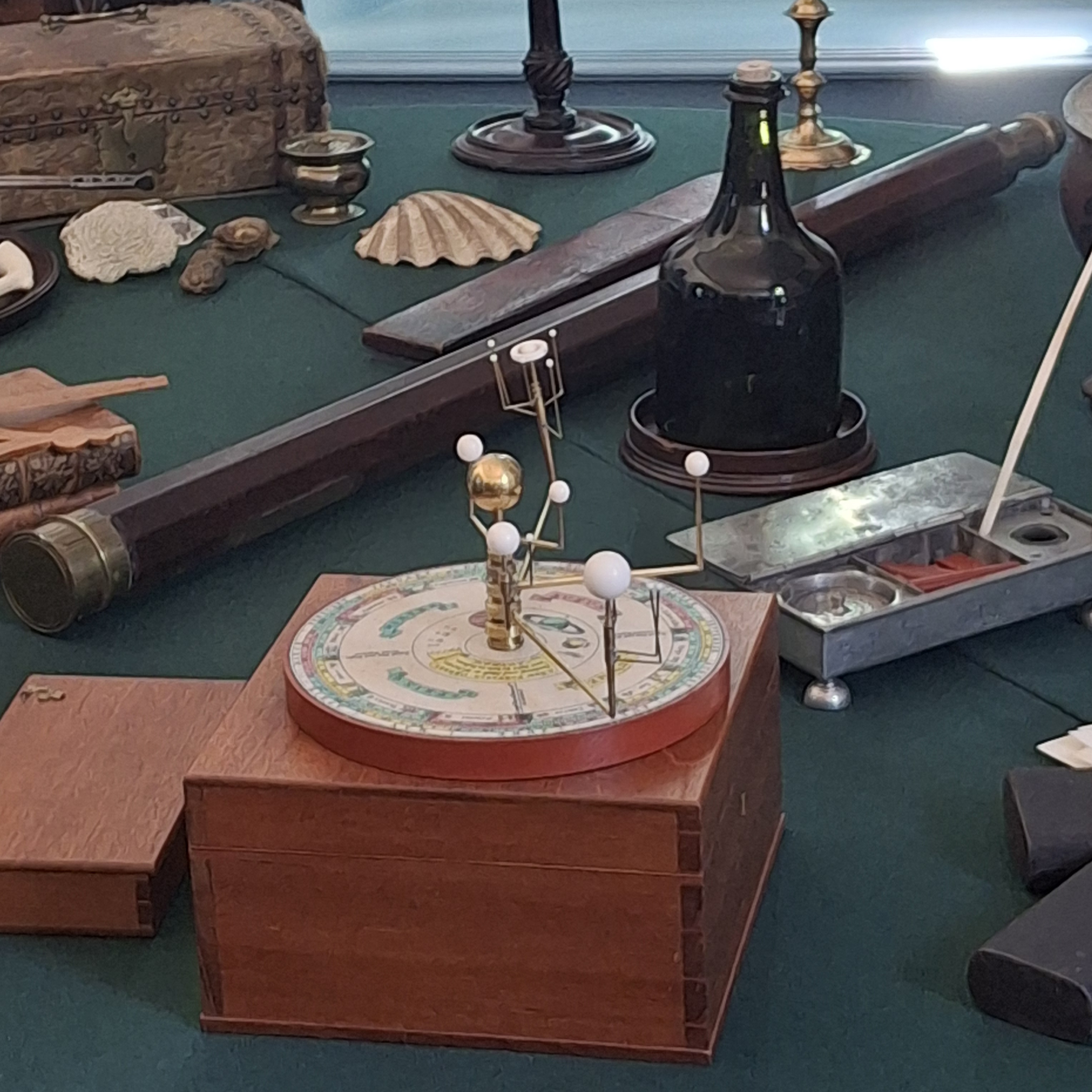
Our first field trip of the year combined our history and science studies! Astronomy in the 18th Century
Art
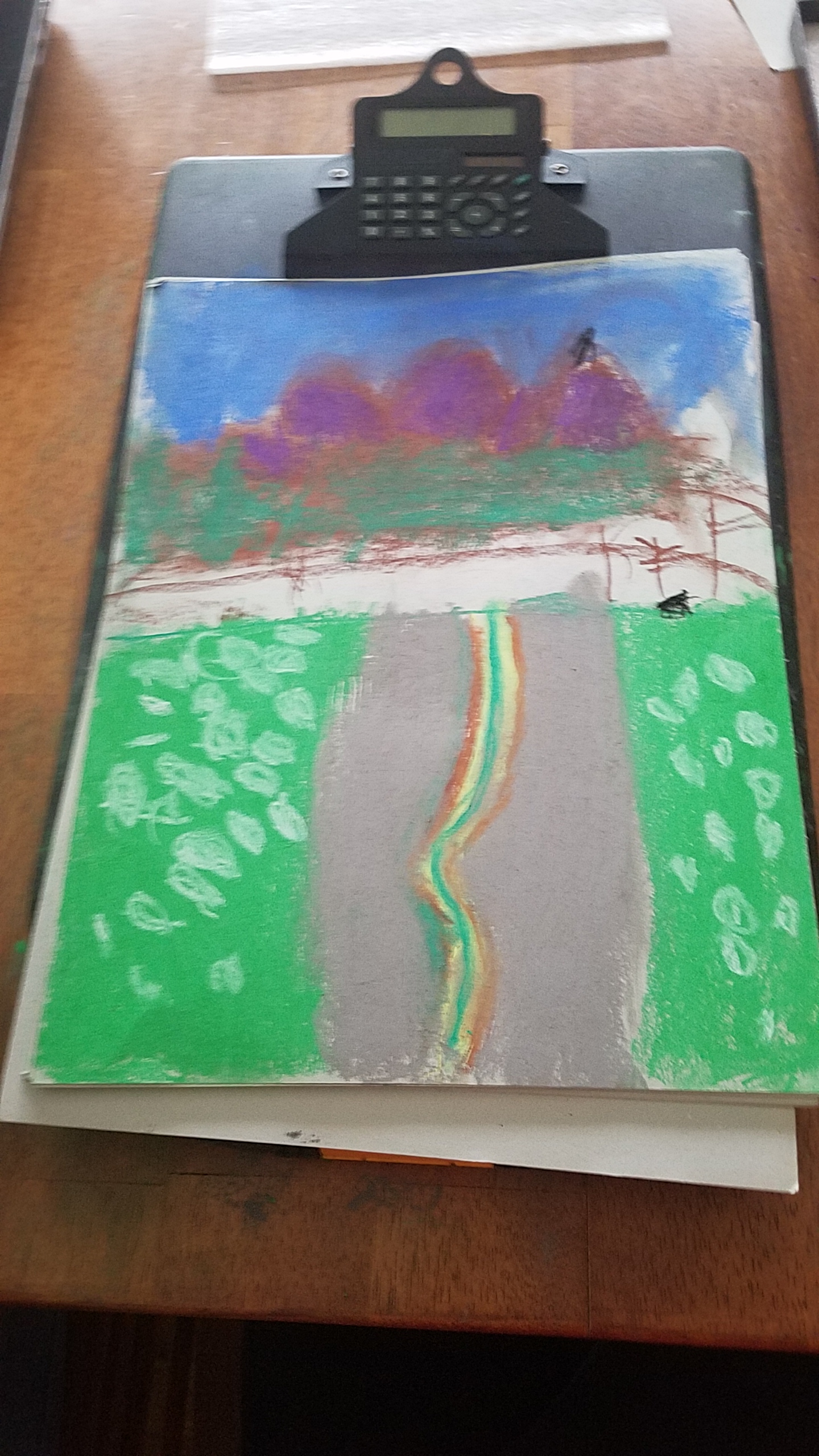
This son is the one I refer to as my little artist. He loves to draw, paint, and create. We will continue to use our membership with You Are An Artist chalk pastels for his online art lessons and provide him with lots of time and materials to be creative.
He also requested the opportunity to learn more about drawing, and so he is going to be trying some lessons from Timberdoodle’s Simply Draw.
Morning Time:
Morning time is my favorite part of our school day. We will do our daily Bible study and watch World Watch for current events each day. In addition, we plan to do a rotation of fine arts studies, poetry, Tuttle Twins books, and more. You can find out more about the resources we are using this year at Morning Time Plans 2025.
We have a toddler in the house and seven standing appointments each week, so I am holding all of our plans in an open hand and praying for the best. We will do what we can, when we can, and trust that God will fill in the gaps.
Resource Library and Affiliate Disclosure
When you sign up for the Schoolin’ Swag free resource library, you will receive a link and password to access the library. We add new items to the library each month. You will also receive a bi-weekly newsletter email to keep you up to date on our current posts.
This post may contain affiliate or referral links, including Amazon affiliate links. As always, I will never recommend a product that I don’t believe in, and you will never be charged more for purchasing through our links. It does help pay for the costs associated with the blog.
Morning time has been one of the few constants in our homeschool. As my children have changed, our schedules have changed, and our goals have changed, we have adapted our homeschooling curriculum in many ways, but having a morning time has remained a constant.
There have been years when morning time more typically happened in the evening (we should rename it family time), but we tried to keep that time of learning together. We have incorporated a variety of subjects, and it looks a little different each year.
Still, two things have remained the same: we learn together as a family, and we incorporate some type of Bible study.
What is Changing in our Morning Time Routine?
Last year, I worked hard to make sure we were consistent each morning with our time, even if we kept it simple some mornings. This year, we are keeping many of the same things in our “morning time.” However, between some speech and physical therapy appointments and my daughter having an early morning dual enrollment class twice a week, the timing is going to be a bit different.
I still want to be consistent because this is one of the most essential parts of our school day, but instead of a consistent time each day, I am working on a consistent time for each day of the week.
So, for example, on Mondays and Wednesdays, we will do morning time just after breakfast, but on Thursdays, we will do our “morning time” after dinner, and on Tuesdays, it will be after lunch. The value in morning time comes from the content and family togetherness, not the time of day.
What Do We Include In Our Morning Time Studies?
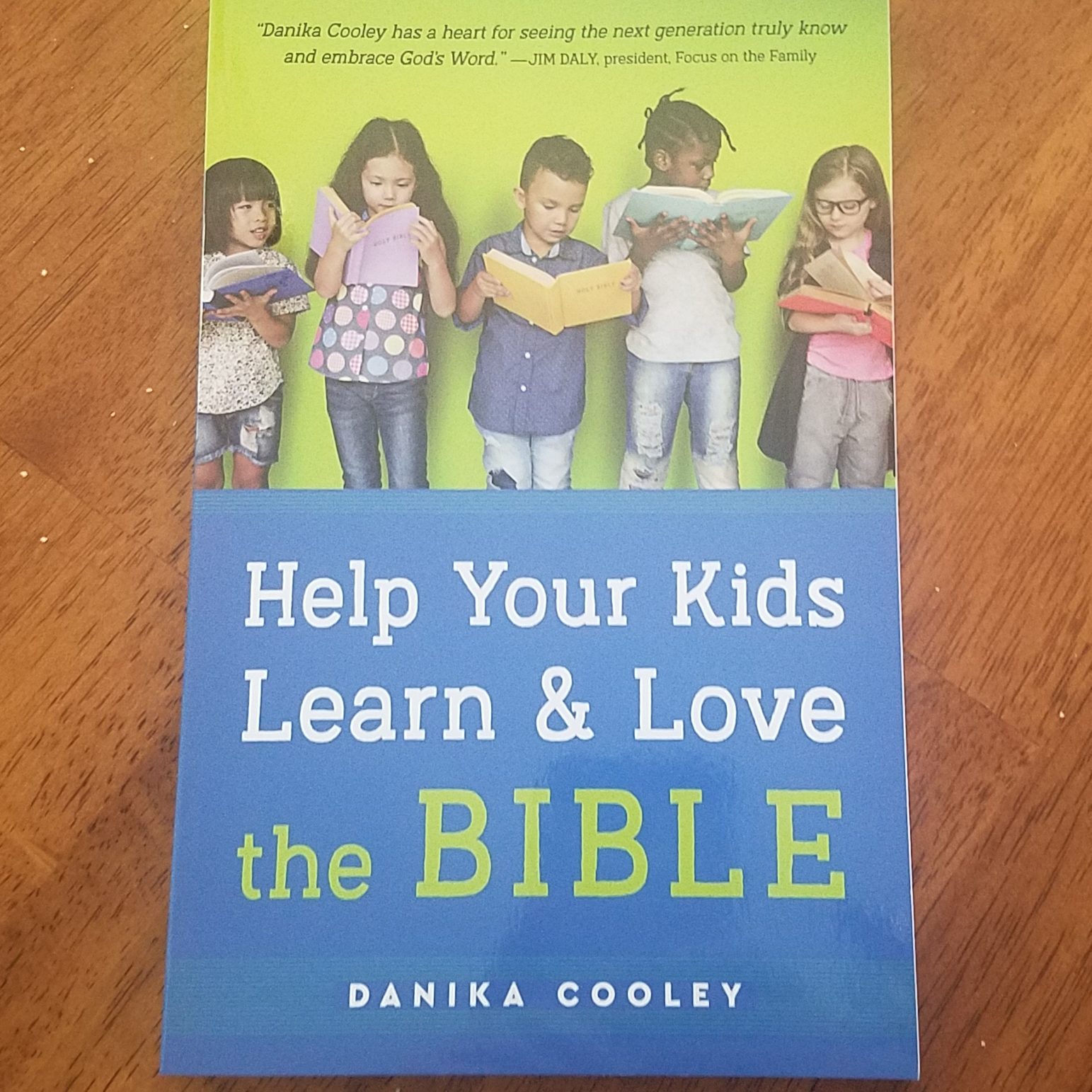
Our two main priorities for morning time will remain our daily family Bible reading and World Watch. Over the years, we have used a wide variety of Bible curricula and enjoyed many of them, but often I found it hard to be consistent when using curricula and trying to make it work for all ages. However, several years ago, I read Help Your Kids Learn and Love the Bible, and realized I was over complicating things.
Our Bible Study
Now, as a family, we read one chapter a day from the Bible, going through an entire book. This keeps it simple and easy to maintain, even during busy seasons. We read (or listen to it on my phone app) the chapter and then discuss it.
My husband bought me an excellent set of commentaries that we pull out if we have questions or want to dig deeper into a verse. We have found this to be hugely impactful and easy to maintain.
World Watch
World Watch is our second priority. We even kept these two components throughout most of our summer break. If you are not familiar, World Watch is a student news program with a Christian perspective. It is ten minutes a day and covers a variety of both major news topics and fun interest stories.
It has opened the door for many conversations, helped my teens better understand what is happening in the world, and given us all more perspective. We have found that watching and discussing works well for our family, but I did want to mention that they now also have downloadable worksheets that you could add to your World Watch time if you felt your student needed that or to help you use it for high school credit.
In addition to our two main components, we will incorporate one additional subject each day. Those will include fine arts, hymn study, logic, poetry, books of the Bible, and any other topics that I want to fit in as a family.
Sometimes we may do the same subject each day for several weeks, and other times we may rotate daily depending on our needs. This allows us to cover a variety of topics without trying to add in too many different things in one day (which would make it unmanageable).
Our Morning Time Rotations
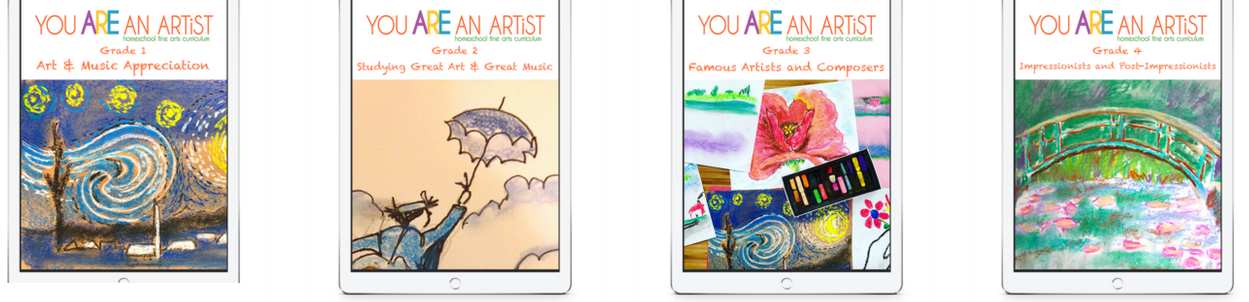
Fine Arts: We will be using the Fine Arts program from You Are An Artist. They have a variety of fine arts courses that focus on different eras and topics.
A few of the many fine arts options that are available!
Hymn Study: For hymn study, we will be using the studies that I have already written, as well as some new studies that I will be adding throughout the year.
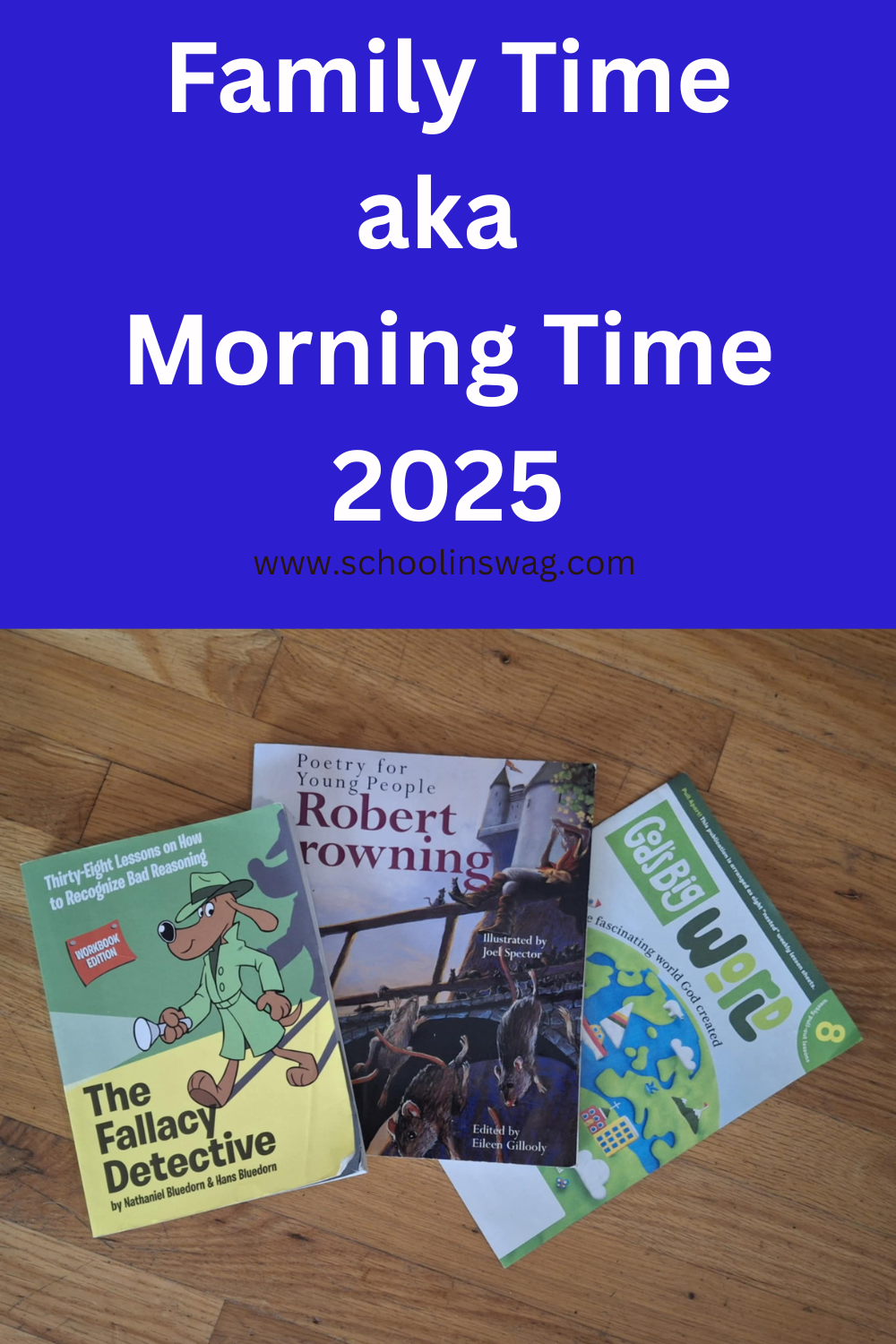
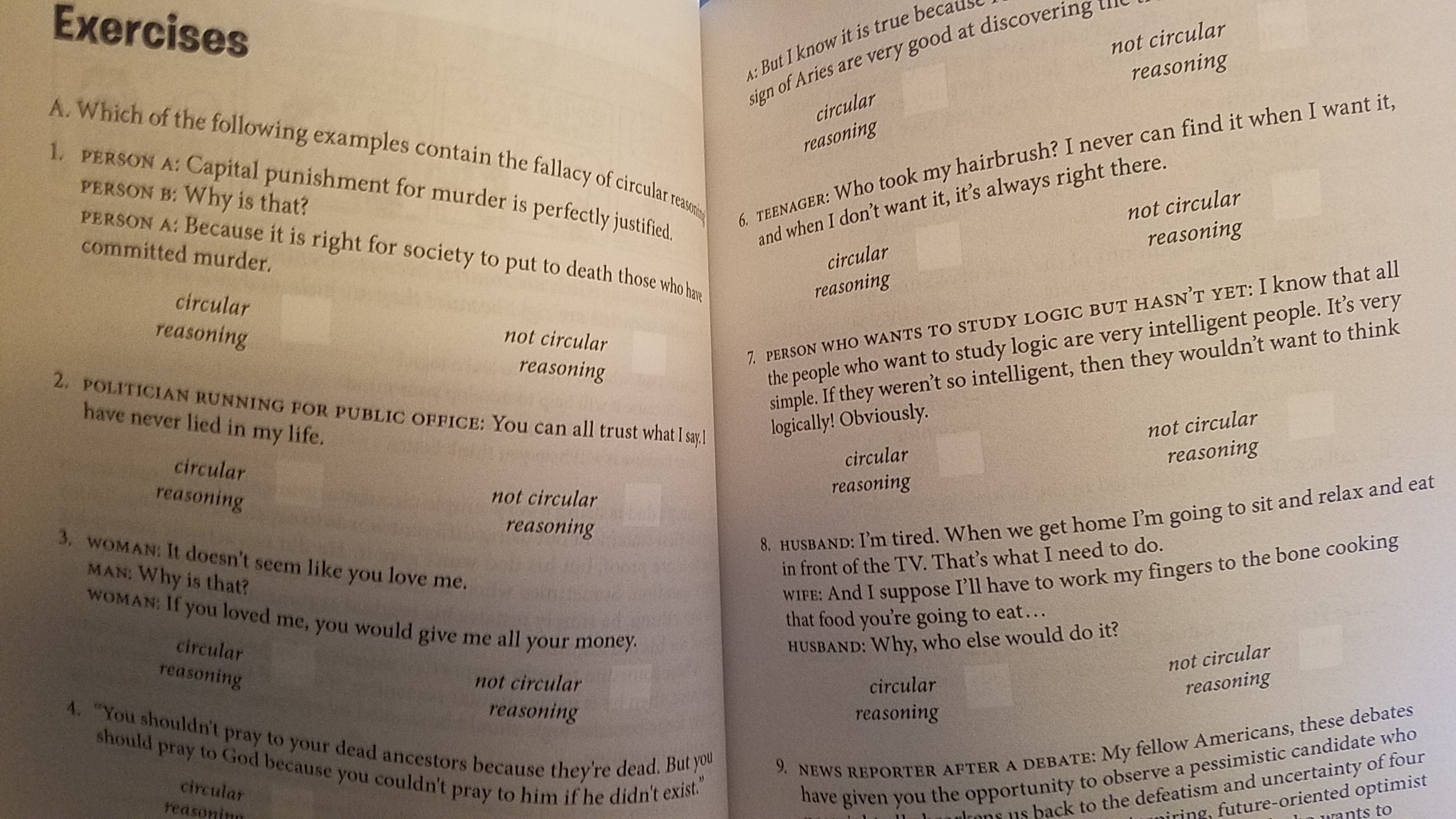
Logic: We use the book, The Fallacy Detective, for our study of logic and logical fallacies. While I don’t particularly care if my children can remember the exact name of a fallacy, I appreciate how it helps them identify fallacies in different arguments. (And they have come to love calling them out by name.)
Poetry: For poetry, we love the Poetry for Young People series. It is a great way to learn a little more about a poet and their poetry through reading aloud.
We are entering this school year amid a hectic life season (we have six scheduled appointments each week for speech and physical therapy), and the routine is going to look a lot different. Still, I am excited to get back into a routine.
I pray that our morning time helps keep us focused and working together and provides an anchor in the busyness of this season.There are so many different options for morning time. I’d love to hear how you incorporate it into your homeschool and if you have any favorite resources.
Resource Library and Affiliate Disclosure
When you sign up for the Schoolin’ Swag free resource library you will get a link and password to the library, we are adding to the library each month with new items. You will also get a bi-weekly newsletter email to keep you up to date on what we have going on.
This post may contain affiliate or referral links, including Amazon affiliate links. As always I will never recommend a product that I don’t believe in and you will never be charged more for purchasing through our links. It does help pay for the costs associated with the blog.
Find Christ-centered homeschool curriculum at SchoolhouseTeachers.com and set their hearts on the right path.
Tuttle Twins is having their BIG Back to School sale. They have up to 70% off book bundles and major discounts on their academy classes (which now has World History offerings). We love their books and their American History curriculum.
















 The Schoolin' Swag Blog