Sixth Grade Curriculum Choices (2025)

*Some links are affiliate links; see full disclosure below*

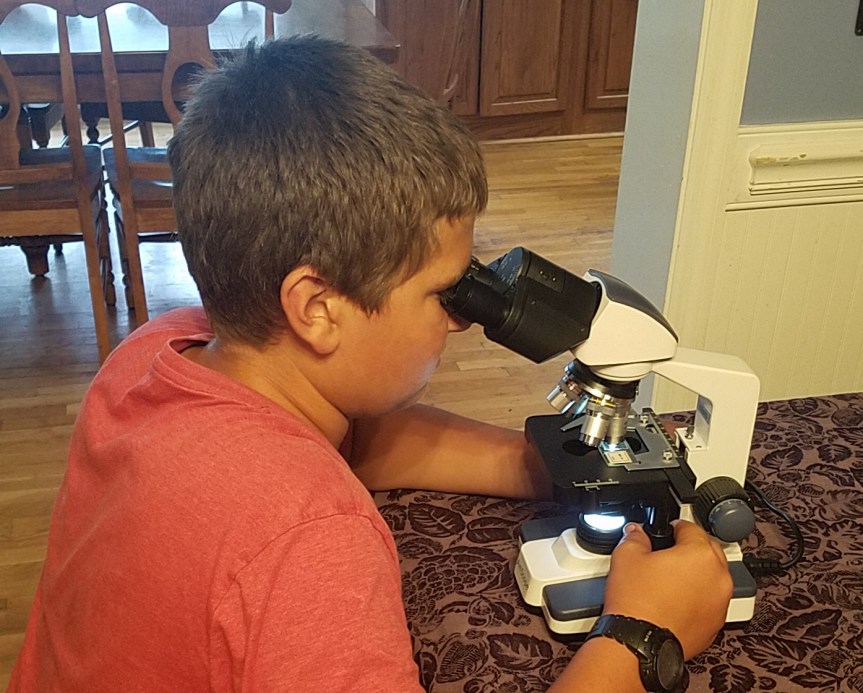
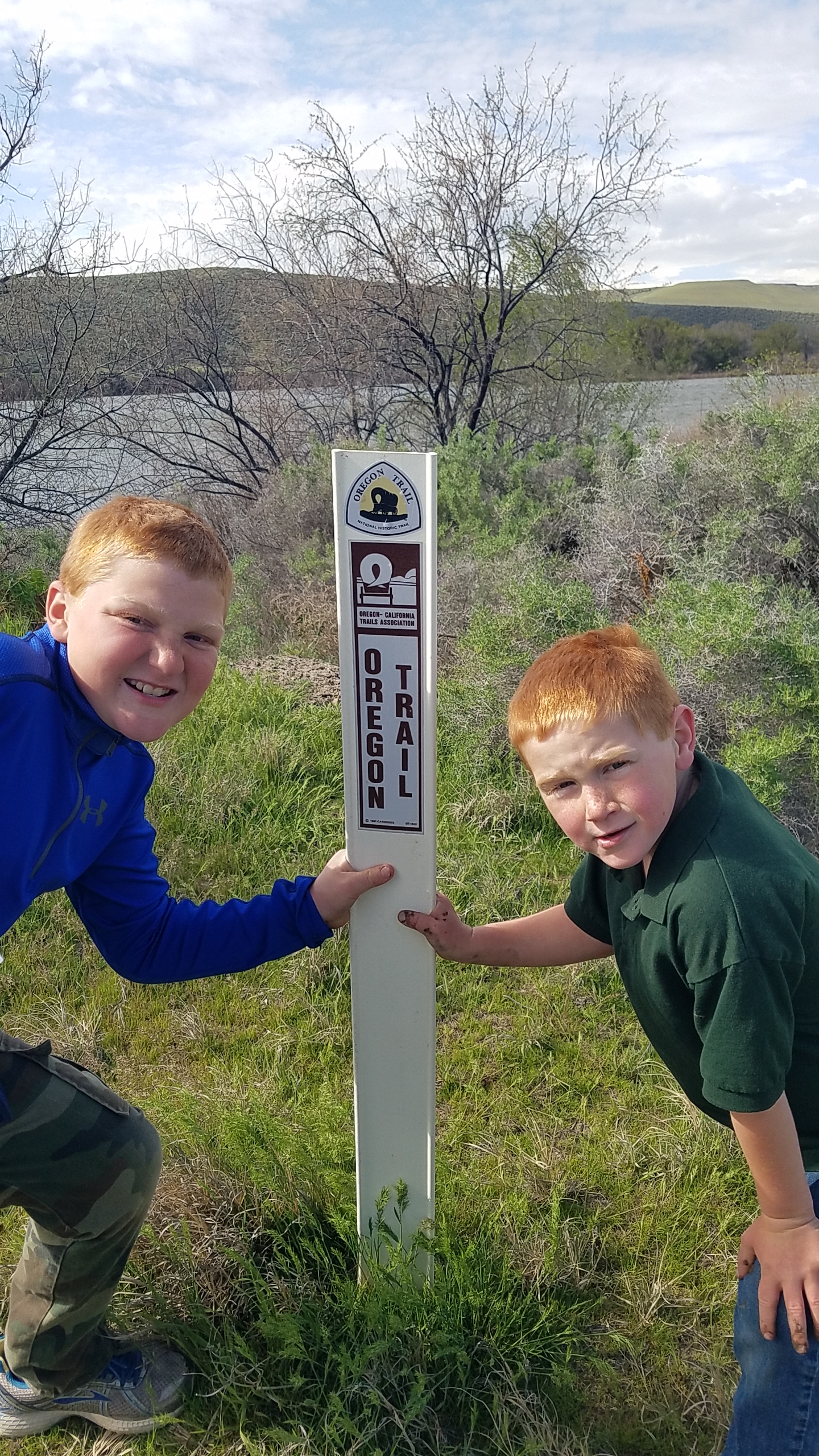
My eleven-year-old is going into sixth grade! How is he already old enough for church youth group and moving up to the Navigators group in our Trail Life troop?

He also enjoys fishing, hiking, and all things science. This is his first year running cross country for the local homeschool team. He would love to be able to skip math, but alas, I feel math is an integral part of his education.

Reading:

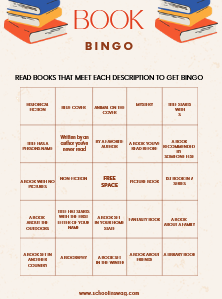
Since his reading is solid and he loves to read, we are going to do a fun and easy (for Mom) Book Bingo for his literature this year. The book bingo will give him a lot of autonomy in his reading, but also make sure he is getting in a variety of different books.
We are also continuing to use the Family Book Clubs from Read Aloud Revival, which are always fun and engaging.

Finally, don’t tell him that it’s actually school work, but he is participating in a local book club where they read a book each month and gather together to discuss it. Last month, they read Robin Hood, and this month, they are reading Sense and Sensibility.

Spelling

We have been working on All About Spelling, and he will continue to work his way through that. He really struggled with spelling, but over the last couple of years, he has shown tremendous progress, and we are excited to continue. We discovered All About Spelling years ago when my oldest child was struggling with spelling, and it has been our family’s favorite ever since.

Writing

For writing, we will be finishing Master Books Handwriting A to Zoo to review some handwriting skills. He will also be doing the next level in First Language Lessons to work on some grammar.

I printed out a huge selection of fun journaling prompts, and he chooses one each day to write about in his journal to work on his creative writing. He will also be entering some essays into several contests, including those sponsored by our junior historians and the state fair, to work on those skills. Those real-life applications have been so beneficial in encouraging my children to write solid essays.

Math

He will be finishing Math for a Living Education this year. We both love the format; it worked very well for him. There is generally enough practice for him without it being too much busy work. If there are concepts where he struggles, we can add in some extra practice.

Science:

I needed to be realistic this year about the amount of time and focus I have available for schoolwork, while also managing a toddler and multiple speech and physical therapy appointments each week. Of course, it is also important to me that my children get the solid education that they deserve.

This is where Journey Homeschool Academy solved my problem. We are doing one of their elementary science courses (which is solid enough for a sixth grader) with both my second and sixth graders. The boys wanted to learn about Astronomy, and we are loving the Elementary Astronomy course so far.
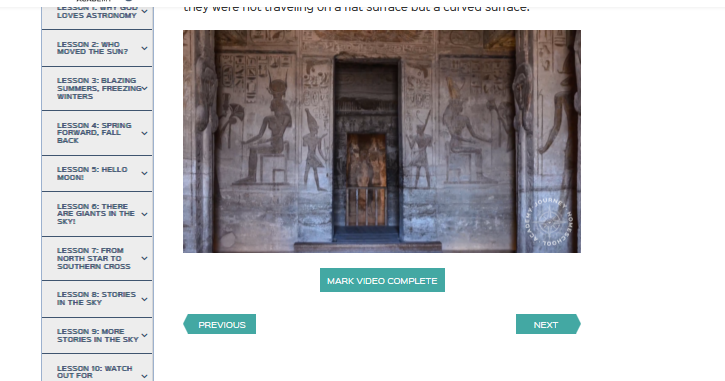
The video-based content makes it easy for them to do while I’m focused on the toddler, but then we can do the hands-on activities together. The course has solid science content with a Christian worldview that is also easy for me to implement. It has been a win for all of us.

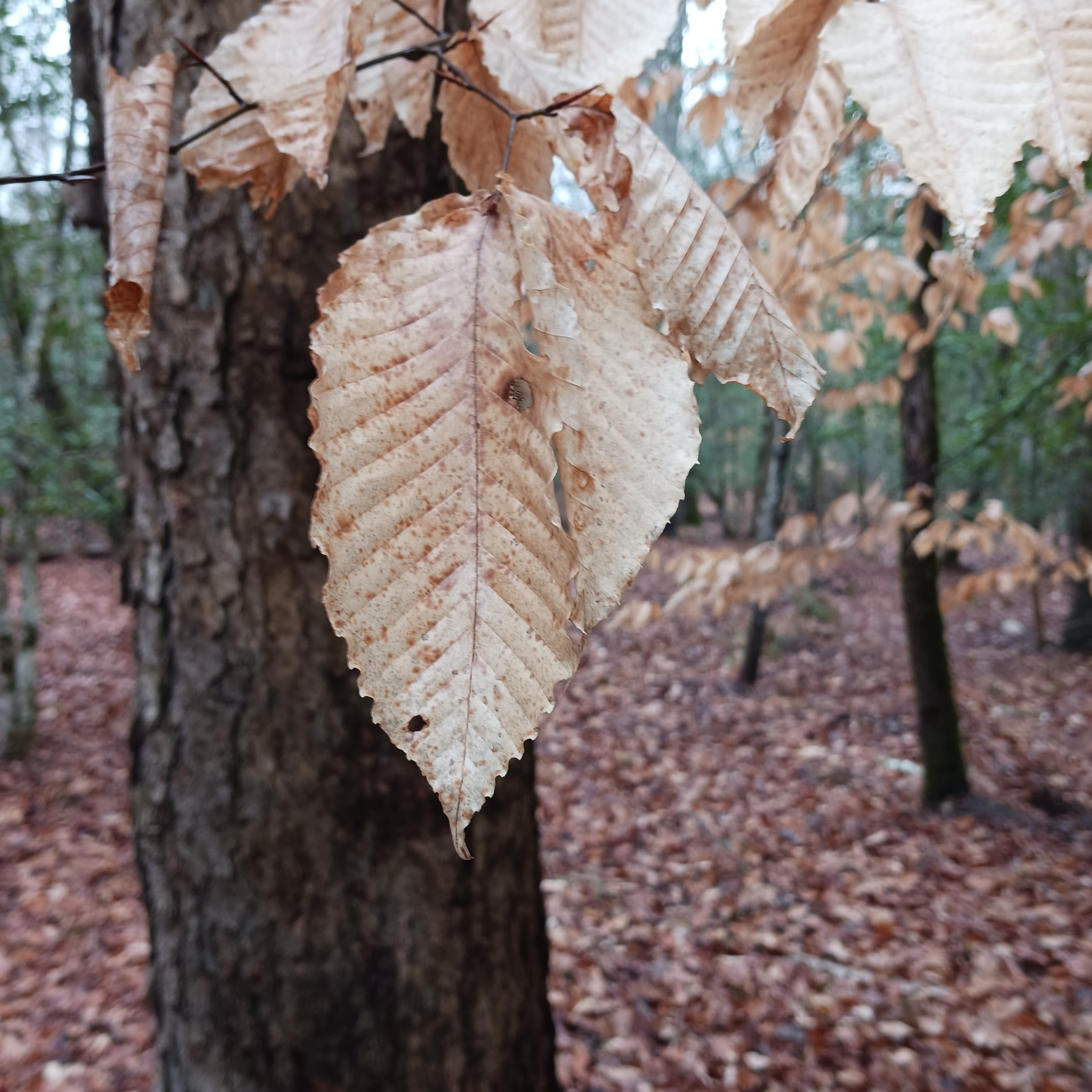
Additionally, we will conduct a nature study at least once a week (we often do it more frequently when the weather is favorable). Sometimes our nature study is as simple as going outside and observing. Still, we also love to use our Homeschool Nature Study subscription to take things a little further and help me find some great activities and ideas.

History:

We are jumping back into Story of the World Volume 3 this year. We love all the hands-on activities and recipes included in the workbook, and we have the audio version of the text that allows us to listen while riding to appointments during our busy weeks.

Art

This son is the one I refer to as my little artist. He loves to draw, paint, and create. We will continue to use our membership with You Are An Artist chalk pastels for his online art lessons and provide him with lots of time and materials to be creative.
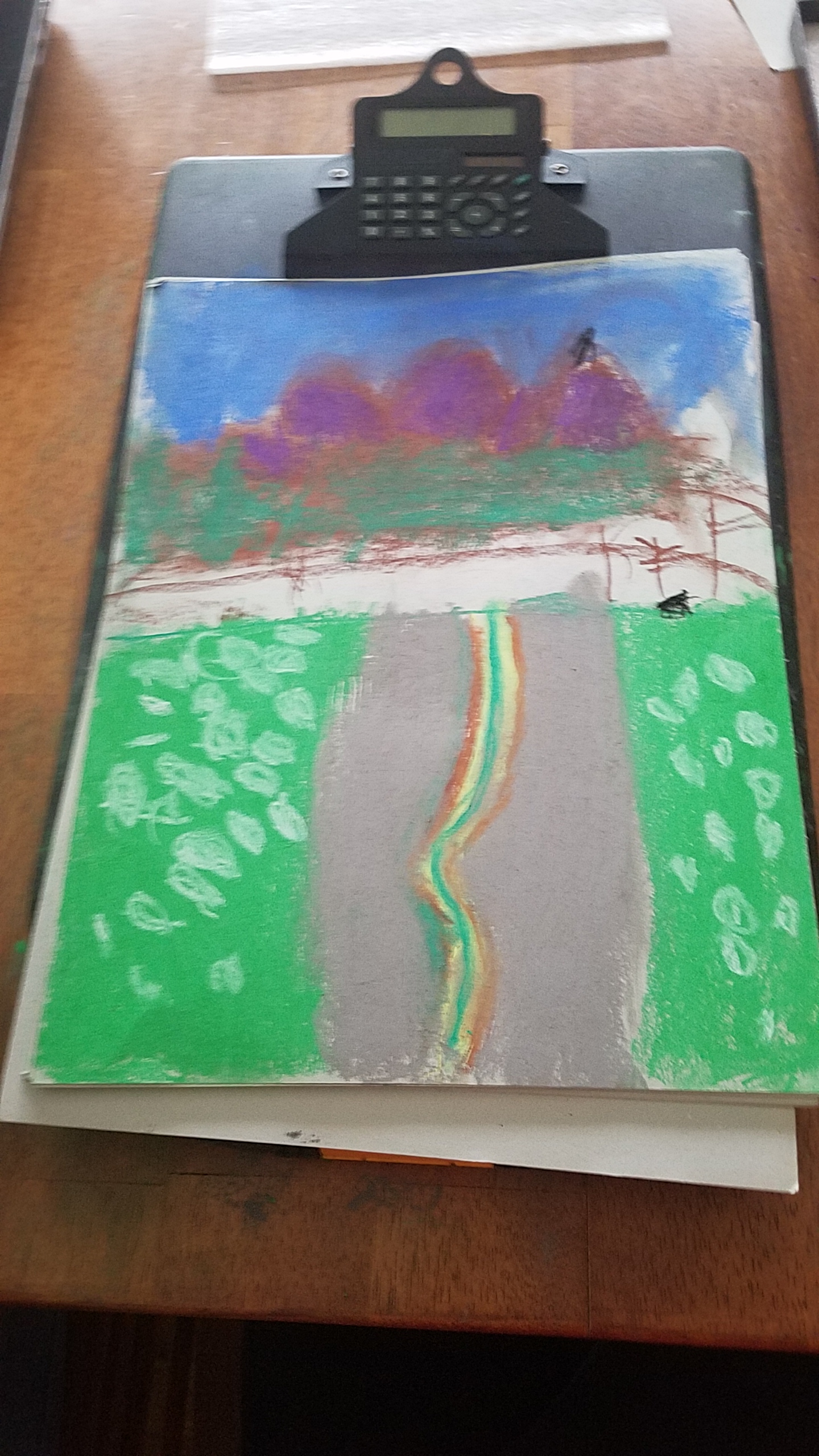
He also requested the opportunity to learn more about drawing, and so he is going to be trying some lessons from Timberdoodle’s Simply Draw.

Morning Time:

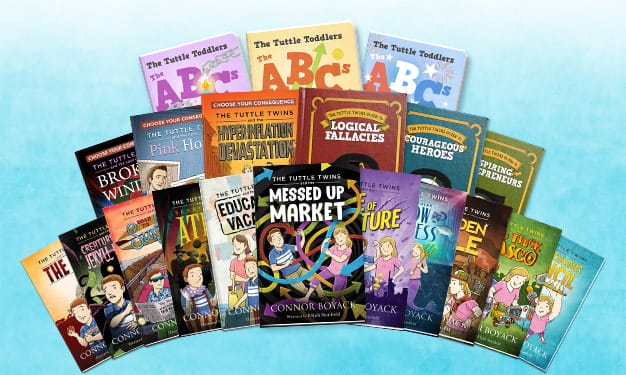
Morning time is my favorite part of our school day. We will do our daily Bible study and watch World Watch for current events each day. In addition, we plan to do a rotation of fine arts studies, poetry, Tuttle Twins books, and more. You can find out more about the resources we are using this year at Morning Time Plans 2025.
We have a toddler in the house and seven standing appointments each week, so I am holding all of our plans in an open hand and praying for the best. We will do what we can, when we can, and trust that God will fill in the gaps.

Resource Library and Affiliate Disclosure

When you sign up for the Schoolin’ Swag free resource library, you will receive a link and password to access the library. We add new items to the library each month. You will also receive a bi-weekly newsletter email to keep you up to date on our current posts.

Resource Library 

This post may contain affiliate or referral links, including Amazon affiliate links. As always, I will never recommend a product that I don’t believe in, and you will never be charged more for purchasing through our links. It does help pay for the costs associated with the blog.

Deals and Freebies

If you have not tried SchoolhouseTeachers.com, you don’t want to miss this sale!

Tuttle Twins is having a big curriculum sale! You can also get great deals on books and their Academy.

New subscribers can get 3 months of World Watch for FREE! This is a great deal.
Family Time (aka Morning Time) 2025

Morning time has been one of the few constants in our homeschool. As my children have changed, our schedules have changed, and our goals have changed, we have adapted our homeschooling curriculum in many ways, but having a morning time has remained a constant.

There have been years when morning time more typically happened in the evening (we should rename it family time), but we tried to keep that time of learning together. We have incorporated a variety of subjects, and it looks a little different each year.

Still, two things have remained the same: we learn together as a family, and we incorporate some type of Bible study.

What is Changing in our Morning Time Routine?

Last year, I worked hard to make sure we were consistent each morning with our time, even if we kept it simple some mornings. This year, we are keeping many of the same things in our “morning time.” However, between some speech and physical therapy appointments and my daughter having an early morning dual enrollment class twice a week, the timing is going to be a bit different.

I still want to be consistent because this is one of the most essential parts of our school day, but instead of a consistent time each day, I am working on a consistent time for each day of the week.

So, for example, on Mondays and Wednesdays, we will do morning time just after breakfast, but on Thursdays, we will do our “morning time” after dinner, and on Tuesdays, it will be after lunch.  The value in morning time comes from the content and family togetherness, not the time of day.

What Do We Include In Our Morning Time Studies?

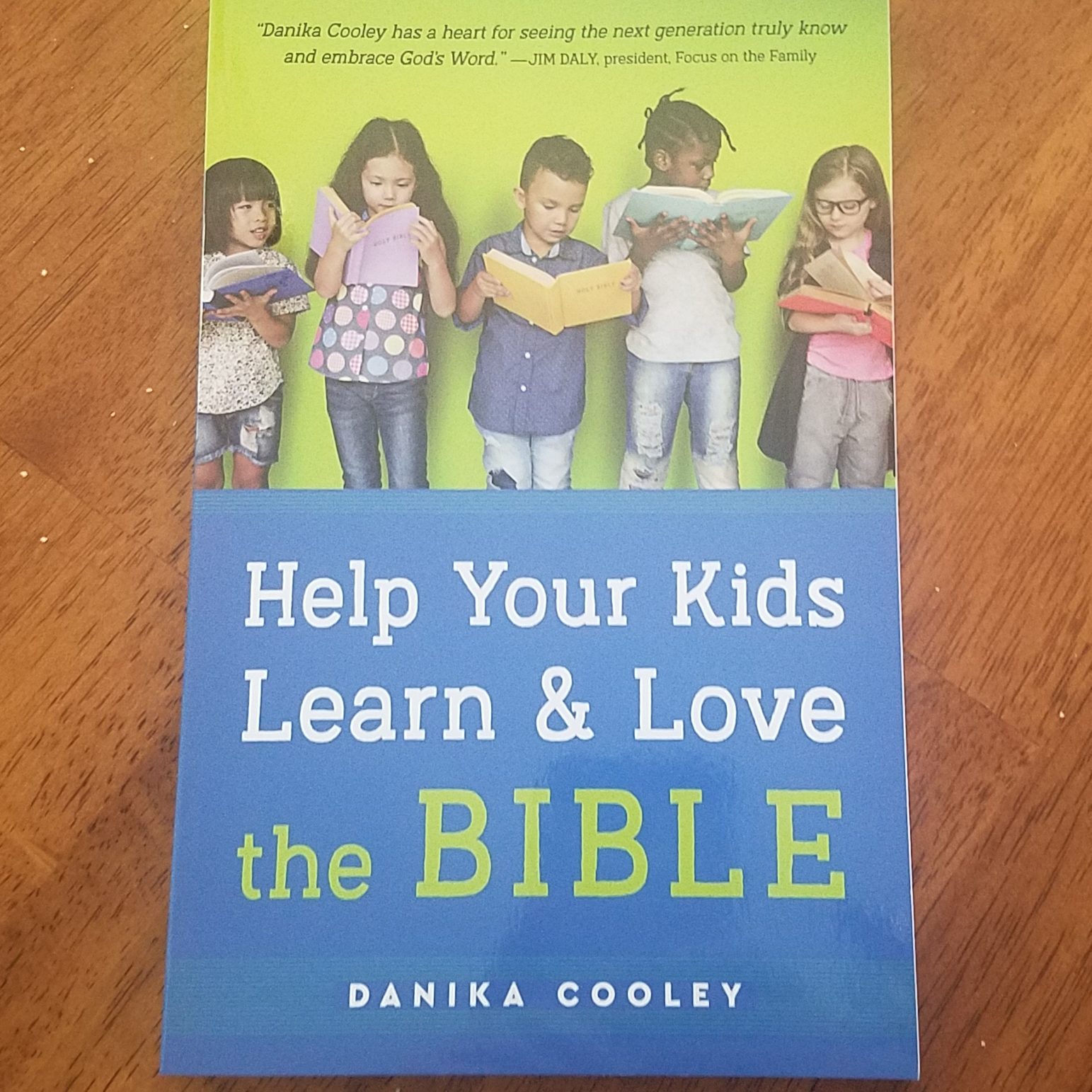
Our two main priorities for morning time will remain our daily family Bible reading and World Watch. Over the years, we have used a wide variety of Bible curricula and enjoyed many of them, but often I found it hard to be consistent when using curricula and trying to make it work for all ages. However, several years ago, I read Help Your Kids Learn and Love the Bible, and realized I was over complicating things.

Our Bible Study

Now, as a family, we read one chapter a day from the Bible, going through an entire book. This keeps it simple and easy to maintain, even during busy seasons. We read (or listen to it on my phone app) the chapter and then discuss it.

My husband bought me an excellent set of commentaries that we pull out if we have questions or want to dig deeper into a verse.  We have found this to be hugely impactful and easy to maintain.

World Watch

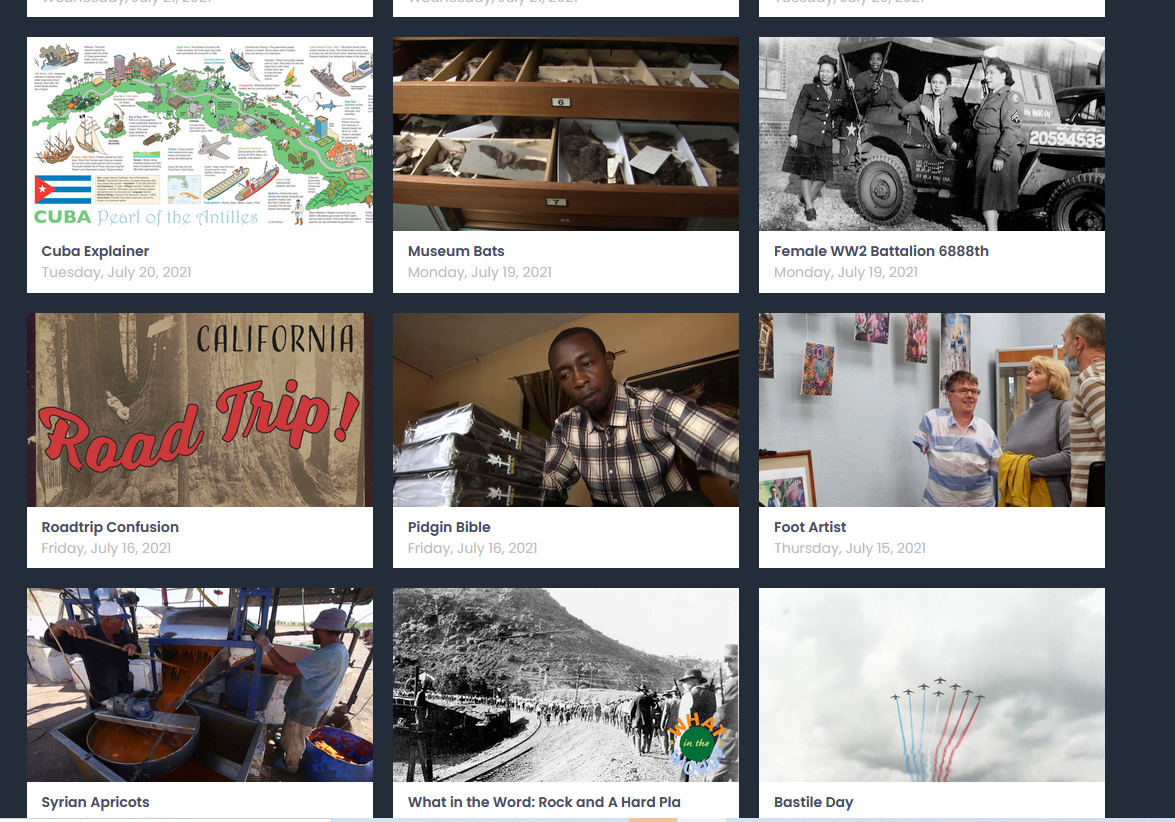
World Watch is our second priority. We even kept these two components throughout most of our summer break. If you are not familiar, World Watch is a student news program with a Christian perspective. It is ten minutes a day and covers a variety of both major news topics and fun interest stories. 

It has opened the door for many conversations, helped my teens better understand what is happening in the world, and given us all more perspective.  We have found that watching and discussing works well for our family, but I did want to mention that they now also have downloadable worksheets that you could add to your World Watch time if you felt your student needed that or to help you use it for high school credit.

In addition to our two main components, we will incorporate one additional subject each day. Those will include fine arts, hymn study, logic, poetry, books of the Bible, and any other topics that I want to fit in as a family.

Sometimes we may do the same subject each day for several weeks, and other times we may rotate daily depending on our needs. This allows us to cover a variety of topics without trying to add in too many different things in one day (which would make it unmanageable).

Our Morning Time Rotations

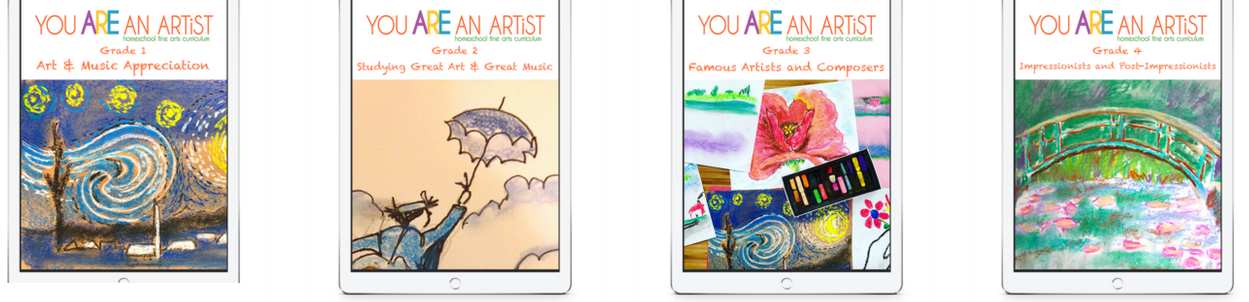
Fine Arts: We will be using the Fine Arts program from You Are An Artist. They have a variety of fine arts courses that focus on different eras and topics.

A few of the many fine arts options that are available!

Hymn Study: For hymn study, we will be using the studies that I have already written, as well as some new studies that I will be adding throughout the year.

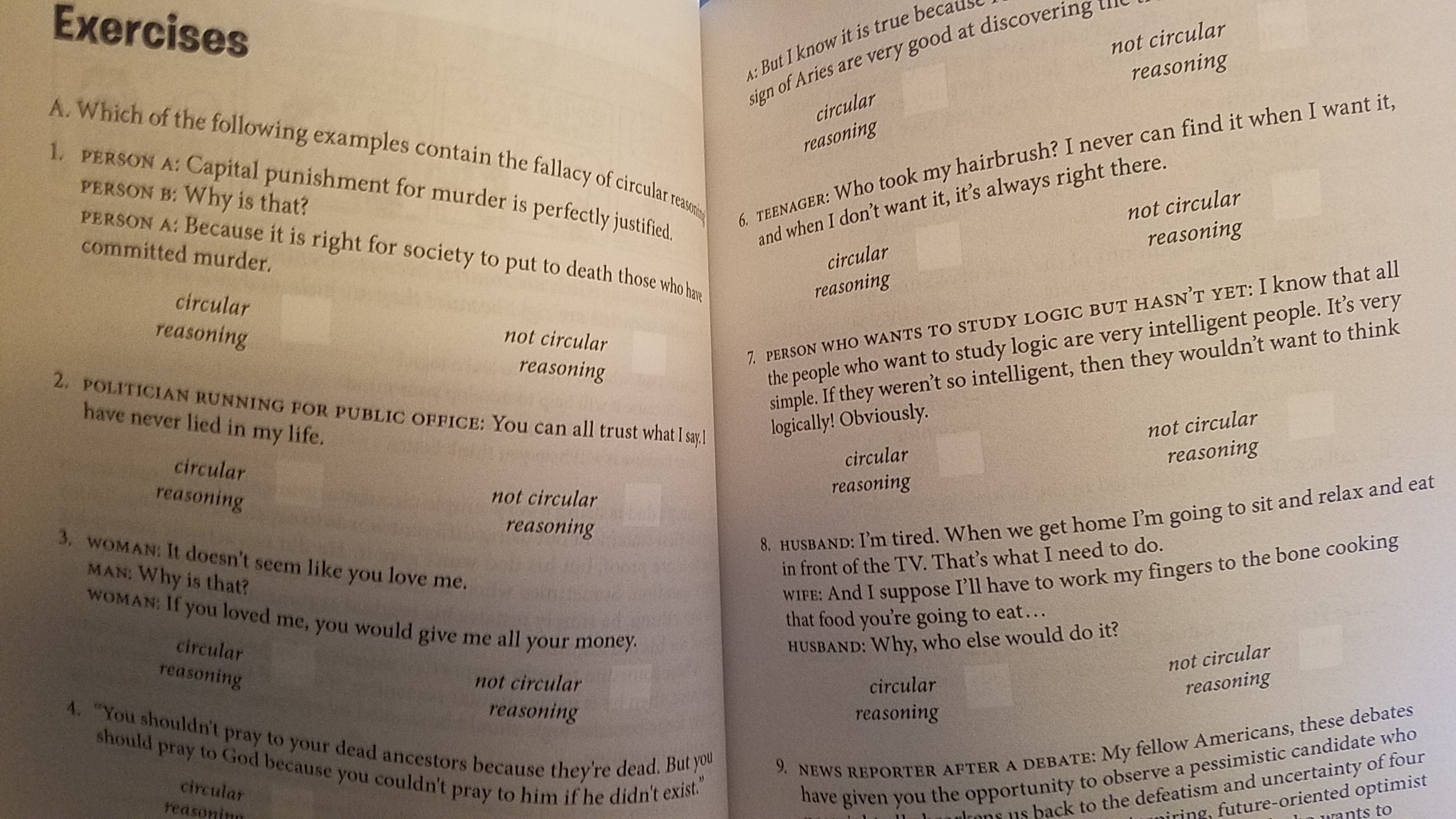
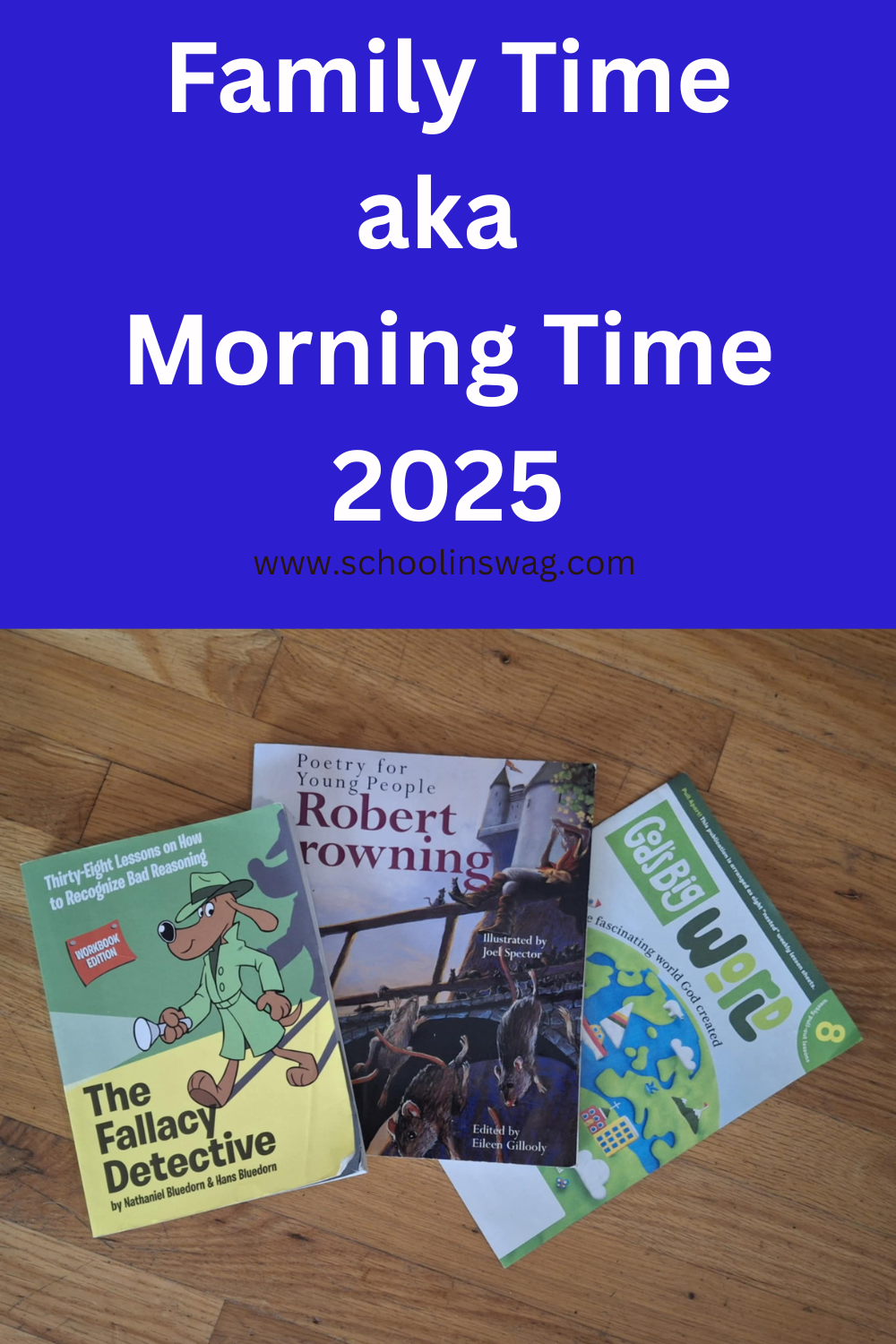
Logic: We use the book, The Fallacy Detective, for our study of logic and logical fallacies. While I don’t particularly care if my children can remember the exact name of a fallacy, I appreciate how it helps them identify fallacies in different arguments. (And they have come to love calling them out by name.)

Poetry: For poetry, we love the Poetry for Young People series. It is a great way to learn a little more about a poet and their poetry through reading aloud.

We are entering this school year amid a hectic life season (we have six scheduled appointments each week for speech and physical therapy), and the routine is going to look a lot different. Still, I am excited to get back into a routine.

I pray that our morning time helps keep us focused and working together and provides an anchor in the busyness of this season.There are so many different options for morning time. I’d love to hear how you incorporate it into your homeschool and if you have any favorite resources.

Resource Library and Affiliate Disclosure

When you sign up for the Schoolin’ Swag free resource library you will get a link and password to the library, we are adding to the library each month with new items. You will also get a bi-weekly newsletter email to keep you up to date on what we have going on.

Resource Library 

This post may contain affiliate or referral links, including Amazon affiliate links. As always I will never recommend a product that I don’t believe in and you will never be charged more for purchasing through our links. It does help pay for the costs associated with the blog.

Find Christ-centered homeschool curriculum at SchoolhouseTeachers.com and set their hearts on the right path.

Tuttle Twins is having their BIG Back to School sale. They have up to 70% off book bundles and major discounts on their academy classes (which now has World History offerings). We love their books and their American History curriculum.

My Unsolicited Thoughts About Journey Homeschool Academy’s Elementary Astronomy

I’ve been telling you how much I love Journey Homeschool Academy for high school science ever since my son tried out biology several years ago. He went on to college sciences and said that he was well prepared because of his experience with Journey Homeschool Academy.

High School Biology

*links are affiliate links, see full disclosure below*

First, I love that the lessons use a Christian worldview. As a busy mom of five, I appreciated that at the high school level, they were designed for my students to complete independently with video instruction, lab guides, and online tests. It was so simple for me to set them and get them started. Finally, I appreciated that it was approachable, engaging, and rigorous.

What’s New in Our Journey Homeschool Academy Experience?

I am excited to try out one of their elementary courses this year. I have generally done teacher-directed science in the elementary years (mostly with Apologia and the geology course I created). However, in this particular season of life, I really wanted a science that could get done even when I needed to have my attention focused on a busy toddler or when I needed to be shuttling the baby to physical therapy or other appointments. 

We will officially start Astronomy in September with our new school year. However, I have been checking out the video lessons and materials to get ready and to share more with you guys in case anyone else needs a helping hand with science this year.

The Basics of Elementary Astronomy with Journey Homeschool Academy

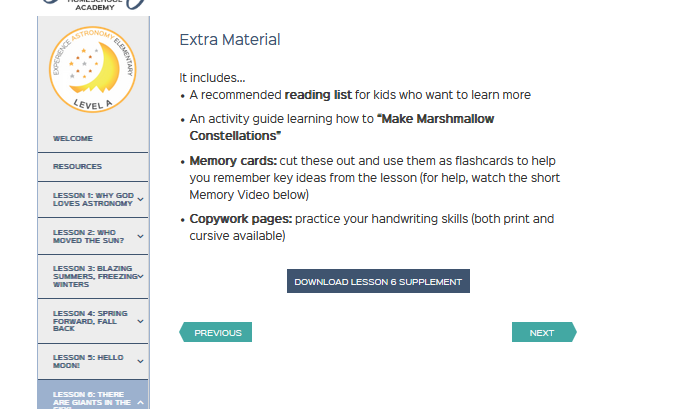
This elementary astronomy course has thirty lessons. Each lesson includes a video (around fifteen to twenty minutes long), a hands-on activity, memory cards (with a two to three-minute memory video), copy work, and suggested additional reading.

The videos cover the concept for the week and often share footage from a different location, like a virtual field trip. They are very reasonable in length and engaging, not just rote lectures.

A sample of the resources included in an elementary astronomy lesson.

The hands-on activities use primarily materials that would be found around most homes (especially homeschool homes, which tend to have a nice crafting collection). They are simple enough to complete but help reinforce the concept for the week.

The memory cards include a few of the most important facts from the week, and each week, a short two—to three-minute video discusses them.

There is copywork for each week in cursive or print form, and there is a quiz that you can use if you wish.

There is a lot of flexibility built into this curriculum, and you can use as many or as few of the resources as you choose and go at whatever pace you would like. Unlike the high school courses, you have lifetime access to this course.

Seven Things I love About Elementary Astronomy

  • I love that the video lessons are long enough to cover the material well but short enough to keep the attention of my active boys!
  • I love that they honor the Creator and give glory to God.
  • I love that it includes hands-on projects that are easy to complete.
  • I love that the course is only 30 weeks long, so we can easily complete it in a school year while still taking December off for Christmas schooling.
  • I can use it with multiple ages at one time.
  • It will give us another excuse to go outside and study God’s creation.
  • I love that I have lifetime access so we can go as slow or fast as we want, and I can use the course again in a few years with my youngest.

What Will I Add to Journey Homeschool Academy’s Elementary Astronomy?

This course easily stands on its own as a science course and would not need anything added. However, we love art in our house, and Nana over at You Are an Artist has some wonderful space-themed art lessons that will be the perfect complement to this course. You can purchase them separately as a course, or they are included in the art membership (which we love because we can choose whatever strikes our interest that day).

Overall, I am very excited about using elementary astronomy next year. It will simplify science instruction and help me ensure that it does not get pushed to the back burner. My children are excited about astronomy, a topic that I think the whole family can enjoy. Overall, I think the Journey Homeschool Academy elementary courses would be a great fit for families struggling to make time for science, wanting something easy to implement, or having a strong interest in astronomy.

Resource Library and Affiliate Disclosure

When you sign up for the Schoolin’ Swag free resource library you will get a link and password to the library, we are adding to the library each month with new items. You will also get a bi-weekly newsletter email to keep you up to date on what we have going on.

Resource Library 

This post may contain affiliate or referral links, including Amazon affiliate links. As always I will never recommend a product that I don’t believe in and you will never be charged more for purchasing through our links. It does help pay for the costs associated with the blog.

 Benefits of Outside Time for Children (and Moms)

Are your kids feeling restless?

Trouble with attitudes?

Feeling a little gloomy?

Want to encourage a love of nature and science?

Need to add in some healthy movement for you or your children?

Trouble focusing?

Benefits of Time Outdoors

Time outside can be the remedy for all of those concerns and more.  Spending time outside in the fresh air and sunshine can make a tremendous difference in the atmosphere of your home and homeschool. This is true for both parents and children.

(Please note that I am not a doctor, and I am not trying to treat health problems. If you are having serious depression, etc,  please seek medical care.)

I have noticed that when we are super busy, or the weather has been less than ideal, and we have not spent much time outside, my children struggle to focus on schoolwork, their attitude and behavior suffer, and they tend to be more sedentary.

While I do not start “bouncing off the walls” or appear like I’m vibrating because I’m restless like my children, I also notice that my attitude and focus are better when I spend some time each day outside. The sunshine brightens my mood, and the fresh air helps clear my mind. I try to go for a walk each day, and that 45 minutes of time outside gives me more focus and clarity for the rest of the day.

Educational Benefits

In addition to the physical and mental benefits of time outside, there are also educational benefits. Time spent outside in nature helps students learn by observing the vast world around them. As they begin to look and learn, they tend to become more appreciative of God’s beautiful creation.

While we sometimes take nature walks specifically to observe and study, I find that once you show children how to look for things around them, they begin to do it naturally during their free time outside. We might go for a walk and look for birds one day, but months later, they are still pointing out different types of birds as they spend time outside.

I will not discuss all the research on spending time outside, though I will include a list of good resources at the end of this post. Instead, I want to focus on simple ways to add more outside time to your schedule.

Strategies for Spending More Time Outdoors

1. Dress for the season

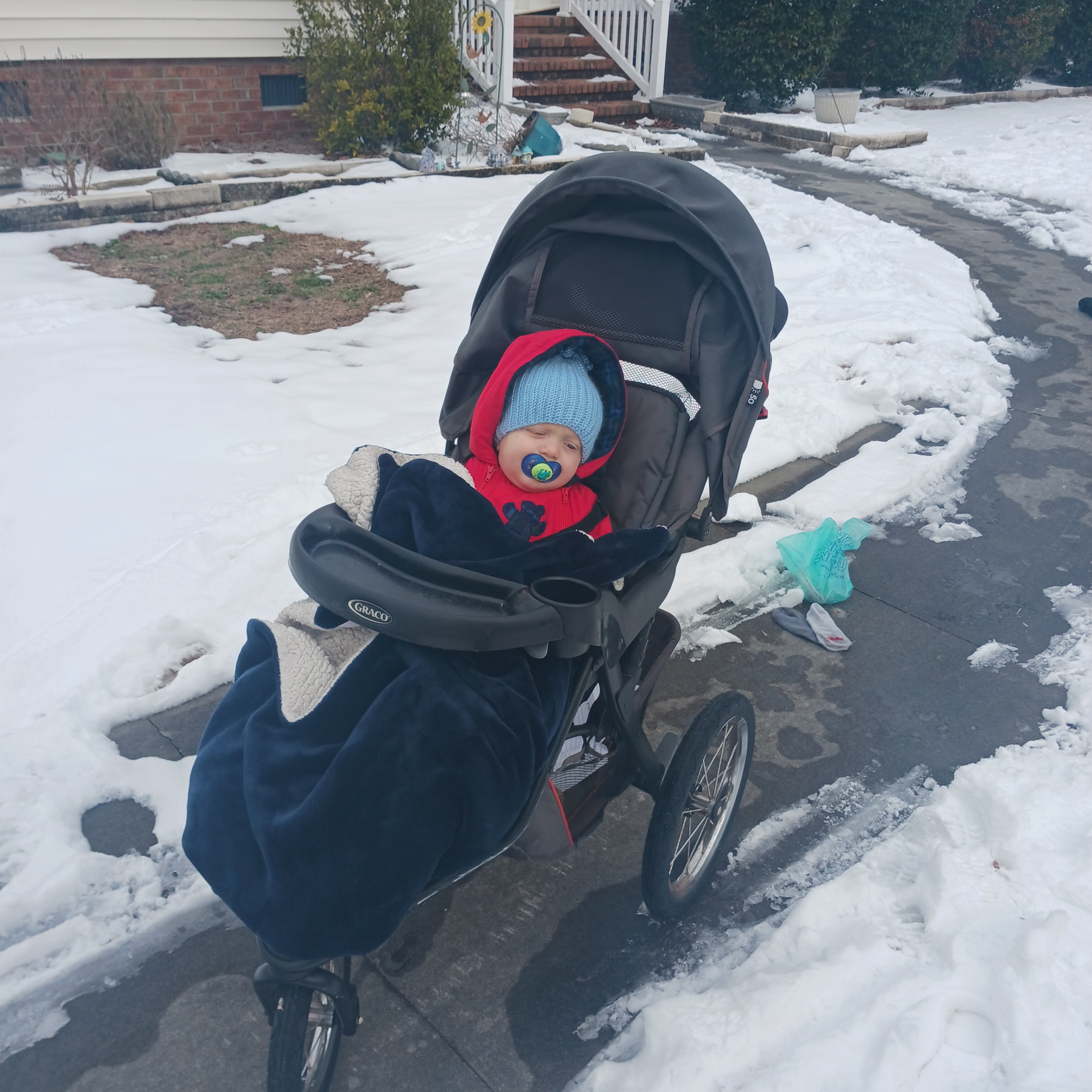
      While there are some days when the weather is too bad to get outside, most days the key is just being well-dressed. When it is cold, it is easy to decide to stay inside, but I often pay for those days with challenging attitudes and bouncing children. It really is worth the effort to layer up and spend some time outside. In the summer, we use lots of sunscreen, light clothes, and water activities to battle the heat.

      2. Take the books outside

        Sometimes, going outside would be wonderful, but there is no time. You need to get reading, math, etc. done, as well as whatever else life throws at you. Taking school outside to a picnic table or blanket on the ground is a great option. The novelty and fresh air can make school a little more fun, and it is time you would already be spending with the added benefit of sunshine and fresh air.

        Specific nature study is another great way to spend time outside while checking off the educational boxes. It can be as simple as observing what is around them and choosing something to learn more about. If you like to have ideas and more resources for nature study, check out the Homeschool Nature Study Membership.

        3. Keep it Simple

          We love to do fun things, try new parks, gather with friends, and explore different nature projects. However, spending time outside can be as simple as allowing children to play in the backyard, ride bikes, or walk in your neighborhood. Do not feel like every day or every time outside has to have a plan or special activities.

          4. Think Outside the Box

            Finally, field trips are a great way to add some time outside. We enjoy going to our state and national park sites to learn more about science and history while exploring the outdoors. There are also local parks, conservation programs, and more that offer outdoor experiences. Sometimes, these fit into our curriculum; other times, they are just fun educational opportunities. If you are in North Carolina, our state parks offer an amazing assortment of outdoor events that you can learn about on their website.

            Resources and Research

            1000 Hours Outdoors Outside

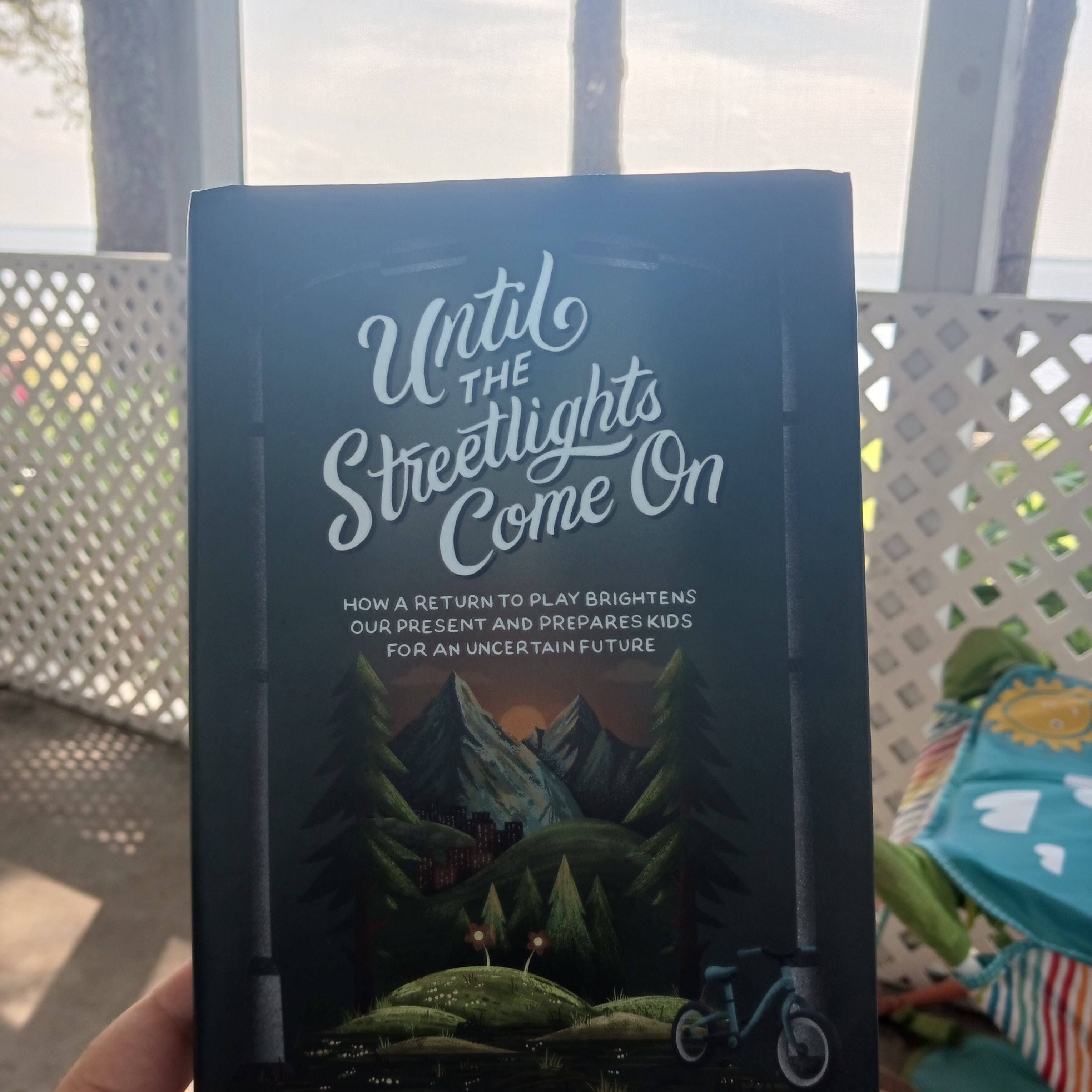
            Until the Streetlights Come On

            Last Child in the Woods

            North Carolina State Parks

            National Park Sites

            Kids in Parks

            Homeschool Nature Study Membership

            Resource Library and Affiliate Disclosure

            When you sign up for the Schoolin’ Swag free resource library you will get a link and password to the library, we are adding to the library each month with new items. You will also get a bi-weekly newsletter email to keep you up to date on what we have going on.

            Resource Library 

            This post may contain affiliate or referral links, including Amazon affiliate links. As always I will never recommend a product that I don’t believe in and you will never be charged more for purchasing through our links. It does help pay for the costs associated with the blog.

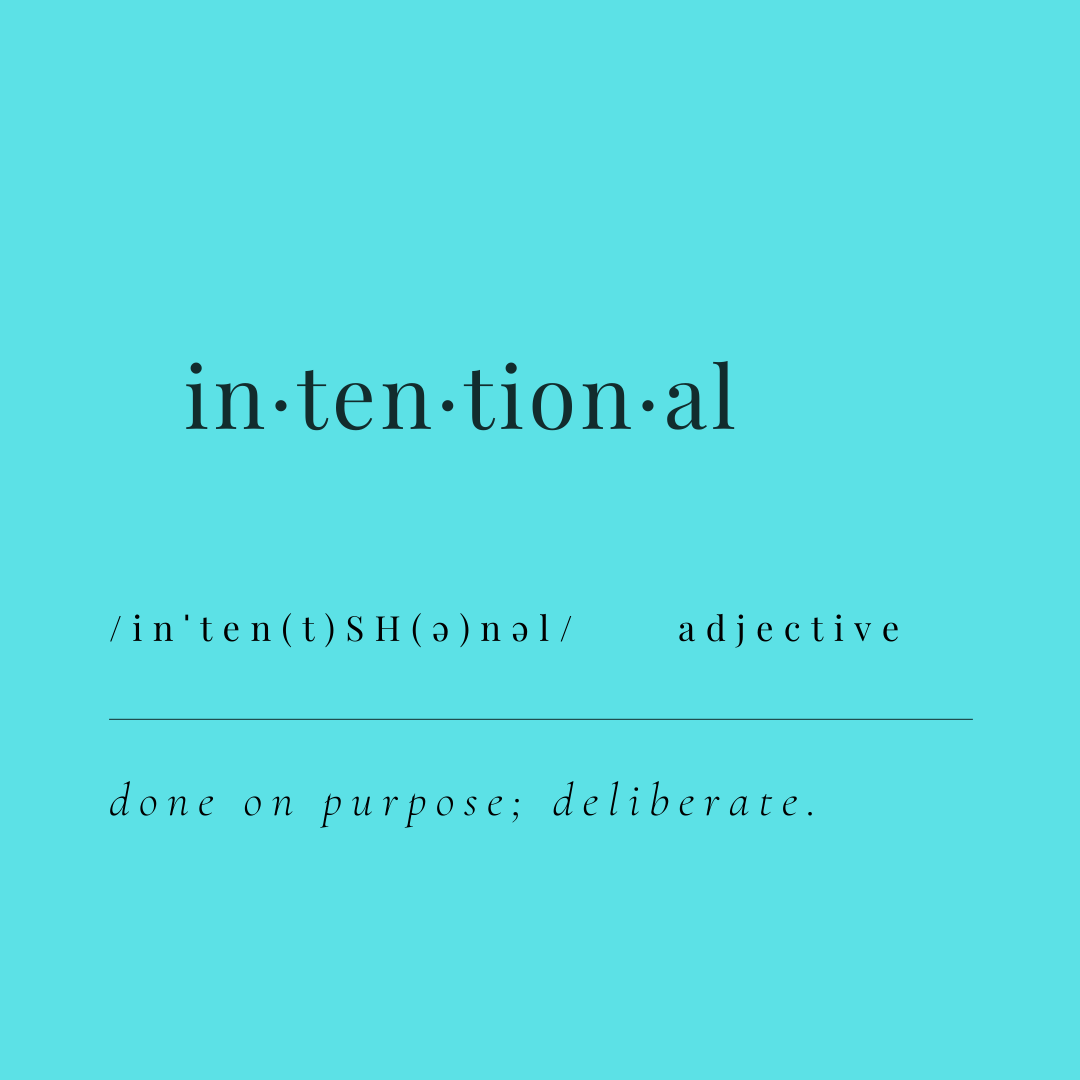
            Focus Word 2025: Intentional

            Last year, my focus word was Savor, and it was perfect for the stage I was in. We had highs and lows last year, but overall, it was a year of many beautiful changes.

            We had baby number five on January 11th, 2024, we took an epic seven-week road trip in March and April, my oldest graduated from our homeschool in May and began college in August, my daughter got her driver’s license in January, began dual enrollment in August, and so much more.


            Through it all, I tried to savor and enjoy the experiences and make memories with my family.  It was a good year, but I want to focus more on being intentional this year. With the baby and so many things going on last year, I feel like I let some things slide (out of necessity). However, as we begin a new year, I feel like I am in a place to begin to be more intentional.


            What Does Intentional Look Like For Me?


            I am making conscious decisions about different areas of my life where I want to grow and spend time, and instead of just hoping to get to those things, I am making intentional plans but still holding those plans with an open hand.


            Bible:

            While we continued with our family Bible reading last year, I feel I was not intentional about spending personal time in the word. So, this year, I started a very simple Bible plan to read through the New Testament in a year. It should take me about ten minutes daily, which is doable even with the baby.


            Family:

            Making realistic but intentional plans to spend time with my husband and children. I know I can’t plan weekly date nights out at this stage of life, but we can plan to walk 4 or 5 days a week and do something special together once a month or so. I can’t take each of my kids out one-on-one each week.

            Still, I can make sure to spend a few minutes checking in with them each week and be diligent about finding opportunities to spend one-on-one time, even if it’s just taking one of them with me to run errands or grabbing a quick treat together.

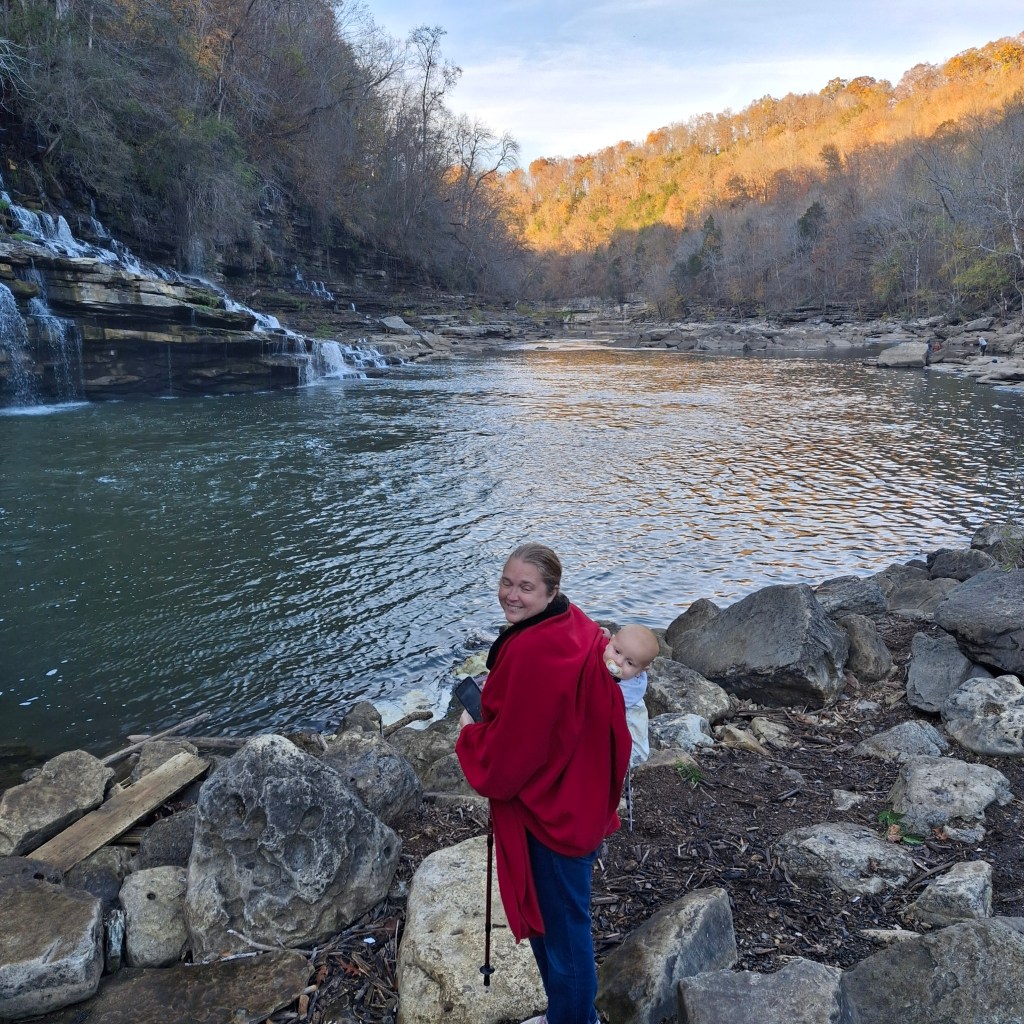
            Hiking with My People..Savoring the Moment and Intentionally Focusing on my Health.


            Health:

            Complications from my pregnancy caused me to really focus on my health in 2023, and I was doing a great job eating well and getting in movement. However, the busyness of life with an infant and teenagers caught up with me last year, and I noticed I was not as intentional about making good choices.

            So this year, I want to get back on track by being intentional about drinking more water, staying active each day, and getting plenty of protein. When I do those things, I feel better and have more energy for the other things on my list.


            Social Media:

            I believe that social media is a double-edged sword. I love being able to keep up with friends who aren’t physically close to me anymore; I enjoy learning from other homeschool moms and seeing encouraging posts and scriptures. However, it so easily becomes lost time.

            When the baby was born, and I was up with him at night, I felt too tired to read, but I hated just sitting there, so I often would watch silly videos on Facebook. However, I really want to focus on intentionally using social media to keep up with the people in my life and to share and learn from other homeschoolers.

            So, I will limit my time on social media (using an app on my phone) and be intentional about what content I view while using social media.


            Blog:

            Finally, I want to be more intentional about sharing ideas and resources on the blog. I was very quiet on the blog for the first half of 2024 because I needed to focus on the baby, my other children, and our travels. However, this year, I am intentionally putting work time back on my weekly calendar to be more consistent about sharing in this space.

            My seventeen-year-old daughter will be babysitting a few hours each week in exchange for car insurance and gas, and I will be able to return to sharing new content with you each week.


            I am looking forward to 2025 and continuing to savor the time with friends and family while also being more intentional about how I spend my time and making sure that my priorities are getting the attention they deserve.
            I would love to hear your word of the year or your resolutions or tips on how you are intentional with your time.

            Resource Library and Affiliate Disclosure

            When you sign up for the Schoolin’ Swag free resource library you will get a link and password to the library, we are adding to the library each month with new items. You will also get a bi-weekly newsletter email to keep you up to date on what we have going on.

            Resource Library 

            This post may contain affiliate or referral links, including Amazon affiliate links. As always I will never recommend a product that I don’t believe in and you will never be charged more for purchasing through our links. It does help pay for the costs associated with the blog.

            Deals and Freebies

            If you have not tried SchoolhouseTeachers.com, you don’t want to miss this sale!

             Journey Homeschool Academy is offering sale if you need a new science program! We love their high school programs and plan to try their elementary astronomy next year.

            This is a great resource for lots of amazing printable materials from pre-k to 12th grade and they are offering 40% of lifetime access.

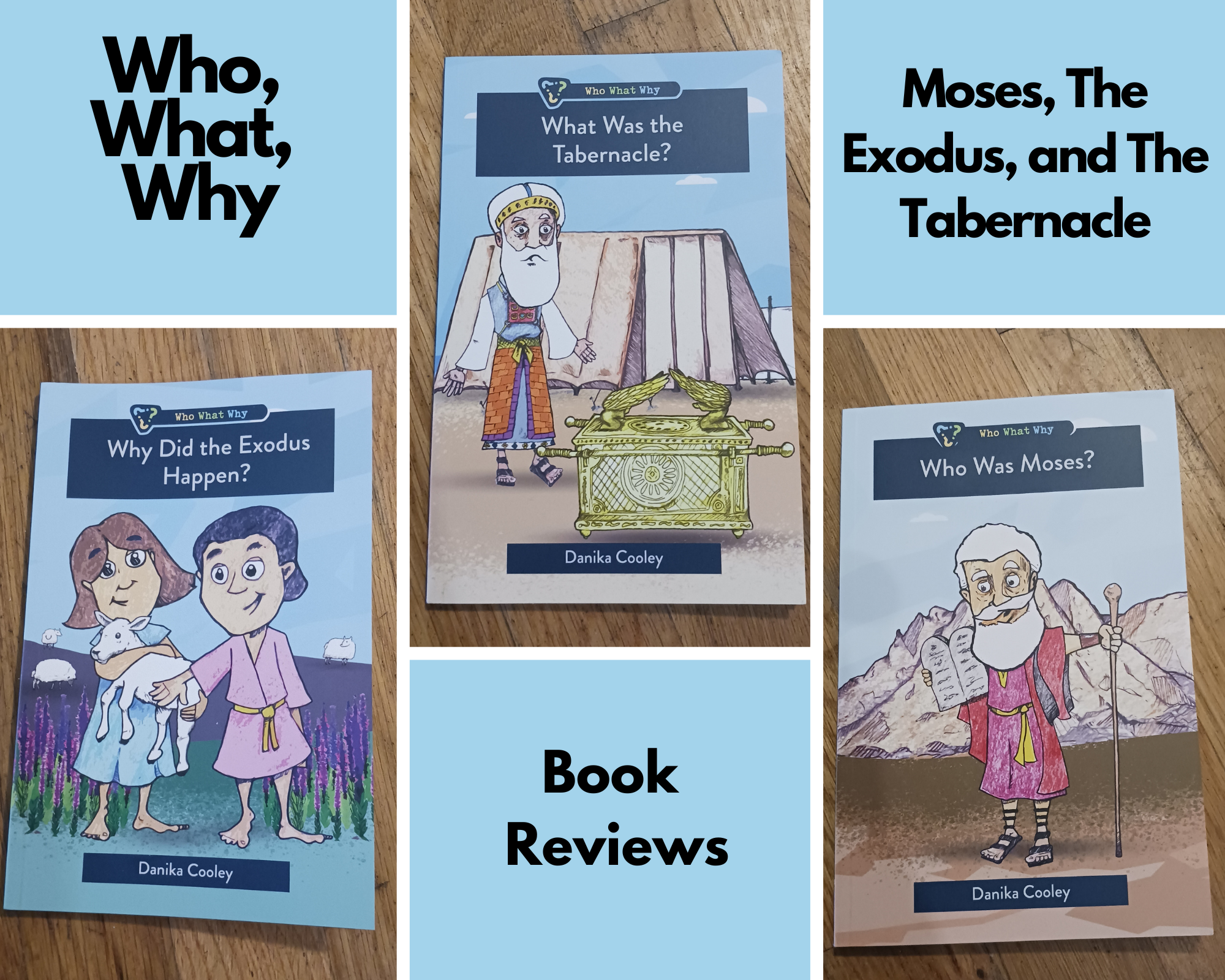
            Who What Why Moses, The Exodus, and The Tabernacle

            I am excited to share the latest three books in Danika Cooley’s Who, What, Why series with you! I always look forward to these books because they are engaging and full of great Biblical information to help us as I teach and disciple my children.

            The three newest books in the series were released this month. They cover Moses, the Exodus, and the Tabernacle. 

            *Some links are affiliate links, see disclosure below*

            Who What Why Series

            If you are unfamiliar with the series, it consists of brief chapter books geared toward students aged eight to eleven. The books are nonfiction but engaging and sometimes humorous. In addition to the target age group, younger students could enjoy them and learn from them through read-aloud. In addition, older students would find them to be very simple but still educational.

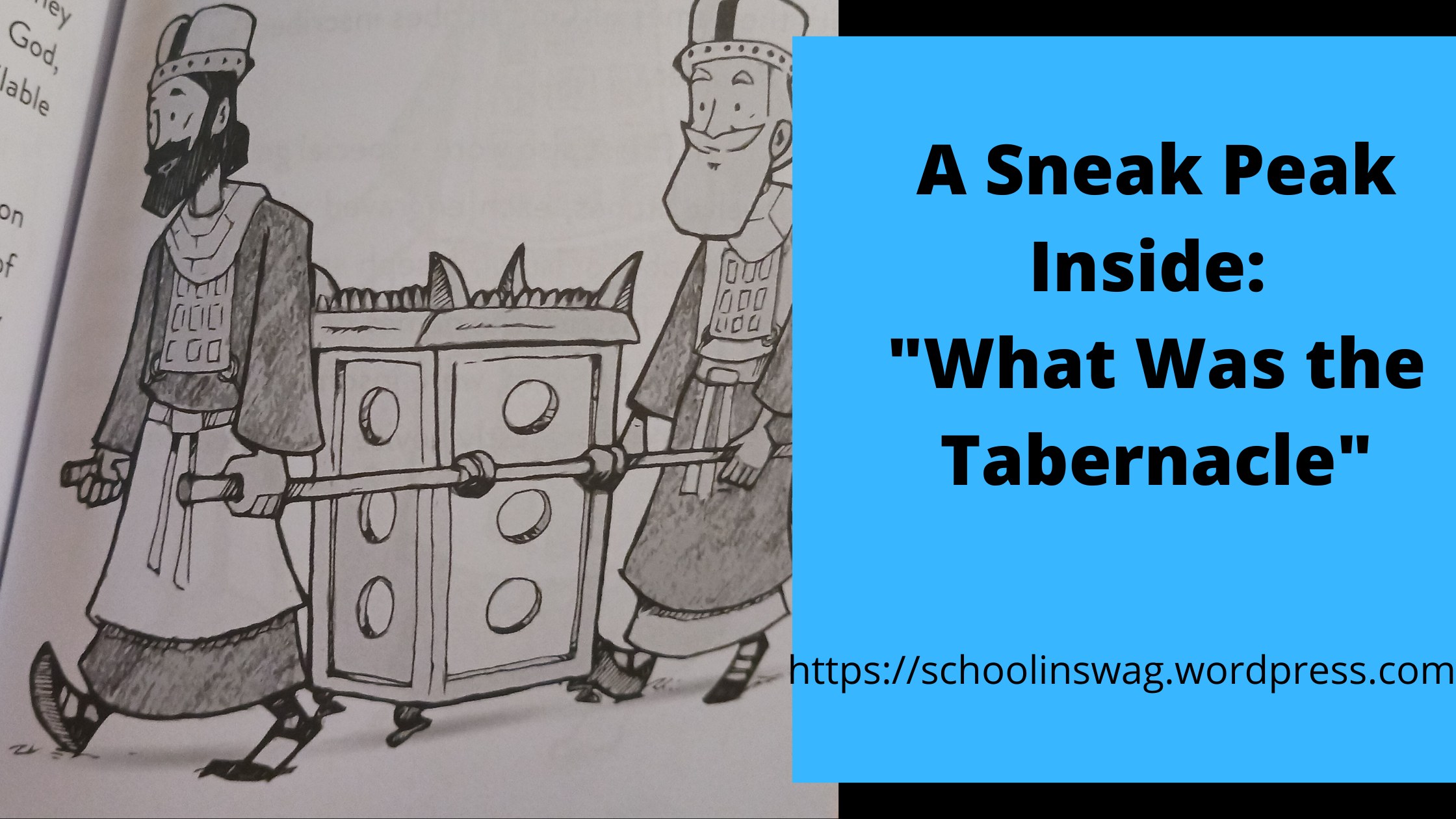
            Each book contains illustrations that help the reader understand the book (and are often quite humorous), a timeline of events, and a works cited section so that you know where she derived the historical information.

            Who Was Moses?

            This exciting and easy-to-read chapter book details Moses’s life and contributions. It also explains how the events that happened with Moses point to Jesus. An excellent timeline in the back helps you understand how Moses’s life fits with other Biblical and historical events.

            Did you know that while it should only have taken 11 days to walk from Mount Sinai to Kadesh, it took the Israelites over forty years? Did you know that Moses was 120 when God showed him the promised land?

            While the facts are all included in scripture, this book helps to really break things apart and allows the reader to really understand Moses and his life.

            Why Did the Exodus Happen?

            All scripture is useful for teaching, but some of its contents can be a little challenging for children to understand. This book helps students better understand the Exodus, why it happened, and the historical timeline.

            Many interesting facts help students (and parents) better understand the Exodus. For example, did you know that “The people of Israel left Egypt in the middle of the night with bowls of flatbread dough tied to their backs…There were six hundred thousand Israelite men walking out of Egypt. With their wives and children, the caravan probably numbered more than two million people.” While I have read about the Exodus multiple times, I had never really thought about just how many people were included.

            Throughout this book, while learning about the Exodus, the reader is also introduced to the various characteristics of God. For example, God is Faithful, God is Known to Us, God is Sovereign, and God is our Savior.

            It is a great resource to assist children in their study and understanding of the Bible.

            What was the Tabernacle?

            The Old Testament spends a great deal of time discussing the Tabernacle, both its physical characteristics and spiritual importance. This book helps students understand what the Tabernacle was and how that physical Tabernacle pointed to Jesus.

            This book describes the Tabernacle’s physical description, information on how long it took to make, the materials used, the craftsmanship involved, etc. However, it also takes time to discuss the different feasts and procedures involved in worshiping God through the Tabernacle.

            Then, it takes it a step further and discusses how things are different now because of Jesus and the New Covenant.  

            Conclusions

            The Who, What, Why series is a great addition to any home library. They are useful as read-alouds or independent reading. You can supplement your Bible study or a study of Ancient History with these books. They could also work as independent reading.

            These books are available to purchase at Thinking Kids Press (individually or save money and buy them as a bundle) or on Amazon.

            Which title most interests you? What other titles would you like to see added to the series?

            Resource Library and Affiliate Disclosure

            When you sign up for the Schoolin’ Swag free resource library, you will get a link and password to the library. We add new items to the library each month. You will also receive a monthly newsletter email to keep you up to date on what we have going on.

            Resource Library 

            This post may contain affiliate or referral links, including Amazon affiliate links. As always, I will never recommend a product that I don’t believe in, and you will never be charged more for purchasing through our links. It does help pay for the costs associated with the blog.

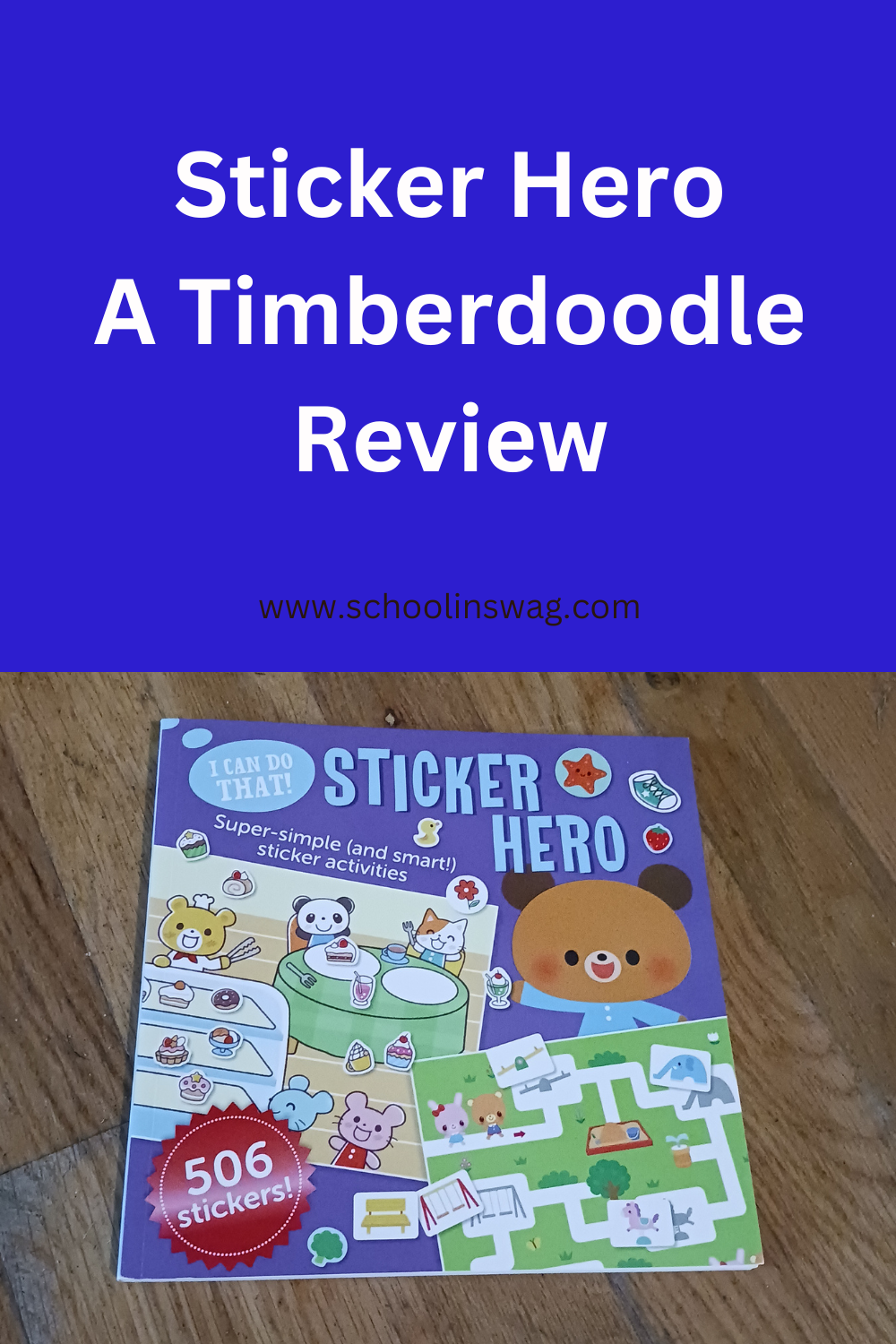
            Sticker Hero: A Timberdoodle Review

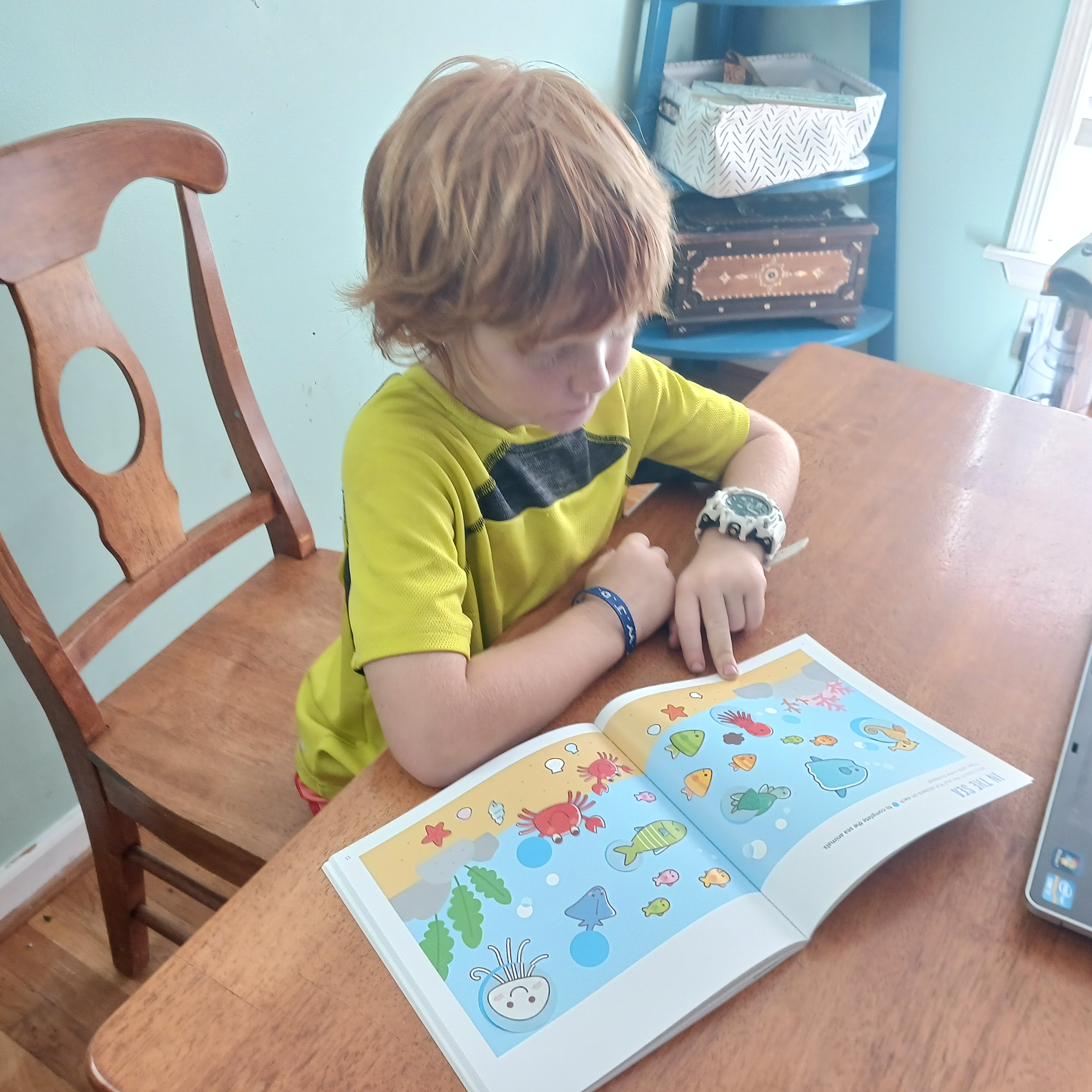
            Stickers are so much fun for children of all ages, whether just using random pretty stickers to decorate a paper or activities that use stickers.  Timberdoodle recently gave me the opportunity to review Sticker Hero, a fun sticker activity book.


            What is Sticker Hero?

            Designed for ages three and up, this activity book includes 506 stickers and 48 pages of sticker activities. The pages are bright, colorful, and made from thick paper to be more durable for little hands.


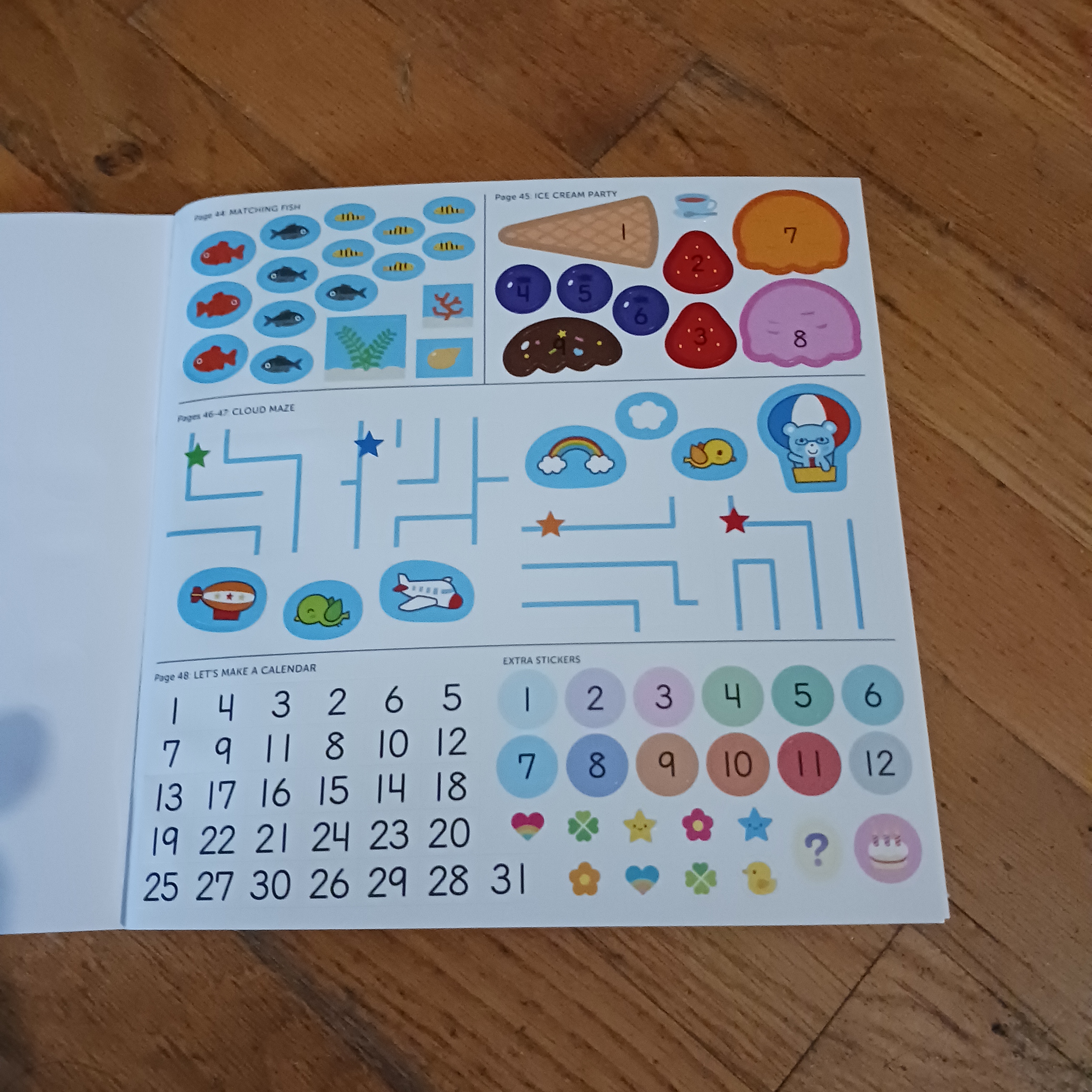
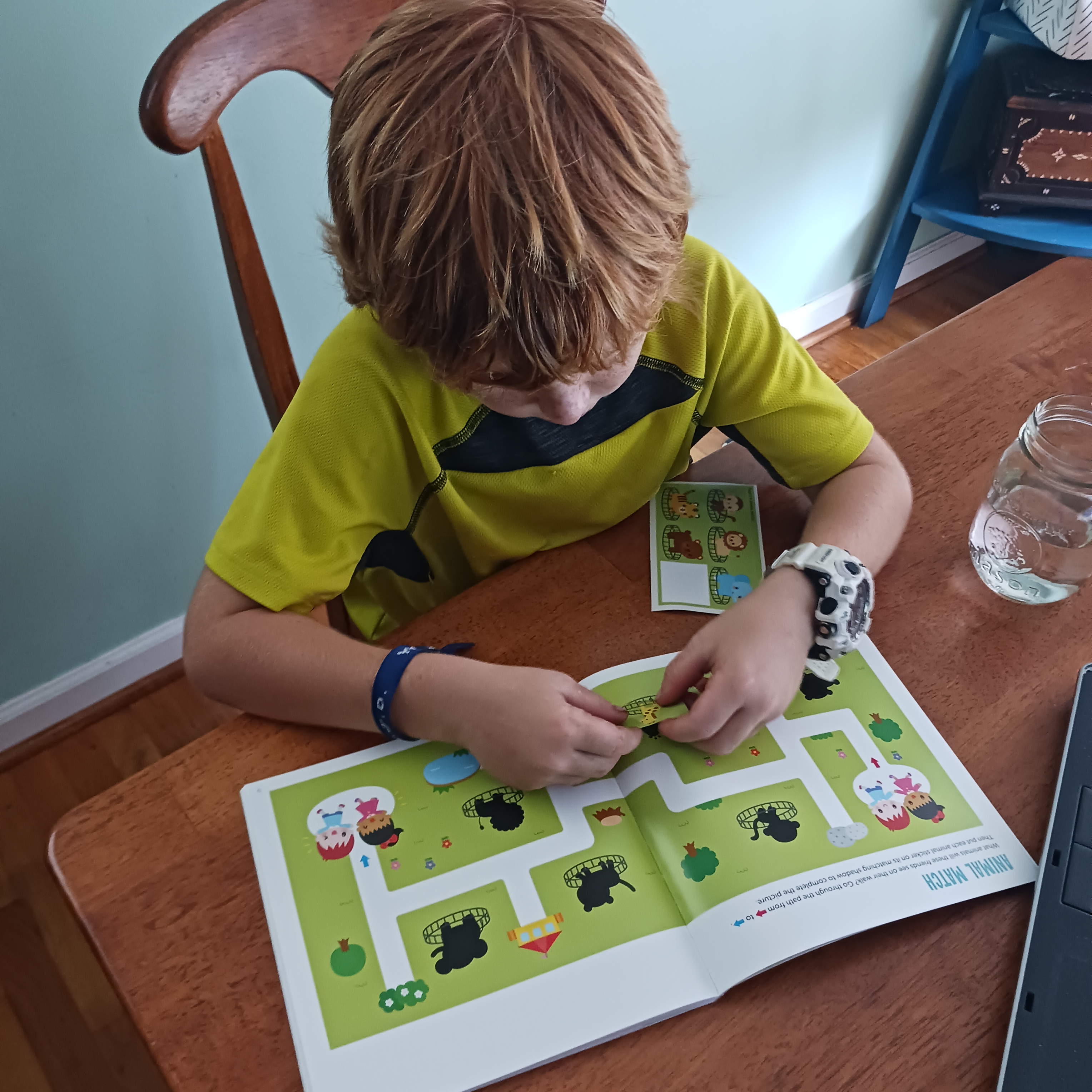
            The activities include matching, counting, decorating, mazes, and more. The stickers for each activity are located in the back of the book and conveniently separated by activity. This allows you to either show the child the correct stickers or even take the correct ones from the back of the book to simplify the activity for younger children.


            Working with stickers naturally enhances fine motor skills, but these activities also work on counting, sorting, matching, and observation skills. There are even activities to work on the alphabet.


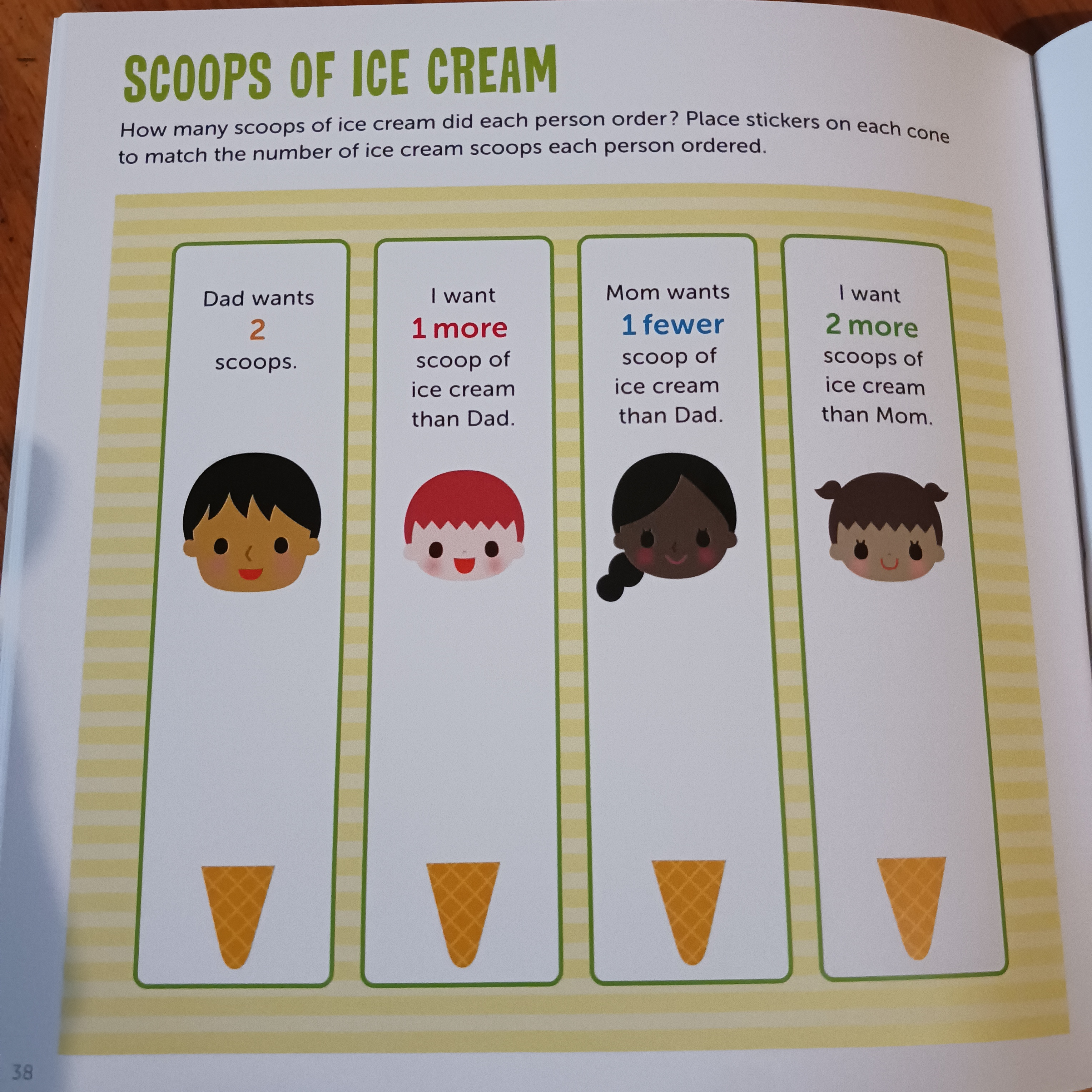
            For example, the first activity has a bunch of colorful socks hanging on a clothesline, and the child has to find the matching sock stickers to put beside the one already on the page.  Another activity has them filling in the numbers on a clock, telephone, and remote. There is even a page with word problems, where a child has to work with the concepts of less than and more than to put on ice cream scoops.


            Who Should Use Sticker Hero?


            Children, especially preschoolers, need lots and lots of physical activity and movement. However, sometimes, you need them to sit quietly for a short time. This might be during learning time at home, sitting through a meeting, or waiting for an appointment. This book is small and convenient for taking on the go, but it is also great for your time at home.


            The activities include a variety of levels, and depending on the child, they could be used from around age three to six (or older if a child has a delay or is still working on those skills).


            The book could be just a fun quiet activity or it would be easy to incorporate into a homeschool day.

            Where Can I Find Sticker Hero?

            My son loved it and kept asking to do more pages. While some of them were very basic for him, he enjoyed each activity that he did.
            You can see more and purchase your copy over at Timberdoodle. It is available independently or as a part of their Pre-K kit.

            Tips for Using Free Homeschool Summits and Conferences

            Each fall and spring, there is a small window of time when my email and social media become inundated with various free homeschooling conferences and summits. They all sound wonderful, with great topics, engaging speakers, and exciting ideas. However, I wondered how I would find time to actually teach my children if I did all of those workshops.


            If you feel the same way, you might be tempted to click delete on those emails, scroll past the social media posts, and ignore all the conferences. While I totally understand that temptation, I think there is a third option. Instead of spending all your time in conferences or ignoring all the summits, you can choose the parts of the summits that will be most beneficial for you, but not try to do it all.


            Choose One or Two Applicable Sessions Each Day

            Generally, my favorite way to enjoy one of these events is to pick one (or maybe two) session from each day that I think would be most beneficial to me. Then, I work out a time each day to watch those sessions. This lets me benefit from the workshops without having it take all day.

            For my schedule, that time is often just after lunch. The baby is napping, we have completed school for the day, and I can send the big kids outside to play while I listen and learn.


            That time of day is often when I would be getting other household tasks or computer work done, but the encouragement and inspiration that I gain from the sessions make it time well spent. Other good options are taking a walk and listening, listening while cooking dinner or folding laundry has also worked for me in the past.

            When I remember that homeschooling my children is a calling and an important job, it is easy to see that it is not wasted time but time used to gain valuable knowledge and inspiration.


            Have a Teacher Workday

            Sometimes, the best way to take advantage of a homeschool summit is to pick the day that the sessions you are most interested in and call it a teacher workday. Give your students the day off, make yourself a cup of hot tea or coffee and your favorite chocolate, grab a notebook, and settle in.

            You can watch the sessions, take notes, and spend some time planning and implementing the things you learn in the sessions. In addition to some great ideas, a day like this can provide refreshment and help you be ready to jump back into the work of homeschooling.


            Buy Yourself Some Extra Time


            If you are going through the conference and really enjoying your sessions but feel like you want to watch them all, most of these summits and conferences offer you the opportunity to purchase the sessions for a small fee. Once you buy the conference or summit, you will have access for a year or a lifetime (depending on the conference). Then, if you need encouragement or help or have a little extra time, you can watch a session.

            Upcoming Conferences and Summits


            These are some of the conferences and summits that are coming up. Take a look at some of the wonderful speakers and see how you can use these to encourage you in your homeschooling journey.

            These are some of the conferences and summits that are coming up. Take a look at some of the wonderful speakers and see how you can use these to encourage you in your homeschooling journey.

            Such a great opportunity for encouragement and resources.

            Resource Library and Affiliate Disclosure

            When you sign up for the Schoolin’ Swag free resource library, you will get a link and password to the library; we are adding to the library each month with new items. You will also get a bi-weekly newsletter email to keep you up to date on what we have going on.

            Resource Library 

            This post may contain affiliate or referral links, including Amazon affiliate links. As always, I will never recommend a product that I don’t believe in, and you will never be charged more for purchasing through our links. It does help pay for the costs associated with the blog.

            New subscribers can get 3 months of World Watch for FREE! This is a great deal.
            30 Days of FREE Audiobooks and Podcasts with Audible!

            Gnome Sweet Gnome a Timberdoodle Review

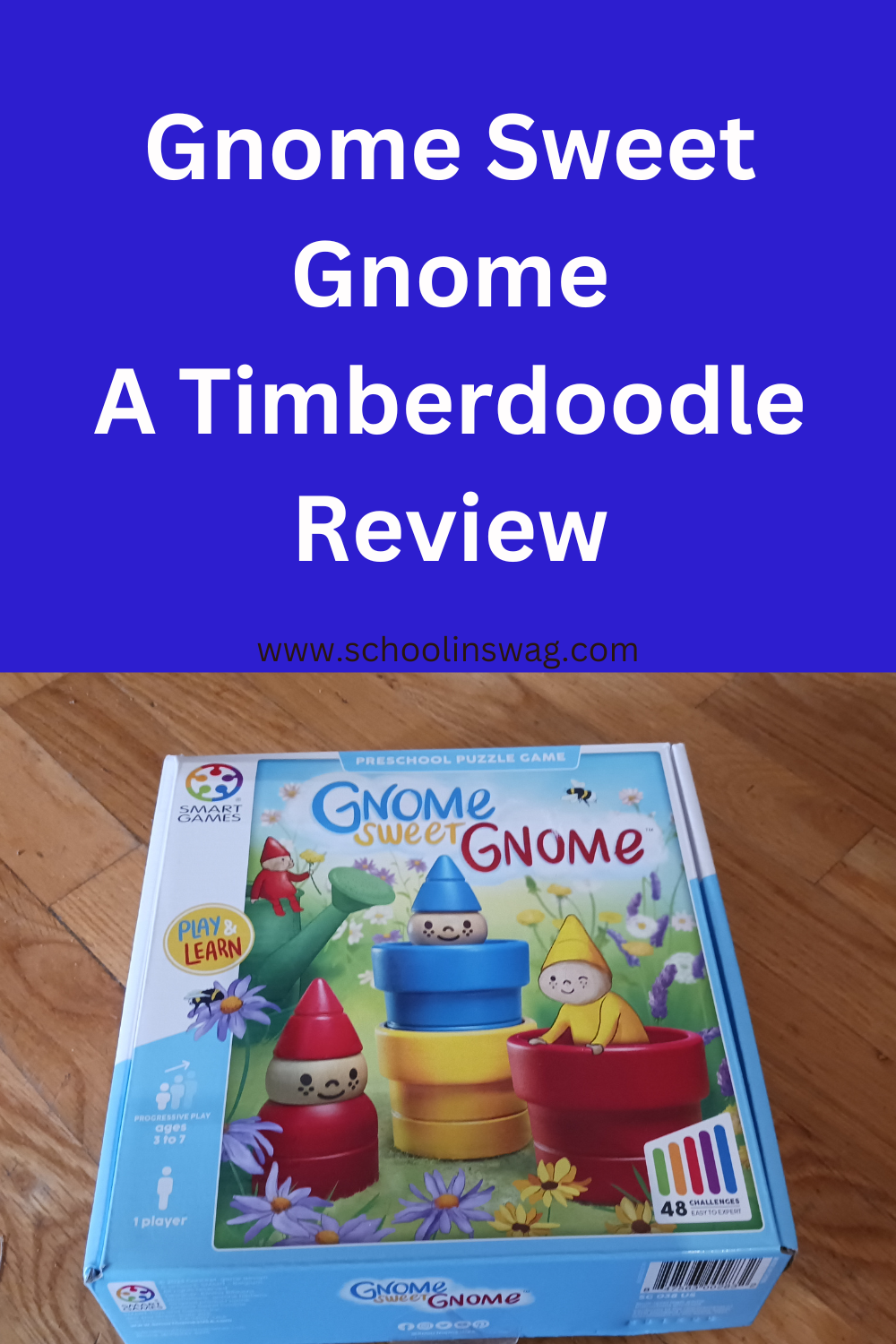
            Children learn so much through play, and I love it when I find tools that can help guide that learning while still being fun and enjoyable for the child. I recently had the opportunity to review the game Gnome Sweet Gnome from Timberdoodle.

            Gnome Sweet Gnome is a game that children can play independently. It has several different skill levels, making it great for developing skills. It works on fine motor skills, critical thinking, comparing sizes, and color recognition and is great for preschool through kindergarten or first grade.

            What is Gnome Sweet Gnome?

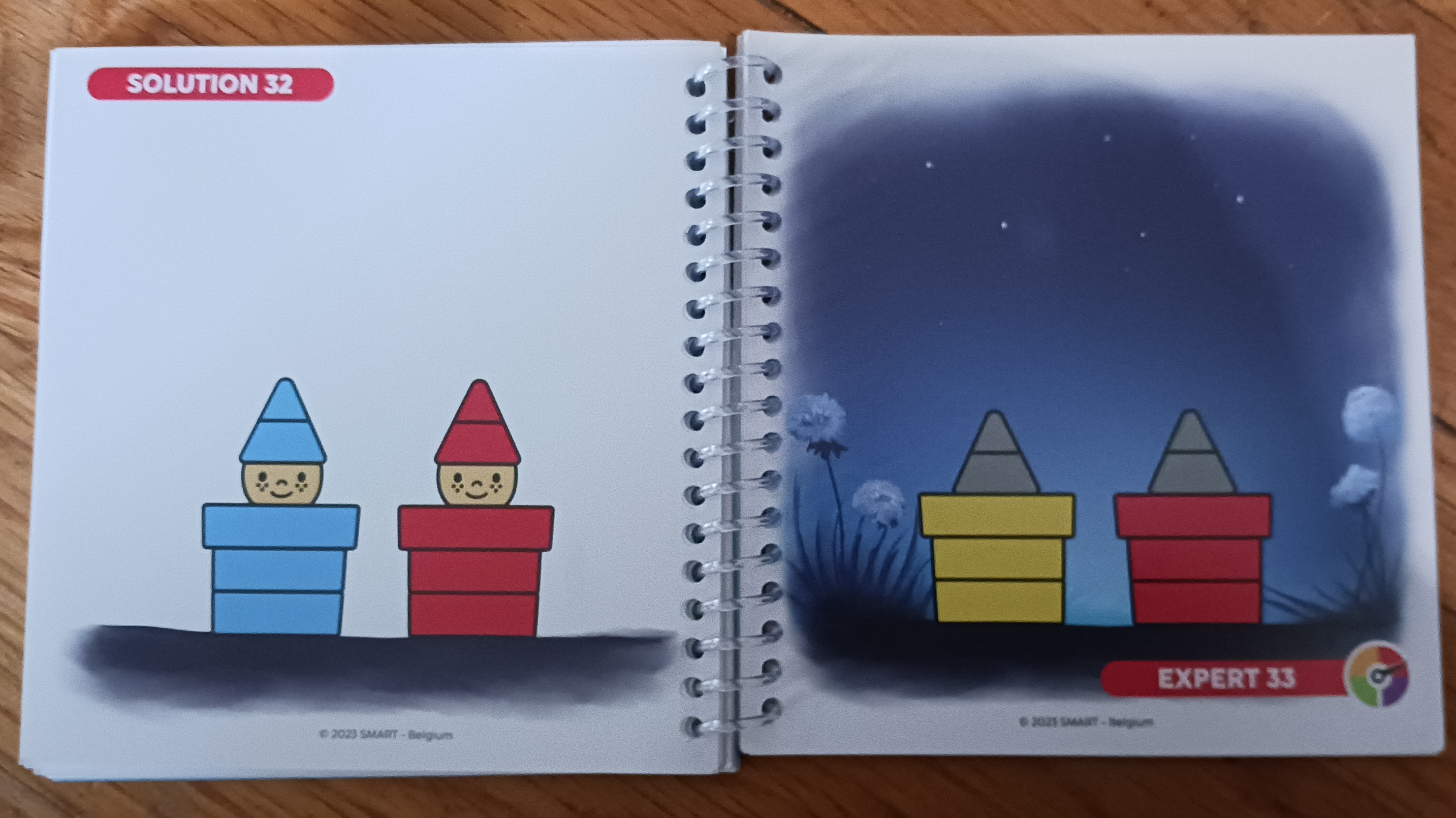
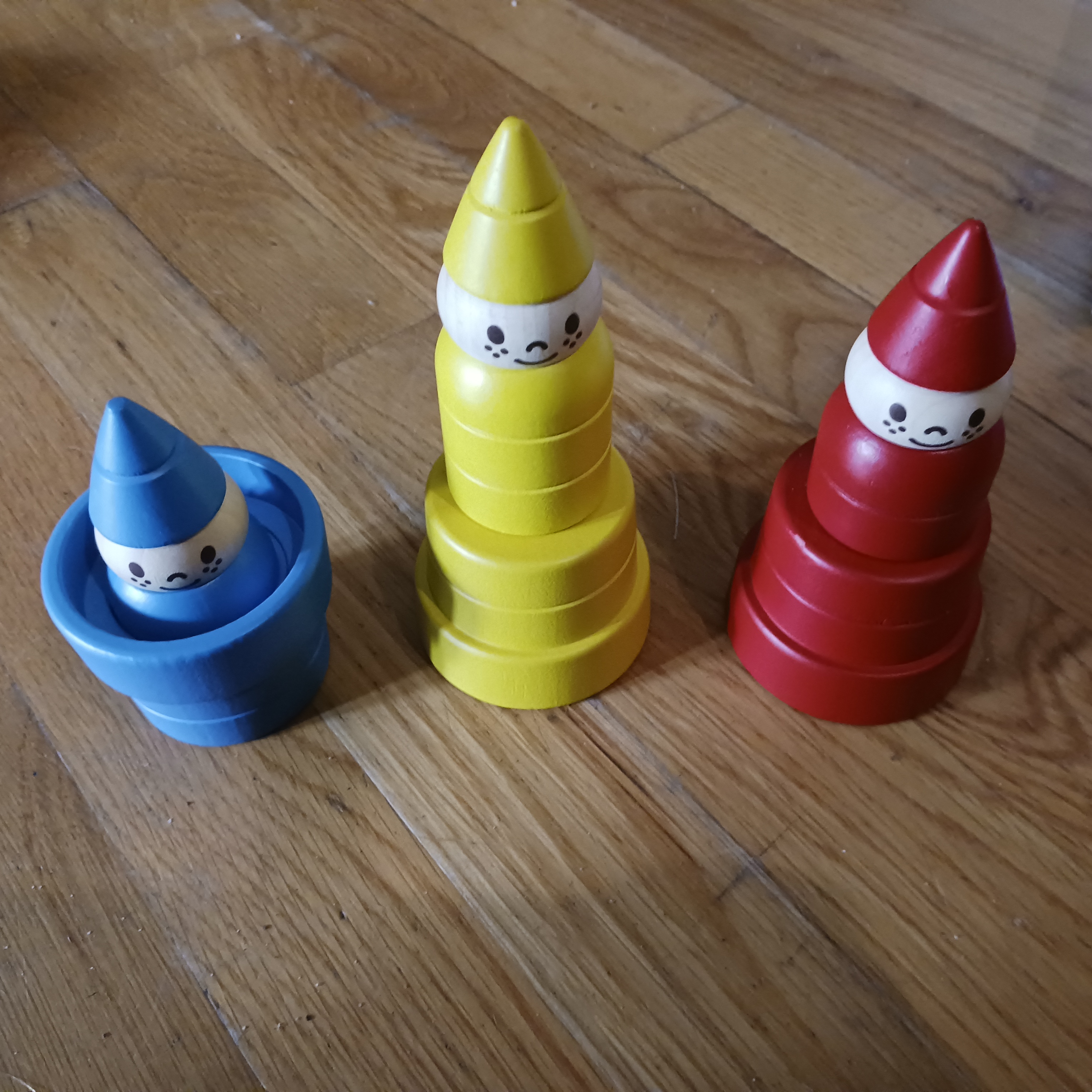
            The game includes three different gnomes, each gnome is a different size and color. The Gnomes each come with a matching flower pot, each with a different depth. The different sizes and depths mean that when stacked in different combinations, you can see different amounts of the gnome. For example, if you put the smallest gnome in the deepest flower pot, you can only see the top of his hat.

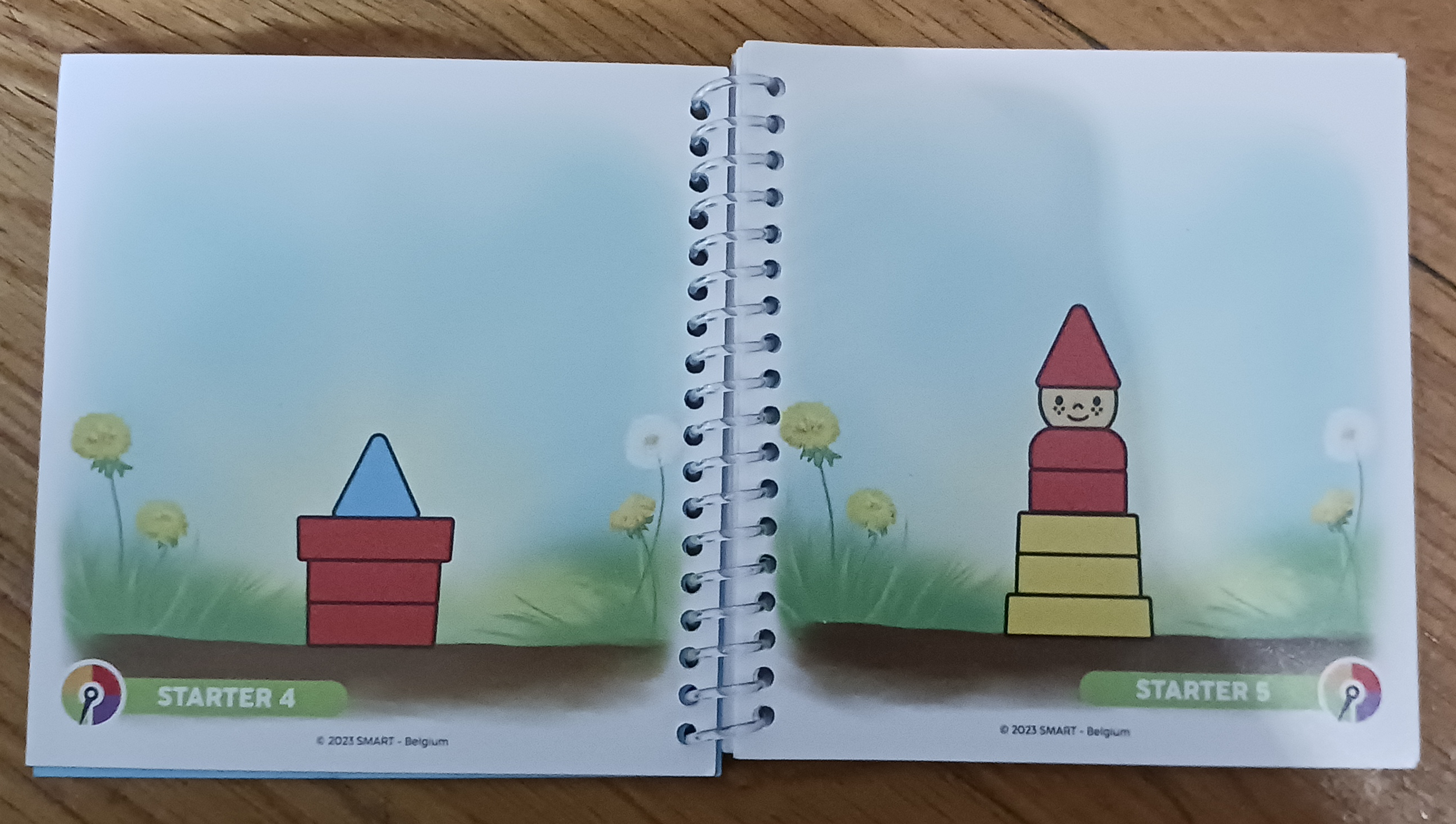
            There are forty-eight challenges included with the game (each challenge is a different picture that the child needs to recreate). The challenges vary from easy to expert levels. I loved that the challenges were all enclosed in a spiral-bound book. That means no loose cards that are easy to misplace.

            How Do We Play Gnome Sweet Gnome?

            The beginning challenges use only a few pieces, and the challenge card shows the color for all of the pieces used. Then, they get a little more challenging by using more pieces but still showing all of the colors. On the final levels of difficulty, some or all of the colors are grayed. Other than the easiest level, all the challenges have a solution picture on the back of the page so the child can check their work.

            This game can be completed independently, or a parent could work with the child to check their work and help them problem-solve. Depending on their attention span and ability level, children can work through anywhere from one challenge to the whole book. Younger children can start with the easier levels, and as they get more practice and confidence, they can move up to the more challenging options.

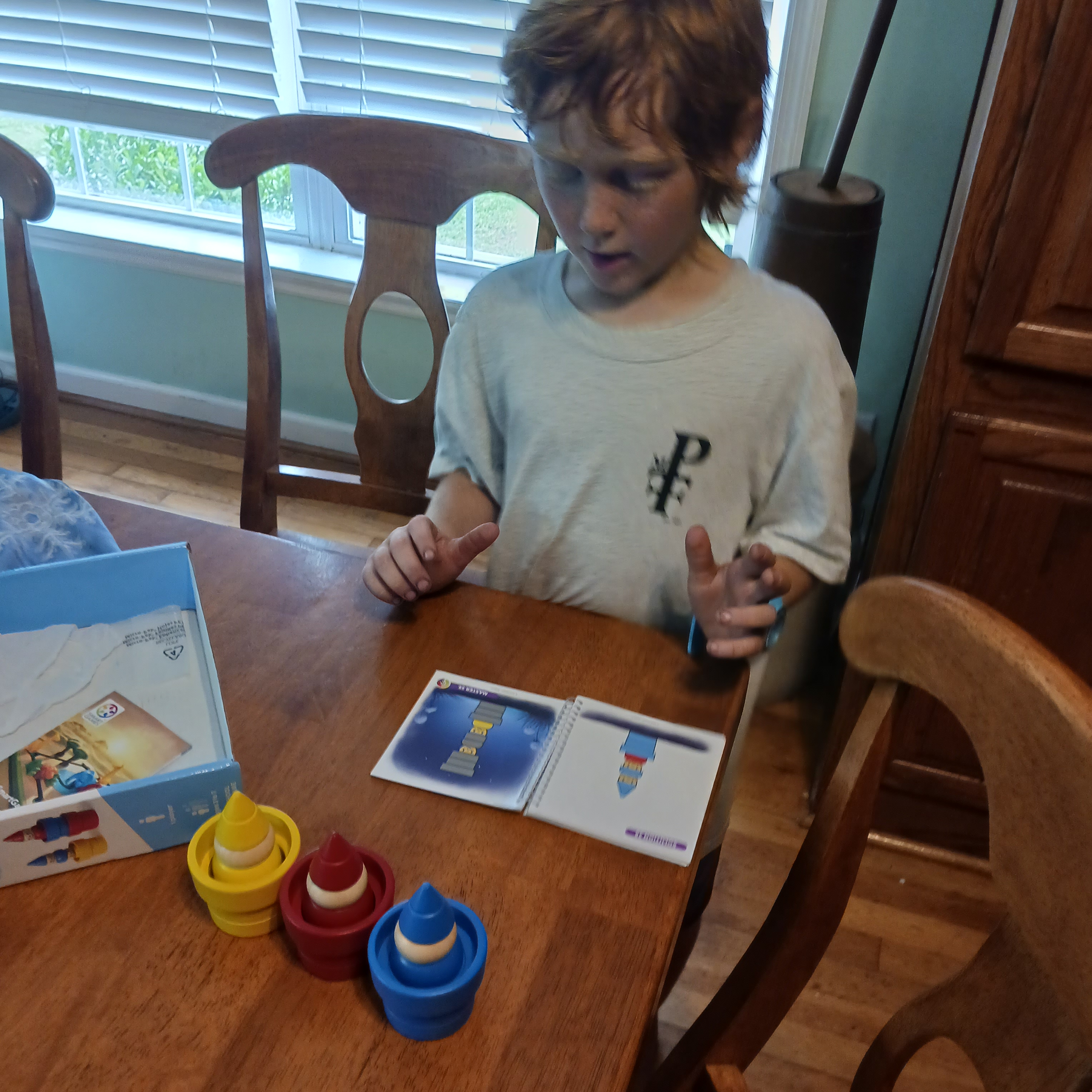
            Overall, we really enjoyed this game. My six-year-old wanted to check it out and went through all the levels in one sitting. Even though he had completed them all, he still wanted to play again on other occasions, so it was not a one-and-done activity.

            He loves playing Gnome Sweet Gnome!

            This is also a great game to prepare students for the more challenging IQ Gears that we reviewed a few weeks ago for Timberdoodle. They work on similar skills at different levels.

            Where Do I Find Gnome Sweet Gnome?

            I highly recommend this game if you have a young child and want to work on fine motor skills (stacking), colors, or problem-solving. You can find out more and purchase Gnome Sweet Gnome at Timberdoodle. It is also included in their preschool kit.

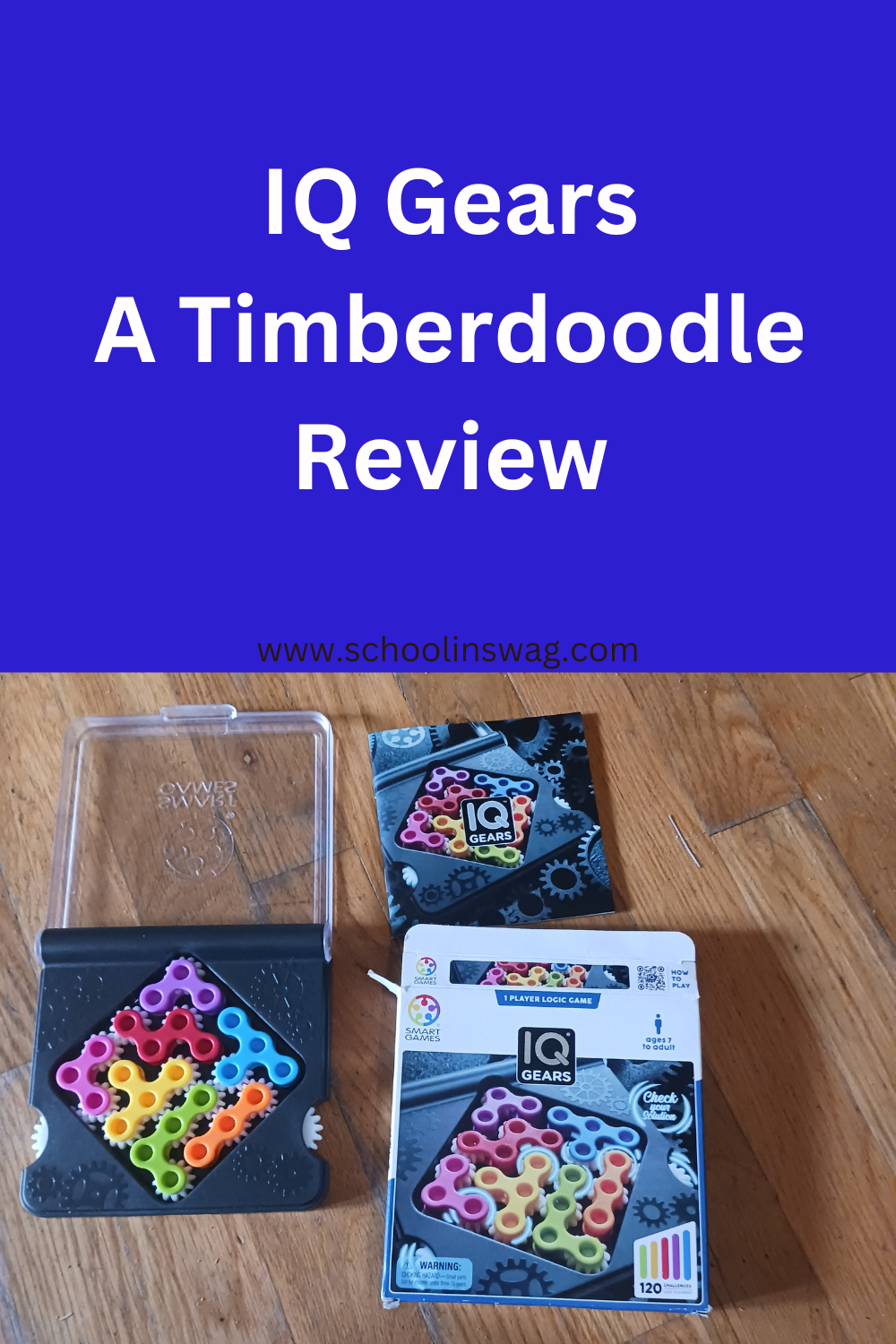
            IQ Gears a Timberdoodle Review

            I love getting my hands on fun and educational games, little ways my children can keep their minds growing while they play. Thus, I was excited to get the opportunity to review Smart Games’ IQ Gears from Timberdoodle.  We had reviewed another game, IQ 6 Pro, from them last year, so I had high expectations.

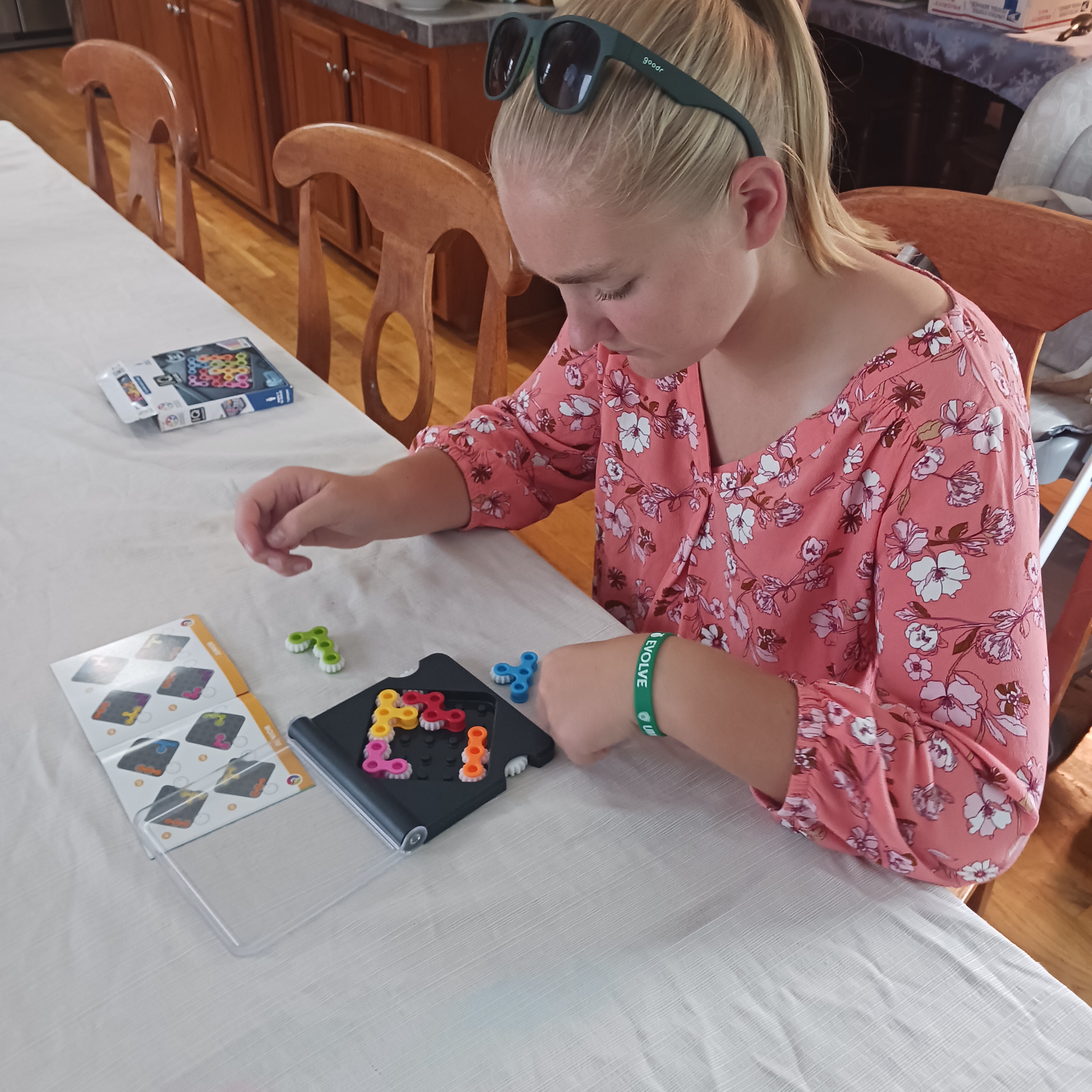
            The IQ Gears was similar to the IQ 6 Pro but with added fun and challenge. It is a puzzle game that can be played independently or together, with players challenging each other to different levels.

            What is IQ Gears?

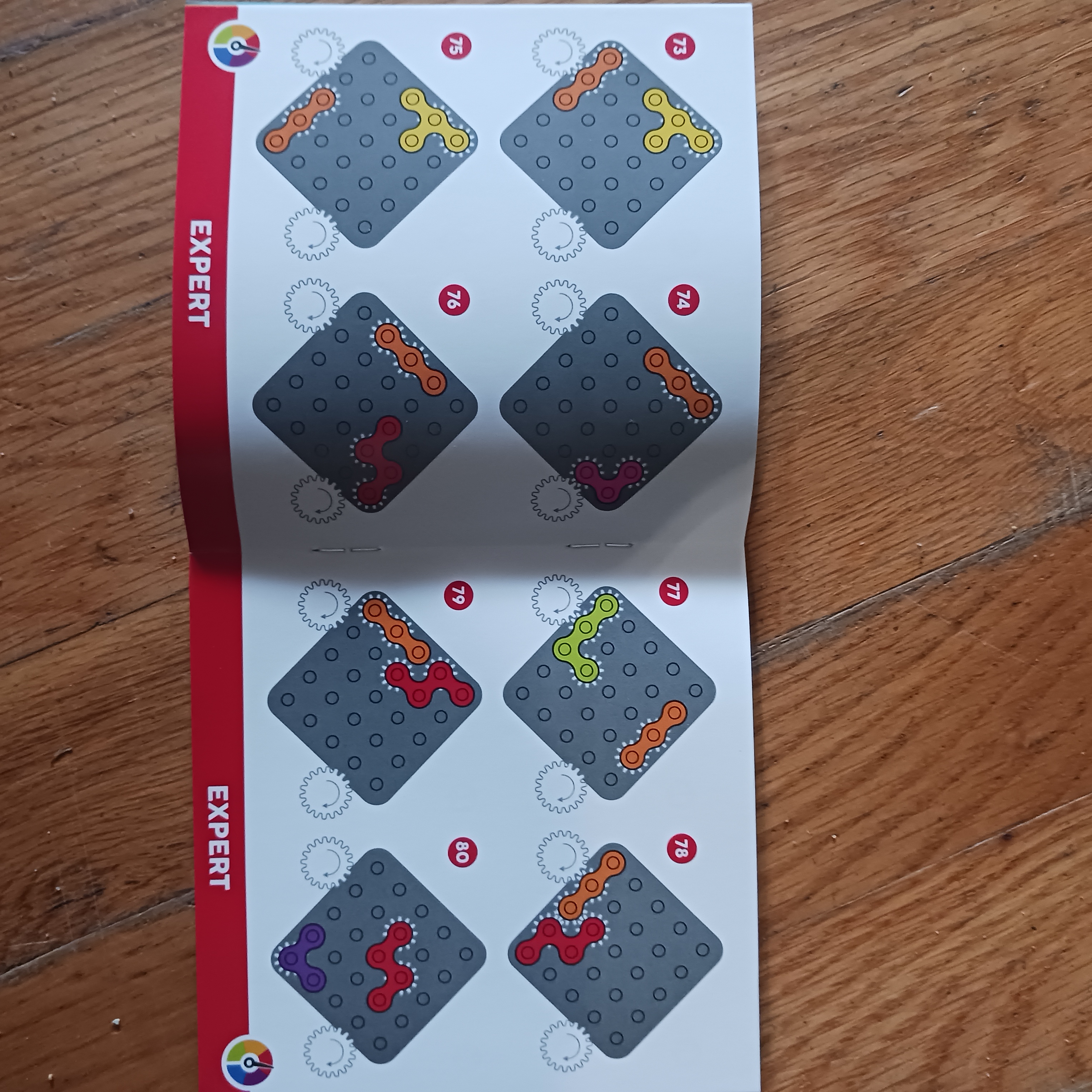
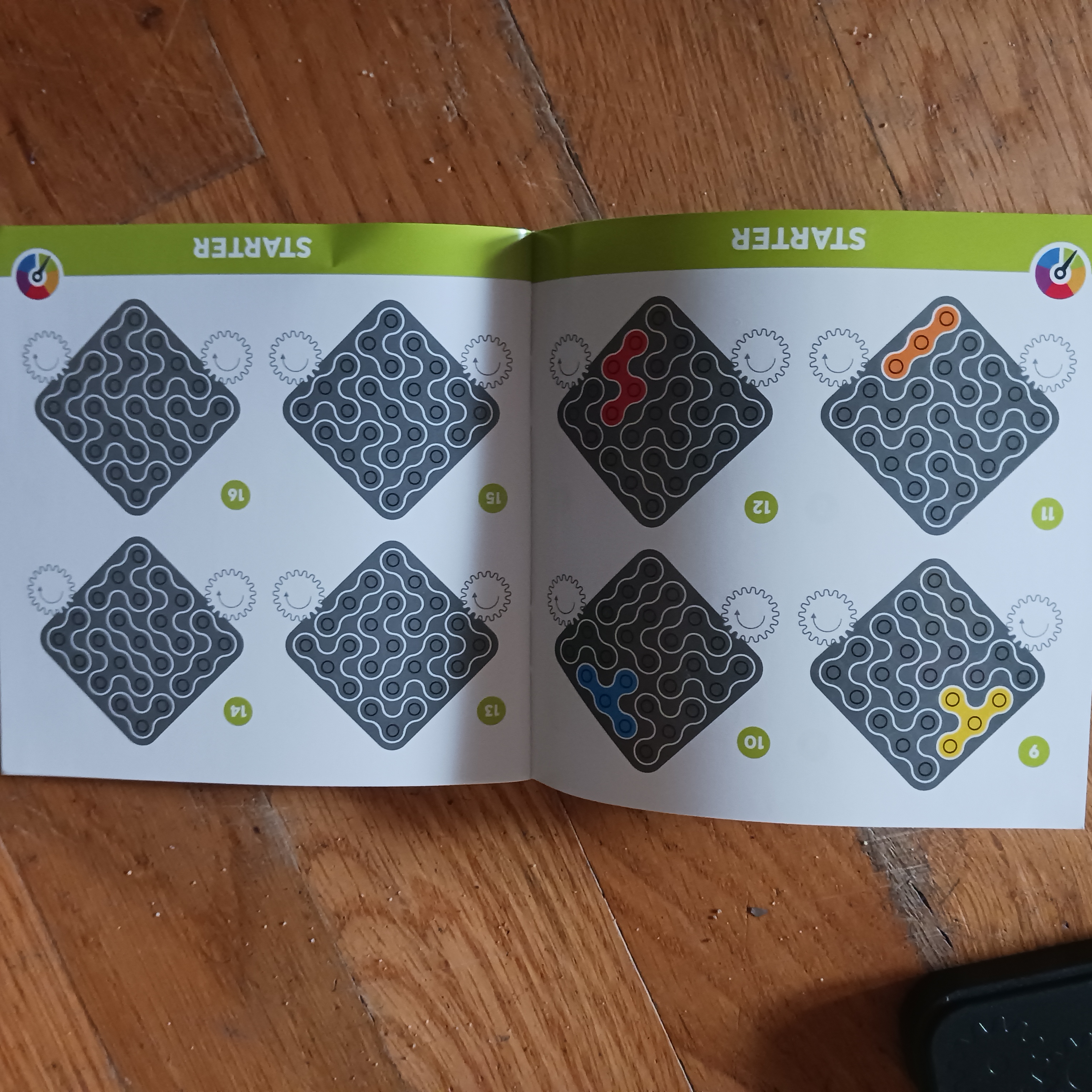
            The game consists of a playing board and seven puzzle pieces. Seven pieces may not seem like a lot, but there are so many different combinations and challenge levels that it is great for a variety of ages. The included manual has over one hundred challenges at five different levels, ranging from starter to wizard.

            Each of the seven pieces is a different color and shape. They also each have small gears on different parts of the shape. On the outside of the playing board are two larger gears. The goal is to get the puzzle pieces to fit back on the playing board in a way that connects the two outside gears. So you should be able to turn one outside gear and cause the other outside gear to turn.

            There are many possible combinations to make this happen, but each challenge has specifics that have to be in place. For example, it might show you the position of several of the pieces, and you have to figure out where the other pieces will fit. Some of the challenges show positions but with the pieces whited out so that you have to figure out which pieces they are using and get them all in the right places. 

            The easiest starter puzzles show the shapes of all the pieces on the board but only have a few of them colored in. All of these levels make it easy for people of different ages to enjoy the puzzle together.

            How To Use This Game

            As a homeschool mom, I loved that this game was working on critical thinking skills and was QUIET. It was very small and self-contained, so it worked well as a game for car rides. A child who needs to keep their hands occupied during read-aloud time could also use it.

             It doesn’t have to be for school; it also makes a delightful family game to play in the evenings. It challenges teenagers and can be a great way to engage them in family time. My daughter was surprised at how challenging it was at first. She assumed that with only sevel pieces it would be too easy.

            We enjoyed the game and were glad to add it to our collection. I encourage you to find out more about IQ Gears at Timberdoodle, where it can be purchased independently or as part of the 10th-grade kit.