I love books and always appreciate the opportunity to review a new children’s book. This month we have been checking out not just one but two new children’s books from Buck Academy. We spent time reading Baby BUCK, How Much Am I… and BUCK Making Cents together with my three-year-old and seven-year-old sons. These books teach children about American currency, specifically coins, and the dollar bill.
Buck and Baby Buck Books
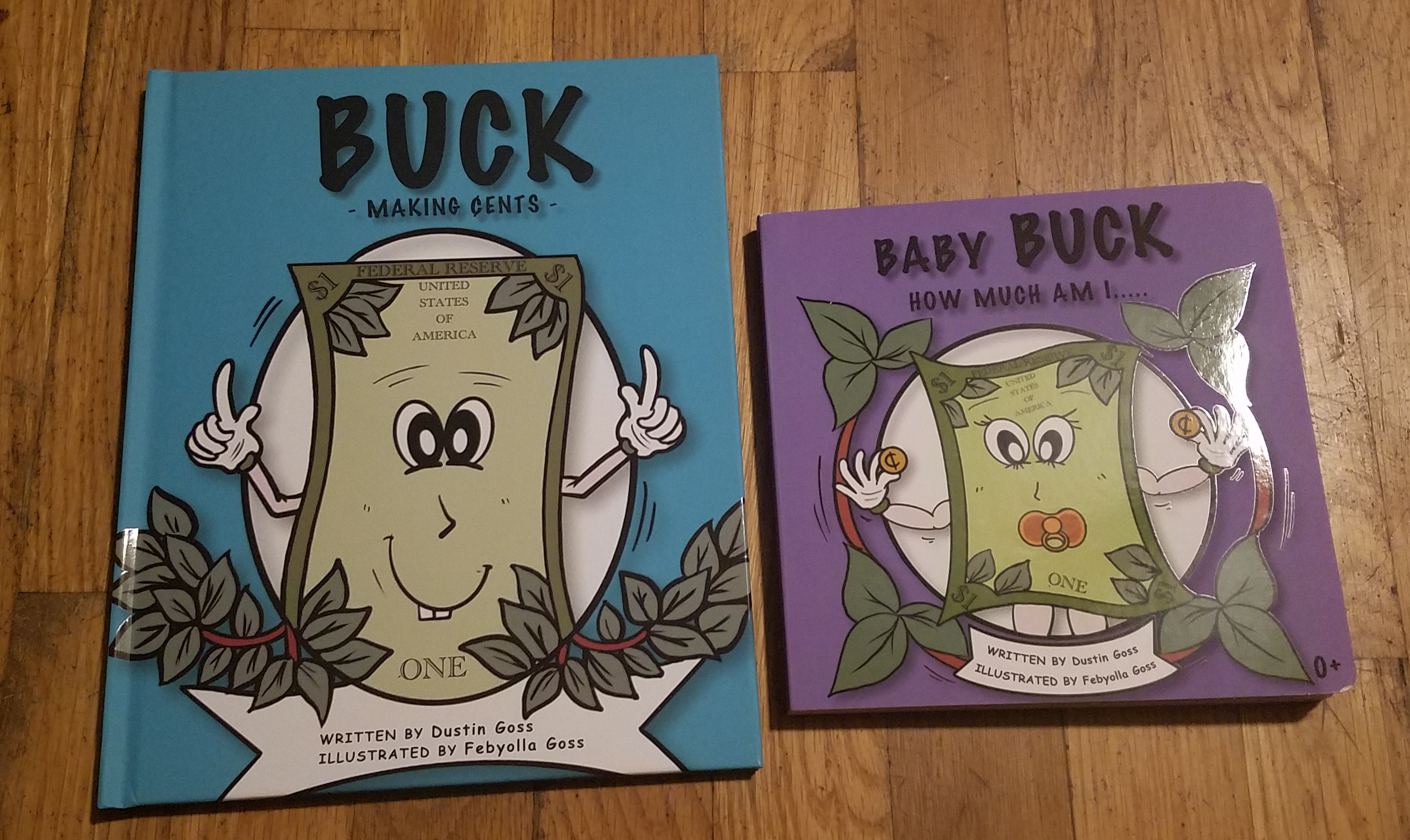
Baby BUCK, How Much Am I…
Baby BUCK, How Much Am I… is a toddler board book. Written by Dustin Goss and illustrated by Febyalla Goss. It is a cute book with a purple cover and adorable illustrations. This book teaches young children about the value of a penny, nickel, dime, and quarter. It also talks about a dollar bill.
The sturdy board book pages will hold up better to young hands than a standard paperback. And the smaller square shape makes it easy for small hands to hold and flip the pages.
Inside the book, there are excellent shiny illustrations of the various coins and flaps to lift and see the values. This makes it very interactive and engaging for young learners. The short eleven pages are just enough to give young readers a fun and straightforward introduction to currency. It would be interesting for those ages 2-6 as a read-aloud.
BUCK Making Cents
BUCK Making Cents is a picture book also written by Dustin Goss and illustrated by Febyalla Goss. This book is geared towards elementary-age children and is a hardback picture book. With twenty-nine pages, this book goes into more details about coins.
In addition to teaching the values of the coins, it discusses the front and back of each coin, how many of each coin it takes to make a dollar, has questions at the end to see what students have learned, and includes other fun facts. The authors recommend students have one of each coin and a dollar bill to interact with as they read the book. I recommend this for elementary students learning about money, but even my three-year-old enjoyed listening to me read it aloud.
Conclusions
Overall, these were cute books that are great for introducing students to American currency. They have adorable illustrations with very realistic coins. They are great for younger children through the mid-elementary level. Make sure to have real coins available for the children to inspect to help round out the experience. The BUCK Making Cents book would also be good for older students who are new to American currency.
Be sure to click on the graphic below to see how other Review Crew families used these books from Buck Academy.
Disclosure: I received this complimentary product through the Homeschool Review Crew.
Over the last month, we have been reviewing literature study guides from Progeny Press. My 2nd grader worked with me to do the Wagon Wheels Study Guide, and my 8th grader did Cricket in Times Square Study Guide. These were digital guides that could be printed or completed on the computer. They require you to have the novel, but most of them are available at your local library, or they can be ordered directly from Progeny Press.
Progeny Press Cricket in Times Square Study Guide
Cricket in Times Square Study Guide
Progeny Press recommends the Cricket in Times Square Study Guide for upper elementary students, but since my middle school daughter had never read the book, we decided to give it a try.
This guide broke the book down into small sections of just a few chapters. Each week my daughter would read the assigned chapters and work on that section in the guide. The guide was provided as an editable PDF so she could fill in the answers on her computer and save her work. We liked that format and appreciated that we didn’t have to manage lots of papers.
Each section had a vocabulary component, comprehension questions, and a going deeper section. My daughter felt like the vocabulary section helped her understand the book. We both appreciated that the going deeper areas often brought in scripture. We liked the Christian worldview of the study. There was also background information and optional writing assignments. Within the questions, there was information about various literary terms such as foreshadowing.
Overall, my daughter said she would love to do another similar study. She liked that she read the book in shorter sections and felt like she would enjoy other novels done in the same style. She spent about two hours each week completing the reading and questions.
Wagon Wheels Study Guide
We started with my second grader by checking out the Wagon Wheels book from the library and reading it together. Then we went back and began the Wagon Wheels Study Guide.
This guide had vocabulary, comprehension questions, and going deeper questions as well. Since my son needs more help with reading and writing, I asked him the questions orally and typed in his answers. I thought the questions were very appropriate for the age level. Some of them were very direct from the story, and some asked him to think a bit more.
Each section took us about 30-45 minutes. This worked well for us because we were using this in conjunction with his phonics program and so only wanted to spend a few minutes a day working through the study. A student who was reading and writing on a second-grade level could have completed the study mostly independently. If he were completing it independently, it might have taken a bit longer.
Overall Thoughts and Conclusions
When my older son had tried literature guides from Progeny Press, he really did not enjoy them (though he learned a lot.). However, my daughter and younger son did well with the Progeny Press study guides. We found them to be interesting, thorough, and easy to use. I liked that my daughter could complete hers independently, and I could just go behind her and check her work. Since my son is a struggling reader but much stronger at comprehension, we completed his together. It was a great way to allow him to focus on understanding the book without the hindrance of his phonics struggles.
Different Review Crew Members tried out additional studies for various ages, so I encourage you to click on the graphic below and see how they used them in their families.
*Some links are affiliate links, see below for disclosure*
It feels like just yesterday we were getting excited about October. Celebrating fall, pumpkins, and hot apple cider. Suddenly, the end of October is here, and November begins on Monday. Time seems to always be moving quickly, and this time of the year makes that very apparent with various holidays and obligations.
As we move into November, I want to take a few minutes to talk about a holiday that is too often overlooked: Veterans Day. Every year, our country honors all of the brave men and women who fought for our country on November 11th.
Veterans Day Parade 2019
Service Projects and Community Events
Many communities host events in honor of Veterans Day. There are parades, ceremonies, dinners, and other celebrations to honor those who served. Getting out into the community for these events is a great way to help children understand who we are celebrating and honor those in your community. Helping with those events can also be a great way to serve those veterans. For example, you might help set up for a ceremony or cook for dinner. Our family has participated in Veterans Day parades in the past.
In addition to those community events, you can find ways to serve veterans in your church, community, or family. You could help host a dinner at your church for those in the congregation who are veterans. You might have the children bake a special treat to deliver to Veterans, send cards to those who served or even do artwork to thank them for their service.
Books and Movies to Celebrate Veterans Day
Books and movies can be a great way to help children understand the jobs and sacrifices of our veterans. They give us a chance to view things through a different lens and gain insight into events that may seem difficult to understand. However, there are many great examples. Of course, our favorite book is Heroes Next Door: Hornet 24, which gives a wonderful example of a Vietnam veteran.
We have to be careful that language or depiction of violence in some movies and books are not too much for our children. Some excellent documentaries are too graphic for younger viewers.
H is for Honor (an alphabet book and free to read with kindle unlimited)
Sargeant York (Movie, Great for older children/teens)
Art and Music Ideas for Veteran’s Day
You can incorporate patriotic art into your Veterans Day celebrations, whether just for the experience or even to give as a gift to say thank you to a veteran. You can check out my guest post, The Art of Patriotism, at You Are An Artist for more specific art ideas for Veterans Day and other patriotic holidays.
Veterans Day Homeschool Art Project
There are many patriotic songs that you can study and enjoy in celebration of Veterans Day.We love both patriotic hymns and music by John Phillips Sousa.
I want to take a minute to thank all those veterans or the family of veterans who are reading. For those who fought in Vietnam, we say Welcome Home! Our family appreciates your sacrifice and bravery.
Field Trip to a Local Military Museum
If you want more ideas, check out your local history sites for ways to learn about the wars our country has fought and the veterans of those wars. You can also find more ideas in this Flag Day Resources post.
No matter how you choose to celebrate Veterans Day this year, I hope you take the time to teach your children about the importance of the day and say thank you to the veterans in your life.
Resource Library and Affiliate Disclosure
When you sign up for the Schoolin’ Swag free resource library you will get a link and password to the library, we are adding to the library each month with new items. You will also get a bi-weekly newsletter email to keep you up to date on what we have going on.
This post may contain affiliate or referral links, including Amazon affiliate links. As always I will never recommend a product that I don’t believe in and you will never be charged more for purchasing through our links. It does help pay for the costs associated with the blog.
We have been reviewing LightSail for Homeschoolers and their Premium Subscription. LightSail covers reading, writing, vocabulary, and fluency. This program provides resources and instruction for preschool through high school. There is so much to this program from writing assignments and vocabulary exercises to a tremendous digital library. We focused most of our time on the digital library and reading comprehension activities.
Description of LightSailed for Homeschoolers
Lightsail Preschool Library
LightSail for Preschool
My three-year-old had a premium subscription as a preschooler. I was hoping to have him listen to audio books and flip through the pages of other digital books. Unfortunately, at the preschool level, he did not have an audio book section in his level. However, he did have a section of livestreams that have lots of great educational livestreams. My son is currently enthralled with deep sea divers and enjoyed watching a live stream of divers. There are others for different animals and other educational activities.
LightSail for Elementary
I was using this with my seven-year-old beginning reader. When I first had him start, it was too challenging for him because they wanted him to answer questions and he was not able to read the questions. Since he is such a beginning reader, I went in and turned that setting off so that he could just read along and listen to books. I think that the questions would be really beneficial to students who were a little more advanced in their reading. It would also help with comprehension. As a parent, you can set how often a child needs to read a book with questions and when they can free read.
My son loves audio books and wanted to spend most of his time listening. We loved that you could change the speed of the narration and on many books follow along in the digital book to see the words and the illustrations. He did wish that he had access to longer audio books and chapter books for longer listening. The books available to him were mostly short readers that were designed to help him follow along with the words.
LightSail for Middle Grades and High School
Neither of my older children needs reading instruction or remediation, but I gave them both the opportunity to take a look at the curriculum. I was really impressed by the quantity of books and audio books that were available. I could see this being a great resource for finding reading materials to accompany other subjects or to have access to a lot of great classics.
I appreciated the ability to set controls that worked for our family in allowing certain content and blocking other content. I was also able to specify what religious content I wanted to include. For several categories, I chose to allow them to request permission for books so that I could evaluate each book on a case-by-case basis. The way the questions occur during the text would be helpful for making sure they are understanding as they read and not waiting until the end.
Lightsail for Homeschoolers Parent Dashboard
What We Loved
I loved that the parental controls allowed me to filter what we thought was appropriate for each child. The controls were very specific and allowed me to be comfortable allowing them to choose their own books. I appreciated that there was a faith-based library included. I loved the variety of content available, especially for older students. The livestreams were a nice addition for the younger levels. I also appreciated that I was able to go in and adjust the requirements for each child.
What We Would Change
We struggled, especially in the beginning, to get the technology working correctly. The website does not work well in Firefox and even in Chrome it sometimes freezes up or gets hung up. This caused the program to be difficult for my seven-year-old to use independently.
I felt like it was a little challenging to get everything set-up and find the materials that we wanted to use. It did get easier as we used the program more, but I needed to be available and hands-on to help both of the younger students. The personalization which was wonderful in use did require a little extra input on my part in the beginning. It is my understanding that they are continuing to add to this program and make adjustments and I think that they issues will resolve over time.
Conclusions
I think there is a lot of great information and literature in this program. However, we struggled with using it with my pre-readers and beginning reader. They both needed a lot of help to utilize the program and struggled with technical issues. We did enjoy the educational videos, and reading books together. For older children who were more technologically literate and reading well, it was a bit easier to use.
I think this program would be best for a parent that wanted to work through the program with their student, students that can read on their own but need to improve their reading skills, or older students that want to read digitally. While we primarily focused on the reading portion of this subscription, other reviewers used other components of the program. Make sure to click on the graphic below to read more reviews.
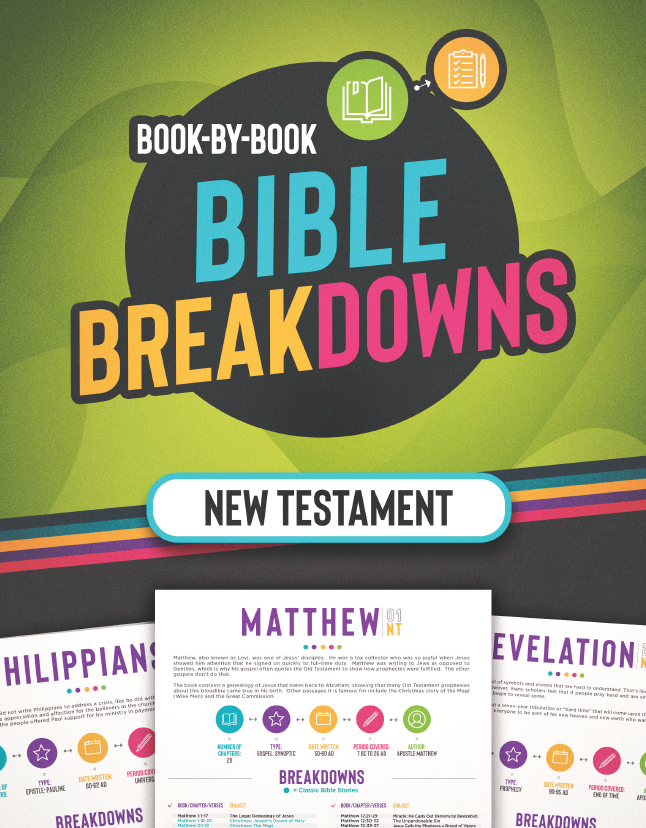
Over the last month, we have been reviewing Bible Breakdowns from Teach Sunday School. I received both the Old Testament and New Testament sets. They include a page for each book of the Bible. The pages break down the book into sections and have information about what is in each section.
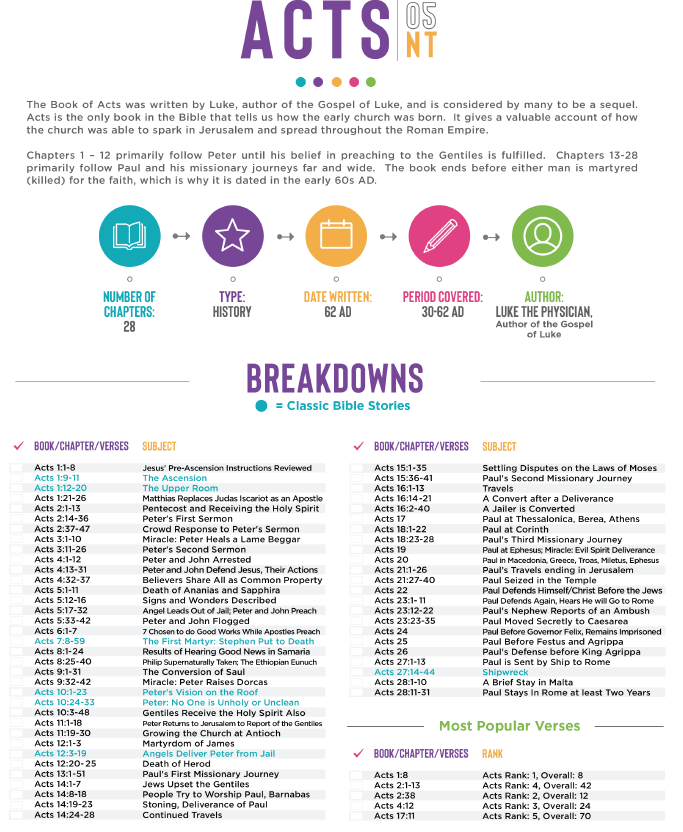
Bible Breakdowns Example Page
Bible Breakdowns Description
Almost all of the books of the Bible are broken down into one-page informational sheets (Matthew takes two pages). Each one includes information about each book: the number of chapters, type of book, date written, period covered, and the author.
There is also a section that shares which verses from that book are the most popular. Those have rankings both within just that book and within the entire Bible.
The central portion of the page includes the chapters and verses of that book broken down by topic. So, it starts with chapter 1, verse 1, and breaks it down into sections based on the subject. Some of those sections are a verse or two, and others are larger.
For example, Luke 19:1-10 Zacchaeus or Luke 6:12-19 12 Disciples Named.
USES
There are many different ways that you could use this resource. In our family, we used them for Bible study, research, and memory work.
Bible Study
I think this is an excellent resource for helping with Bible study. It gives you background information about when that book was written, who wrote the book, and even the type of book or genre. This information is excellent for helping you understand the scripture in context. The breakdowns also help you to group verses and study a specific selection instead of verses in isolation. You could even use it to mark what verses you have read and keep track of where you are studying.
Research
Researching was, inadvertently, the first way in which I used this resource. I was leading a ladies’ Bible study during the week that we received these downloads. I did not know the answer was a question about the chronology of something from the Old Testament. I used these to help me quickly identify the timeline of events and answer at the next meeting. I think these would be an excellent resource for children, teens, or adults.
Memory Work
We are currently working through several Bible memory programs, but I think this resource would be beneficial for choosing passages if we were not already doing Bible memory. You could use the most popular verses, but I also think it would be great to do memory in the broken-down sections. This helps ensure you are memorizing scripture in context.
Conclusions
Overall, I think that the Bible Breakdowns from Teach Sunday School are a great resource. They can be used by students in elementary through high school and even adults. They are a simple resource that can be used as a part of the curriculum, help answer questions, or just for general Bible study. Be sure to check out all of the other Crew Reviews by clicking on the link below. You can see different ways families have used this product. You can also check out my reviews of these other Teach Sunday School Products:Printable Books of the Bible “Summary Sheets” (Review) and Easter Escape Room.
What comes to your mind when you think of October? Aside from my birthday (which you should all celebrate with a big glass of chocolate milk or a cupcake), I think about fall, the fair, and pumpkins!
*Some links are affiliate links, see disclosure below*
Don’t unfollow me, but I do not love pumpkin spice. I do, however, love pumpkins. Pumpkin bread, pumpkin pancakes, pumpkin oatmeal, pumpkin butter, and pumpkin cookies! You might already know that I love cooking and often make treats from scratch. However, I also am a big fan of knowing when you simply need to drop back and make a memory from a box mix.
Simple Pumpkin Cookies
Today, I want to share this super simple recipe for pumpkin cookies that you can pair with a good pumpkin book for a tasty storytime family treat. They are good plain, but they are outstanding if you add a little bit of glaze to the top! We recently realized that we could take a bag of Betty Crocker Sugar Cookie Mix (mixed per the instructions on the bag) and add in half a can of pumpkin puree to make an excellent pumpkin cookie.
You could also use the cookie mix per the instructions and roll them, and cut them out in the shape of pumpkins. We originally planned to cut out the pumpkin cookies, but they are too loose for cut-out cookies and need to bake as drop cookies.
For the glaze, we used about a cup of powdered sugar with a teaspoon of milk. If you are not familiar with making glazes, be sure to add liquid slowly because it does not take much. You can add in what you need until you get to the consistency that you want.
We simply baked the cookies (with the pumpkin puree) according to the package directions. Let them cool for about 30 minutes, and then added the glaze. It tasted like fall!
Once you have your cookies, you can settle down for a bit of fall storytime. There are so many great books about fall or set in the fall.
Charlotte’s Web with the fair themes can be a great one for fall! You can also watch the movie! Just don’t forget the tissues because it always makes me cry.
Anne of Green Gables includes one of my favorite fall quotes, “I am so glad I live in a world where there are Octobers.”
Share your favorite fall or pumpkin books in the comments, and tell me if you try the cookies!
Resource Library and Affiliate Disclosure
When you sign up for the Schoolin’ Swag free resource library you will get a link and password to the library, we are adding to the library each month with new items. You will also get a bi-weekly newsletter email to keep you up to date on what we have going on.
This post may contain affiliate or referral links, including Amazon affiliate links. As always I will never recommend a product that I don’t believe in and you will never be charged more for purchasing through our links. It does help pay for the costs associated with the blog.
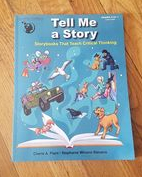
Did you know that a book without words could be lots of fun and teach critical thinking skills? I was unsure exactly what to expect when we reviewed the Tell Me a Story book from The Critical Thinking Co.™.
What is Tell Me a Story?
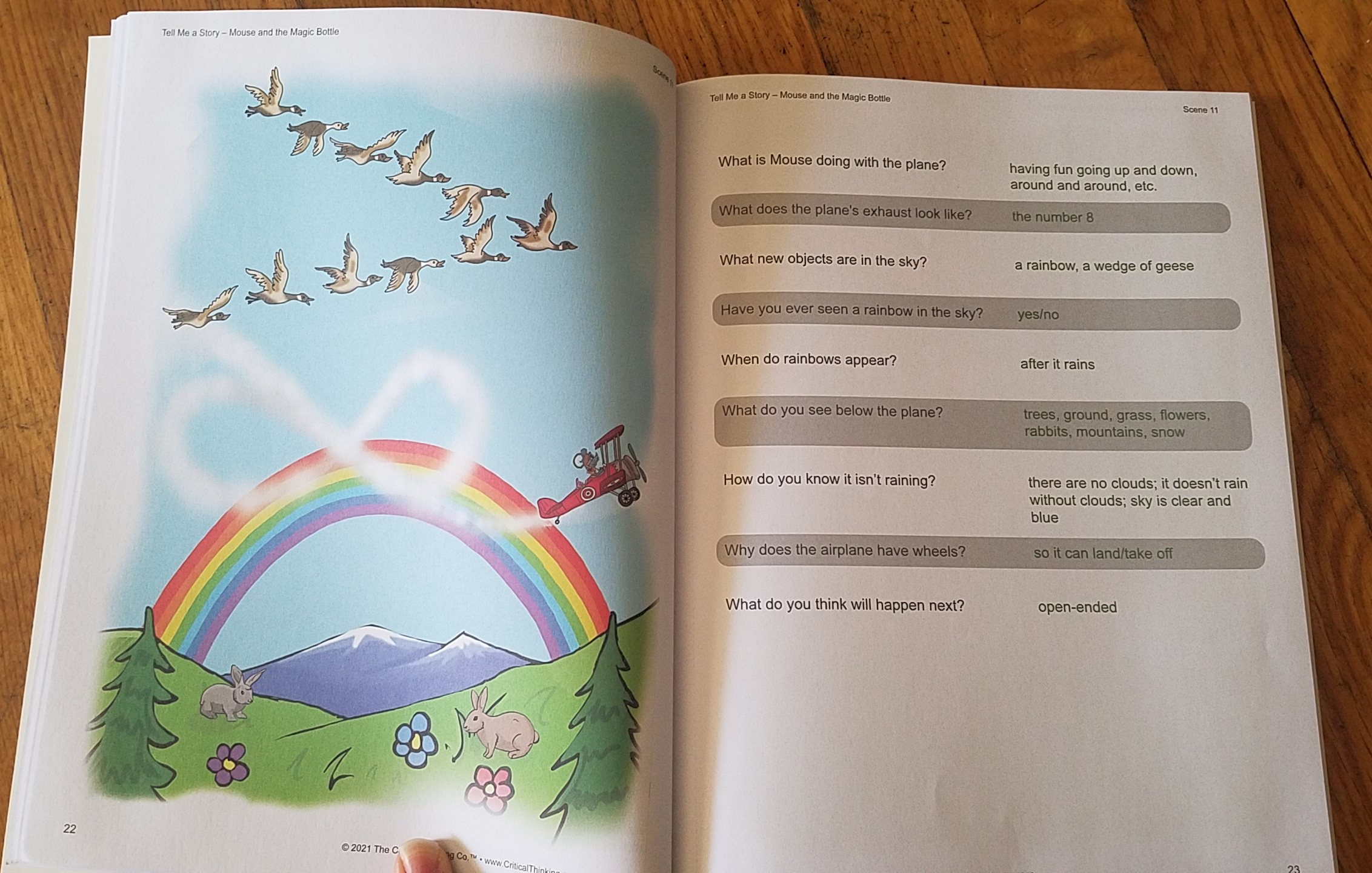
Tell Me a Story is a book that includes two different stories told through pictures. Each picture is a full-page illustration, and on the page opposite the illustration, there are questions about the image. The book is designed for students in grades PreK to first grade to work through with a parent or teacher.
Some of the questions are very factual. An example would be, “Name two things that are in the ocean.” Other questions ask the child to give an opinion such as, “If Seagull could talk, what would it say to Mouse?” Some questions ask the child to predict what will happen next. An example of a prediction question is, “What do you think will come out of the bottle?”.
At the end of each story, some questions have the child think back over the entire story and not just the current page. One example is, “What were the four wishes Genie granted the Mouse?” Some open-ended questions about what could happen next encourage the child to continue imagining the story. For example, “What will happen to the Genie in the bottle?”
Tell Me a Story Sample Page
Each story is about fifty pages total, with half of those being pictures, so there is a lot covered in each story. We went through and did a few pages at a time, and my son enjoyed it. It would be too much to try to cover in one session.
The Stories in Tell Me a Story
The first story tells about a mouse that is having a day at the beach. While he is there, he finds a bottle with a Genie and gets four wishes. The story continues showing his adventures with the wishes. The second story is about a dog and a crow who are friends. They enjoy helping others, and it takes you through many different situations where they help those around them.
Our Thoughts
Overall, I thought this was a fun way to encourage critical thinking and observation skills. I loved hearing what my son had to say about each picture and how it made him imagine what might be happening. I primarily used this with my second-grade son and thought it was a good fit. It is a good tool for my three-year-old to start introducing him to the ideas and observation, but he would not be able to answer all of the questions. I recommend this for PreK through second grade or older students who need to review observation or prediction skills. We did it one-on-one, but it could also be used as a family or class, and students could compare their ideas.
In addition to Tell Me a Story, the Review Crew reviewed various products from The Critical Thinking Co.™, so be sure to click on the graphic below to check out all of the other reviews.
Our family morning time is one of my favorite parts of the day. I love that we get to learn together. However, if I am transparent, it historically has also been a time that quickly gets pushed to the side or skipped. Since it is not a set program, we need to complete it is easy to cut it when we are busy or running late.
It can also be a bit hard to find materials that work well for the whole family. We are almost a month into our school year and our morning time has been consistent and my husband even started joining us most mornings. Usually, I like to do a lot of reading during that time. This year, I decided to switch it up a bit, and I am pleased.
Scripture
During breakfast, we spend time reading a chapter from scripture and discussing. We went through Proverbs, and we are now working our way through the Psalms. I think I will switch over to Luke in December as we focus on the birth of Christ. This is slightly separate from our morning time but still part of our work together each morning.
After we clean up the kitchen from breakfast, we move into the living room for the rest of morning time. We are doing current events, scripture memorization, and hymn study with the whole family. After that, my teens are free to begin work on their other curriculum, and I can spend some time reading with my younger boys. I want to make sure I am making time to read books with my teens as well, but we will do that during a different part of the day.
Cross Seven Hymn Study
For scripture memory and hymn study, we are using Cross Seven. We reviewed Cross Seven last year, and it was an excellent fit for our family. I love that we simply pull up the videos and hit play. It makes it so easy, which helps me be more consistent. Right now, we are learning all of the verses of Amazing Grace and memorizing Philippians 2:1-11. Another thing I love about Cross Seven is that instead of memorizing individual verses, we are learning larger chunks of scripture.
Current Events
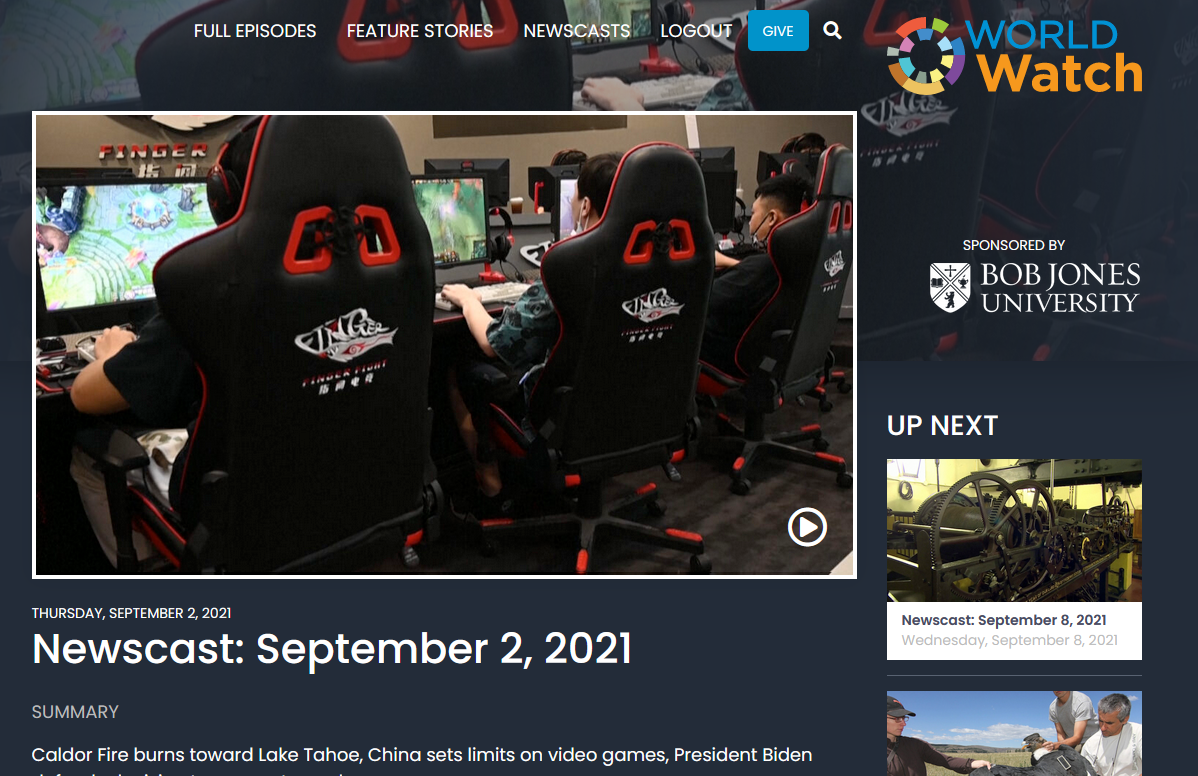
Current events can be such a heavy topic with so much division and conflict in our world. I want my children to know what is happening and learn to discern truth from the propaganda in the mainstream news. However, I also want to shield them from those things that they are still too young to bear. World Watch News has been the perfect fit for our family. In just ten minutes each morning, we get an overview of world news from a Christian perspective. There are serious stories and funny stories as well as fun science segments. Occasionally, we skip a story or two when a content warning tells me it might be too much for my three and seven-year-old sons. On those days, the older children can finish watching independently. My husband then makes a point to discuss some of those news events at dinner later that night.
Why We Do Morning Time
Overall, our morning time is only about twenty minutes each morning. While it may not take long, it is a very impactful part of our school day. It is a chance for us to learn and grow together, have good discussions, and start our day with our focus on Christ. I am sure we will continue to adapt our morning time to meet our various needs, but I am really enjoying this lineup for now.
Do you have a morning time in your home? What do you use for family study?
Resource Library and Affiliate Disclosure
When you sign up for the Schoolin’ Swag free resource library you will get a link and password to the library, we are adding to the library each month with new items. You will also get a bi-weekly newsletter email to keep you up to date on what we have going on.
This post may contain affiliate or referral links, including Amazon affiliate links. As always I will never recommend a product that I don’t believe in and you will never be charged more for purchasing through our links. It does help pay for the costs associated with the blog.
Deals and Freebies
I am so excited about this FREE summit and the chance to hear so many wonderful speakers and get encouragement and advice! I highly encourage you to check it out. Homeschool Fitting It All In Summitt coming next month!
All About Learning does not often run specials, so this is a big deal! They are offering FREE Shipping for purchases over $100. So if you need the next level or are ready to give All About Reading or All About Spelling a try now is the time!
Tuttle Twins has come out with a magazine and we got a chance to check out the first one! It was packed with great information and fun games!
As my children get older, they spend more time completing research papers and watching the news. We’ve encouraged this to help them began to consider, understand, and interact with the broader world around them. We have been trying to help show them that they need to consider their source as they research anything. As an example, my son was fond of using Wikipedia or random websites that were not considered quality sources.
Setting the Scene
On our recent trip to Pennsylvania, my children got a real-world lesson in considering their sources.
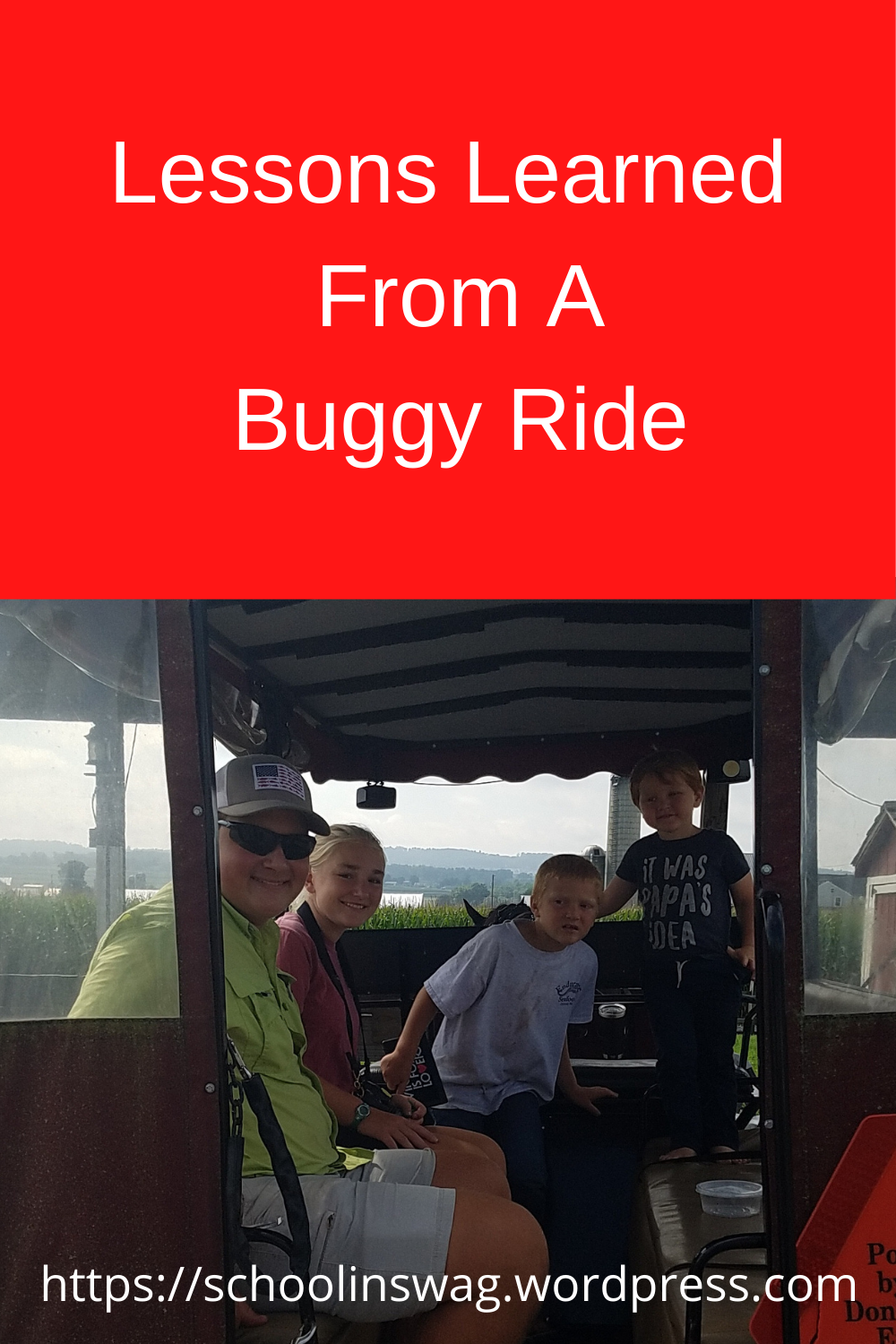
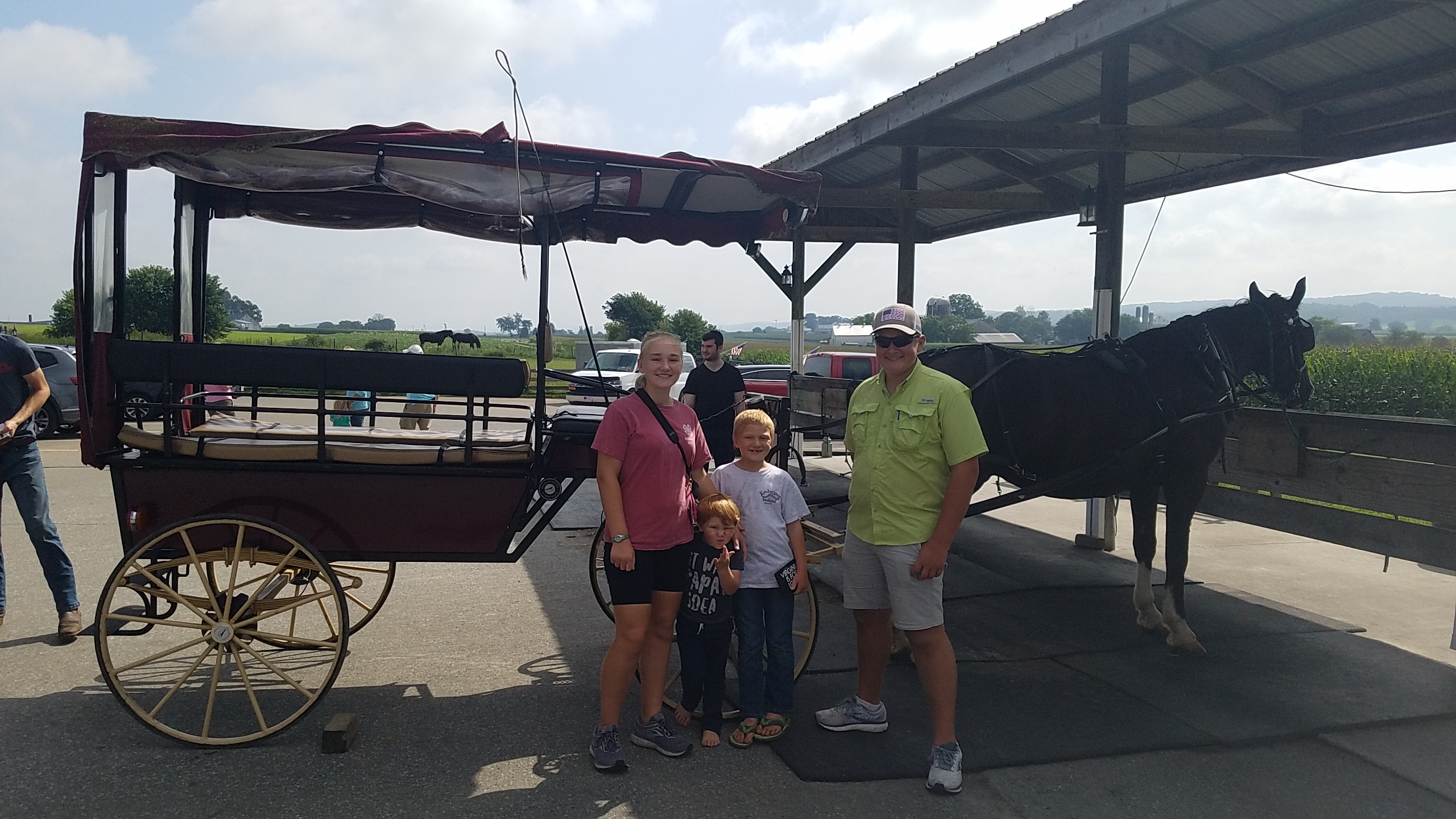
We spent a few days in Pennsylvania helping out with a benefit auction and visiting with friends. We had a wonderful trip and finished our time with a day of ‘tourist’ time in the Lancaster area. It was a lovely trip that included a night sleeping in a train car, a ride on a train, and riding on an Amish-style horse-drawn wagon.
As we went on our ride with a very ‘English’ driver (the term the Amish use for those who are not Amish or Mennonite), the children started to look at me with questioning eyes. I gave them the signal to stay quiet and let them know that we would chat later.
Why would I have them wait to ask their questions? I knew that they were questioning the information that the driver was sharing.
Our Background
The driver did not know that in 2018/2019, we were blessed with the opportunity to personally meet and get to know a variety of wonderful people from various Amish and Mennonite communities. They came to our church as volunteer groups to help with disaster relief following Hurricane Florence.
Each group came from a different community, and each group was diverse but it gave us a new perspective on the way of life in these communities. They would spend a week staying at our church and going out in the community to help rebuild houses.
Our family assisted in the hospitality efforts at the church, and therefore often got to share meals and conversations with the groups. Our trip to Pennsylvania was, in part, to visit with some of those same people we met that year.
We in no way claim to be experts in the Amish and Mennonite way of life, but my children had learned a lot from first had conversations and friendships.
Our Buggy Ride Story
As we were on the ride, the driver tried to be helpful and give them tidbits of information about the Amish community. However, many of the things he was saying did not align with what my children knew to be true.
Some of these inconsistencies may be the result of different congregations having different rules and practices. (Think about assuming that every church in America used the same songs or style.) However, he was claiming that everyone followed those same practices. Other things were misconceptions or misunderstandings.
Lessons Learned
I did not want to be confrontational or disrespectful to the driver. We felt that he was sharing the best information he knew. We also know that we are not experts and did not want to make that claim. However, we had a good family discussion about what the children heard and learned once we finished the ride.
It became a great object lesson in considering their sources. The man who did buggy tours for a living might not seem like a poor source, but using a first-hand source was a much better option. They realized their friends who talked with them about their real lives knew more than someone watching from the outside.
We talked about how we should remember that with many things in life:
reading the Bible instead of trusting someone else’s words,
listening to what people say instead of listening to rumors or clips in the news,
primary source documents versus other people’s interpretation of history.
I hope that they will remember that they need to carefully weigh the source of information and check what they hear against what they know to be true throughout their lives.
Your Thoughts
Have you had any experiences where you could teach your children to consider their sources as they formed beliefs and opinions?
Resource Library and Affiliate Disclosure
When you sign up for the Schoolin’ Swag free resource library you will get a link and password to the library, we are adding to the library each month with new items. You will also get a bi-weekly newsletter email to keep you up to date on what we have going on.
This post may contain affiliate or referral links, including Amazon affiliate links. As always I will never recommend a product that I don’t believe in and you will never be charged more for purchasing through our links. It does help pay for the costs associated with the blog.
Tuttle Twins has come out with a magazine and we got a chance to check out the first one! It was packed with great information and fun games!
I am so excited about this FREE summit and the chance to hear so many wonderful speakers and get encouragement and advice! I highly encourage you to check it out. Homeschool Fitting It All In Summitt coming next month!
For a limited time, Amazon has increased their FREE trial of Audible Plus and Amazon Music Unlimited to 3 Months! Do you use either of these programs? This is a great way to listen to audiobooks and some great music. We love that we can control the playlists and not worry about ads with the music program.
All About Learning does not often run specials, so this is a big deal! They are offering FREE Shipping for purchases over $100. So if you need the next level or are ready to give All About Reading or All About Spelling a try now is the time!
Over the last month, my seven-year-old has been using Reading Eggs and Math Seeds. Created by Reading Eggs, we have been enjoying reviewing both of these online programs. He would focus more on Reading Eggs because reading is an area we are working to improve.
Reading Egg Components
Reading Eggs Jr. (Ages 2-4)
Reading Eggs (Ages 3-7)
Fast Phonics (Ages 5-10)
Reading Eggspress (Ages 7-13)
Math Seeds (Ages 3-9)
Reading Eggs and Math Seeds
The basic setup for both Reading Eggs and Math Seeds is the same. The students take a placement test which puts them at the appropriate skill level. Next, the program begins working them systematically through the lessons for reading or math. Each lesson is a series of activities that work on strengthening the skill that is focused on in that lesson. There are maps to show the progress from lesson to lesson.
Students can earn ‘eggs’ for completing tasks in the reading program and acorns in Math Seeds. In addition to the lessons, there are games and activities that the students can do when they have earned eggs or acorns. They can also use the eggs earned to purchase virtual things like extras for their avatars and virtual world.
Our Experience with Reading Eggs and Math Seeds
My son loved both the activities and the games. It always surprises me how motivated he is to earn the extra eggs. He would frequently ask to do the programs even when I did not require them. I appreciated that he was getting extra practice during his free time.
You can see how they are progressing from the parent portal, see what skills they have mastered, have them retake the placement test, and more. It makes it very easy to see and understand their progress.
When my son took the placement test, I was unsure if he didn’t understand the questions or didn’t do his best. I do not feel like it was a good reflection of what he knew, but the lessons he did were a great review, and he was able to move through them quickly until he got to a level that was more reflective of what he knew.
He did a much better job with the math placement test, and I found it was a great supplement to what he was learning in his math curriculum.
Reading Eggs Jr.
My three-year-old had the opportunity to try out Reading Eggs Jr., and he loved it! With-in that section contained books that he could look at as it read to him. There were also a wide variety of short (1-2 minute) videos that taught various skills and information. Finally, there were activities and games that he could play to help him work on learning letters, numbers, colors, and even handwriting.
I appreciated the wide variety found in the videos. There were hundreds of short videos, and my son enjoyed watching them. There was a series with a video for each letter to help him begin to learn his letters. A series with different science and craft projects that he could watch and we could recreate at home. There were videos about emergency vehicles, trucks, and big machines. Several series were on different animals. There was just such a large amount of educational content, but all done in concise videos that are great for younger children.
Reading Eggspress
Reading Eggspress was too challenging for my children at this time, but it contains excellent resources for working on reading comprehension. It is helpful for a child that can read but wants to increase fluency or comprehension. There is a placement test and lessons for that program as well. In addition, there is a library of digital books and quizzes that students can use.
Fast Phonics
Fast Phonics is a program that helps students work specifically on letter sounds and phonics. It includes videos and activities as well as memory aids to help students learn phonics quickly and systematically. In this section, students can collect virtual gems.
Overall Thoughts
We feel like Reading Eggs and Math Seeds are great for reinforcing the skills we are learning in our homeschool. It also does some teaching and often introduces new skills. The programs make students want to work hard and keep progressing through the lessons. I highly recommend it as a supplement for any elementary-age student that needs a little more practice in reading or math. It is also a great way to challenge a student who is doing well to move forward at their own pace.
Many other Review Crew families reviewed Reading Eggs and Math Seeds, so make sure to click on the graphic below to see what they thought!













 The Schoolin' Swag Blog