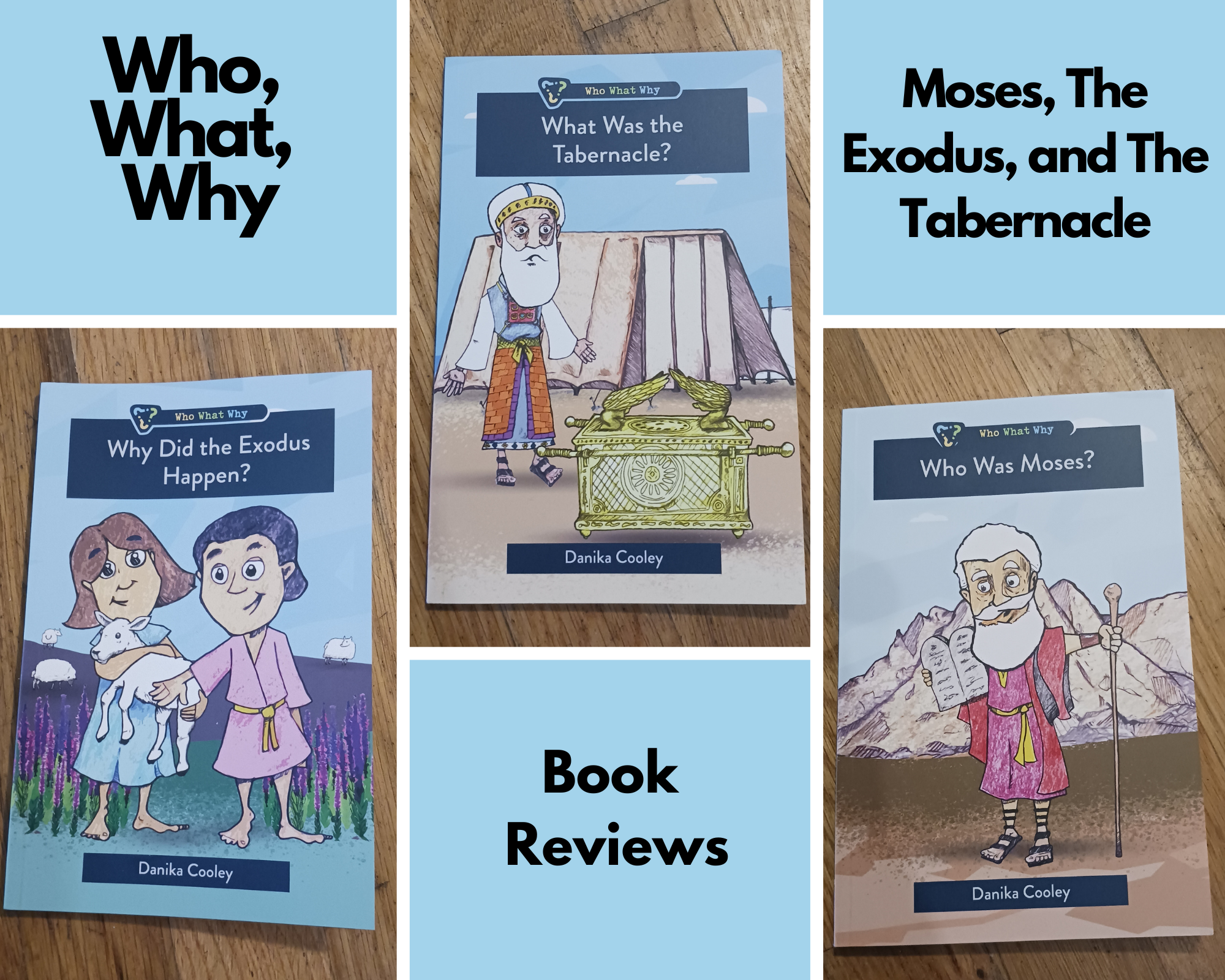
Who What Why Moses, The Exodus, and The Tabernacle

I am excited to share the latest three books in Danika Cooley’s Who, What, Why series with you! I always look forward to these books because they are engaging and full of great Biblical information to help us as I teach and disciple my children.

The three newest books in the series were released this month. They cover Moses, the Exodus, and the Tabernacle. 

*Some links are affiliate links, see disclosure below*

Who What Why Series

If you are unfamiliar with the series, it consists of brief chapter books geared toward students aged eight to eleven. The books are nonfiction but engaging and sometimes humorous. In addition to the target age group, younger students could enjoy them and learn from them through read-aloud. In addition, older students would find them to be very simple but still educational.

Each book contains illustrations that help the reader understand the book (and are often quite humorous), a timeline of events, and a works cited section so that you know where she derived the historical information.

Who Was Moses?

This exciting and easy-to-read chapter book details Moses’s life and contributions. It also explains how the events that happened with Moses point to Jesus. An excellent timeline in the back helps you understand how Moses’s life fits with other Biblical and historical events.

Did you know that while it should only have taken 11 days to walk from Mount Sinai to Kadesh, it took the Israelites over forty years? Did you know that Moses was 120 when God showed him the promised land?

While the facts are all included in scripture, this book helps to really break things apart and allows the reader to really understand Moses and his life.

Why Did the Exodus Happen?

All scripture is useful for teaching, but some of its contents can be a little challenging for children to understand. This book helps students better understand the Exodus, why it happened, and the historical timeline.

Many interesting facts help students (and parents) better understand the Exodus. For example, did you know that “The people of Israel left Egypt in the middle of the night with bowls of flatbread dough tied to their backs…There were six hundred thousand Israelite men walking out of Egypt. With their wives and children, the caravan probably numbered more than two million people.” While I have read about the Exodus multiple times, I had never really thought about just how many people were included.

Throughout this book, while learning about the Exodus, the reader is also introduced to the various characteristics of God. For example, God is Faithful, God is Known to Us, God is Sovereign, and God is our Savior.

It is a great resource to assist children in their study and understanding of the Bible.

What was the Tabernacle?

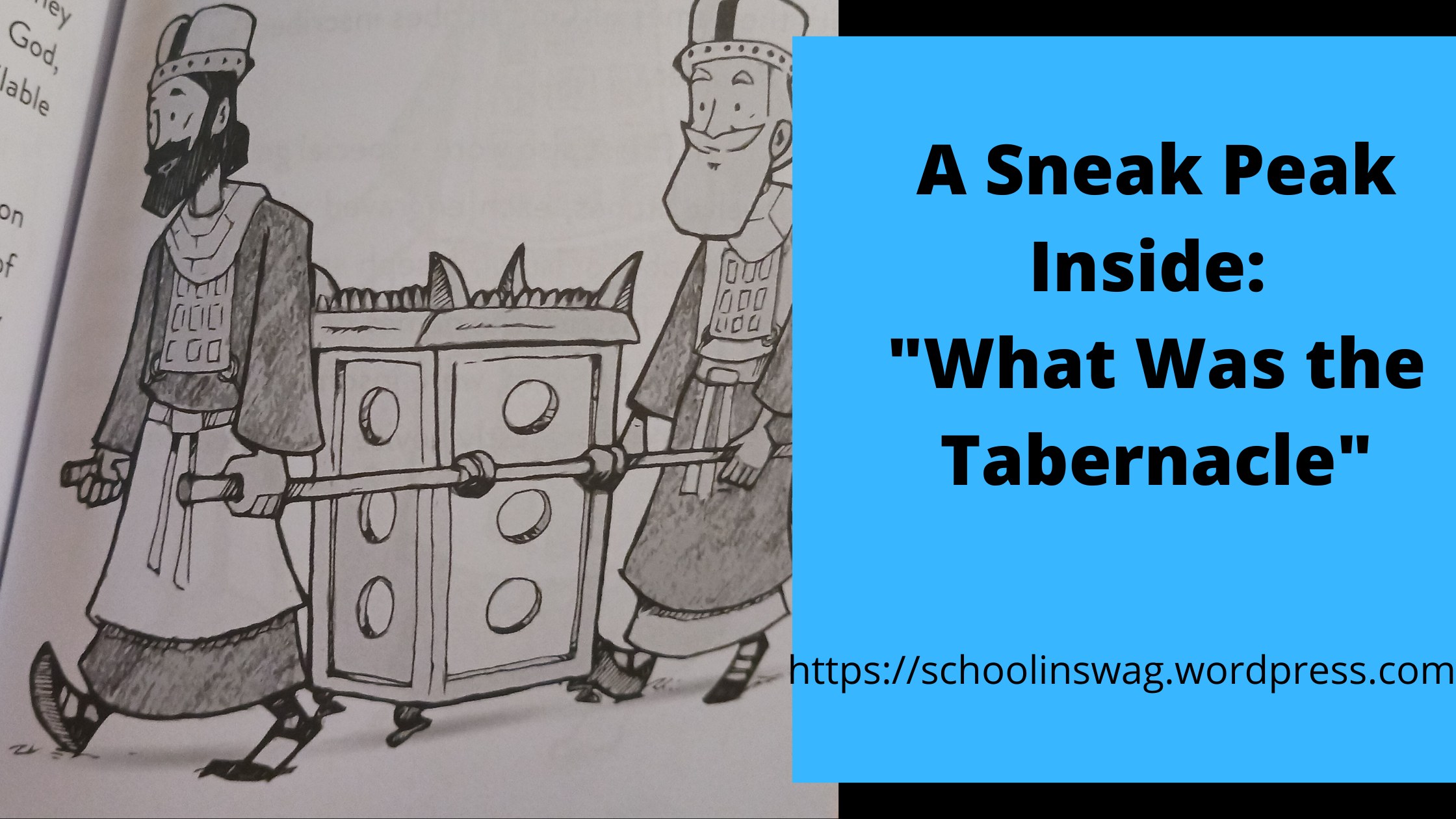
The Old Testament spends a great deal of time discussing the Tabernacle, both its physical characteristics and spiritual importance. This book helps students understand what the Tabernacle was and how that physical Tabernacle pointed to Jesus.

This book describes the Tabernacle’s physical description, information on how long it took to make, the materials used, the craftsmanship involved, etc. However, it also takes time to discuss the different feasts and procedures involved in worshiping God through the Tabernacle.

Then, it takes it a step further and discusses how things are different now because of Jesus and the New Covenant.  

Conclusions

The Who, What, Why series is a great addition to any home library. They are useful as read-alouds or independent reading. You can supplement your Bible study or a study of Ancient History with these books. They could also work as independent reading.

These books are available to purchase at Thinking Kids Press (individually or save money and buy them as a bundle) or on Amazon.

Which title most interests you? What other titles would you like to see added to the series?

Resource Library and Affiliate Disclosure

When you sign up for the Schoolin’ Swag free resource library, you will get a link and password to the library. We add new items to the library each month. You will also receive a monthly newsletter email to keep you up to date on what we have going on.

Resource Library 

This post may contain affiliate or referral links, including Amazon affiliate links. As always, I will never recommend a product that I don’t believe in, and you will never be charged more for purchasing through our links. It does help pay for the costs associated with the blog.


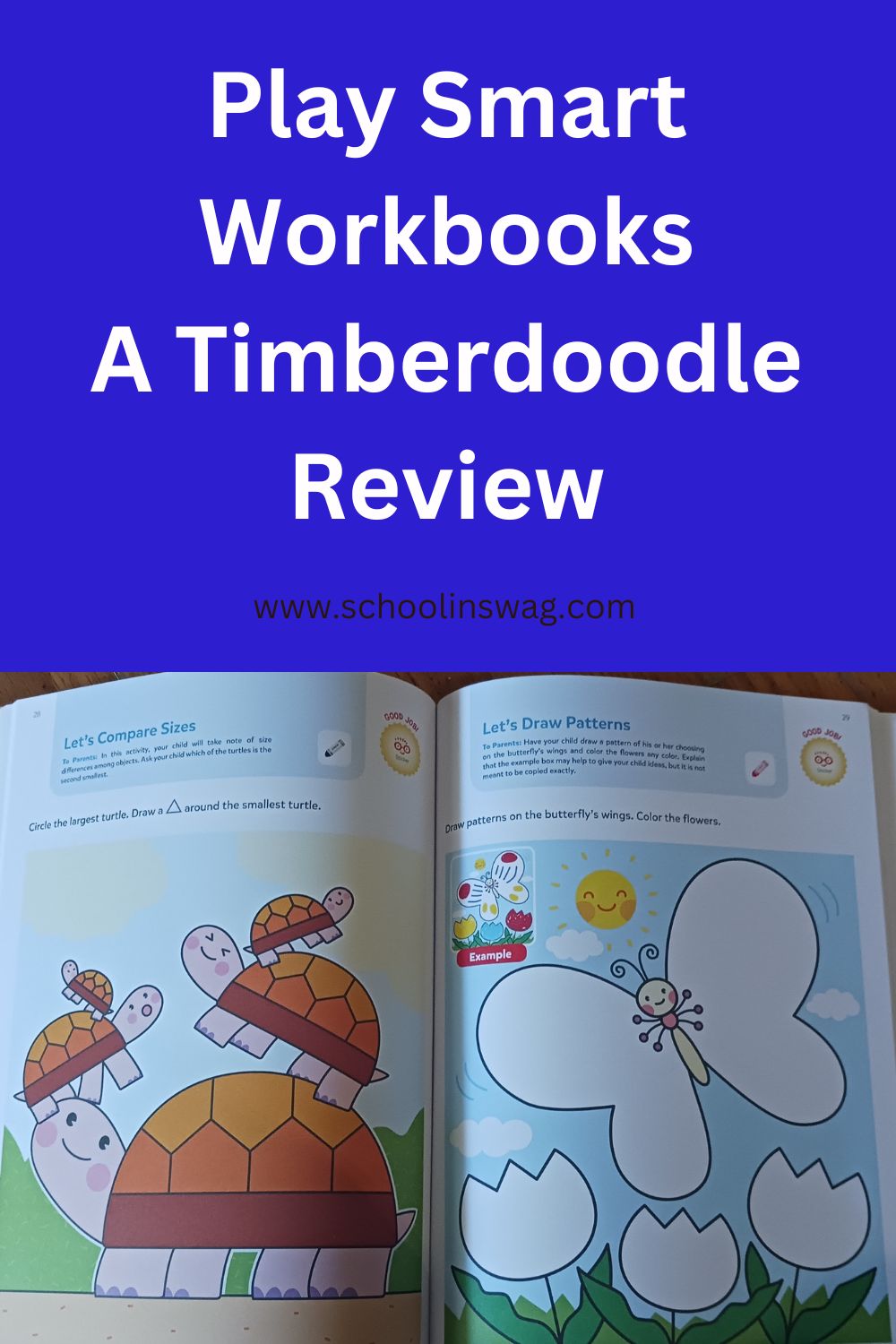
Play Smart Preschool Workbooks: A Timberdoodle Review


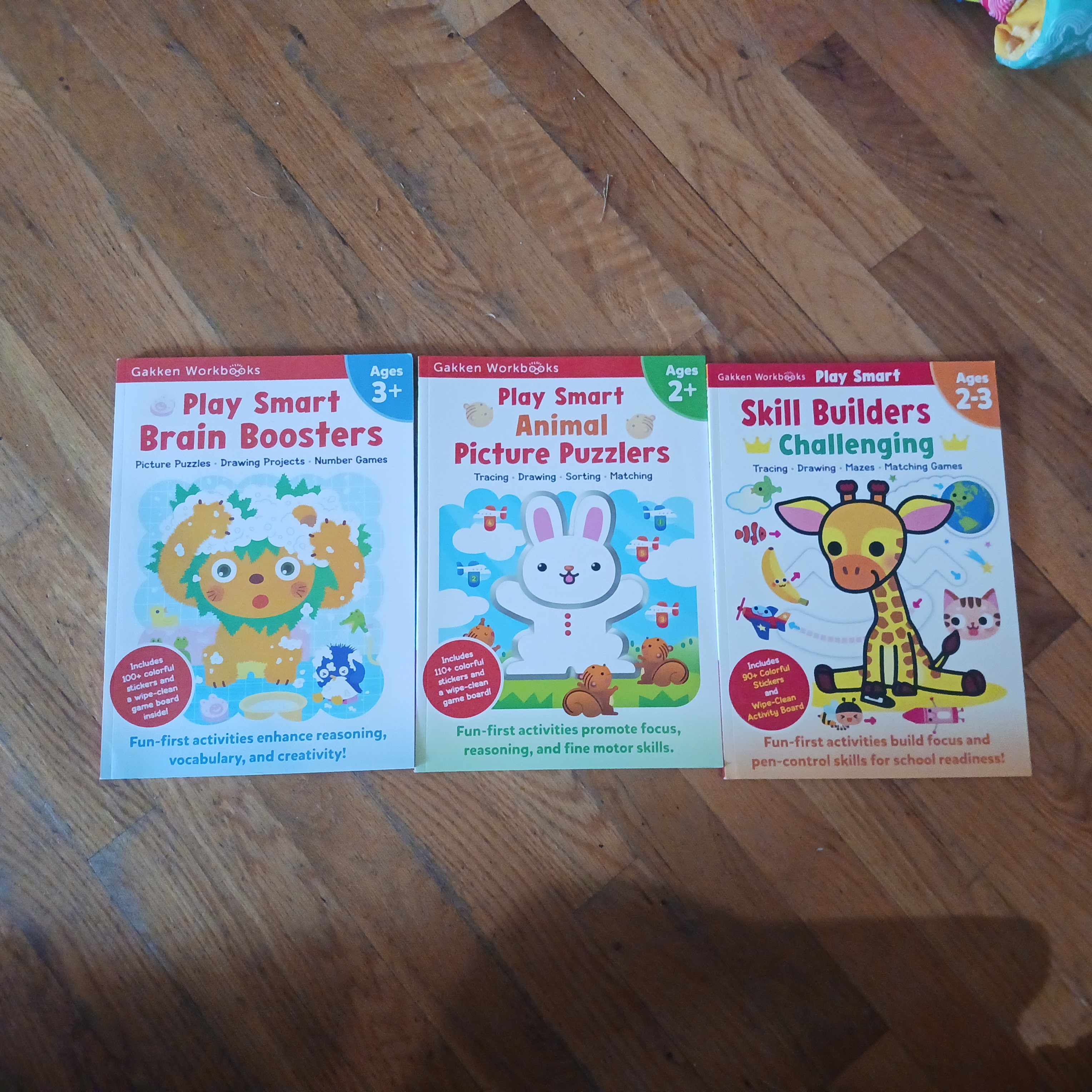
Children, especially young children, learn through play and many hands-on activities. Often, this involves being very active, but sometimes, you need your child to be able to work more quietly or contained. Timberdoodle recently sent me a set of Play Smart workbooks for preschool-age students to review.

The Play Smart workbooks are a great combination of both hands-on learning and quiet play. The books are colorful and engaging, containing lots of stickers and activities.

Play Smart Brain Boosters (3+)


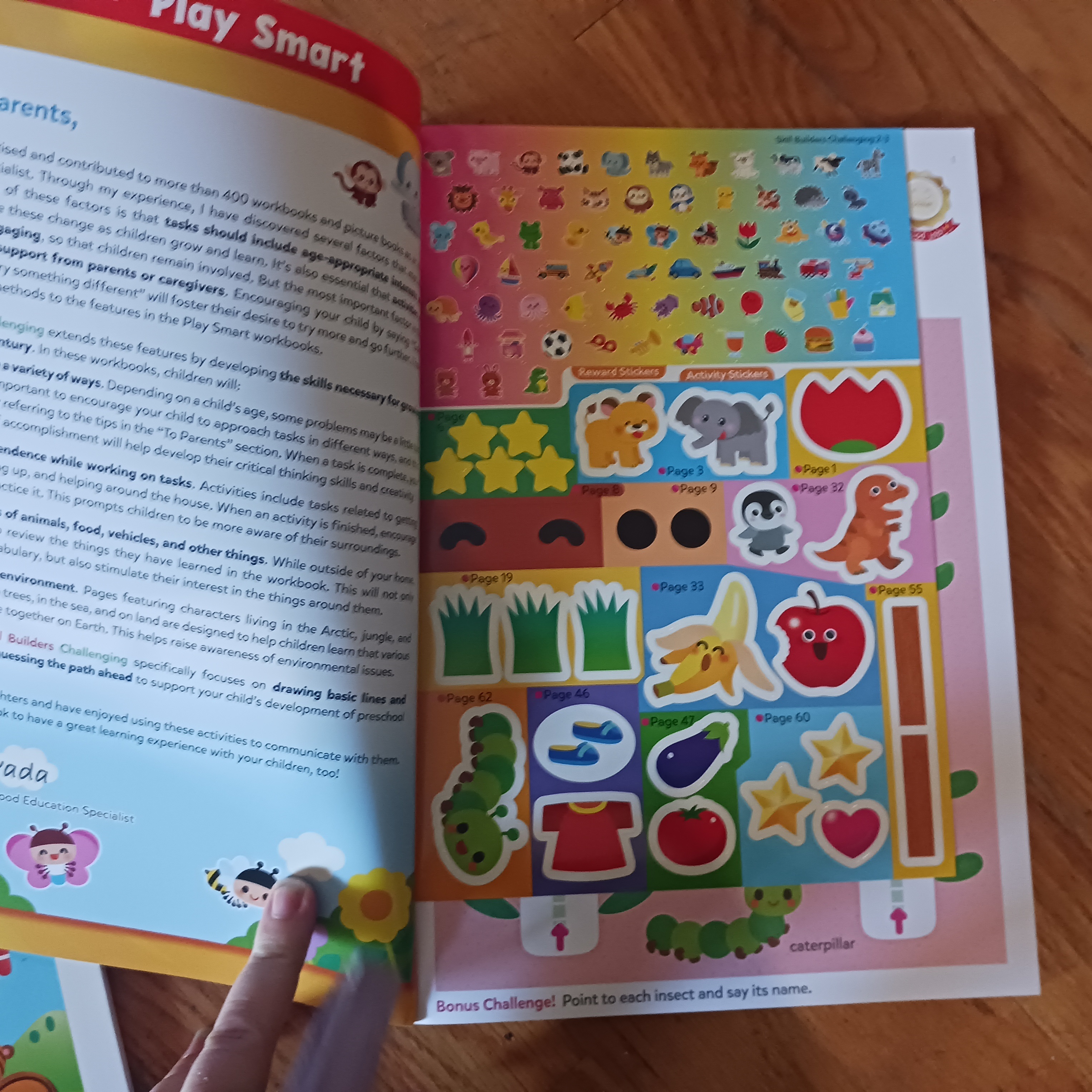
This book contains over 60 pages of picture puzzles, drawing projects, and number games for children ages three and up. In addition, it includes over 100 stickers and a wipe-clean activity mat that allows children to draw different ears on two animal pictures, wipe it clean, and start again.
The activities range in type and style. There are activities with correct answers and others that are more creative. For example, in some activities, the child matches shapes to pictures. In another activity, the child begins with the basic shape drawn and creates a picture of whatever they wish to draw.

Play Smart Skill Builders Challenging (Ages 2-3)


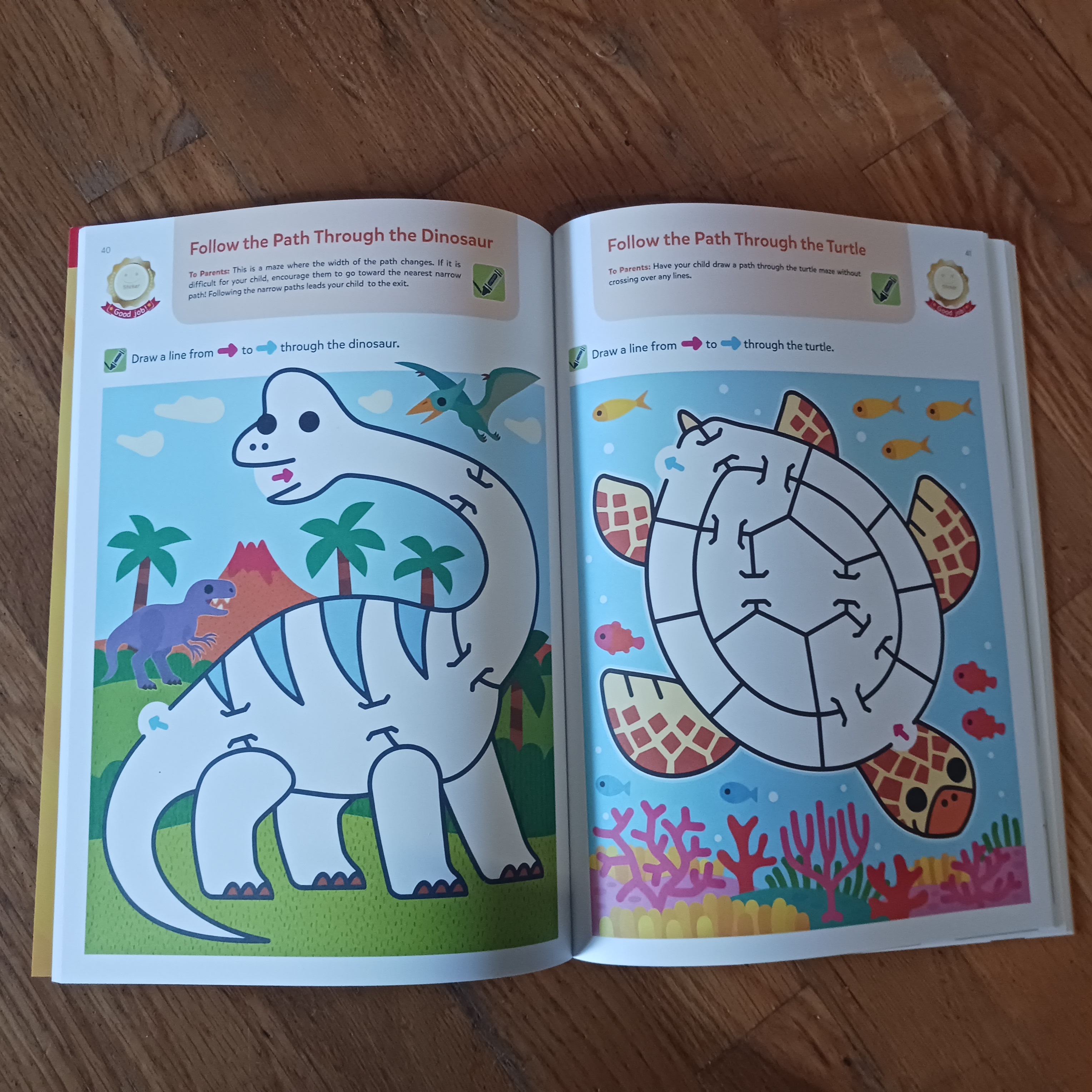
The activities in this book are a bit simpler than those in the brain booster book. There are lots of mazes and different tracing activities. This book also contains over 90 stickers and a wipe-clean activity board maze. Each page is colorful and engaging, with pictures of various animals, flowers, and scenery. The child simply needs a crayon or pencil to complete each activity page.


These would work well as a quiet activity for a parent and child to work on together. The activities promote fine motor skills, pattern recognition, and knowledge of colors and animals.


Play Smart Animal Picture Puzzlers (2+)


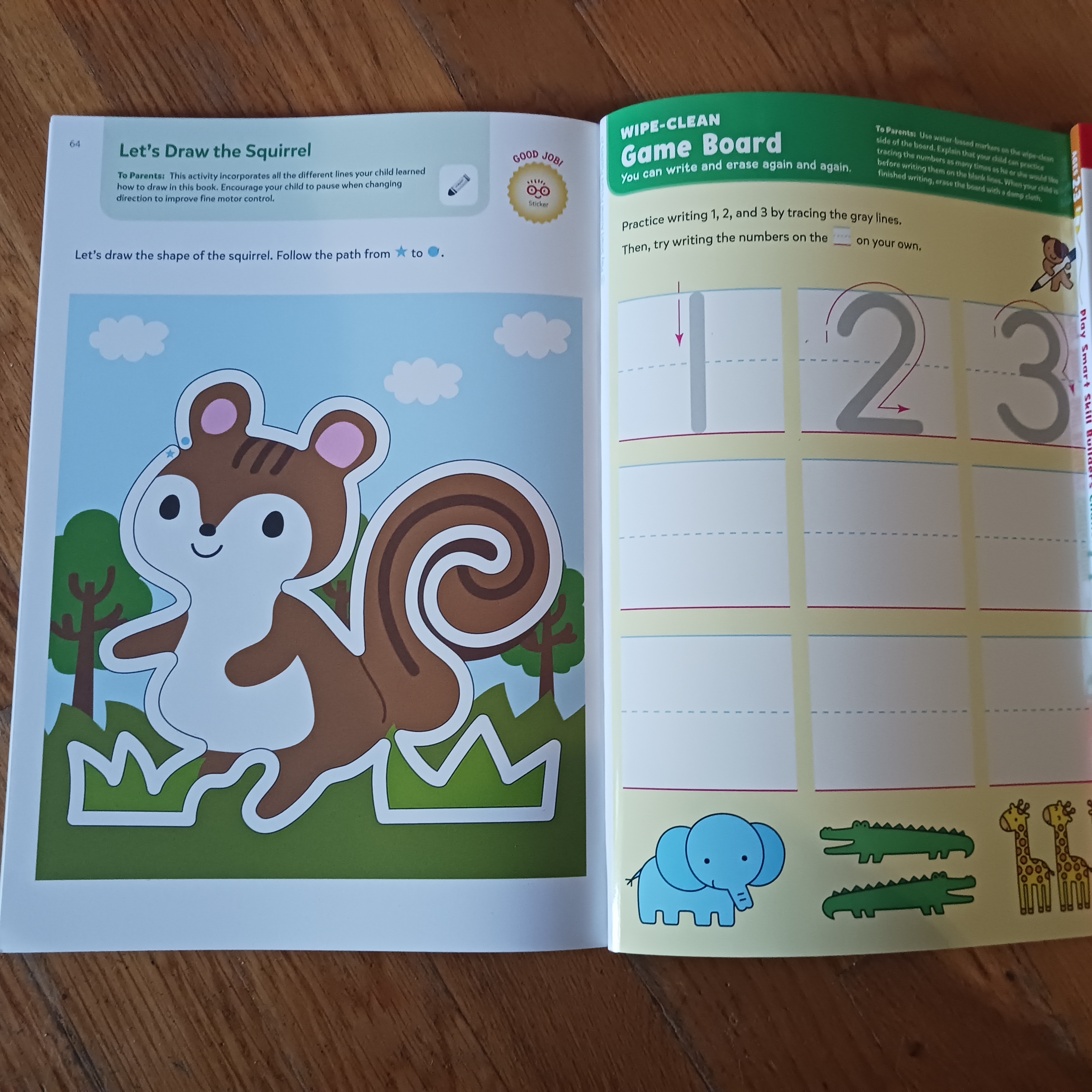
In this full-color workbook, children will work on tracing, drawing, sorting, and matching. They will trace lines in different pictures, including straight lines, curved lines, spirals, and loops. They will also work on counting and recognizing the numbers 1, 2, and 3.
In addition to the over 60 pages of single-use activities, there is a wipe-clean page at the end of the book that assists the student in learning how to write the numbers 1, 2, and 3.


Overall, these Play Smart Workbooks are a great quiet-time activity for preschool students. They promote fine motor skills, matching, patterns, and number recognition. They are bright and engaging and would work well for younger children to do with an adult. Older preschool students could work on activities independently for a few minutes. These are also perfect for those preschoolers who want to ‘do school’ like their older brothers and sisters.
You can learn more about it or purchase your set from Timberdoodle. They are also included in the Timberdoodle Preschool kit.

Sticker Hero: A Timberdoodle Review

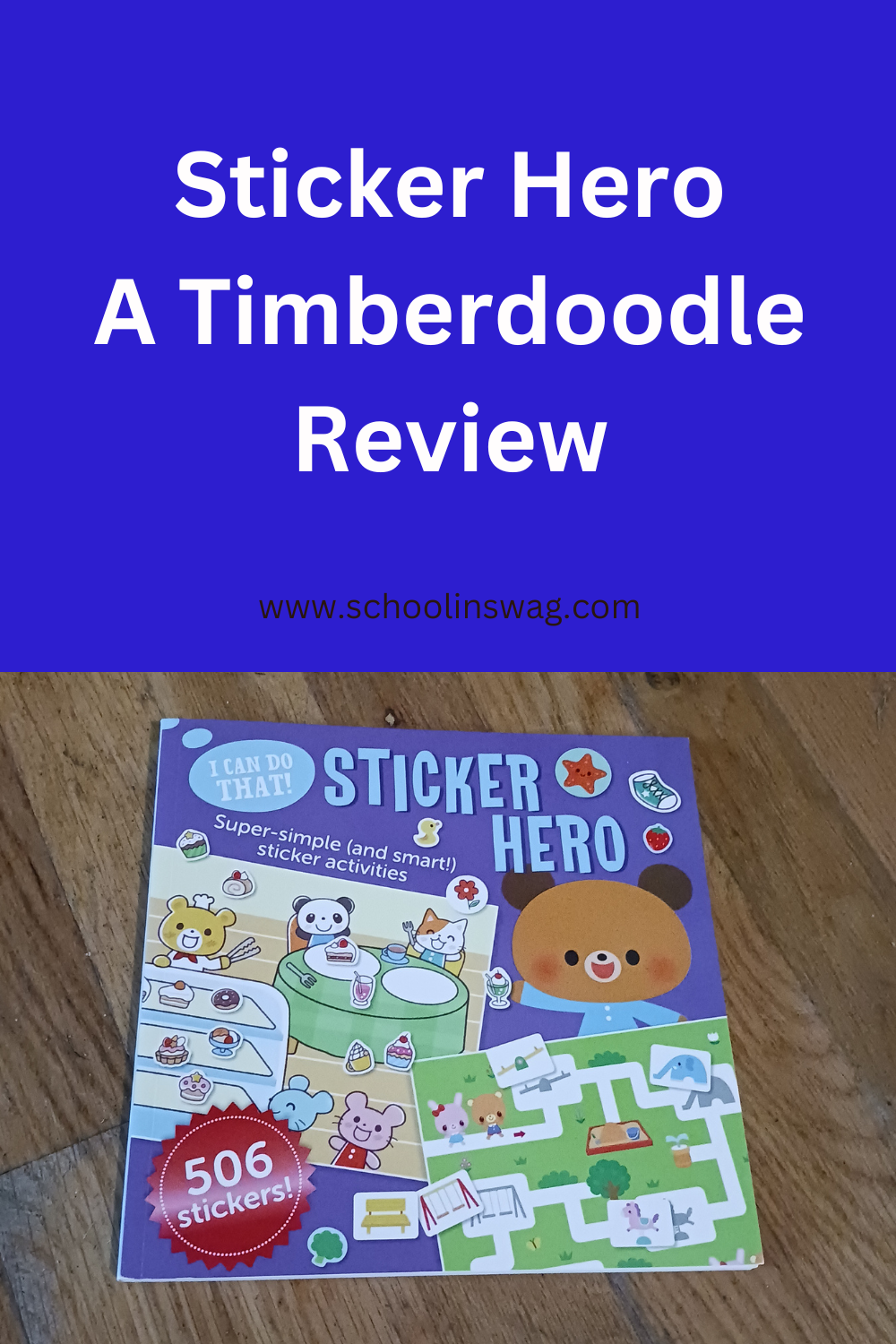
Stickers are so much fun for children of all ages, whether just using random pretty stickers to decorate a paper or activities that use stickers.  Timberdoodle recently gave me the opportunity to review Sticker Hero, a fun sticker activity book.


What is Sticker Hero?

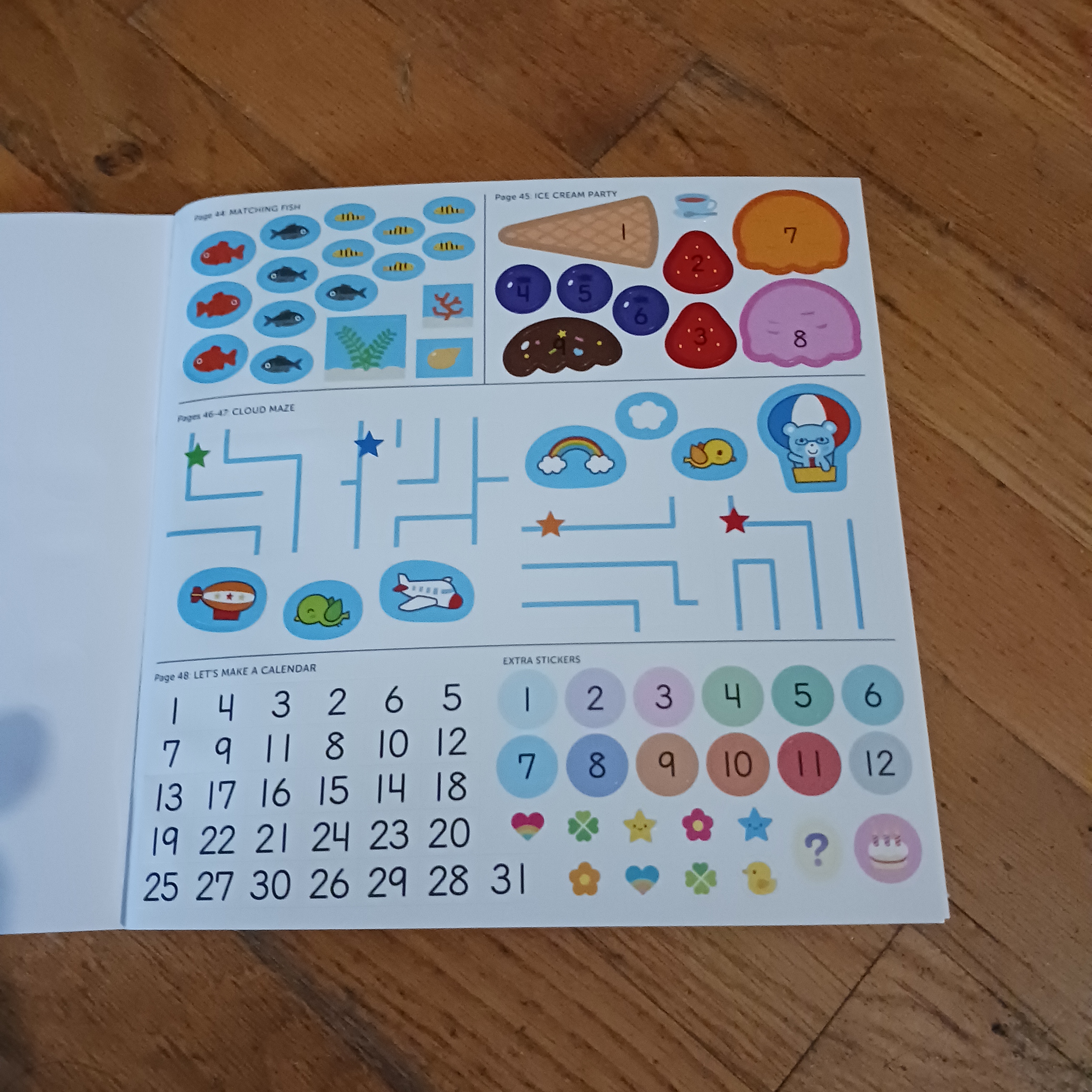
Designed for ages three and up, this activity book includes 506 stickers and 48 pages of sticker activities. The pages are bright, colorful, and made from thick paper to be more durable for little hands.


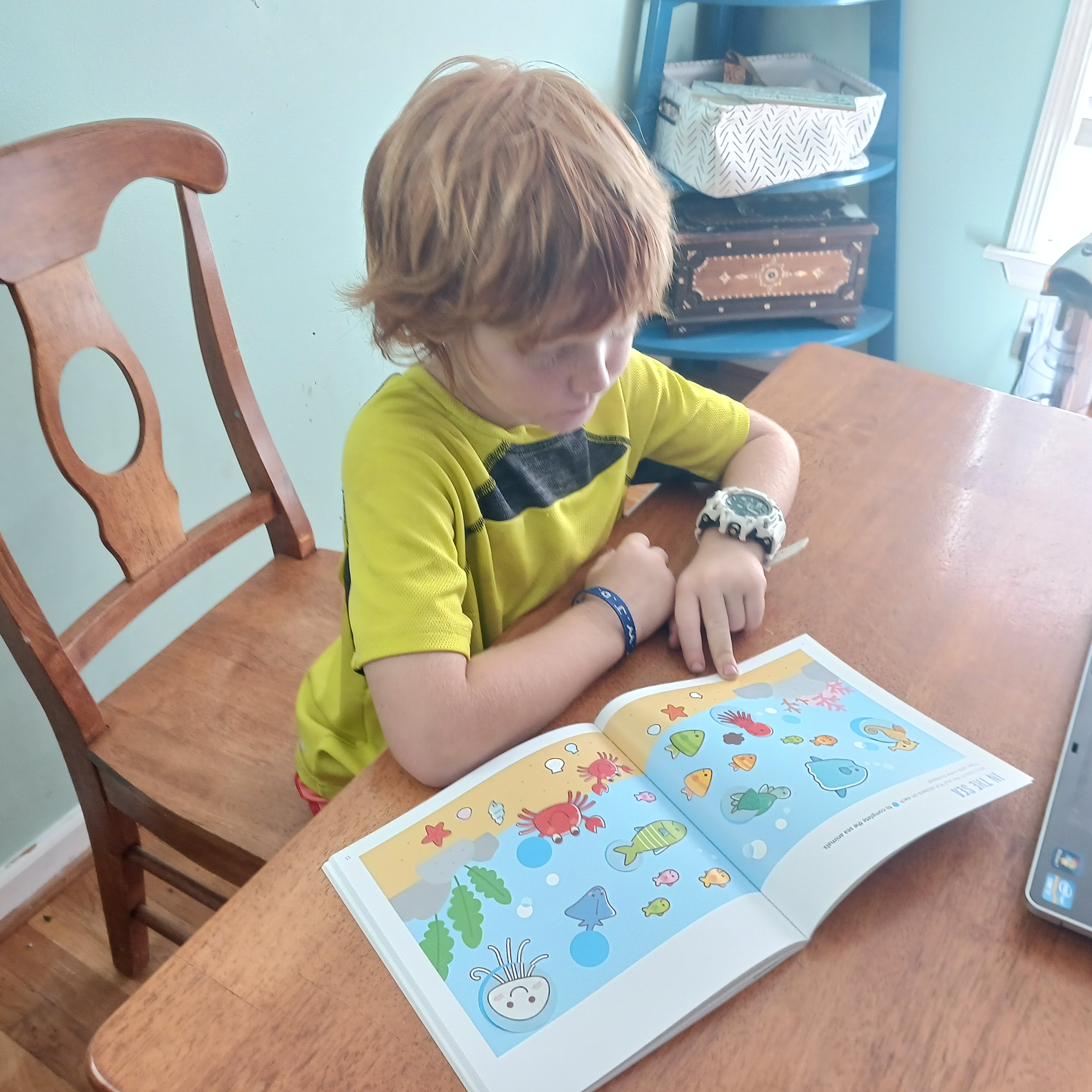
The activities include matching, counting, decorating, mazes, and more. The stickers for each activity are located in the back of the book and conveniently separated by activity. This allows you to either show the child the correct stickers or even take the correct ones from the back of the book to simplify the activity for younger children.


Working with stickers naturally enhances fine motor skills, but these activities also work on counting, sorting, matching, and observation skills. There are even activities to work on the alphabet.


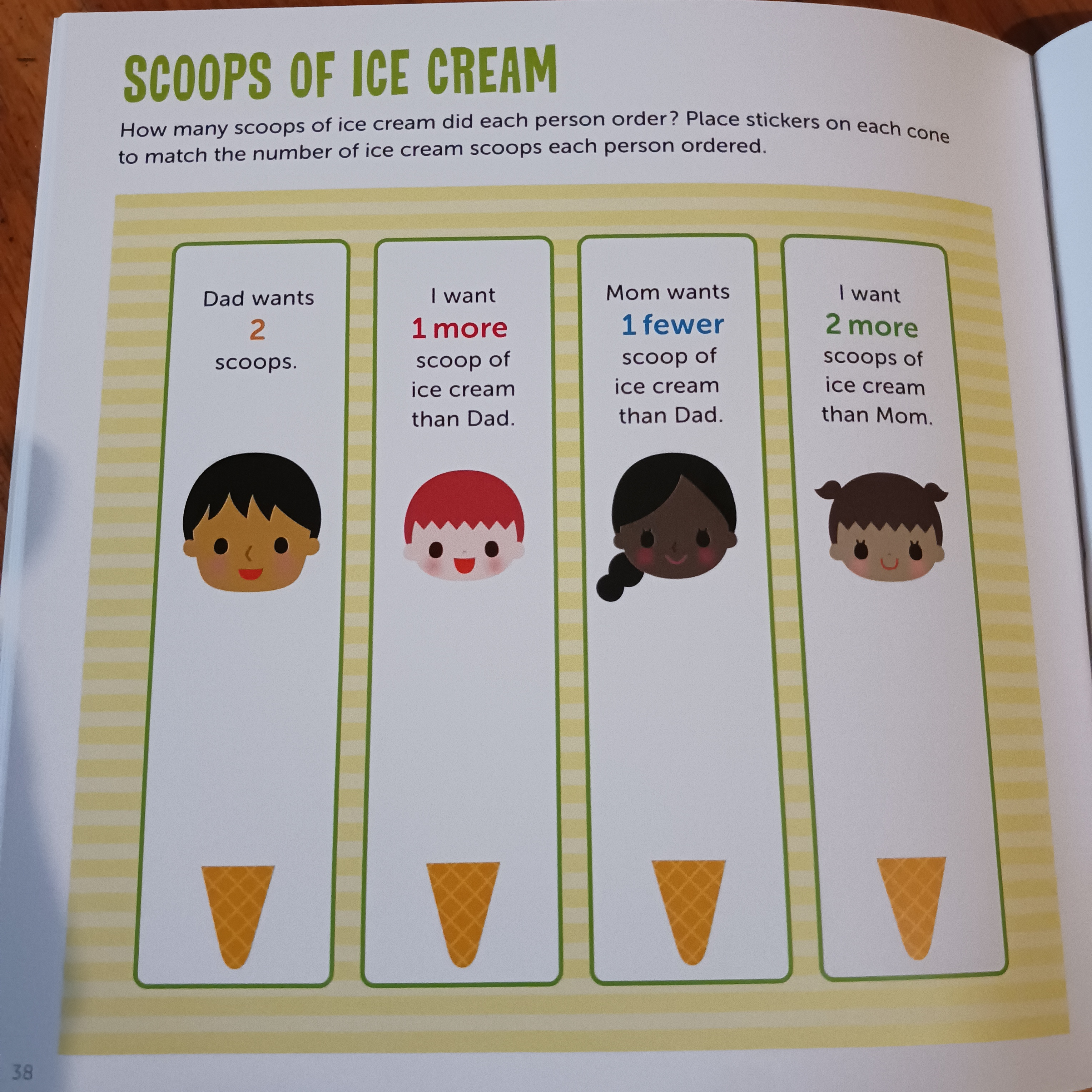
For example, the first activity has a bunch of colorful socks hanging on a clothesline, and the child has to find the matching sock stickers to put beside the one already on the page.  Another activity has them filling in the numbers on a clock, telephone, and remote. There is even a page with word problems, where a child has to work with the concepts of less than and more than to put on ice cream scoops.


Who Should Use Sticker Hero?


Children, especially preschoolers, need lots and lots of physical activity and movement. However, sometimes, you need them to sit quietly for a short time. This might be during learning time at home, sitting through a meeting, or waiting for an appointment. This book is small and convenient for taking on the go, but it is also great for your time at home.


The activities include a variety of levels, and depending on the child, they could be used from around age three to six (or older if a child has a delay or is still working on those skills).


The book could be just a fun quiet activity or it would be easy to incorporate into a homeschool day.

Where Can I Find Sticker Hero?

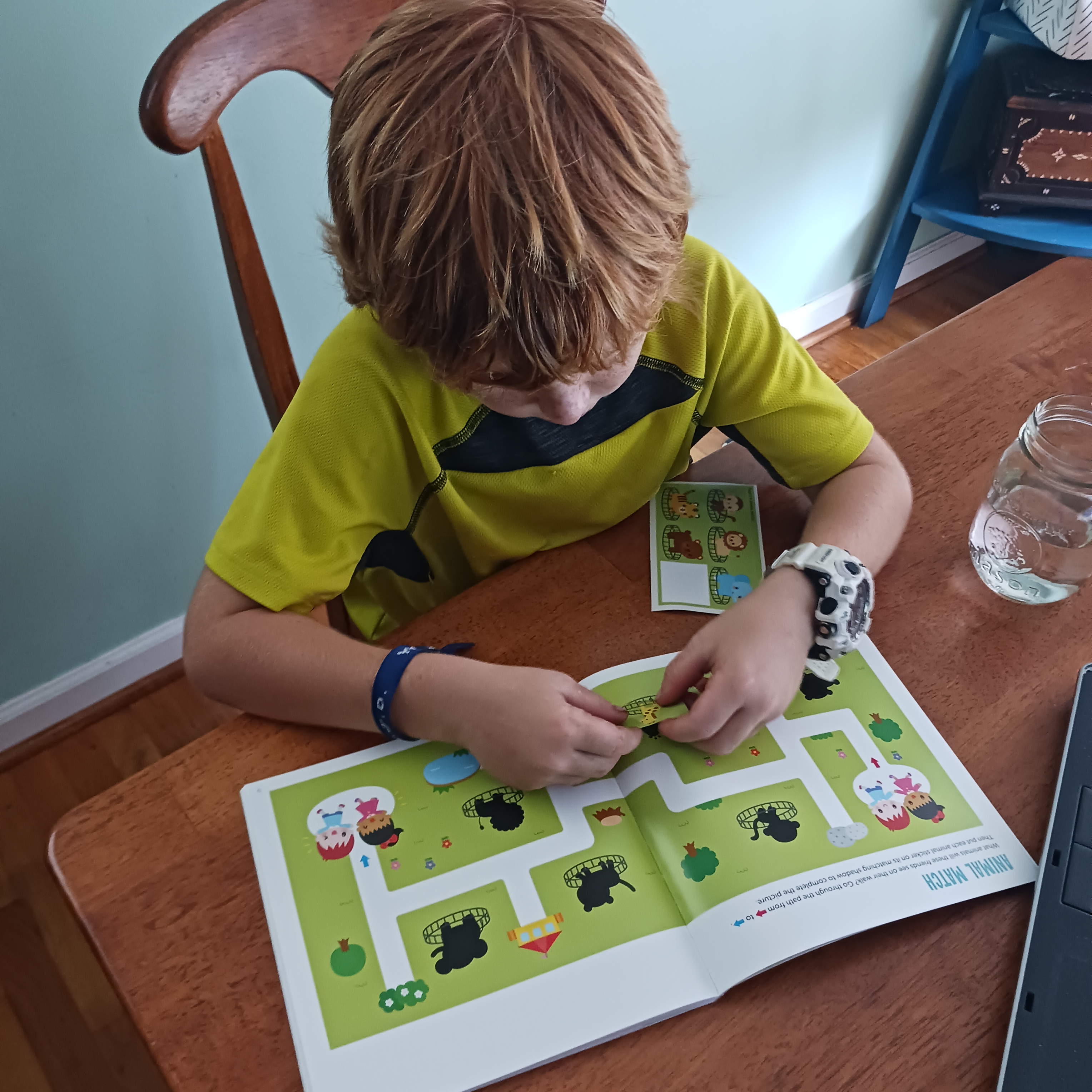
My son loved it and kept asking to do more pages. While some of them were very basic for him, he enjoyed each activity that he did.
You can see more and purchase your copy over at Timberdoodle. It is available independently or as a part of their Pre-K kit.

Tips for Using Free Homeschool Summits and Conferences

Each fall and spring, there is a small window of time when my email and social media become inundated with various free homeschooling conferences and summits. They all sound wonderful, with great topics, engaging speakers, and exciting ideas. However, I wondered how I would find time to actually teach my children if I did all of those workshops.


If you feel the same way, you might be tempted to click delete on those emails, scroll past the social media posts, and ignore all the conferences. While I totally understand that temptation, I think there is a third option. Instead of spending all your time in conferences or ignoring all the summits, you can choose the parts of the summits that will be most beneficial for you, but not try to do it all.


Choose One or Two Applicable Sessions Each Day

Generally, my favorite way to enjoy one of these events is to pick one (or maybe two) session from each day that I think would be most beneficial to me. Then, I work out a time each day to watch those sessions. This lets me benefit from the workshops without having it take all day.

For my schedule, that time is often just after lunch. The baby is napping, we have completed school for the day, and I can send the big kids outside to play while I listen and learn.


That time of day is often when I would be getting other household tasks or computer work done, but the encouragement and inspiration that I gain from the sessions make it time well spent. Other good options are taking a walk and listening, listening while cooking dinner or folding laundry has also worked for me in the past.

When I remember that homeschooling my children is a calling and an important job, it is easy to see that it is not wasted time but time used to gain valuable knowledge and inspiration.


Have a Teacher Workday

Sometimes, the best way to take advantage of a homeschool summit is to pick the day that the sessions you are most interested in and call it a teacher workday. Give your students the day off, make yourself a cup of hot tea or coffee and your favorite chocolate, grab a notebook, and settle in.

You can watch the sessions, take notes, and spend some time planning and implementing the things you learn in the sessions. In addition to some great ideas, a day like this can provide refreshment and help you be ready to jump back into the work of homeschooling.


Buy Yourself Some Extra Time


If you are going through the conference and really enjoying your sessions but feel like you want to watch them all, most of these summits and conferences offer you the opportunity to purchase the sessions for a small fee. Once you buy the conference or summit, you will have access for a year or a lifetime (depending on the conference). Then, if you need encouragement or help or have a little extra time, you can watch a session.

Upcoming Conferences and Summits


These are some of the conferences and summits that are coming up. Take a look at some of the wonderful speakers and see how you can use these to encourage you in your homeschooling journey.

These are some of the conferences and summits that are coming up. Take a look at some of the wonderful speakers and see how you can use these to encourage you in your homeschooling journey.

Such a great opportunity for encouragement and resources.

Resource Library and Affiliate Disclosure

When you sign up for the Schoolin’ Swag free resource library, you will get a link and password to the library; we are adding to the library each month with new items. You will also get a bi-weekly newsletter email to keep you up to date on what we have going on.

Resource Library 

This post may contain affiliate or referral links, including Amazon affiliate links. As always, I will never recommend a product that I don’t believe in, and you will never be charged more for purchasing through our links. It does help pay for the costs associated with the blog.
New subscribers can get 3 months of World Watch for FREE! This is a great deal.

30 Days of FREE Audiobooks and Podcasts with Audible!

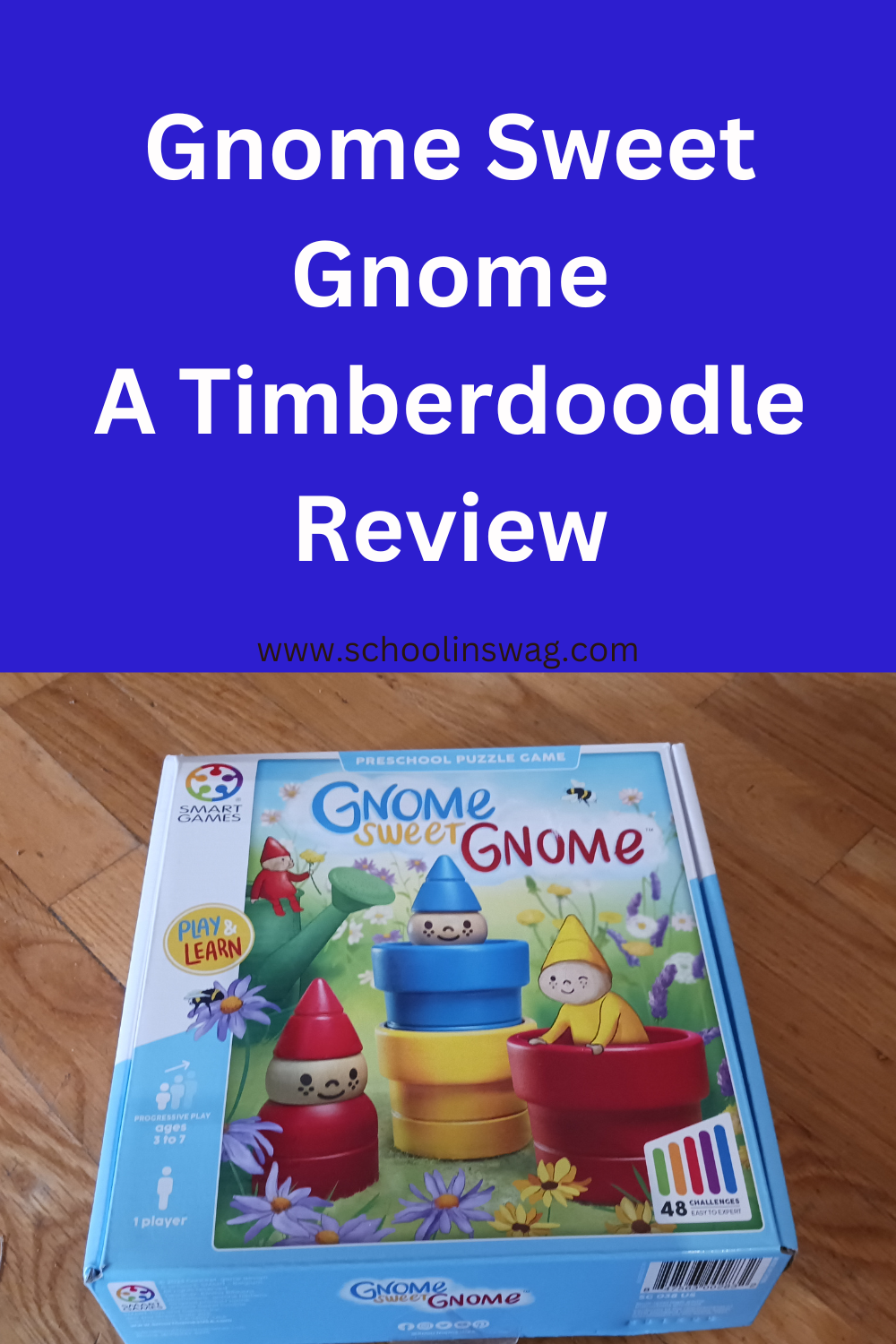
Gnome Sweet Gnome a Timberdoodle Review

Children learn so much through play, and I love it when I find tools that can help guide that learning while still being fun and enjoyable for the child. I recently had the opportunity to review the game Gnome Sweet Gnome from Timberdoodle.

Gnome Sweet Gnome is a game that children can play independently. It has several different skill levels, making it great for developing skills. It works on fine motor skills, critical thinking, comparing sizes, and color recognition and is great for preschool through kindergarten or first grade.

What is Gnome Sweet Gnome?

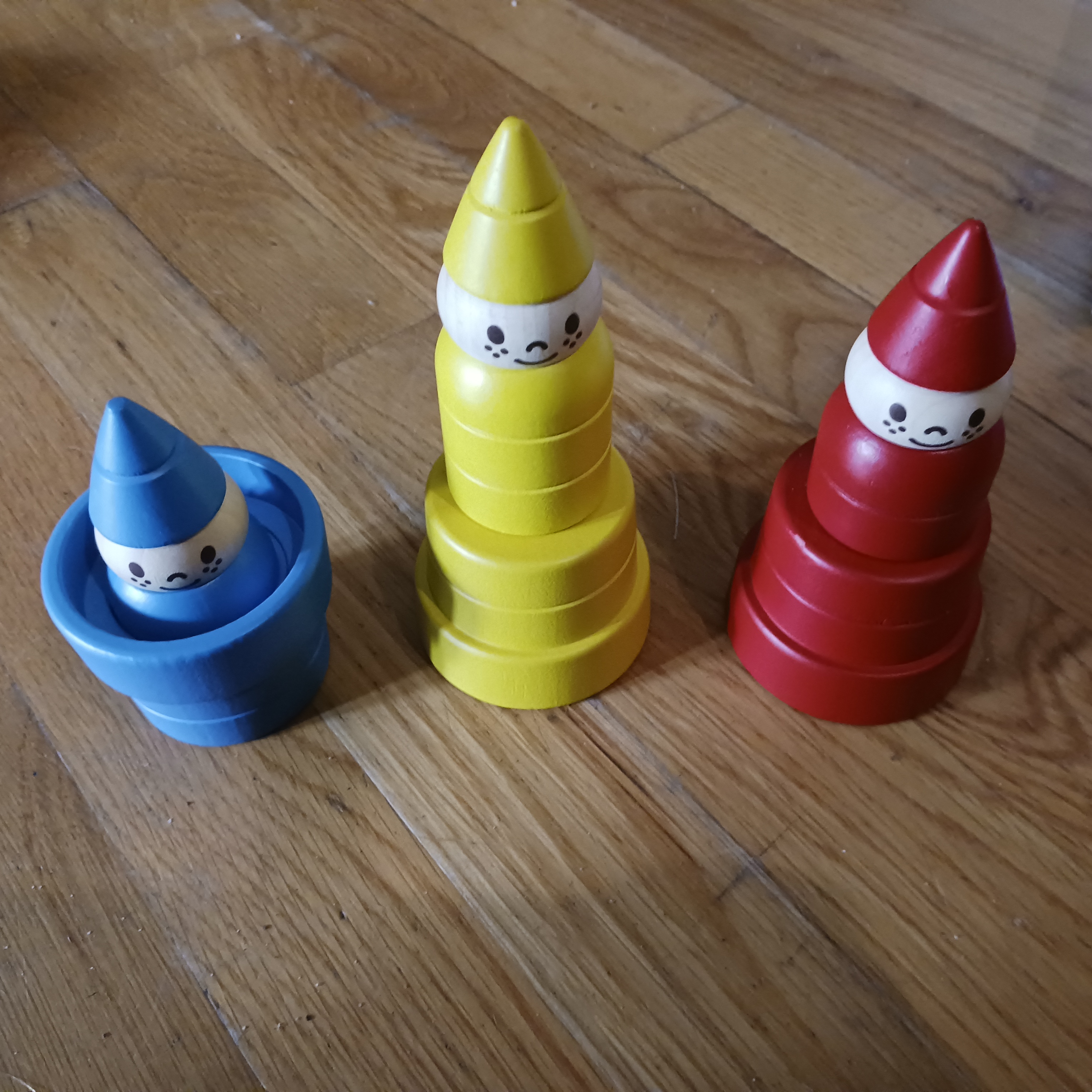
The game includes three different gnomes, each gnome is a different size and color. The Gnomes each come with a matching flower pot, each with a different depth. The different sizes and depths mean that when stacked in different combinations, you can see different amounts of the gnome. For example, if you put the smallest gnome in the deepest flower pot, you can only see the top of his hat.

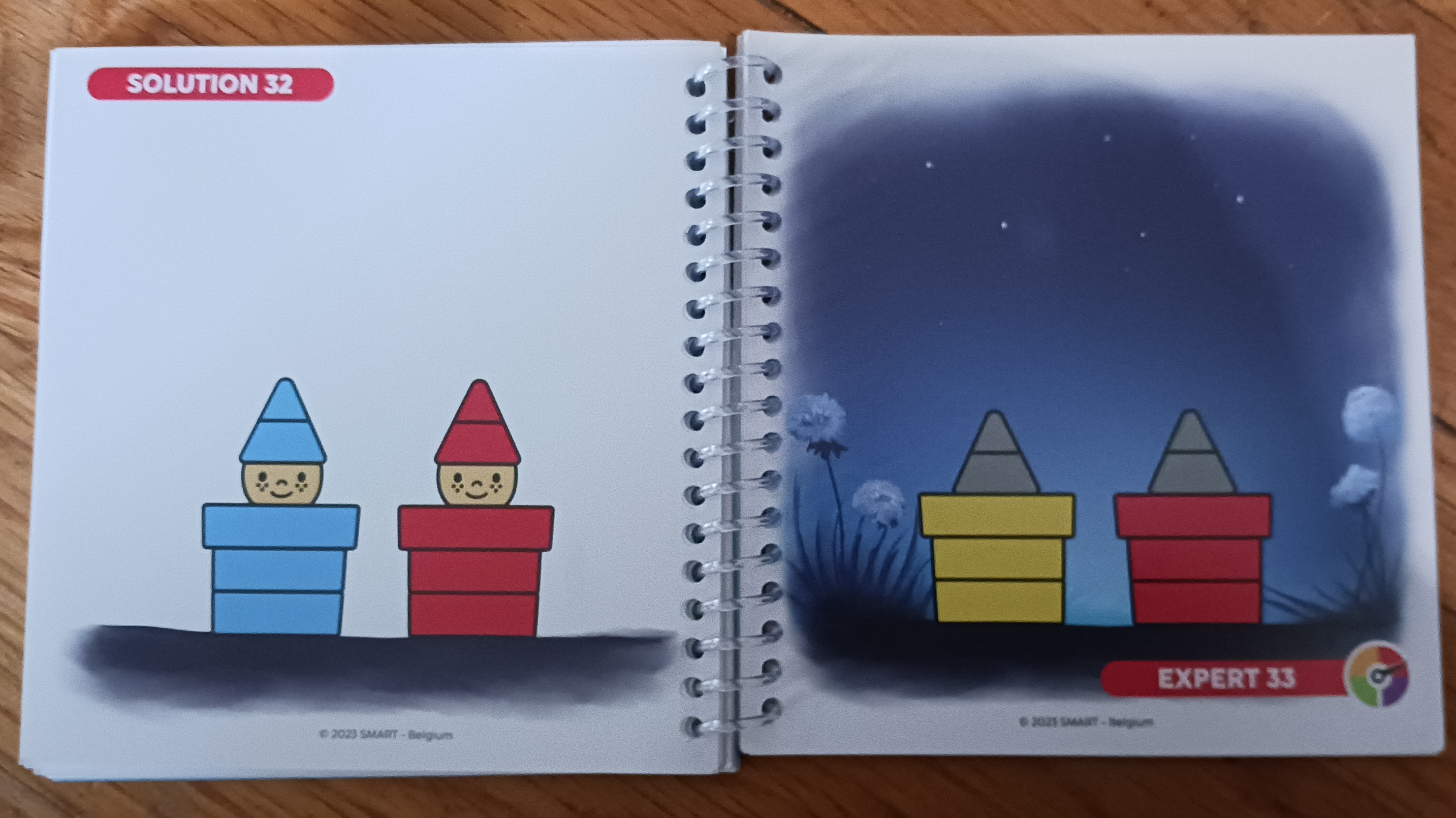
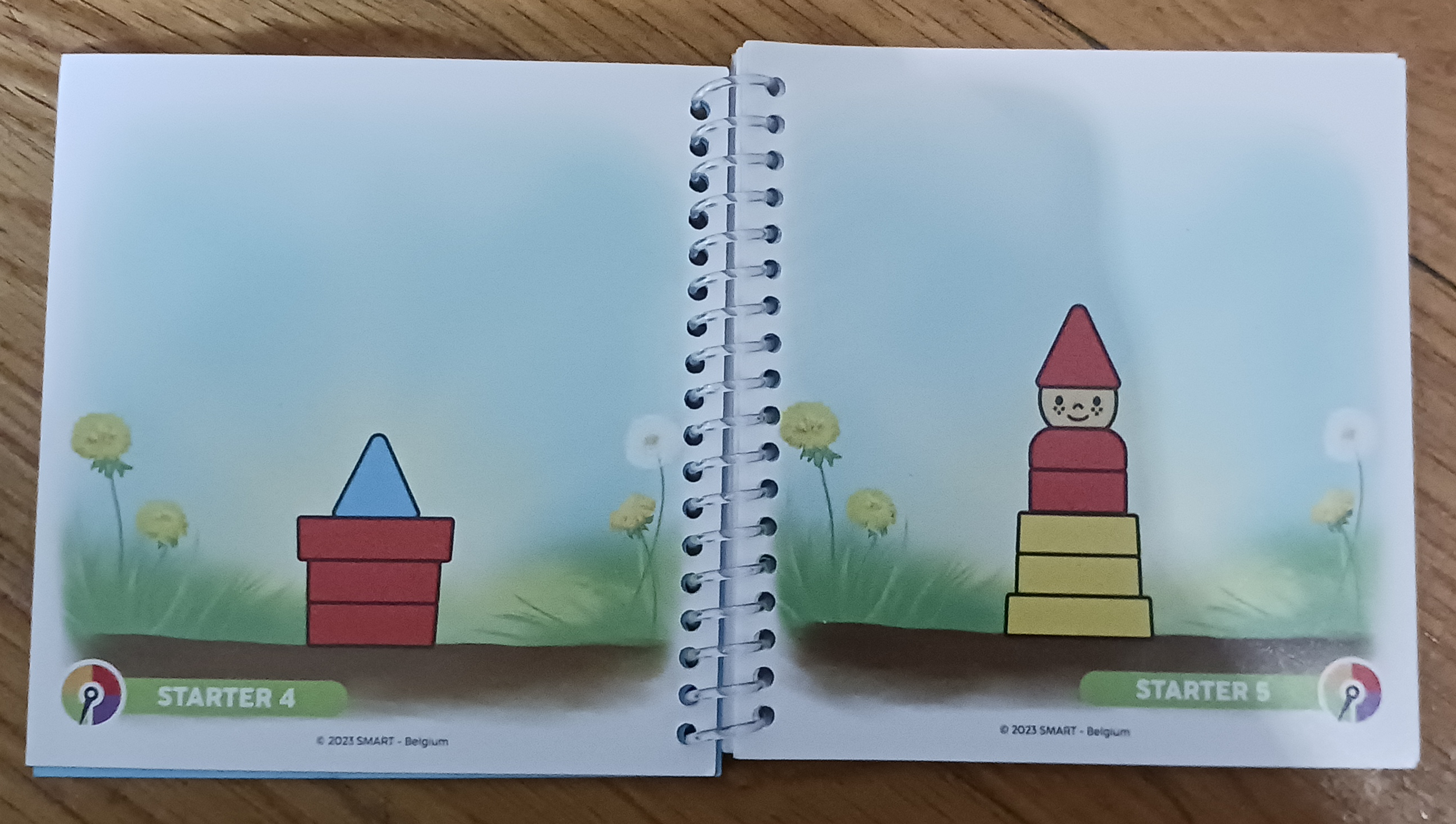
There are forty-eight challenges included with the game (each challenge is a different picture that the child needs to recreate). The challenges vary from easy to expert levels. I loved that the challenges were all enclosed in a spiral-bound book. That means no loose cards that are easy to misplace.

How Do We Play Gnome Sweet Gnome?

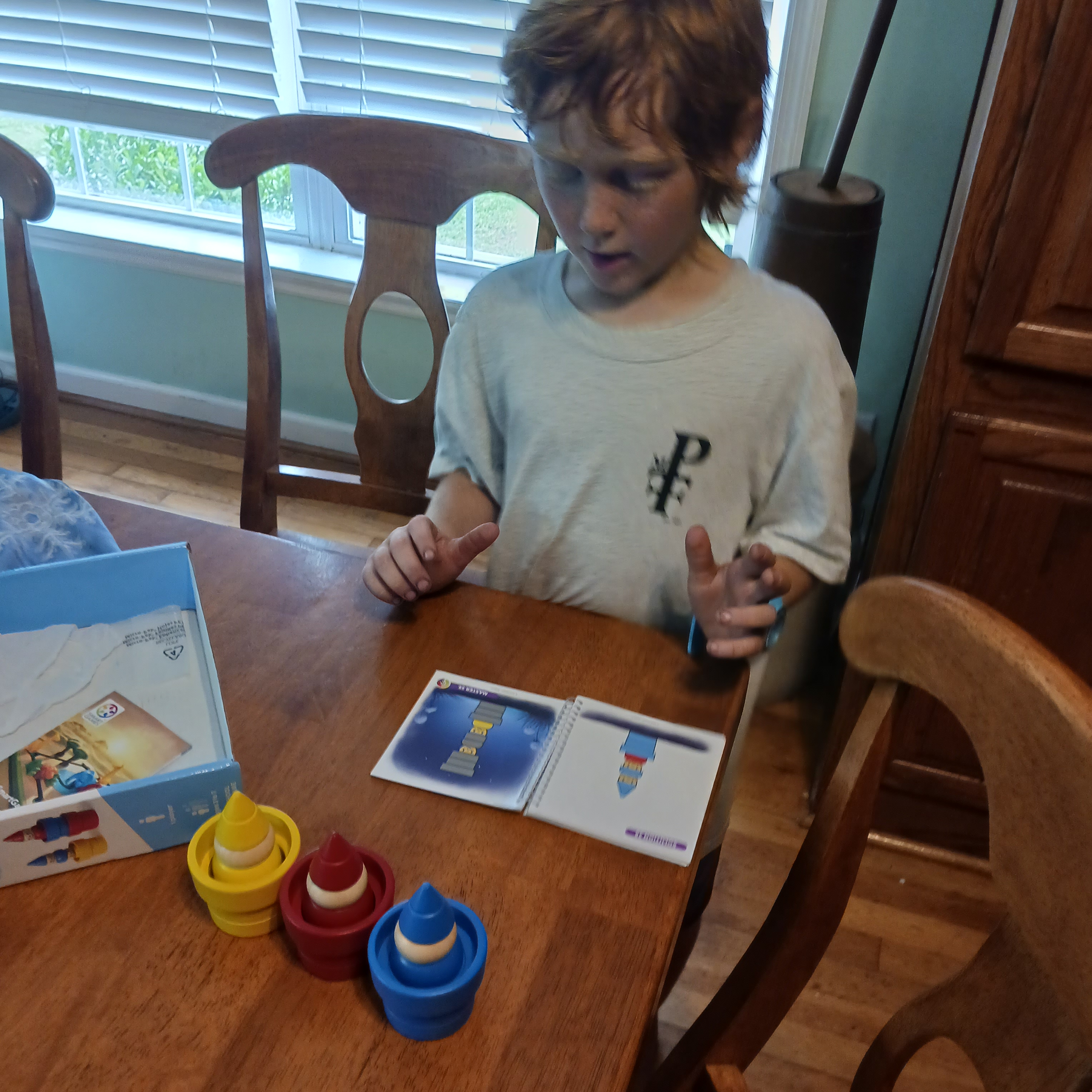
The beginning challenges use only a few pieces, and the challenge card shows the color for all of the pieces used. Then, they get a little more challenging by using more pieces but still showing all of the colors. On the final levels of difficulty, some or all of the colors are grayed. Other than the easiest level, all the challenges have a solution picture on the back of the page so the child can check their work.

This game can be completed independently, or a parent could work with the child to check their work and help them problem-solve. Depending on their attention span and ability level, children can work through anywhere from one challenge to the whole book. Younger children can start with the easier levels, and as they get more practice and confidence, they can move up to the more challenging options.

Overall, we really enjoyed this game. My six-year-old wanted to check it out and went through all the levels in one sitting. Even though he had completed them all, he still wanted to play again on other occasions, so it was not a one-and-done activity.

He loves playing Gnome Sweet Gnome!

This is also a great game to prepare students for the more challenging IQ Gears that we reviewed a few weeks ago for Timberdoodle. They work on similar skills at different levels.

Where Do I Find Gnome Sweet Gnome?

I highly recommend this game if you have a young child and want to work on fine motor skills (stacking), colors, or problem-solving. You can find out more and purchase Gnome Sweet Gnome at Timberdoodle. It is also included in their preschool kit.

IQ Gears a Timberdoodle Review

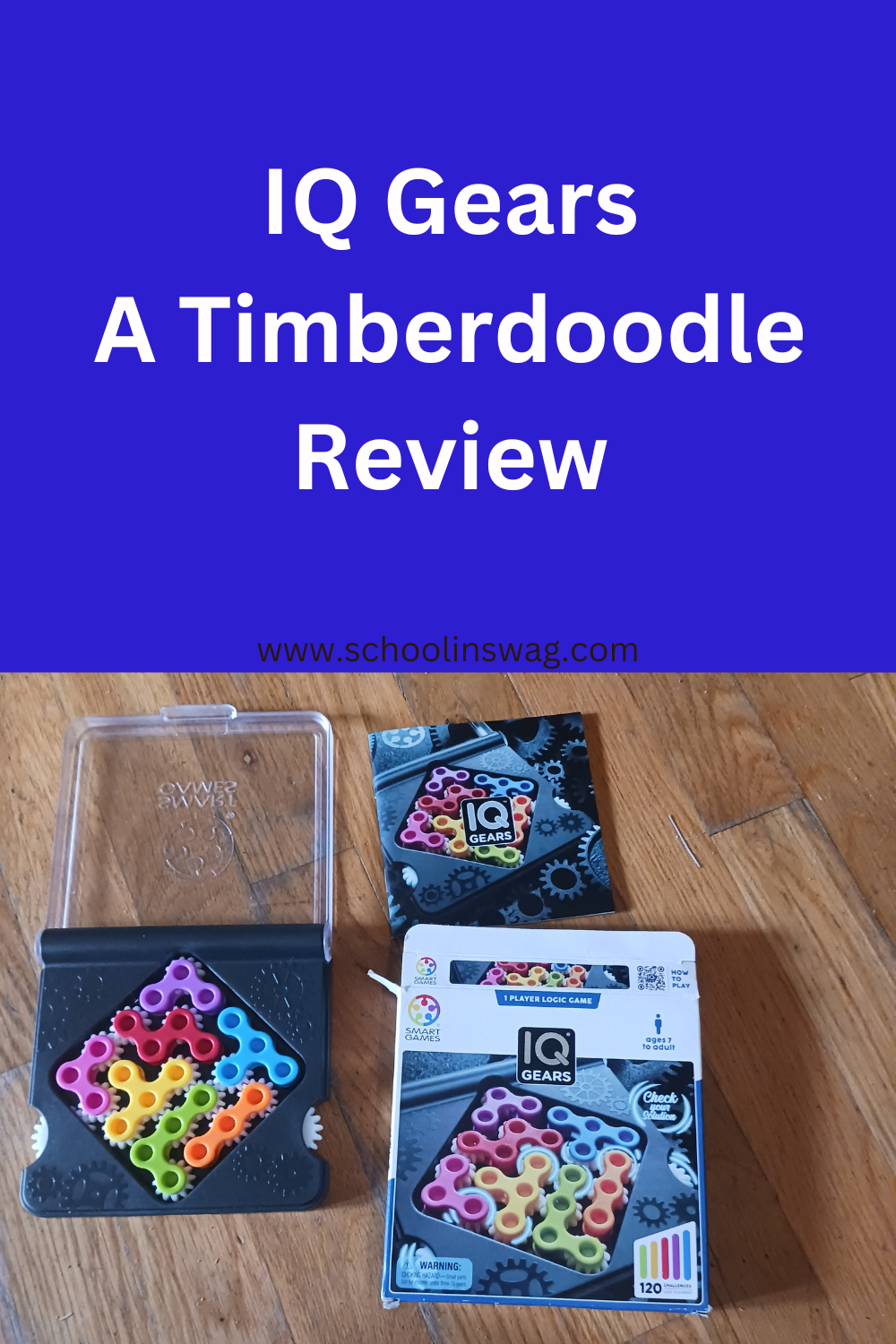
I love getting my hands on fun and educational games, little ways my children can keep their minds growing while they play. Thus, I was excited to get the opportunity to review Smart Games’ IQ Gears from Timberdoodle.  We had reviewed another game, IQ 6 Pro, from them last year, so I had high expectations.

The IQ Gears was similar to the IQ 6 Pro but with added fun and challenge. It is a puzzle game that can be played independently or together, with players challenging each other to different levels.

What is IQ Gears?

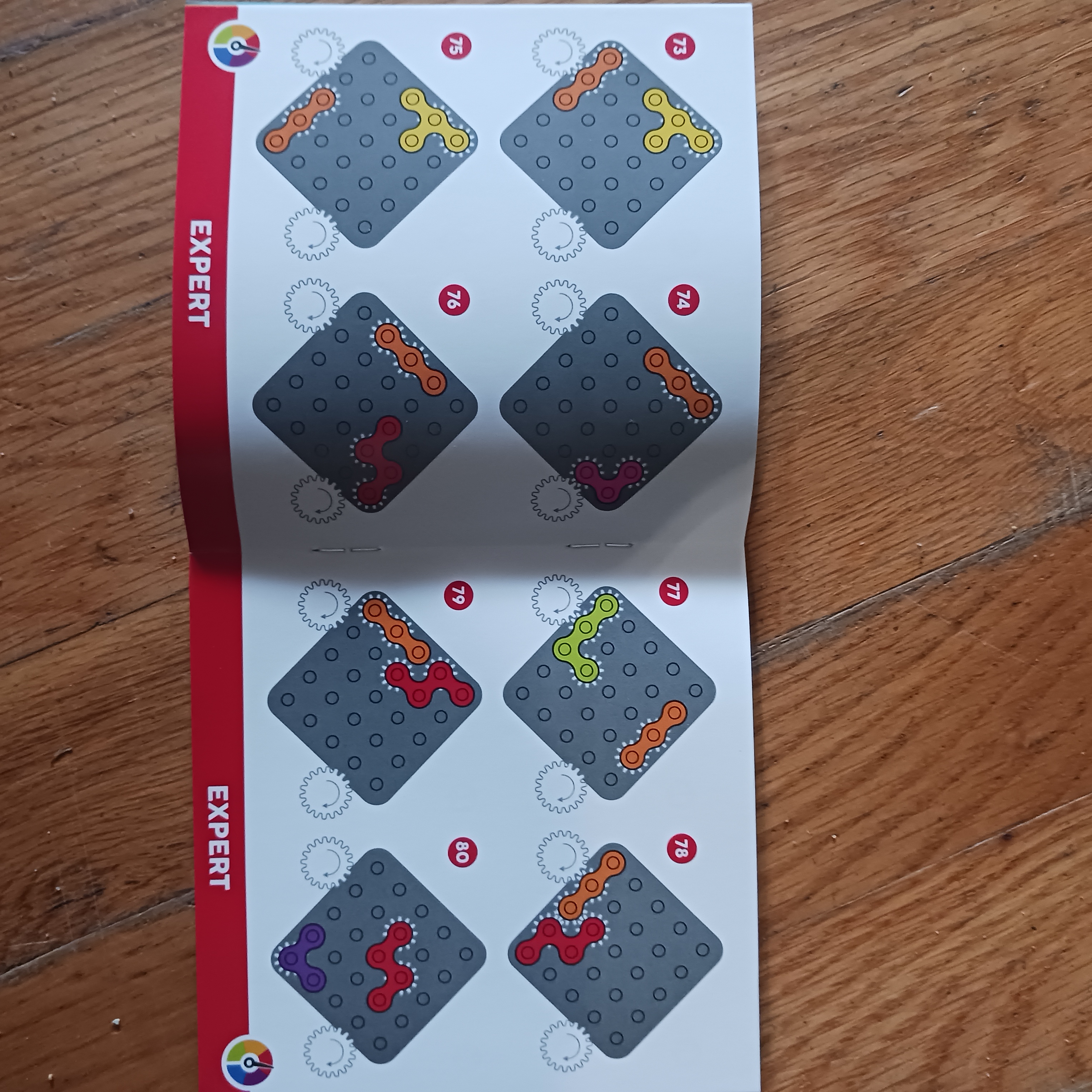
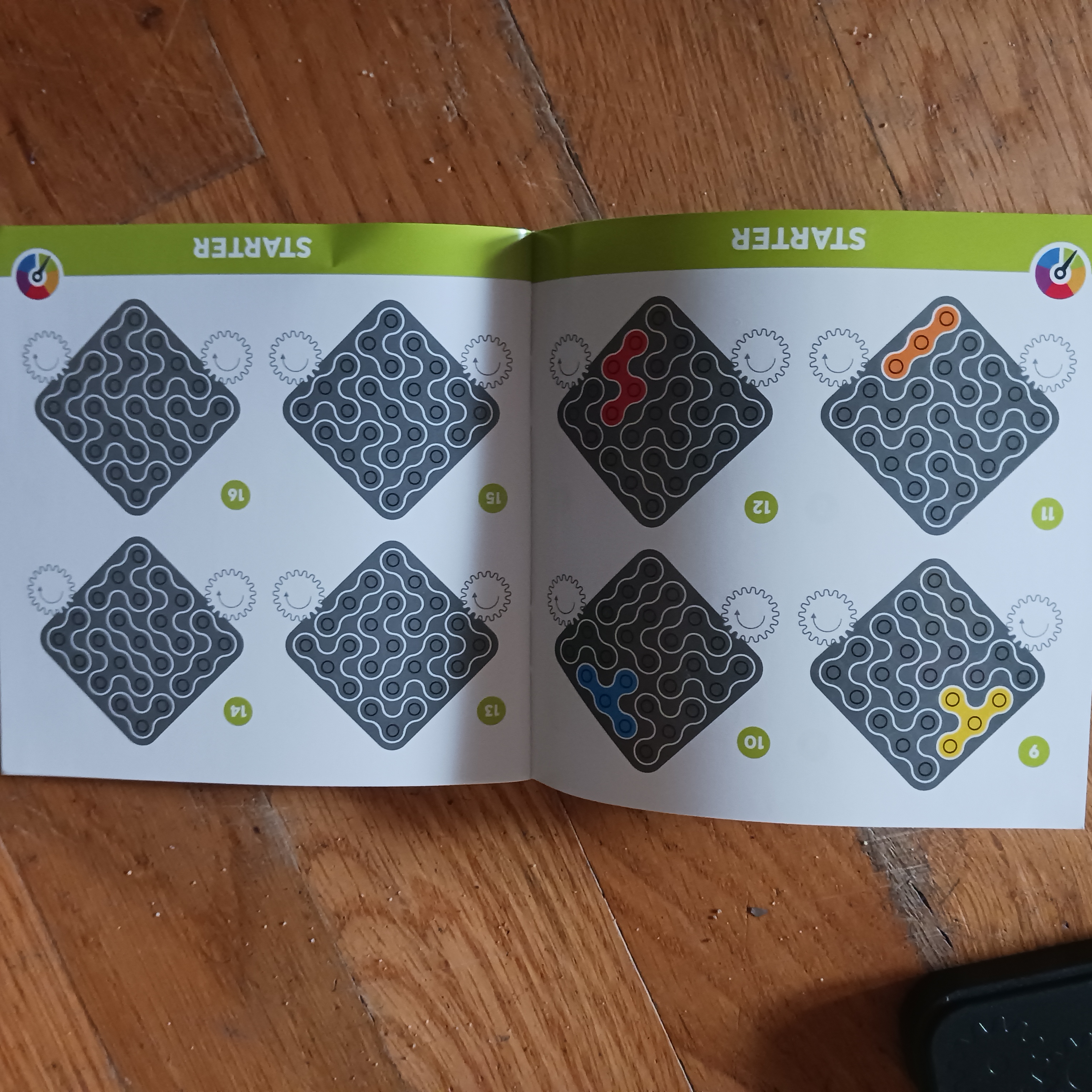
The game consists of a playing board and seven puzzle pieces. Seven pieces may not seem like a lot, but there are so many different combinations and challenge levels that it is great for a variety of ages. The included manual has over one hundred challenges at five different levels, ranging from starter to wizard.

Each of the seven pieces is a different color and shape. They also each have small gears on different parts of the shape. On the outside of the playing board are two larger gears. The goal is to get the puzzle pieces to fit back on the playing board in a way that connects the two outside gears. So you should be able to turn one outside gear and cause the other outside gear to turn.

There are many possible combinations to make this happen, but each challenge has specifics that have to be in place. For example, it might show you the position of several of the pieces, and you have to figure out where the other pieces will fit. Some of the challenges show positions but with the pieces whited out so that you have to figure out which pieces they are using and get them all in the right places. 

The easiest starter puzzles show the shapes of all the pieces on the board but only have a few of them colored in. All of these levels make it easy for people of different ages to enjoy the puzzle together.

How To Use This Game

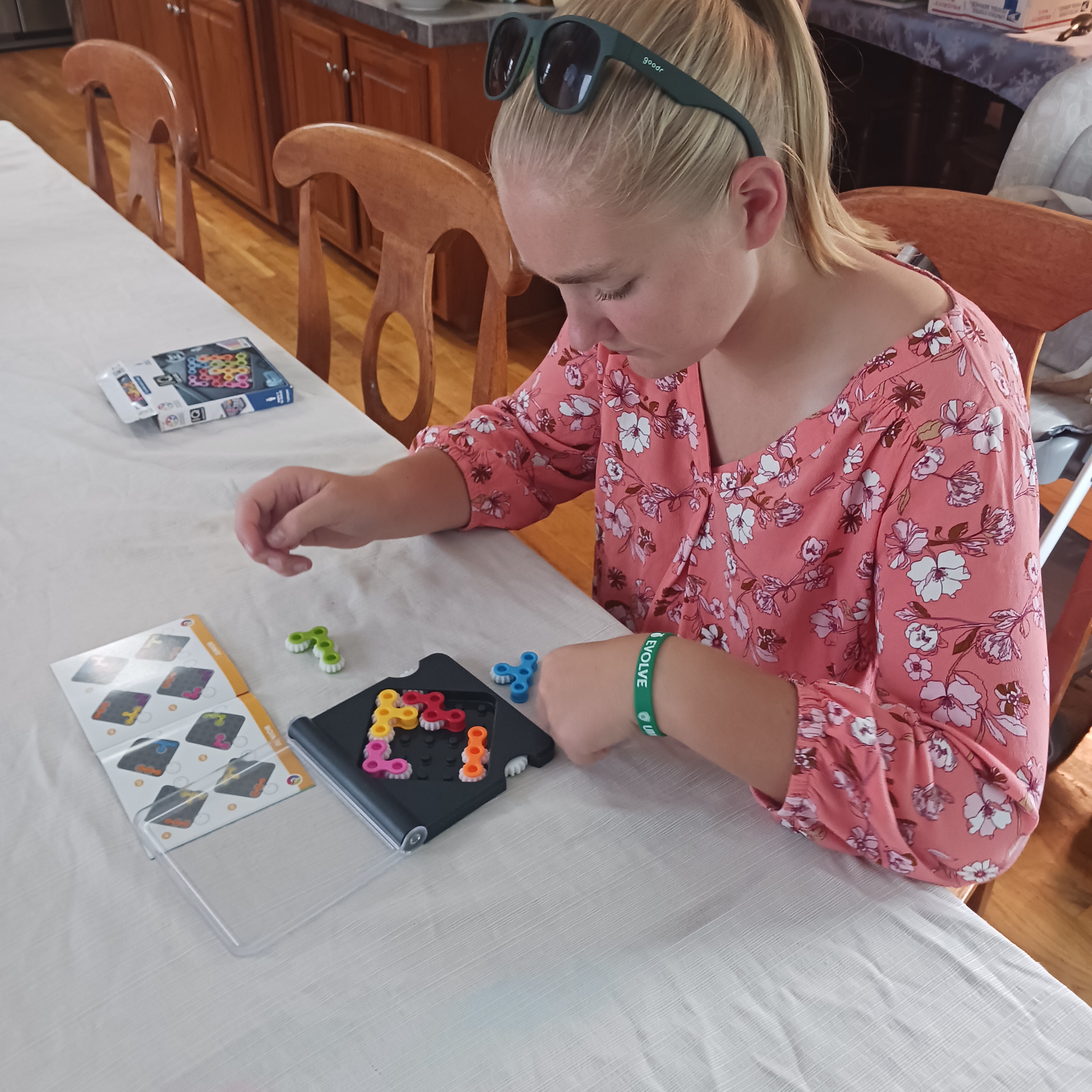
As a homeschool mom, I loved that this game was working on critical thinking skills and was QUIET. It was very small and self-contained, so it worked well as a game for car rides. A child who needs to keep their hands occupied during read-aloud time could also use it.

 It doesn’t have to be for school; it also makes a delightful family game to play in the evenings. It challenges teenagers and can be a great way to engage them in family time. My daughter was surprised at how challenging it was at first. She assumed that with only sevel pieces it would be too easy.

We enjoyed the game and were glad to add it to our collection. I encourage you to find out more about IQ Gears at Timberdoodle, where it can be purchased independently or as part of the 10th-grade kit.

Book Recommendations: Summer 2024

Reading is something that I enjoy year-round, but our summer schedule often allows more time for reading than other times of the year. While summer is never quite the slow, easy time I have in my dreams, I do take homeschooling off my plate for a few months.

*Some links are affiliate links, see disclosure below*

My children go to camp, do 4-H activities, spend time at the river, and engage in many other activities that keep us on the go, but many of them do not require much of my time. This leaves me with a little more flexibility to read.

This summer, I read several great books, both fiction and nonfiction. For years, I was staunchly on team “real paper books,” and while in many ways that is still my preference, I have found it easier to hold a baby and read on my phone. Going digital also opened up lots of more cost-effective options, like Kindle Unlimited and borrowing ebooks through Hoopla from our library.

Book I Read This Summer

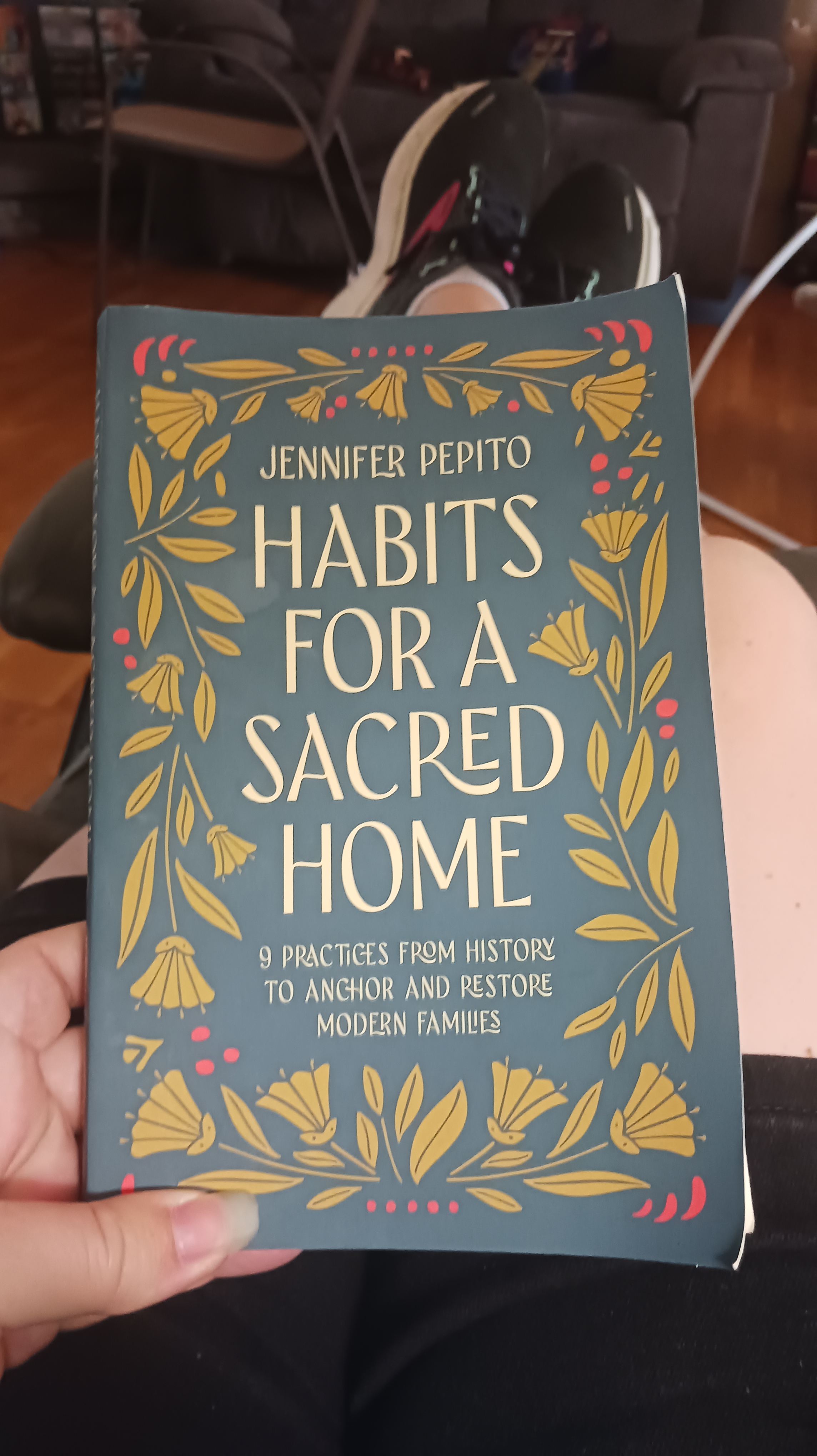
Habits of a Sacred Home by Jennifer Pepito

                Habits of a Sacred Home was a wonderful book to start my summer reading. I found it inspiring, challenging, and yet not so heavy as to be hard to read. It covers “9 practices from history to anchor and restore modern families.”  By reading one chapter a day, I could take the time to focus on and reflect on each habit. I was most inspired and challenged by the chapters on the habits of prayer and simplicity.

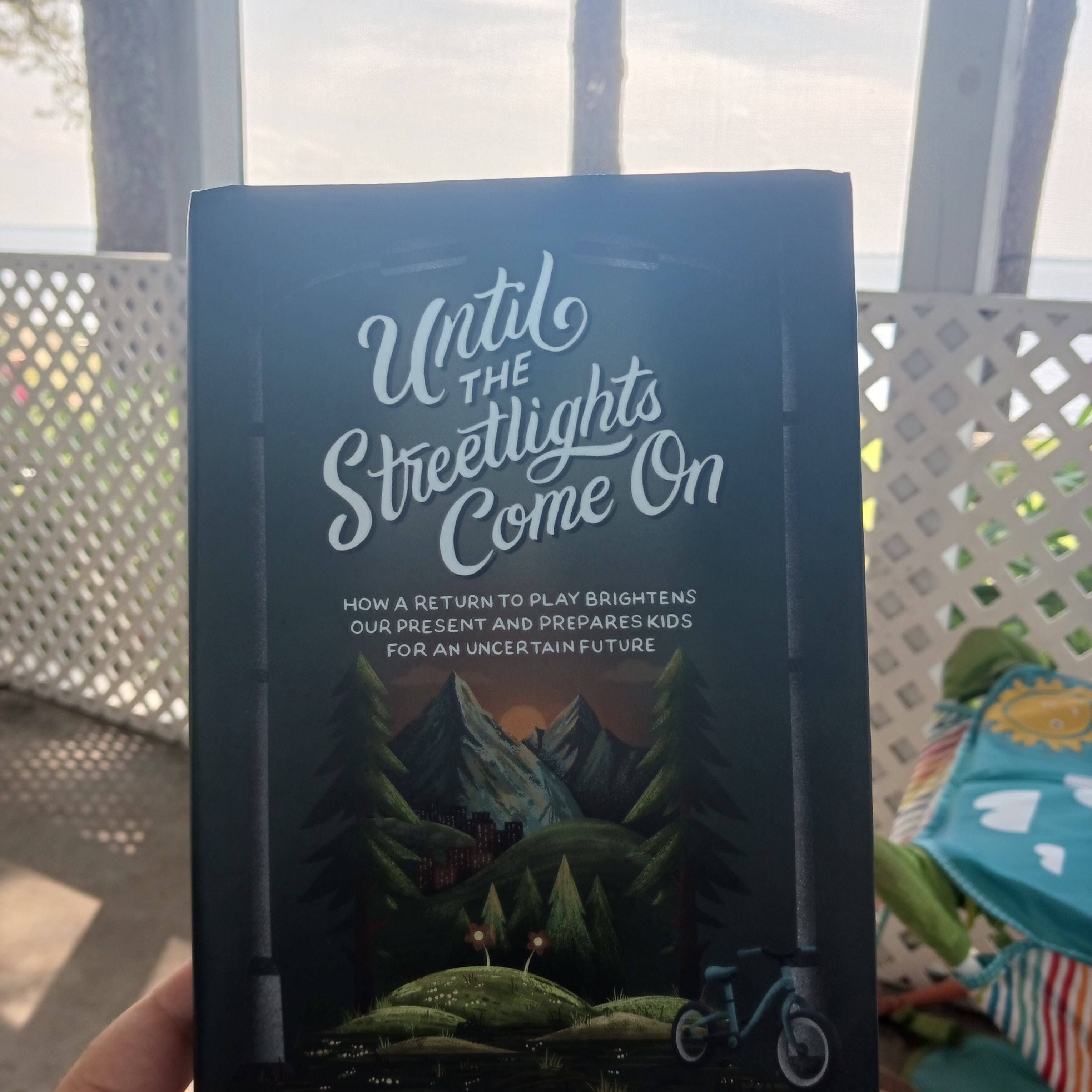
Until the Streetlights Come On by Ginny Yurich

                This book has been on my bedside table since shortly after it was published, but life kept getting in the way of me reading it. However, I am so glad that I could take the time to read it this summer. It reaffirmed my desire to give my children more time outside, more time engaged in authentic play, and more time adventuring together as a family. It also brought up some great points about different types of light and some other science behind all of this that I had not known before.  I am excited about growing further in these areas this year.

Once a Queen by Sarah Arthur

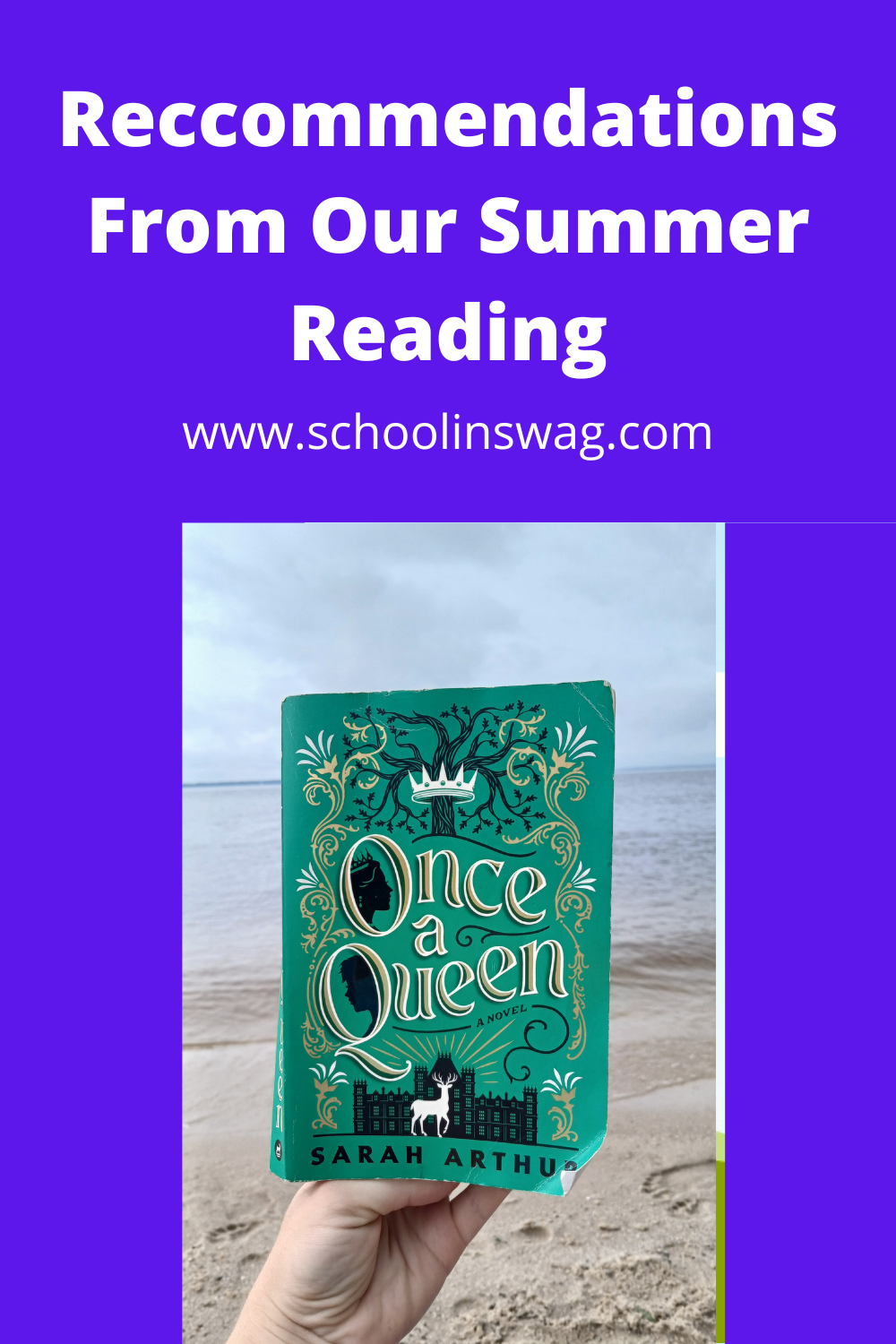
                On my own, I would never have picked up Once a Queen, but I am so glad that I did. It is a middle-grade fiction novel with excellent fantasy elements reminiscent of Narnia. Read Aloud Revival was doing it as a book for mama book club, and I decided it would be fun to read it with them and have my teenage daughter read it.  It was the perfect summer reading, light, and fun, with a little mystery and some fun references to Narnia for those who know the series. My only complaint is that the sequel will not be out until next year!

Your Teenager Isn’t Crazy by Jeramy and Jershua Clark

                Your Teenager Isn’t Crazy: Understanding Your Teen’s Brain Can Make You a Better Parent is an engaging book that offers lots of scientific information and practical application. I have not quite finished reading it, but I have loved what I have read so far. It really helped me better understand my teenagers and gave me ideas for how to respond to them and help them through the emotions and reactions of the teenage brain. (As a bonus, this is available on Kindle Unlimited!)

Chasing Slow by Erin Loechner

                Chasing Slow: Courage to Journey Off the Beaten Path is the story of how Erin Loechner, a TV show star and viral blogger, took control of her life and slowed down. It is less practical self-help strategies and more autobiographical, but inspirational ideas are intertwined into the story.  It was a good, easy read, but I wish there were more practical tips. I felt like it did a great job showing the benefits of Chasing Slow, but I would have liked a little more help with the application side of the equation. (This title was also a Kindle Unlimited read.)

My Current and Upcoming Books

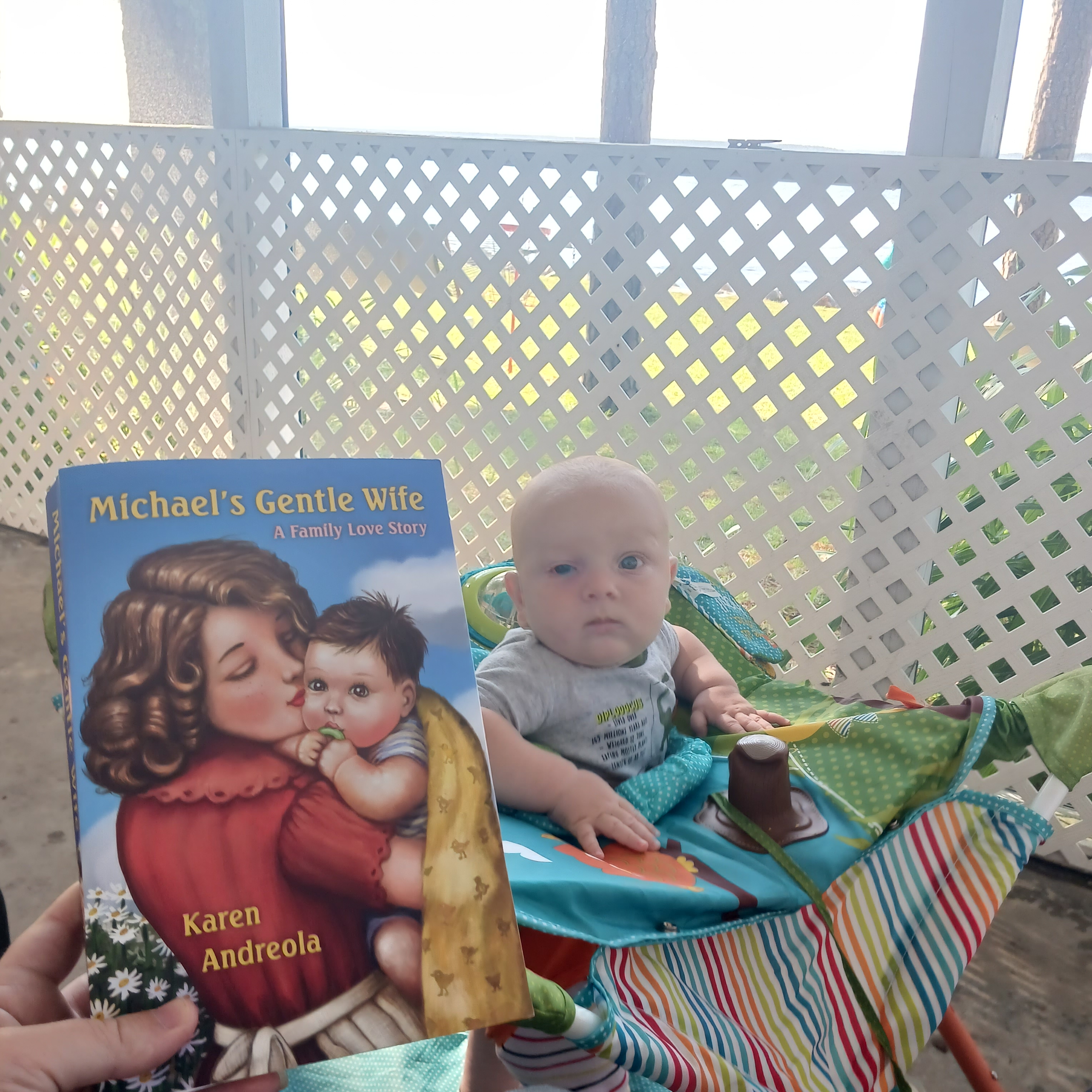
Michael’s Gentle Wife by Karen Andreola

I had a gift card for Amazon last month, and I knew just what I would buy. Michael’s Gentle Wife by Karen Andreola was at the top of my wish list. I had already read the two books before this one, Pocketful of Pinecones and Lessons at Blackberry Inn. So, I knew that I wanted to get my hands on this latest book. I am only a few chapters into it, but I love it so far. It is an easy-to-read story full of ideals and slower living. Set in the 1930s, things are different than today, and while it is written a bit more idyllic than real life, I also find it to be encouraging as we seek to slow down and enjoy our homeschool day.

The Opt-Out Family by Erin Loechner

Within about a month, I saw several references to The Opt Out Family by Erin Loechner in books I read. I also had several friends mention it. I want to take a second look when something keeps appearing like that. I found this one as a digital loan in our library app and have just started it as well.

I am looking forward to reading it and hopefully gaining encouragement and practical strategies for further reducing our family’s dependence on screens while balancing our desire to stay connected.

 Well Lived by Sally Clarkson

Finally, Sally Clarkson is one of my favorite authors who has encouraged and inspired me along my homeschool journey. She writes about the ideals that we try to impart to our children and share in our home. She has encouraged me to continue living out those ideals over the years, even when things are imperfect, which has paid off in many ways. I have had the privilege of reading the first chapter of her new book, Well Lived: Shaping a Legacy of Gratitude and Grace, and I look forward to reading the rest of it when it comes out next month.

In addition to all of these wonderful books, I have been indulging in some fun Christian fiction through my Kindle Unlimited subscription. A chapter or two at night before bed is a great way for my mind to unwind and relax. My son has been reading some books on his Kindle, and my daughter has as well, so we find it to be a great deal, and we save money each month over what we would have spent to buy the individual books.

I am always adding books to my pile, and I would love to hear your recommendations as well.

Deals and Freebies

If you have not tried SchoolhouseTeachers.com, you don’t want to miss this sale!

Tuttle Twins is having a Back to School Sale! Great deals on books and their new Academy.

New subscribers can get 3 months of World Watch for FREE! This is a great deal.

Junior Year 2024 Curriculum Choices


So many times, people tell me they are worried about homeschooling, or non-homeschoolers will ask if we are doing public school for high school. I remember when we first started homeschooling, and I was not sure what high school would look like.


However, with my oldest graduated and in college and my daughter going into her junior year, I can say that homeschooling high school is actually easier than homeschooling in the younger years.  Students are more independent, and I have become more of a facilitator than a teacher.


My daughter is on a slightly different path than my son, so her junior-year courses look somewhat different from those he took. She wants to focus on her music and work towards an associate’s degree in music (and possibly one in biblical studies).


Therefore, we are taking a few core classes from the community college, some life skills electives, and a big focus on her music. Our plan is for her to complete the core classes when she graduates, which will leave her with only music classes at the community college.


Fall Semester:


She is taking English 111, Public Speaking, and College Success this semester from the community college. She chose to take all of these courses online. High school juniors and seniors can take community college classes for free in our state.


Spring Semester:


She will take English 112 and one or two more courses this spring. She will probably take US History and Music Appreciation, but we will make a final decision once the class schedule is available. Our community college partners with several local schools to provide classes, and my daughter is interested in taking some of the same classes as some friends in a local private school. So, she will make a decision in the spring based on what she needs and what they are taking.


At Home:


This year, at home, she is taking Culinary Arts. We desire for all of our children to leave our home with an excellent working knowledge of cooking, food safety, and culinary skills. We created a course a couple of years ago for my son.

We used Good Eats episodes to teach various skills, had hands-on experience included, and a food safety course. We also added in some activities from SchoolhouseTeachers.com. My daughter will complete the same course, except we traded out a few lessons based on their interests. For example, my son is a hunter and enjoys making his own jerky, so we did a jerky lesson for him, but we are baking more for my daughter.


My daughter is continuing her viola lessons with Practice Monkeys for her music this year. Her instructor, Mrs. VanKleek, is specifically working with her on the skills she needs to be prepared for her time at the community college while also continuing her Suzuki curriculum. In addition, my daughter is working with a local instructor to enhance her piano skills for playing at church. She currently plays in our youth group band but hopes to soon be ready to play for Sunday morning worship.


We are also looking into voice lessons and her potentially joining a new local youth orchestra. In addition, she is talking to several friends about teaching some beginner lessons.


Morning Time


In addition to her for credit courses, she will be joining us for our family morning time. During our morning time we will be doing Bible and World Watch each day. We will also do a rotation of other subjects including fine arts, hymn study, logic, and more. 

Since she had plenty of courses for her required credits, we will not be using morning time as a high school credit this year, but you can check out High School Credit for Morning Time Studies to find out how to make it a credit or check out Morning Time Plans 2024 to see exactly what resources we are using this year.

Deals and Freebies

If you have not tried SchoolhouseTeachers.com, you don’t want to miss this sale!

Tuttle Twins is having a Back to School Sale! Great deals on books and their new Academy.

New subscribers can get 3 months of World Watch for FREE! This is a great deal.

5th Grade Curriculum Choices 2024

*Some links are affiliate links; see full disclosure below*

My ten-year-old is going into fifth grade! He developed a love for reading last year, which made me so happy. He struggled in his earlier years with reading, but once it clicked he made great progress and started reading for pleasure. He also loves fishing, hiking, and anything science. He would love to be able to skip math, but alas I feel math is an important part of his education.

Reading:

He will be working through All About Reading Level 4 to continue to strengthen his phonetic skills. Now that he is reading well independently, we may skip some parts of the curriculum, but I find there are still some important skills to learn.

He will also be using Read Aloud Revival’s family book clubs, The Prairie Primer (see history section below for more info), and plenty of independent reading.

All About Reading

Spelling

We have been working on All About Spelling, and he will continue to work his way through that. There will be even more focus on that this year now that his reading is more comfortable. We found All About Spelling years ago when my oldest was a struggling speller, and it has been our family favorite ever since.

Writing

For writing, we will be using Master Books Handwriting A to Zoo to review some handwriting skills. He will also be doing First Language Lessons to work on some grammar. In addition, nature journaling and some other creative writing assignments will help improve his skills.

Math

He will be continuing with Math for a Living Education this year. We both love the format; it worked very well for him. There is generally enough practice for him without it being too much busy work. If there are concepts where he struggles, we can add in some extra practice.

I am still looking at options for extra practice with math facts to help him speed up his computation skills.

Science:

This year both of my younger boys wanted to learn about rocks and geology. They became intrigued on our trip out west this spring and wanted to keep learning. I had never taught a geology course, but I dug around to see what we had and what resources were available. We believe in a young earth creation and wanted primarily resources that aligned with those beliefs. Using Master Book’s Geology book and Northwest Treasures Rocks and Minerals for Little Eyes book, I created our own geology study. You can find out more and get a free copy of it over at our post: Creationist Geology Unit Study for Elementary and Middle Grades.

In addition, we will be doing nature study at least weekly (we often do it more when the weather is comfortable.) Sometimes our nature study is as simple as going outside and observing, but we also love to use our subscription to Homeschool Nature Study to take things a little further and help me find some great activities and ideas.

History:

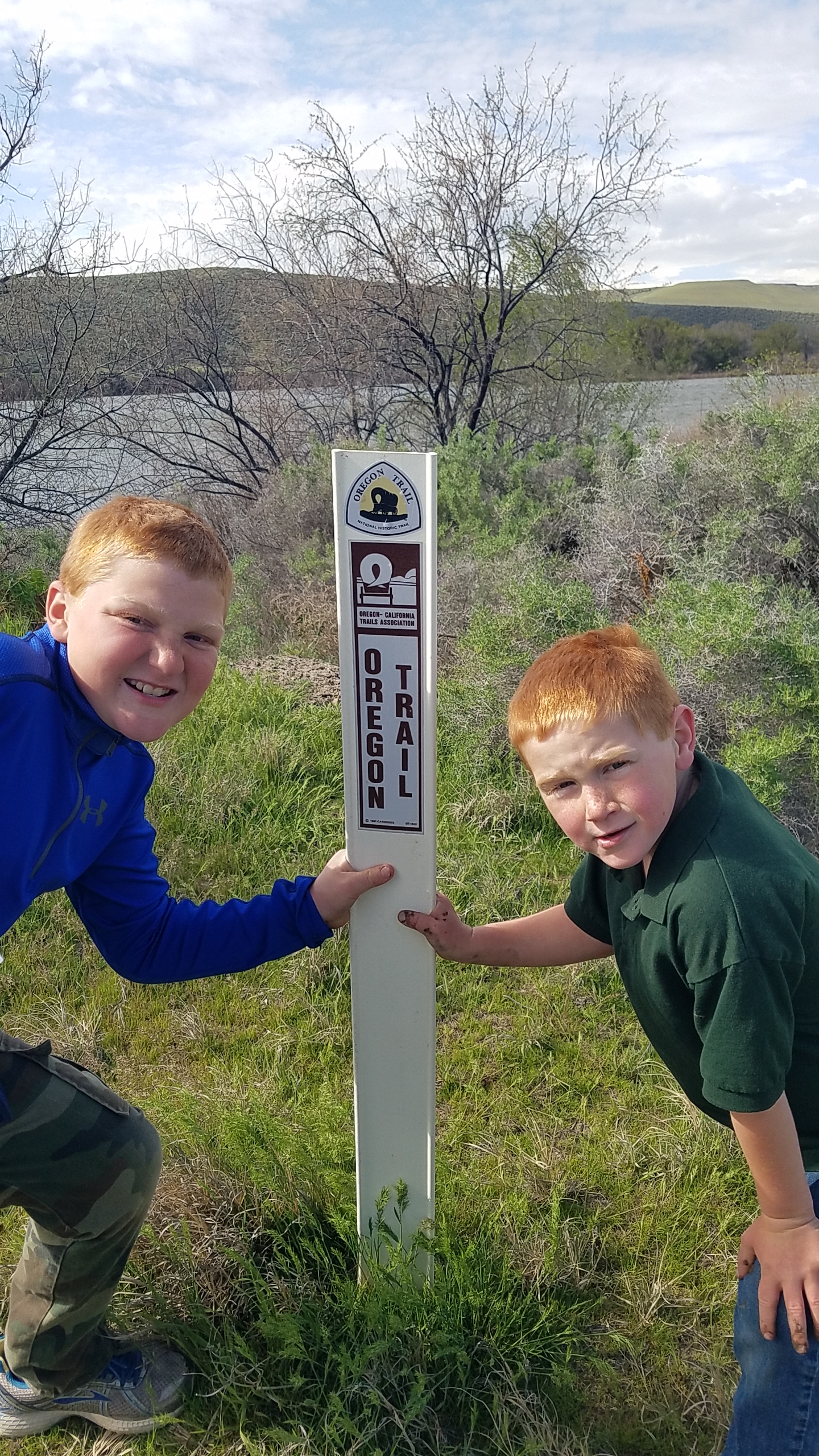
We are generally a Story of the World family for history, but last year we did the new Tuttle Twins American History Volume One book. I had planned to go back into Story of the World Volume 3 this year, but the boys were very interested in the history of the western part of the United States. We had a chance to visit parts of the Oregon Trail and a Pony Express stop as well as many other historical places west of the Mississippi on our spring trip. So, I decided to use a curriculum that would allow us to dive a little deeper into some of those areas.

We are using the Prairie Primer, which is a unit study style program that teaches history, science, health, and more through the Little House on the Prairie book series. We will not be doing all of the activities and will focus mostly on the literature and history components.

Art

This son is the one I refer to as my little artist. He loves to draw, paint, and create. We will continue to use our membership with You Are An Artist chalk pastels for his online art lessons and provide him with lots of time and materials to be creative.

This year he plans to focus on some of the acrylic paint lessons that are included in our membership to broaden his art skills. He also plans to explore independently with water colors and other mediums.

Morning Time:

Morning time is my favorite part of our school day. We will do our daily Bible study and watch World Watch for current events each day. In addition, we plan to do a rotation of fine arts studies, poetry, Tuttle Twins books, and more. You can find out more about the resources we are using this year at Morning Time Plans 2024.

We have a seven-month-old in the house, so I am holding all of our plans in an open hand and praying for the best. We will do what we can, when we can, and trust that God will fill in the gaps. I will adjust as we go along, but I think this is a good start and I am excited about our choices this year.

Resource Library and Affiliate Disclosure

When you sign up for the Schoolin’ Swag free resource library, you will get a link and password to the library; we are adding to the library each month with new items. You will also get a bi-weekly newsletter email to keep you up to date on what we have going on.

Resource Library 

This post may contain affiliate or referral links, including Amazon affiliate links. As always, I will never recommend a product that I don’t believe in, and you will never be charged more for purchasing through our links. It does help pay for the costs associated with the blog.

Deals and Freebies

If you have not tried SchoolhouseTeachers.com, you don’t want to miss this sale!

Tuttle Twins is having a Back to School Sale! Great deals on books and their new Academy.

New subscribers can get 3 months of World Watch for FREE! This is a great deal.

Our First Grade Choices 2024

My six-year-old is so excited to get started with first grade. He actually started his math over the summer because he did not want to wait. I am not naive enough to think that means we won’t have bad days or tough subjects, but I am glad he is enjoying school at this point.

It is important to evaluate curriculum options each year based on what worked and did not work in the past and on the individual student.

*This post contains affiliate links, see full disclosure below.*

Reading

We found All About Learning Press years ago when we struggled with spelling, and it has been an excellent fit for all my children. We started All About Reading Pre-Reading level last year and learned all of his letters.

Due to some speech difficulties we put aside the letter sounds for until this fall so that he had time to work on them in his speech therapy. This year I plan to finish the Pre-Reading level and begin working through level 1. I love the phonetic approach and the fun touches included in this program.

All About Reading Pre-reading

We will be supplementing this with some great programs from Schoolhouse Teachers. They have a fantastic series with a short video for each letter to reinforce what we are learning in AAR.

We will be continuing lots of reading aloud and he loves to listen to audiobooks in his free time or while he is working on chores. We also utilize our Read Aloud Revival membership for fun literature study.

Math

Math for a Living Education is a math series from Masterbooks. My son loved the kindergarten level so much that he finished it in April and he has already begun the first grade level.

We love how they weave a story through the book to show real-life examples of math skills. I also find that there is enough practice without being overwhelming or feeling like busy work. (If you have a child that needs extra practice, they offer a separate book with additional reinforcement.)

In addition, we will be using some calendar math from Schoolhouse Teachers to reinforce essential math concepts as well as days of the week, months of the year, etc.

Science

After our bucket list National Parks trip last year, both my ten and six year-olds really wanted to learn more about rocks. I dug around to see what we had and what was available for elementary geology from a Christian perspective and decided to create my own course using materials from a couple different companies including Master Books and Northwest Treasures. You can get a free copy of my creationist geology plan and find out more over at this post.

In addition, we will be doing nature study at least weekly (we often do it more when the weather is comfortable.) Sometimes our nature study is as simple as going outside and observing, but we also love to use our subscription to Homeschool Nature Study to take things a little further and help me find some great activities and ideas.

History

My original history plans had us moving back into Story of the World. However, after our trip and based on my children’s interests, we decided to use the Prairie Primer this year for history and literature combined. This plan goes through the Little House on the Prairie book series and incorporates history, science, and other subjects.

We will mostly focus on the literature, history, and cooking projects that are included. However, I may also add in a few of the other subjects as we have time and interest. I will note that there are some nutritional lessons that I would disagree with ( I think its just outdated information) so we will just skip those components.

I think the boys will enjoy learning more about the history of the settling of the western part of the United States and be able to make connections to some of the wonderful places we visited on our journey.

Art/Music

Nana would probably cringe if she heard me say it, but I am not an artist, so I love having an art program that will help my children in my area of weakness. We have been using You Are An Artist Chalk Pastel lessons for several years with my older children, and we love them.

Music is another area where I like to call in help teaching, and we use Practice Monkeys for music lessons. We have been with them since 2018, and I cannot say enough good things. Joseph will continue to take violin lessons as well as receive some help from my high school aged daughter. They offer Zoom Suzuki violin, cello, guitar, and piano lessons at a super affordable rate for families.

Handwriting

I am excited to be trying Master Books Handwriting A to Zoo this year. I love that in addition to handwriting he will pick up some fun animal facts and that it gives glory to the Creator. I also appreciate that it is fairly open and go, which is important for me as I balance teaching three students and having a baby in the house.

Morning Time

In addition, we will do family Bible and World Watch during our morning time each day. We will also rotate in a variety of other subjects. You can see more about what we are incorporating during Morning Time this year and learn why it is my favorite time of the day in this post: Morning Time Plans 2024

A Typical Day

All of these subjects (except music lessons and some of our nature study) can be completed in the morning. If my first grader is being diligent about his studies, he can be finished in time for lunch with everything on his checklist. Violin and nature study are the exceptions because the music lesson is scheduled in the afternoons and we often do our nature walks and hikes in the afternoons as well.

This schedule allows him to get a good foundation in the academic subjects but still have lots of time for free play and exploration. We try to ensure he gets several hours outside each day and plenty of time for building with legos and other projects. Over the years, I have come to realize that children can learn as much through that free play as they do through academic instruction.

I would love to know what your favorite resources are for first grade! Also, if you have any questions, please ask them in the comments.

Resource Library and Affiliate Disclosure

When you sign up for the Schoolin’ Swag free resource library, you will get a link and password to the library, we are adding to the library each month with new items. You will also get a bi-weekly newsletter email to keep you up to date on what we have going on.

Resource Library 

This post may contain affiliate or referral links, including Amazon affiliate links. As always, I will never recommend a product that I don’t believe in, and you will never be charged more for purchasing through our links. It does help pay for the costs associated with the blog.
Deals and Freebies

If you have not tried SchoolhouseTeachers.com, you don’t want to miss this sale!